Array
(
[id] => 10
[name] => After-sales Service
[status] => normal
[create_time] => 2025-03-02 16:21:27
[delete_time] =>
[category_ids] => 1
[image] =>
[description] =>
[content] => Service Time Arrangement:
Mondy-Friday 9:00am-10:pm China time
Methods and Channels:
Message, vedio, online meeting, calling (solution expressions) through email, whatsapp, wechat and so on in Eenglish.
Marketing Surport:
If you meet some marketing difficulty, SEENWILLS will offer some advices.
[company_id] => 18
[sort] => 0
[category_id] => 1
[key_name] => after-sales-service
)
Array
(
[id] => 9
[name] => Returning policy
[status] => normal
[create_time] => 2025-03-02 15:41:01
[delete_time] =>
[category_ids] => 1
[image] =>
[description] =>
[content] => Accept returning:
1.<5 days after reached ANY China local warehouse because it will take a little time to arrange the returning task and some time will meet the public holidays;
2. Damaged after reached ANY China local warehouse;
3. Not match the contracts after reached ANY China local warehouse;
NOT accept returning:
1.No quality issue more than 5 days after reach ANY China local warehouse;
2.No quality issue after shipping out from China warehouse;
3.No quality issues with OEM orders;
4.Which are used and damaged;
5.Which are gift or promotional purpose;
Refounding SOP:
1.after getting your returning information and fee charges list,
2.arrange the returning action;
3.clear the refound after get from supplier;
[company_id] => 18
[sort] => 0
[category_id] => 1
[key_name] => returning-policy
)
Array
(
[id] => 8
[name] => Working Principles
[status] => normal
[create_time] => 2025-03-02 15:12:26
[delete_time] =>
[category_ids] => 1
[image] =>
[description] =>
[content] => Friendly
At Seenwills, friendliness is at the heart of everything we do. Our customer service team is dedicated to providing warm, personalized support, making every interaction enjoyable. We foster a welcoming community, encouraging open communication and feedback. Whether online or in person, our approachable demeanor ensures customers feel valued and appreciated, creating lasting relationships built on trust and goodwill.
Love to Save Time
At Seenwills, we understand the value of time. Our streamlined processes and advanced logistics ensure swift delivery, minimizing wait times for our customers. From order placement to doorstep delivery, every step is optimized for efficiency. We prioritize convenience, offering easy-to-navigate interfaces and expedited shipping options. With Seenwills, saving time becomes an effortless luxury.
Quality Principles
Our commitment to quality is unwavering. Each product undergoes rigorous testing and meticulous craftsmanship, ensuring durability and excellence. We adhere to stringent standards, using eco-friendly materials that are both sustainable and robust. Every item reflects our dedication to superior quality, providing customers with products they can trust and cherish for years to come. Meant we will keep some rate as our profits under our deals.
Bulk or OEM
Seenwills excels in both bulk orders and Original Equipment Manufacturer (OEM) services. Whether you need large quantities or customized solutions, our flexible production capabilities cater to diverse needs. Our team collaborates closely with clients to tailor products that meet specific requirements, ensuring consistency and reliability. Experience seamless scalability with Seenwills, where your unique demands are met with precision and care.
Professional on Products
Our expertise lies in delivering top-tier products. From conceptualization to final production, our skilled professionals apply cutting-edge technology and innovative designs. We stay abreast of industry trends, integrating the latest advancements to create exceptional items. Each product is a testament to our professionalism and passion, reflecting our commitment to excellence and customer satisfaction. If you really donot know something on it SEENWILLS stuff will help you with the supplier.
[company_id] => 18
[sort] => 0
[category_id] => 1
[key_name] => seenwills-working-principles
)
Array
(
[id] => 7
[name] => Brand Explanations
[status] => normal
[create_time] => 2025-03-02 14:28:36
[delete_time] =>
[category_ids] => 1
[image] =>
[description] =>
[content] => Seenwills Brand Explainations & Mission Statement
Brand History and Background
Created in 2015 by owner Darren. The name "Seenwills" combines "seen" with "wills," which is representing willing to come true our dreams after seeing the reality under our dreams, actions, smart thoughts, rich sources and related abilities.
Product Quality and Innovation
At Seenwills, we prioritize meticulous attention to detail, ensuring stringent quality control processes from material selection to final product delivery. Our products are crafted from eco-friendly and durable materials, each batch rigorously tested and inspected. Continuous innovation keeps us at the forefront of the industry, meeting diverse customer needs.
Customer Service and Support
We offer comprehensive customer service support, including responsive after-sales service, flexible return and exchange policies, and dedicated technical assistance. Our team is committed to providing exceptional service experiences, resolving issues promptly and considerately to ensure customer satisfaction.
Social Responsibility and Sustainability
Seenwills actively engages in social responsibility initiatives, focusing on environmental protection and sustainable development. We participate in various eco-friendly projects such as tree-planting campaigns and help many welfare Institutes and homeless kids every year.
Transparency and Integrity
Operating transparently, we share information on supply chain management, financial status, and other operational aspects. Our annual Corporate Social Responsibility (CSR) report details our progress and contributions across various areas, ensuring adherence to high standards and building trust with customers.
Customer Reviews and Testimonials
Genuine customer reviews and testimonials are showcased on our website, reflecting the positive experiences and feedback from users worldwide. Many express how Seenwills products have inspired them to pursue their dreams and are eager to recommend our brand to friends. One phrase can share here which from our 20-year business relationship partner " you are one of my dear brother from another mum."
Certifications and Accreditations
Seenwills will ask for certifications and accreditations from supplier if you are really in need under serious projects under the local goverment requests, such as ISO 9001, Rohs, CE, FDA...
Community and Engagement
We foster a vibrant user community by organizing online and offline events, increasing direct engagement with customers. Regular user meetups and product launch events invite everyone to discuss dreams and aspirations, creating a sense of belonging and shared purpose.
Data Security and Privacy Protection
Committed to protecting customer data and privacy, we employ advanced encryption technologies to safeguard every customer's personal information. Strict adherence to privacy policies and compliance measures ensures that customers can trust us with their sensitive data.
Long-Term Partnerships
Seenwills collaborates with renowned enterprises, establishing long-term partnerships that elevate brand influence and credibility. Partnerships with leading brands like Nike and Adidas enhance our brand influence and offer customers superior products and services.
[company_id] => 18
[sort] => 0
[category_id] => 1
[key_name] => seenwills-brand-explanations
)
Array
(
[id] => 5
[name] => Sourcing SOP
[status] => normal
[create_time] => 2025-03-02 13:08:29
[delete_time] =>
[category_ids] => 1
[image] =>
[description] =>
[content] => Here are 7 Steps on how to shop happily with Seenwills.com
-
Register an Account: First, create an account on seenwills shopping website you have got the right link: www.seenwills.com. Ensure you use a strong password,a safe email ID to registe, and finally save the user name and passwords with a note to aovid forgetting.DONOT give your account information to anyone but yourself. If you really forgot it you can ask SEENWILLS team to help you officially.
-
Browse and Search: Utilize the eeenwills website's search function and category directories to find the products you need. Using specific keywords can help you locate your target items with more choices. If you really want only the product whch you have the product image already, then you can upload it and find the right supplier easily and fast.
-
Compare Products: Don’t rush to buy. Compare similar products offered by different brands and sellers. Check product details、prices to understand product key points or ask for other buyers' experiences. Attentions: the suppliers are different; the prices are different; some product images are same but the sku or related quality are quite different, so please make a choice and ask SEENWILLS to offer you some professional advice through our CHAT or message note or other communicating founctions. If not any quality issue SEENWILLS will hardly help once ship out from warehouse.
-
Confirm the Details: Tell Seenwills the reality of your purchasing purpose,、details on:logo, package, color, quantity, time, sample...then pay the deposites.
- Contract: Make a contract with our system, but the other details talked from any channel also under the same right to each party as a contract or agreement.
6. QC Programn: Ask for the really product making vedios for most important point, but no more change if all under the contract or agreements.
7. Secure Payment: Choose secure payment methods such as credit cards or well-known e-wallet services. Avoid direct bank transfers to individuals to prevent fraud.
8. Confirm Your Order and Track Logistics: After completing payment, confirm that your order details are correct and keep the order confirmation email or number. Use the platform’s logistics tracking service to monitor the status of your package.
[company_id] => 18
[sort] => 0
[category_id] => 1
[key_name] => sourcing-sop
)
Array
(
[id] => 4
[name] => About Seenwills
[status] => normal
[create_time] => 2025-02-16 20:54:30
[delete_time] =>
[category_ids] => 1
[image] =>
[description] =>
[content] => CHANGSHA SEENWILLS TECHNOLOGY COMPANY LIMITED
is a professional B2B sourcing partner from China with 200 millions curated product system.
Registered on Decenber 28th, 2023, head office based in Changsha City Hunan Province, where to devolope our system under the request of our business management by the owner of Dongsheng Qin , English name is Darren. Branch Office of Yiwu city offers customers services including: supplier verifying, order confirm, purchasing programn, quality control, warehouse and shipping solution, document and contract facilidation.
Main markets: United States, Canada, Germany, Russia, UAE, Maldive, Morroc, Ghana, Uganda...over 10 countries.
Main industries: Chemical paint, plastic chairs & table, A4 copy paper, tissues, mackerel, compressor, bamboo products, pencils, jewelry, houseware, hair care appliance, IP cameras, water bottles... about 15 - 20 lines.
Mission: making global trade simpler, enhancing efficiency through our system, delivering warmth through our services.
Vision: setting a new benchmark for trust in global B2B procurement, enabling "China Smart Manufacturing" to better serve the world.
Value: systems are constantly iterated, services are continuously optimized.
CSR Moto: keep peace, love as a seed.
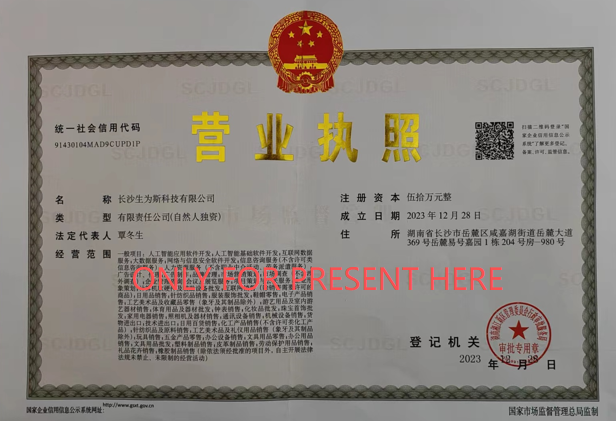
(Here is the license of CHANGSHA SEENWILLS TECHNOLOGY COMPANY LIMITED)
[company_id] => 18
[sort] => 0
[category_id] => 1
[key_name] => about-seenwills-company
)
Array
(
[id] => 34
[name] => Dongsheng Qin
[status] => normal
[create_time] => 2026-02-24 15:33:19
[delete_time] =>
[category_ids] => 1
[image] =>
[description] =>
[content] => 
Chinese Name: Dongsheng Qin
English Name: Darren
Education: Shaoyang University (2001-2004)
Working Experience:
2004-2010 Sales in Mobile & Computer IOT Advanced Company Limited
2011-2018 Sales Manager in UAE, Kenya, Ghana
2019-2022 Brand Manager in Yiwu Alibaba C-Partener Company
2023... Created CHANGSHA SEENWILLS TECHNOLOGY COMPANY LIMITED to offer professional sourcing service with it brand SEENWILLS and millions of curated product system
You can call Darren Qin
[company_id] => 18
[sort] => 0
[category_id] => 1
[key_name] => seenwills-owner-dongsheng-qin
)
Array
(
[id] => 2
[name] => Contacts
[status] => normal
[create_time] => 2024-12-02 23:08:25
[delete_time] =>
[category_ids] => 1
[image] =>
[description] =>
[content] => Darren
+86 15868905595 (wechat /whatsapp)
oober_qin@126.com (email is faster)
Room 1111, China-Africa Mansion, Futian District, Shangcheng Road, Yiwu Jinhua City, Zhejiang Province, China.
If you didnot get what you want from our product selectiong system, please try RFQ system or leave a message through our online chatting system.
[company_id] => 18
[sort] => 0
[category_id] => 1
[key_name] => contacts
)
Array
(
[id] => 120
[name] => Why was my dropshipping payment declined?
[status] => normal
[create_time] => 2026-03-23 16:09:41
[delete_time] =>
[category_ids] => 3
[image] =>
[description] =>
[content] => Rejections may result from bank fraud protection triggers, insufficient funds, or data entry errors. We advise contacting your financial institution or attempting an alternative payment method/PayPal.
[company_id] => 18
[sort] => 0
[category_id] => 3
[key_name] => dropshipping-payment-declined-reasons
)
Array
(
[id] => 128
[name] => How to verify a Chinese dropshipping supplier?
[status] => normal
[create_time] => 2026-03-23 16:12:32
[delete_time] =>
[category_ids] => 3
[image] =>
[description] =>
[content] => First, leverage trusted business referrals. Second, conduct thorough due diligence via professional networks like LinkedIn and video platforms like YouTube to identify reputable entities.
[company_id] => 18
[sort] => 0
[category_id] => 3
[key_name] => verify-china-dropshipping-supplier
)
Array
(
[id] => 127
[name] => Are there legitimate dropshipping gurus?
[status] => normal
[create_time] => 2026-03-23 16:12:14
[delete_time] =>
[category_ids] => 3
[image] =>
[description] =>
[content] => Yes, but exercise extreme due diligence, as the industry contains many fraudulent actors.
[company_id] => 18
[sort] => 0
[category_id] => 3
[key_name] => avoid-fake-dropshipping-gurus
)
Array
(
[id] => 126
[name] => How can I find a reliable dropshipping mentor?
[status] => normal
[create_time] => 2026-03-23 16:11:53
[delete_time] =>
[category_ids] => 3
[image] =>
[description] =>
[content] => The Seenwills team provides comprehensive, transparent, and honest guidance throughout your journey.
[company_id] => 18
[sort] => 0
[category_id] => 3
[key_name] => find-trusted-dropshipping-mentor
)
Array
(
[id] => 125
[name] => Should I prioritize web development before starting dropshipping?
[status] => normal
[create_time] => 2026-03-23 16:11:30
[delete_time] =>
[category_ids] => 3
[image] =>
[description] =>
[content] => If you possess strong offline networks, a part-time approach is viable. However, to maximize scalability and customer acquisition, deploying a robust e-commerce infrastructure is essential.
[company_id] => 18
[sort] => 0
[category_id] => 3
[key_name] => dropshipping-web-development-strategy
)
Array
(
[id] => 124
[name] => When is the optimal time to launch a dropshipping venture?
[status] => normal
[create_time] => 2026-03-23 16:11:10
[delete_time] =>
[category_ids] => 3
[image] =>
[description] =>
[content] => You should commence when you have dedicated time for marketing execution and sufficient seed capital to sustain initial operations.
[company_id] => 18
[sort] => 0
[category_id] => 3
[key_name] => best-time-start-dropshipping
)
Array
(
[id] => 123
[name] => Is it feasible to start dropshipping with only $1,000?
[status] => normal
[create_time] => 2026-03-23 16:10:39
[delete_time] =>
[category_ids] => 3
[image] =>
[description] =>
[content] => Feasibility is contingent upon the specific product niche and unit economics.
[company_id] => 18
[sort] => 0
[category_id] => 3
[key_name] => start-dropshipping-low-budget
)
Array
(
[id] => 122
[name] => Can you provide a comprehensive dropshipping tutorial?
[status] => normal
[create_time] => 2026-03-23 16:10:17
[delete_time] =>
[category_ids] => 3
[image] =>
[description] =>
[content] => Yes. We offer end-to-end solutions covering trending product selection, pricing strategy, packaging, warehousing, labeling, payment integration, and cargo logistics.
[company_id] => 18
[sort] => 0
[category_id] => 3
[key_name] => complete-dropshipping-tutorial-guide
)
Array
(
[id] => 121
[name] => Can I cancel a dropshipping order after placement?
[status] => normal
[create_time] => 2026-03-23 16:09:58
[delete_time] =>
[category_ids] => 3
[image] =>
[description] =>
[content] => Cancellation with a full refund is possible if the order has not yet been pushed to the supplier. Once the fulfillment process initiates, the standard return procedure applies.
[company_id] => 18
[sort] => 0
[category_id] => 3
[key_name] => cancel-dropshipping-order-policy
)
Array
(
[id] => 129
[name] => Is targeting Chinese suppliers wise for dropshipping beginners?
[status] => normal
[create_time] => 2026-03-23 16:12:55
[delete_time] =>
[category_ids] => 3
[image] =>
[description] =>
[content] => It depends on your capital reserves and marketing proficiency. With limited funds, focus on honing marketing skills first. Once you achieve a volume of 10–30 daily orders per SKU, partnering with a high-quality Chinese dropshipping firm becomes a strategic advantage.
[company_id] => 18
[sort] => 0
[category_id] => 3
[key_name] => china-dropshipping-for-beginners
)
Array
(
[id] => 119
[name] => Which payment methods are supported for dropshipping?
[status] => normal
[create_time] => 2026-03-23 16:09:21
[delete_time] =>
[category_ids] => 3
[image] =>
[description] =>
[content] => We accept all major payment instruments, including Visa, MasterCard, American Express, PayPal, Apple Pay, and Google Pay.
[company_id] => 18
[sort] => 0
[category_id] => 3
[key_name] => dropshipping-supported-payment-methods
)
Array
(
[id] => 118
[name] => Is the dropshipping payment gateway secure for credit cards?
[status] => normal
[create_time] => 2026-03-23 16:09:01
[delete_time] =>
[category_ids] => 3
[image] =>
[description] =>
[content] => Our system operates on a project-based model without a native checkout. All transactions are processed through official, compliant third-party payment gateways under our corporate entity, ensuring data encryption and security against leakage.
[company_id] => 18
[sort] => 0
[category_id] => 3
[key_name] => secure-dropshipping-payment-gateway
)
Array
(
[id] => 117
[name] => Can you reimburse customs duties charged on dropshipping orders?
[status] => normal
[create_time] => 2026-03-23 16:08:42
[delete_time] =>
[category_ids] => 3
[image] =>
[description] =>
[content] => If the product listing guaranteed "tax-included" delivery and you were taxed, please submit the tax invoice for reimbursement. If no such guarantee was made, duties must be settled in accordance with local laws.
[company_id] => 18
[sort] => 0
[category_id] => 3
[key_name] => dropshipping-customs-duty-reimbursement
)
Array
(
[id] => 116
[name] => Am I liable for import duties on dropshipping shipments?
[status] => normal
[create_time] => 2026-03-23 16:08:20
[delete_time] =>
[category_ids] => 3
[image] =>
[description] =>
[content] => Liability depends on the customs regulations of your destination country. Some orders may incur duties payable by the recipient, while specific shipping lines offer DDP (Delivered Duty Paid) solutions. This is governed by the agreed dropshipping terms.
[company_id] => 18
[sort] => 0
[category_id] => 3
[key_name] => dropshipping-import-duty-liability
)
Array
(
[id] => 115
[name] => How to return dropshipping items without printing labels?
[status] => normal
[create_time] => 2026-03-23 16:08:01
[delete_time] =>
[category_ids] => 3
[image] =>
[description] =>
[content] => We can generate a QR code for presentation at courier drop-off points or email a PDF file that can be displayed digitally to the courier.
[company_id] => 18
[sort] => 0
[category_id] => 3
[key_name] => dropshipping-digital-return-labels
)
Array
(
[id] => 114
[name] => Are discounted dropshipping items eligible for return?
[status] => normal
[create_time] => 2026-03-23 16:07:41
[delete_time] =>
[category_ids] => 3
[image] =>
[description] =>
[content] => Unless explicitly marked as "Final Sale" or "Clearance," discounted items enjoy the same return privileges as full-priced merchandise.
[company_id] => 18
[sort] => 0
[category_id] => 3
[key_name] => dropshipping-sale-item-returns
)
Array
(
[id] => 113
[name] => How to handle receiving the wrong dropshipping item?
[status] => normal
[create_time] => 2026-03-23 16:07:21
[delete_time] =>
[category_ids] => 3
[image] =>
[description] =>
[content] => Please document the discrepancy with photos and contact us immediately. We will arrange for the correct item to be resent promptly.
[company_id] => 18
[sort] => 0
[category_id] => 3
[key_name] => wrong-dropshipping-item-resolution
)
Array
(
[id] => 137
[name] => How to prevent hijacking of dropshipping best-sellers?
[status] => normal
[create_time] => 2026-03-23 16:15:36
[delete_time] =>
[category_ids] => 3
[image] =>
[description] =>
[content] => Enforce intellectual property rights, accelerate product iteration cycles, and secure exclusive supply chain agreements.
[company_id] => 18
[sort] => 0
[category_id] => 3
[key_name] => protect-dropshipping-brand-from-hijackers
)
Array
(
[id] => 139
[name] => How to choose sustainable packaging for Gen Z dropshipping?
[status] => normal
[create_time] => 2026-03-23 16:16:14
[delete_time] =>
[category_ids] => 3
[image] =>
[description] =>
[content] => Utilize biodegradable materials for packaging and execute branding strategies with visual designs tailored to Gen Z preferences, emphasizing sustainability and ethical consumption.
[company_id] => 18
[sort] => 0
[category_id] => 3
[key_name] => eco-friendly-dropshipping-packaging-gen-z
)
Array
(
[id] => 138
[name] => Is combining digital products with dropshipping feasible?
[status] => normal
[create_time] => 2026-03-23 16:15:56
[delete_time] =>
[category_ids] => 3
[image] =>
[description] =>
[content] => Yes, this represents a highly viable niche and a promising growth sector.
[company_id] => 18
[sort] => 0
[category_id] => 3
[key_name] => digital-products-dropshipping-model
)
Array
(
[id] => 112
[name] => Is dropshipping exchange complicated vs refund and rebuy?
[status] => normal
[create_time] => 2026-03-23 16:07:02
[delete_time] =>
[category_ids] => 3
[image] =>
[description] =>
[content] => Due to the complexities of cross-border logistics, exchanges involve long lead times. We typically recommend requesting a refund and placing a new order to ensure faster receipt of replacement goods.
[company_id] => 18
[sort] => 0
[category_id] => 3
[key_name] => dropshipping-exchange-vs-refund
)
Array
(
[id] => 136
[name] => When to transition from dropshipping to FBA or overseas warehouse?
[status] => normal
[create_time] => 2026-03-23 16:15:15
[delete_time] =>
[category_ids] => 3
[image] =>
[description] =>
[content] => Initiate the transition once a specific SKU consistently achieves approximately 20 orders per day.
[company_id] => 18
[sort] => 0
[category_id] => 3
[key_name] => dropshipping-to-fba-transition-guide
)
Array
(
[id] => 135
[name] => How to prevent stockouts in dropshipping?
[status] => normal
[create_time] => 2026-03-23 16:14:56
[delete_time] =>
[category_ids] => 3
[image] =>
[description] =>
[content] => Implement inventory forecasting based on market trends and historical sales data. Maintain a safety stock buffer equivalent to 1.2 times the average daily sales volume over a 7–10 day rolling period.
[company_id] => 18
[sort] => 0
[category_id] => 3
[key_name] => prevent-dropshipping-stockouts
)
Array
(
[id] => 134
[name] => Do dropshipping companies accept third-party QC inspections?
[status] => normal
[create_time] => 2026-03-23 16:14:31
[delete_time] =>
[category_ids] => 3
[image] =>
[description] =>
[content] => This must be stipulated as a clause in the contract prior to signing, especially for products with stringent quality requirements.
[company_id] => 18
[sort] => 0
[category_id] => 3
[key_name] => third-party-qc-for-dropshipping
)
Array
(
[id] => 133
[name] => Can individuals operate a dropshipping business?
[status] => normal
[create_time] => 2026-03-23 16:14:12
[delete_time] =>
[category_ids] => 3
[image] =>
[description] =>
[content] => Absolutely. Dropshipping is fundamentally a service model accessible to sole proprietors.
[company_id] => 18
[sort] => 0
[category_id] => 3
[key_name] => individual-dropshipping-business-model
)
Array
(
[id] => 132
[name] => Is there software to integrate dropshipping with Shopee or Lazada?
[status] => normal
[create_time] => 2026-03-23 16:13:53
[delete_time] =>
[category_ids] => 3
[image] =>
[description] =>
[content] => Check your e-store's service center for native integrations. Alternatively, inquire with dropshipping service providers regarding their API compatibility with these platforms.
[company_id] => 18
[sort] => 0
[category_id] => 3
[key_name] => dropshipping-shopee-lazada-integration
)
Array
(
[id] => 131
[name] => Do individual dropshippers need to collect and remit taxes?
[status] => normal
[create_time] => 2026-03-23 16:13:33
[delete_time] =>
[category_ids] => 3
[image] =>
[description] =>
[content] => Chinese suppliers include applicable export taxes. However, overseas tax obligations depend on local commercial laws. Currently, most countries require the importer to settle import duties upon customs clearance.
[company_id] => 18
[sort] => 0
[category_id] => 3
[key_name] => dropshipping-tax-obligations-individuals
)
Array
(
[id] => 130
[name] => Is competing with Temu and TikTok Shop a good dropshipping strategy?
[status] => normal
[create_time] => 2026-03-23 16:13:13
[delete_time] =>
[category_ids] => 3
[image] =>
[description] =>
[content] => No, this is ill-advised. Instead, focus on curating high-quality products to build long-term customer loyalty, brand equity, and sustainable returns, rather than engaging in a race to the bottom on price.
[company_id] => 18
[sort] => 0
[category_id] => 3
[key_name] => dropshipping-vs-temu-tiktok-strategy
)
Array
(
[id] => 87
[name] => What is the dropshipping delivery timeframe and why is it slower than Amazon?
[status] => normal
[create_time] => 2026-03-23 15:58:27
[delete_time] =>
[category_ids] => 3
[image] =>
[description] =>
[content] => Delivery typically takes 7–15 business days. Since goods are shipped via cross-border direct mail, the process involves international transit and customs clearance protocols, which naturally extends the timeline compared to domestic warehousing, albeit at a significantly more cost-effective price point.
[company_id] => 18
[sort] => 0
[category_id] => 3
[key_name] => dropshipping-shipping-time-explained
)
Array
(
[id] => 95
[name] => Who is liable for lost or damaged dropshipping parcels?
[status] => normal
[create_time] => 2026-03-23 16:01:27
[delete_time] =>
[category_ids] => 3
[image] =>
[description] =>
[content] => Upon confirmation of loss or non-negligent damage, please contact your dropshipping service provider immediately. They will facilitate communication with the freight forwarder to manage claims and compensation procedures.
[company_id] => 18
[sort] => 0
[category_id] => 3
[key_name] => dropshipping-lost-damaged-claims
)
Array
(
[id] => 94
[name] => Do dropshipping suppliers ship on weekends and holidays?
[status] => normal
[create_time] => 2026-03-23 16:01:06
[delete_time] =>
[category_ids] => 3
[image] =>
[description] =>
[content] => Suppliers typically operate on standard business days. Orders placed during weekends or holidays will be processed on the next working day, with corresponding adjustments to the estimated delivery timeline.
[company_id] => 18
[sort] => 0
[category_id] => 3
[key_name] => dropshipping-weekend-holiday-shipping
)
Array
(
[id] => 93
[name] => Which countries do you ship dropshipping orders to?
[status] => normal
[create_time] => 2026-03-23 16:00:43
[delete_time] =>
[category_ids] => 3
[image] =>
[description] =>
[content] => Generally, we support delivery to all major global markets. Please consult our service representatives for specific regional coverage and restrictions.
[company_id] => 18
[sort] => 0
[category_id] => 3
[key_name] => global-dropshipping-shipping-coverage
)
Array
(
[id] => 92
[name] => Can I modify the shipping address on a dropshipping order?
[status] => normal
[create_time] => 2026-03-23 16:00:24
[delete_time] =>
[category_ids] => 3
[image] =>
[description] =>
[content] => If the order has not yet been dispatched, we can attempt to amend the details. Once the shipment is in transit, modifications depend on real-time coordination with the logistics carrier to determine feasible rerouting solutions.
[company_id] => 18
[sort] => 0
[category_id] => 3
[key_name] => change-dropshipping-shipping-address
)
Array
(
[id] => 91
[name] => What to do if my dropshipping package shows "Delivered" but is missing?
[status] => normal
[create_time] => 2026-03-23 16:00:02
[delete_time] =>
[category_ids] => 3
[image] =>
[description] =>
[content] => First, inspect your immediate premises, mailbox, and inquire with household members or neighbors. If the package remains missing, contact the local last-mile carrier or the dropshipping provider immediately to initiate an investigation.
[company_id] => 18
[sort] => 0
[category_id] => 3
[key_name] => missing-dropshipping-package-solutions
)
Array
(
[id] => 90
[name] => Is dropshipping delivery door-to-door or post office pickup?
[status] => normal
[create_time] => 2026-03-23 15:59:38
[delete_time] =>
[category_ids] => 3
[image] =>
[description] =>
[content] => Under DDP (Delivered Duty Paid) terms, couriers will perform door-to-door delivery. For other Incoterms, the recipient or their appointed agent may be required to handle final collection or customs formalities.
[company_id] => 18
[sort] => 0
[category_id] => 3
[key_name] => dropshipping-delivery-terms-ddp
)
Array
(
[id] => 89
[name] => Do dropshipping providers offer expedited shipping options?
[status] => normal
[create_time] => 2026-03-23 15:59:19
[delete_time] =>
[category_ids] => 3
[image] =>
[description] =>
[content] => Yes, providers can accommodate premium expedited services (e.g., DHL, FedEx) upon request for an additional fee. Standard shipping is typically offered as a complimentary or low-cost economic solution.
[company_id] => 18
[sort] => 0
[category_id] => 3
[key_name] => dropshipping-expedited-shipping-services
)
Array
(
[id] => 88
[name] => Do dropshipping agents provide tracking numbers and why do updates lag?
[status] => normal
[create_time] => 2026-03-23 15:58:48
[delete_time] =>
[category_ids] => 3
[image] =>
[description] =>
[content] => Yes, tracking numbers are provided. However, latency in updates is common during the handover from the dropshipping facility to the international carrier, and during stages such as departure from the country of origin, security screening, and customs clearance. These information gaps are normal operational occurrences requiring patience.
[company_id] => 18
[sort] => 0
[category_id] => 3
[key_name] => dropshipping-tracking-number-delays
)
Array
(
[id] => 96
[name] => Will dropshipping products match images or have color variations?
[status] => normal
[create_time] => 2026-03-23 16:01:48
[delete_time] =>
[category_ids] => 3
[image] =>
[description] =>
[content] => For textiles and printed materials, slight chromatic aberration is normal due to monitor calibration, lighting conditions, and batch-to-batch raw material variances. Hard goods generally exhibit minimal color discrepancy in dropshipping scenarios.
[company_id] => 18
[sort] => 0
[category_id] => 3
[key_name] => dropshipping-product-color-variance
)
Array
(
[id] => 86
[name] => Why source dropshipping products from China instead of local suppliers?
[status] => normal
[create_time] => 2026-03-23 15:57:36
[delete_time] =>
[category_ids] => 3
[image] =>
[description] =>
[content] => Many Chinese dropshipping firms leverage direct procurement from proprietary warehouses, wholesale marketplaces, or offline distribution hubs. This model offers competitive pricing, a zero-inventory risk structure for buyers, and a highly efficient fulfillment operational framework.
[company_id] => 18
[sort] => 0
[category_id] => 3
[key_name] => china-dropshipping-sourcing-advantages
)
Array
(
[id] => 97
[name] => Are dropshipping product dimensions accurate and how to size?
[status] => normal
[create_time] => 2026-03-23 16:02:09
[delete_time] =>
[category_ids] => 3
[image] =>
[description] =>
[content] => Sizing standards may vary by region (e.g., Asian sizes often run smaller). Always refer to the detailed metric/imperial size charts provided in the product description rather than generic S/M/L labels. For high-precision items, we recommend obtaining third-party inspection reports before finalizing bulk orders.
[company_id] => 18
[sort] => 0
[category_id] => 3
[key_name] => dropshipping-sizing-chart-guide
)
Array
(
[id] => 98
[name] => Is there a quality guarantee for authentic dropshipping goods?
[status] => normal
[create_time] => 2026-03-23 16:02:32
[delete_time] =>
[category_ids] => 3
[image] =>
[description] =>
[content] => Industrial goods are sourced from rigorously vetted suppliers to ensure alignment with product descriptions. For branded items, we guarantee procurement through authorized channels. For fashion and consumer goods, quality is maintained via dual-stage inspections upon warehouse inbound and outbound processing, per buyer specifications.
[company_id] => 18
[sort] => 0
[category_id] => 3
[key_name] => dropshipping-quality-authenticity-guarantee
)
Array
(
[id] => 99
[name] => Why do some dropshipping items have minimal branding or packaging?
[status] => normal
[create_time] => 2026-03-23 16:02:52
[delete_time] =>
[category_ids] => 3
[image] =>
[description] =>
[content] => Certain SKUs are factory-direct value offerings prioritizing functionality and cost-efficiency. They utilize minimalist and eco-friendly packaging, which does not compromise product integrity or performance.
[company_id] => 18
[sort] => 0
[category_id] => 3
[key_name] => dropshipping-minimal-packaging-explained
)
Array
(
[id] => 100
[name] => Do dropshipping electronics include warranty and voltage compatibility?
[status] => normal
[create_time] => 2026-03-23 16:03:12
[delete_time] =>
[category_ids] => 3
[image] =>
[description] =>
[content] => Warranty terms are defined within the specific dropshipping procurement contract. Plugs are typically configured to international standards or the destination region; however, buyers should verify voltage compatibility and prepare converters if necessary.
[company_id] => 18
[sort] => 0
[category_id] => 3
[key_name] => dropshipping-electronics-warranty-voltage
)
Array
(
[id] => 101
[name] => Do dropshipping products include manuals and are they in Chinese?
[status] => normal
[create_time] => 2026-03-23 16:03:31
[delete_time] =>
[category_ids] => 3
[image] =>
[description] =>
[content] => Most items include English or multi-language documentation. Chinese-only manuals are generally excluded from international shipments.
[company_id] => 18
[sort] => 0
[category_id] => 3
[key_name] => dropshipping-product-manual-languages
)
Array
(
[id] => 102
[name] => Why is this dropshipping item cheaper on other websites?
[status] => normal
[create_time] => 2026-03-23 16:03:50
[delete_time] =>
[category_ids] => 3
[image] =>
[description] =>
[content] => Price variances often stem from differences in material quality, craftsmanship, after-sales support, and logistics speed. We commit to providing competitive pricing while maintaining superior quality standards and comprehensive after-sales support.
[company_id] => 18
[sort] => 0
[category_id] => 3
[key_name] => dropshipping-price-comparison-factors
)
Array
(
[id] => 103
[name] => Do you regularly update the dropshipping product catalog?
[status] => normal
[create_time] => 2026-03-23 16:04:10
[delete_time] =>
[category_ids] => 3
[image] =>
[description] =>
[content] => While we do not manufacture new products internally, we offer curated services to integrate the latest new arrivals from various upstream channels into your inventory.
[company_id] => 18
[sort] => 0
[category_id] => 3
[key_name] => new-dropshipping-product-updates
)
Array
(
[id] => 104
[name] => What happens if a dropshipping item is out of stock?
[status] => normal
[create_time] => 2026-03-23 16:04:32
[delete_time] =>
[category_ids] => 3
[image] =>
[description] =>
[content] => Upon payment, we immediately verify ready-made availability. If uncertainty exists, we proactively source alternative procurement channels to fulfill the requirement.
[company_id] => 18
[sort] => 0
[category_id] => 3
[key_name] => dropshipping-out-of-stock-policy
)
Array
(
[id] => 105
[name] => Can I customize dropshipping products like engraving or colors?
[status] => normal
[create_time] => 2026-03-23 16:04:53
[delete_time] =>
[category_ids] => 3
[image] =>
[description] =>
[content] => Most dropshipping items are standard SKUs not supporting deep customization. Some suppliers offer light customization, but this often requires MOQs (Minimum Order Quantities) and incurs additional costs for molds and lead times. Please consult customer service prior to ordering.
[company_id] => 18
[sort] => 0
[category_id] => 3
[key_name] => dropshipping-customization-moq-options
)
Array
(
[id] => 106
[name] => Can I return unsatisfactory dropshipping items and who pays shipping?
[status] => normal
[create_time] => 2026-03-23 16:05:13
[delete_time] =>
[category_ids] => 3
[image] =>
[description] =>
[content] => Return policies and freight responsibilities are determined by the specific product category and project agreement.
[company_id] => 18
[sort] => 0
[category_id] => 3
[key_name] => dropshipping-return-policy-costs
)
Array
(
[id] => 107
[name] => Do dropshipping returns need to be shipped back to China?
[status] => normal
[create_time] => 2026-03-23 16:05:33
[delete_time] =>
[category_ids] => 3
[image] =>
[description] =>
[content] => Returns generally must be sent to the country of origin (China), where freight costs can be significant. Final liability for return shipping is adjudicated based on the dropshipping contract terms.
[company_id] => 18
[sort] => 0
[category_id] => 3
[key_name] => dropshipping-return-to-china-costs
)
Array
(
[id] => 108
[name] => What is the step-by-step dropshipping return process?
[status] => normal
[create_time] => 2026-03-23 16:05:51
[delete_time] =>
[category_ids] => 3
[image] =>
[description] =>
[content] => The workflow involves: confirming the issue -> obtaining Return Merchandise Authorization (RMA) and address -> shipping the item with tracking -> warehouse inspection -> refund issuance.
[company_id] => 18
[sort] => 0
[category_id] => 3
[key_name] => dropshipping-return-process-guide
)
Array
(
[id] => 109
[name] => How long does a dropshipping refund take to process?
[status] => normal
[create_time] => 2026-03-23 16:06:08
[delete_time] =>
[category_ids] => 3
[image] =>
[description] =>
[content] => Once the returned item is received and verified, refunds are processed within 3–5 business days. Additional time (approx. 3 days) may be required for bank or payment gateway settlement.
[company_id] => 18
[sort] => 0
[category_id] => 3
[key_name] => dropshipping-refund-processing-time
)
Array
(
[id] => 110
[name] => Can I get a partial dropshipping refund for minor defects?
[status] => normal
[create_time] => 2026-03-23 16:06:26
[delete_time] =>
[category_ids] => 3
[image] =>
[description] =>
[content] => Yes. For minor imperfections, you may request a partial refund as compensation without returning the goods. The specific amount is subject to negotiation with customer support.
[company_id] => 18
[sort] => 0
[category_id] => 3
[key_name] => dropshipping-partial-refund-policy
)
Array
(
[id] => 111
[name] => Can I return a dropshipping item after 30 days?
[status] => normal
[create_time] => 2026-03-23 16:06:44
[delete_time] =>
[category_ids] => 3
[image] =>
[description] =>
[content] => The standard window for initiating return discussions is within 3 days of receipt. Requests beyond this period are generally not accepted under standard policy.
[company_id] => 18
[sort] => 0
[category_id] => 3
[key_name] => dropshipping-return-window-limits
)
Array
(
[id] => 51
[name] => Yiwu after-sales problems buyers face
[status] => normal
[create_time] => 2026-03-03 14:34:53
[delete_time] =>
[category_ids] => 3
[image] =>
[description] =>
[content] => After-sales support normally supported but some extremely limited. Once payment is made and goods are shipped, resolving quality issues usually involves negotiation for compensation rather than full refunds.
[company_id] => 18
[sort] => 0
[category_id] => 3
[key_name] => yiwu-supplier-after-sales-challenges
)
Array
(
[id] => 60
[name] => Yiwu language & communication reality?
[status] => normal
[create_time] => 2026-03-03 14:54:17
[delete_time] =>
[category_ids] => 3
[image] =>
[description] =>
[content] => "Yiwu English" is prevalent. Many bosses can conduct basic trade negotiations, but complex technical discussions often require professional translation services. If you are lack of China business experience or busy with many tasks, so better to get a good company to help you in Yiwu.
[company_id] => 18
[sort] => 0
[category_id] => 3
[key_name] => how-to-communicate-with-yiwu-suppliers
)
Array
(
[id] => 59
[name] => How to visit Yiwu effectively in 3 days?
[status] => normal
[create_time] => 2026-03-03 14:52:45
[delete_time] =>
[category_ids] => 3
[image] =>
[description] =>
[content] => Day 1: Map out target zones based on market layout.
Day 2: Conduct bulk sampling and price comparison.
Day 3: Perform factory audits and finalize contracts.
[company_id] => 18
[sort] => 0
[category_id] => 3
[key_name] => 3-day-yiwu-buying-trip-plan
)
Array
(
[id] => 58
[name] => Can Yiwu support long-term partnerships?
[status] => normal
[create_time] => 2026-03-03 14:51:41
[delete_time] =>
[category_ids] => 3
[image] =>
[description] =>
[content] => Yes, but only if the relationship is formalized with a written contract and clear, agreed-upon quality inspection benchmarks from the outset.
As Seenwills knows:
They like the buyers in good manners, communications, and honest alwasys.
[company_id] => 18
[sort] => 0
[category_id] => 3
[key_name] => yiwu-supplier-long-term-viability
)
Array
(
[id] => 57
[name] => Yiwu payment habits explained?
[status] => normal
[create_time] => 2026-03-03 14:49:57
[delete_time] =>
[category_ids] => 3
[image] =>
[description] =>
[content] => Due to the govermental tax laws, suppliers strongly prefer cash or immediate mobile payments (Alipay/WeChat Pay). They are generally cautious about Letters of Credit or extended credit terms.
But for the big amount orders they accept the official company account payment to get great records through govermental managements.
[company_id] => 18
[sort] => 0
[category_id] => 3
[key_name] => how-to-pay-yiwu-suppliers-safely
)
Array
(
[id] => 56
[name] => Yiwu MOQ negotiation secrets
[status] => normal
[create_time] => 2026-03-03 14:47:46
[delete_time] =>
[category_ids] => 3
[image] =>
[description] => How to get lower MOQ in Yiwu Center?
[content] =>
- Do not negotiate the unit price in isolation. Instead, leverage "commitment to long-term volume" or "cash on the barrel" to secure lower MOQs.
- Ask your Chinese Sourcing agency to help you.
[company_id] => 18
[sort] => 0
[category_id] => 3
[key_name] => how-to-negotiate-moq-in-yiwu
)
Array
(
[id] => 55
[name] => How Yiwu suppliers view foreign buyers?
[status] => normal
[create_time] => 2026-03-03 14:46:15
[delete_time] =>
[category_ids] => 3
[image] =>
[description] =>
[content] => All are friendly.
They view foreign buyers as high-value clients. Although order volumes may be smaller, they offer higher profit margins, faster cash flow, and access to international markets.
[company_id] => 18
[sort] => 0
[category_id] => 3
[key_name] => yiwu-supplier-perspective-on-foreign-buyers
)
Array
(
[id] => 54
[name] => Yiwu product categories with best margins?
[status] => normal
[create_time] => 2026-03-03 14:45:00
[delete_time] =>
[category_ids] => 3
[image] =>
[description] =>
[content] => Seasonal decorations,
promotional gifts,
Jeselery,
Cups,
Plastic products for home /kitchen/ bathroom/ usage,
custom packaging products offer high margins due to their high perceived value and design-driven nature,
school satationary,
uniforms,
bags,
cases,
for more details please check out this article
yiwu international wholesale market
[company_id] => 18
[sort] => 0
[category_id] => 3
[key_name] => best-yiwu-products-for-resale-profit
)
Array
(
[id] => 53
[name] => What kind of buyers should NOT source from Yiwu?
[status] => normal
[create_time] => 2026-03-03 14:40:09
[delete_time] =>
[category_ids] => 3
[image] =>
[description] =>
[content] => Buyers requiring highly complex, integrated systems (such as precision medical devices, AI machines & system) or single-unit heavy industrial machinery should look elsewhere or directly check the brand company with some Chinese trading service company assistant.
[company_id] => 18
[sort] => 0
[category_id] => 3
[key_name] => who-should-not-source-from-yiwu
)
Array
(
[id] => 52
[name] => What kind of buyers Yiwu is best for?
[status] => normal
[create_time] => 2026-03-03 14:38:05
[delete_time] =>
[category_ids] => 3
[image] =>
[description] =>
[content] =>
- It is ideal for startups, e-commerce sellers,
- Entrepreneurs who require small batches, diverse SKUs, and fast turn around times.
- Normal products for house or personal useness
[company_id] => 18
[sort] => 0
[category_id] => 3
[key_name] => ideal-buyers-for-yiwu-market
)
Array
(
[id] => 61
[name] => Yiwu factory audits – what matters, what doesn't?
[status] => normal
[create_time] => 2026-03-03 14:54:56
[delete_time] =>
[category_ids] => 3
[image] =>
[description] =>
[content] => What matters is the actual production capacity and raw material sourcing. What doesn't matter is a fancy office showroom, which is often just for show.
[company_id] => 18
[sort] => 0
[category_id] => 3
[key_name] => yiwu-factory-audit-checklist
)
Array
(
[id] => 50
[name] => Yiwu suppliers and delivery time explained
[status] => normal
[create_time] => 2026-03-03 14:29:37
[delete_time] =>
[category_ids] => 3
[image] =>
[description] =>
[content] => Standard lead times range from 2 to 15 days.
For little MOQ can take away in the same days , such as few dozens of Jewelry.
However, this can extend significantly during peak seasons or around the Chinese New Year, requiring advanced planning.
So before your payment you have to check the full steps and delievery times for your great arrangement, if not so much hurry you can leave to your sourcing agent in Yiwu to help.
[company_id] => 18
[sort] => 0
[category_id] => 3
[key_name] => yiwu-supplier-lead-times-explained
)
Array
(
[id] => 49
[name] => Is Yiwu good for brand building?
[status] => normal
[create_time] => 2026-03-03 14:27:34
[delete_time] =>
[category_ids] => 3
[image] =>
[description] =>
[content] => Yes, but only if you partner deeply with R&D-focused factories that hold design patents and proprietary technology to ensure product differentiation. So when you want to copporate with them you have to have a good inspectation.
[company_id] => 18
[sort] => 0
[category_id] => 3
[key_name] => building-a-brand-with-yiwu-suppliers
)
Array
(
[id] => 48
[name] => Yiwu pricing: why two buyers get two prices?
[status] => normal
[create_time] => 2026-03-03 14:25:41
[delete_time] =>
[category_ids] => 3
[image] =>
[description] => Can you get cheapest prices in Yiwu Markets?
[content] => Pricing is dynamic and highly personalized. It depends on order volume, negotiation skills, payment terms, and whether the buyer is a first-time or repeat customer.
From Seenwills experience, no matter how, we have to get a little benifits for the supplier so that the business relationships and product quality can meet the goal as wishes. Otherwise no long-term copporations any more.
[company_id] => 18
[sort] => 0
[category_id] => 3
[key_name] => why-yiwu-prices-differ-between-buyers
)
Array
(
[id] => 47
[name] => Can Yiwu handle large orders?
[status] => normal
[create_time] => 2026-03-03 14:22:37
[delete_time] =>
[category_ids] => 3
[image] =>
[description] => For bulk orders are easy for the Yiwu Market dealers.
[content] => Absolutely. Yiwu possesses one of the world's most efficient supply chain clusters, and handling million-unit orders is part of its daily operational capacity.
Why?
As Seenwills saw:
- most of related factories are their relatives, friends;
- they have strong copporation relationships with the full chains;
- local goverment can give good supports on the big orders as well;
- it has fast express & cargo services companies;
- it is easy to get enough workers when it is in needs;
- many small items are made in Yiwu factory, Such as : flags, jewelry, cups...
[company_id] => 18
[sort] => 0
[category_id] => 3
[key_name] => sourcing-large-quantities-from-yiwu
)
Array
(
[id] => 46
[name] => Yiwu Product Quality: Myth vs Reality?
[status] => normal
[create_time] => 2026-03-03 14:15:35
[delete_time] =>
[category_ids] => 3
[image] =>
[description] => How do you think yiwu products?
[content] => Quality is strictly tiered and corresponds directly to price. While there is dollar-store quality merchandise, there is also premium, export-standard goods available for the right price.
As Seenwills experience:
- there are some brands factories for the global brands as well, like KEMEI, SHUANGTONG,
- most are normal standard products
- it has 2% company are stepping on real quality product to be brand or sourcing agency to serve the great brands overseas.
[company_id] => 18
[sort] => 0
[category_id] => 3
[key_name] => truth-about-yiwu-product-quality
)
Array
(
[id] => 45
[name] => Why many Amazon sellers fail in Yiwu?
[status] => normal
[create_time] => 2026-03-03 14:10:15
[delete_time] =>
[category_ids] => 3
[image] =>
[description] => Amazon supply chain is very serious in the world.
[content] => As Seenwills analysised:
1.They approach sourcing with an Amazon mindset, expecting FBA returns, customer reviews, and easy refunds. Yiwu operates on a final-sale basis with no return policy, leading to post-purchase disputes.
2. Most products are for standard quality or normal markets, but buyers on amazon are very serious on the product details so most of suppliers are not very fit for the amazon business.
[company_id] => 18
[sort] => 0
[category_id] => 3
[key_name] => why-amazon-fba-sellers-struggle-in-yiwu
)
Array
(
[id] => 44
[name] => How To Check Real factory vs trading company in Yiwu Markets?
[status] => normal
[create_time] => 2026-03-03 14:03:45
[delete_time] =>
[category_ids] => 3
[image] =>
[description] => How to identify the real factory or trading company easily.
[content] => As Seenwills experience:
- check their product lines, factories are normally display their own products;
- Check the business license.Entities with "Manufacturing," "Production," or "Processing" in their registered name are factories, while those with only "Trading" or "Sales" are trading companies;
- Check the sales' product professional knowledges;
- Ask them to present their real factory locations to visit;
- Check their brands online whether it is same as they said;
- Employ a translator or sourcing agency to help you for your negotiations;
[company_id] => 18
[sort] => 0
[category_id] => 3
[key_name] => how-to-verify-yiwu-factory-supplier
)
Array
(
[id] => 43
[name] => Biggest advantage of Yiwu sourcing
[status] => normal
[create_time] => 2026-03-03 13:54:31
[delete_time] =>
[category_ids] => 3
[image] =>
[description] => 10 Advantages here for your Yiwu sourcing work
[content] =>
- Full product ranges for your choice;
- Low MOQ welcome as well;
- Most are in stocks;
- Accept fast OEM orders with normal MOQ;
- No need too much time for taxi
- Less costs for hotel and food
- many shipping companies for your choices, from sea to train express;
- easy to come to Yiwu by Shanghai Airport and Guangzhou Airport or even fast trains;
- People are friendly;
- Many places for your short journeies around
[company_id] => 18
[sort] => 0
[category_id] => 3
[key_name] => key-benefits-of-yiwu-sourcing
)
Array
(
[id] => 42
[name] => Can Yiwu suppliers really do OEM?
[status] => normal
[create_time] => 2026-03-03 13:46:53
[delete_time] =>
[category_ids] => 3
[image] =>
[description] => OEM orders are safe in Yiwu?
[content] => Yes, OEM/ODM manufacturing is a core competency of Yiwu. The vast majority of factories specialize in custom manufacturing, offering rapid prototyping and flexible production capabilities.
As Seenwills knows there are many real factory outlets in Yiwu International Wholesale Markets, even if some are trading dealers they have already in such industry more than 10 or even over 20 years, so there are less worry on OEM orders in Yiwu.
[company_id] => 18
[sort] => 0
[category_id] => 3
[key_name] => yiwu-oem-capability-explained
)
Array
(
[id] => 64
[name] => Yiwu sourcing mistakes we see every week?
[status] => normal
[create_time] => 2026-03-03 14:57:19
[delete_time] =>
[category_ids] => 3
[image] =>
[description] =>
[content] => Assuming the sample quality equals mass production quality. Third-party inspections or pre-shipment audits are mandatory to avoid discrepancies.
[company_id] => 18
[sort] => 0
[category_id] => 3
[key_name] => yiwu-sourcing-pitfalls-guide
)
Array
(
[id] => 63
[name] => How professional buyers really use Yiwu?
[status] => normal
[create_time] => 2026-03-03 14:56:42
[delete_time] =>
[category_ids] => 3
[image] =>
[description] =>
[content] => They use Yiwu as a "product laboratory" to rapidly source samples and validate market trends before committing to large-scale production runs.
[company_id] => 18
[sort] => 0
[category_id] => 3
[key_name] => yiwu-market-professional-buyer-guide
)
Array
(
[id] => 62
[name] => Why many buyers overtrust Yiwu suppliers?
[status] => normal
[create_time] => 2026-03-03 14:56:14
[delete_time] =>
[category_ids] => 3
[image] =>
[description] =>
[content] => Yiwu suppliers often exceptionally warm and service-oriented in business, leading buyers to overlook the necessity of rigorous quality control during mass production.
[company_id] => 18
[sort] => 0
[category_id] => 3
[key_name] => why-yiwu-suppliers-seem-more-reliable
)
Array
(
[id] => 41
[name] => Yiwu vs Guangzhou: which is better for small MOQ?
[status] => normal
[create_time] => 2026-03-03 13:43:31
[delete_time] =>
[category_ids] => 3
[image] =>
[description] => How do you think of Guangzhou or Yiwu Markets for your great business?
[content] => Yiwu is superior for small Minimum Order Quantities (MOQs). A vast number of suppliers offer extremely low MOQs ranging from 1 to 50 pieces, whereas Guangzhou typically focuses on bulk wholesale and established brands.
As Seenwills knows Yiwu is a really one-stop service global business purchasing markets which you can take less time to go to different centres with taxi, meanwhile no so much traffic jams, but in Guangzhou you will take a long to different wholesale malls.
[company_id] => 18
[sort] => 0
[category_id] => 3
[key_name] => small-moq-sourcing-yiwu-vs-guangzhou
)
Array
(
[id] => 40
[name] => What most buyers misunderstand about Yiwu Market?
[status] => normal
[create_time] => 2026-03-03 13:38:40
[delete_time] =>
[category_ids] => 3
[image] =>
[description] => What does Yiwu Markets sell mostly?
[content] => Most buyers mistakenly perceive Yiwu solely as a marketplace for trinkets and low-end novelties. In reality, it has evolved into a global digital trade hub that encompasses everything from new energy vehicles to industrial robotics and heavy machinery.
As seenwills knows here it has more markets around, such as DATANG SOCK WHOLESALE MARKET, ZHUJI PEARL JEWELRY MARKET, which are not very far.
[company_id] => 18
[sort] => 0
[category_id] => 3
[key_name] => common-misconceptions-about-yiwu-market
)
Array
(
[id] => 15
[name] => Barber & Salon Shop Appilance
[status] => normal
[create_time] => 2026-01-31 17:14:11
[delete_time] =>
[category_ids] => 14
[image] =>
[description] => Barber & Salon Shop business is very great chance.
[content] => Ready to Grow Your
Barber & Salon Business?
Whether you are a large beauty chain, a professional salon owner, or a boutique barber shop —
we offer the right solutions to match your goals.
Get your samples and the best quotation directly today.
Why SEENWILLS Built This Platform for B2B Barber & Salon Buyers?
Millions of professional hair & grooming products sourced from top manufacturers in Guangdong, Zhejiang, and Yiwu —
We don't just list products. We deliver real value:
A. Verify real-time stock availability – No fake listings, no delays.
B. Secure the best quality at competitive cost – We inspect factories and compare specs.
C. Handle international payments – Most Chinese suppliers lacks of languages, services; we bridge the gap.
D. Customize packaging & labeling – Private label, multilingual tags, eco-friendly boxes — done for you.
E. Warehousing, consolidation & global shipping – Store inventory with us, ship when you’re ready.
* Zero ads. Zero middlemen. Just direct access to verified suppliers.
Who Are Our Clients?
Salon & Barber Chain Operators
Beauty E-commerce Sellers (including Amazon, Shopify, dropshipping)
Private Label Brand Owners
Wholesale Distributors in Hair Care, Grooming & Spa
Quickly Find What You Need – Browse by Category
Didn’t find what you need?
REQUEST A QUOTATION with your product description.
We’ll respond within 24 hours via official email: oober_qin@126.com
Quality Assurance You Can Trust
All professional-grade products undergo rigorous testing:
Motor durability test (for clippers & dryers)
Chemical stability test (for dyes & treatments)
Heat resistance test (for ceramic tools)
Leak-proof packaging validation
Skin sensitivity & dermatological testing (where applicable)
CE / RoHS / FDA compliance verification
Additional Services We Offer
On-the-ground sourcing in China’s top beauty hubs:
Guangzhou Baiyun Cosmetic Market
Yiwu International Beauty & Health Zone
OEM / Private Label Development – From formula to packaging
Inventory storage & fulfillment in our bonded warehouse
Repackaging, relabeling & kitting for your brand
Our Vision
Your trusted bridge to China’s beauty & grooming industry — building iconic salon brands together.
⚠️ Important Notice
We do not accept counterfeit or trademark-infringing products.
Any branded item must be accompanied by original authorization documents (e.g., Power of Attorney or brand license).
CLICK SEENWILLS.COM NOW to start sourcing smarter, faster, and more profitably.
[company_id] => 18
[sort] => 0
[category_id] => 14
[key_name] => barber-salon-shop-appilance
)
Array
(
[id] => 12
[name] => Jewelry B2B Sources
[status] => normal
[create_time] => 2025-10-14 15:29:53
[delete_time] =>
[category_ids] => 14
[image] =>
[description] => Offer best jewelry sources for the global jewelry buyers
[content] => Ready to Grow Your
Jewelry Business?
Whether you are a large retailer, a professional buyer,or a boutique store
we offer right solutions to your goals. Get your samples and the best
quotation directly today.
Why SEENWILLS made such landing page for the B2B jewelry purchasers?
- Millions of jewelry products for the choice from most of jewelry wholesalers/factories based in Guangdong and Yiwu around;
- Seenwills does NOT need to upload the jewelry images and related datas;
- Seenwills just DOs
|
A.check whether the purchasing jewelries are really in stock,
|
|
B.try to get the good quality one with the same cost,
|
|
C.help the supplier to receive the payment (because most of Chinese domestic wholesale websites or suppliers don't have international payment account);
|
|
D.doing some other additional services, such as change the jewelry packages, repack it, labeling and so on;
|
|
E.ship/storage the jewelries;
|
- There are no advertisements when you choose the listing jewelries;
Who are our jewelry clients?
1. OEM jewelry businessmen;
2. Jewelry bulk buyer;
3. Jewelry e-commerce dealer (like drop shipping)
Quickly search by our jewelry keyword list here.(just click it or use your own keywords through our jewelry sourcing system,please CLICK SEENWILLS .)
If you didnot get what you want, you can also REQUEST FOR QUOTATIONS with your descriptions, we will answer you within 24 hours with our official email (oober_qin@126.com).
Most important testing for the very high quality standerd jewelries you should know
thermal shock test ---friction coefficient test---cleaning and maintenance testing --- salt spray test--- uv test ---hardness test
More services we offer:
1. Looking for requested jewelries in two biggest wholesale markets: yiwu international jewelry market zone one second floor; guangzhou xijiao manson building;
2. OEM jewelry service;
3. Shipping or stock your brand jewelries in our warehouse;
4. Repacking or labeling;
Seenwills vision
Your trusted bridge to China — building successful brands together.
Warning
Not accept any copy jewelry deals (any brand jewelry logo MUST with original POWER OF ATTORNEY)
[company_id] => 18
[sort] => 0
[category_id] => 14
[key_name] => jewelry-b2b-sources
)
Array
(
[id] => 13
[name] => SITEMAP
[status] => normal
[create_time] => 2025-10-23 22:51:21
[delete_time] =>
[category_ids] => 15
[image] =>
[description] =>
[content] =>
ABOUT SEENWILLS
STARTER GUIDING
ORDER REQUESTS
LOGISTIC SOLUTIONS
REFOUND RULES
AFTER-SALES SERVICES
SOURCING CATEGORIES
Blogs
1.China Sourcing Agency: Global Buyers' Top 5 Tips
2. 7 Solutions to Ship Products fron China to USA
3. 9 Main Solutions to Ship Product fron China to Amazon FBA
4. How to Source Well in Yiwu Market
5. Pujiang Crystal-The Global Purchaser's Secret Industry Zone
6. Invisible Champion of Yongkang Drinkware
7. To Taizhou to Purchase Competitive Plastic Homewares
8. China Auto & Motorcycle Parts Sourcing Centre - Wenzhou
9. Children Wearing Wholesale Centre ---Huzhou Zhili Markets
10. Electrical Home Appliance Town-Cixi City
11. Do Not Miss to Purchase in Yiwu International Wholesale Market
12. Market Insights & Global Strategies on Smart AI Tanks for Fish
13. FAQs to Make a Water Bottle in China Factory
14. 36 Questions & Answers for the Water Bottle Business
15. Keep Your Pets Health with Pet Air Purifier Machine
16. 2026 E-commerce Trending Products Reports
17. Decoding Yongkang Ladder Economics
18. Top 100 Enterprises in Yiwu City with 6 Business Sections
19. Real Pearl Jewelry Wholesale Market In Zhuji Zhejiang
20. 10000+ Socks Manufacturing Factories in Zhuji Zhejiang
21. 6 Tips to Have a Better Conversation in Business with Chinese
22. 100 Nice Chinese Sentences for a Better Business Negotiations
23. Win-Win Chance--- China's 100% 0-Tariff Policy To Africa
24. Best B2B Sourcing Platforms & Channels
25. How to Use Xiaohongshu for B2B Sourcing in China (2026 Factory Verification Guide)
26. How to Use AI Agent Serve Global B2B Sourcing
27. Global Exotic Pet Products Business Report 2026
28. How to Choose High Quality Baby Bottle & China Supplier
29. New Trends on Smart Baby Bottle
30. AI Toy Trends
31. Global Luggage & Bag Marketing Report
32. Christmas Products Sourcing & Purchasing in China
33. Beauty Market Growth in South America 2026
34. Textile Revolutions Under Oil Crisis 2026
35. FAQ on dropshipping
36. FAQ on sourcing
[company_id] => 18
[sort] => 0
[category_id] => 15
[key_name] => sitemap
)
Array
(
[id] => 142
[name] => FAQ on Dropshipping
[status] => normal
[create_time] => 2026-03-24 14:44:36
[delete_time] =>
[category_ids] => 16
[image] =>
[description] =>
[content] => 1. Why source dropshipping products from China instead of local suppliers?
2. What is the dropshipping delivery timeframe and why is it slower than Amazon?
3. Do dropshipping agents provide tracking numbers and why do updates lag?
4. Do dropshipping providers offer expedited shipping options?
5. Is dropshipping delivery door-to-door or post office pickup?
6. What to do if my dropshipping package shows "Delivered" but is missing?
7. Can I modify the shipping address on a dropshipping order?
8. Which countries do you ship dropshipping orders to?
9. Do dropshipping suppliers ship on weekends and holidays?
10. Who is liable for lost or damaged dropshipping parcels?
11. Will dropshipping products match images or have color variations?
12. Are dropshipping product dimensions accurate and how to size?
13. Is there a quality guarantee for authentic dropshipping goods?
14. Why do some dropshipping items have minimal branding or packaging?
15. Do dropshipping electronics include warranty and voltage compatibility?
16. Do dropshipping products include manuals and are they in Chinese?
17. Why is this dropshipping item cheaper on other websites?
18. Do you regularly update the dropshipping product catalog?
19. What happens if a dropshipping item is out of stock?
20. Can I customize dropshipping products like engraving or colors?
21. Can I return unsatisfactory dropshipping items and who pays shipping?
22. Do dropshipping returns need to be shipped back to China?
23. What is the step-by-step dropshipping return process?
24. How long does a dropshipping refund take to process?
25. Can I get a partial dropshipping refund for minor defects?
26. Can I return a dropshipping item after 30 days?
27. Is dropshipping exchange complicated vs refund and rebuy?
28. How to handle receiving the wrong dropshipping item?
29. Are discounted dropshipping items eligible for return?
30. How to return dropshipping items without printing labels?
31. Am I liable for import duties on dropshipping shipments?
32. Can you reimburse customs duties charged on dropshipping orders?
33. Is the dropshipping payment gateway secure for credit cards?
34. Which payment methods are supported for dropshipping?
35. Why was my dropshipping payment declined?
36. Can I cancel a dropshipping order after placement?
37. Can you provide a comprehensive dropshipping tutorial?
38. Is it feasible to start dropshipping with only $1,000?
39. When is the optimal time to launch a dropshipping venture?
40. Should I prioritize web development before starting dropshipping?
41. How can I find a reliable dropshipping mentor?
42. Are there legitimate dropshipping gurus?
43. How to verify a Chinese dropshipping supplier?
44. Is targeting Chinese suppliers wise for dropshipping beginners?
45. Is competing with Temu and TikTok Shop a good dropshipping strategy?
46. Do individual dropshippers need to collect and remit taxes?
47. Is there software to integrate dropshipping with Shopee or Lazada?
48. Can individuals operate a dropshipping business?
49. Do dropshipping companies accept third-party QC inspections?
50. How to prevent stockouts in dropshipping?
51. When to transition from dropshipping to FBA or overseas warehouse?
52. How to prevent hijacking of dropshipping best-sellers?
53. Is combining digital products with dropshipping feasible?
54. How to choose sustainable packaging for Gen Z dropshipping?
[company_id] => 18
[sort] => 0
[category_id] => 16
[key_name] => dropshipping-faq
)
Array
(
[id] => 141
[name] => Textile Revolutions Under Oil Crisis 2026
[status] => normal
[create_time] => 2026-03-24 10:13:42
[delete_time] =>
[category_ids] => 16
[image] =>
[description] =>
[content] => The Textile Revolution Under Oil Crisis: The New-Old Transition and Sustainable Future of Keqiao Textile Industry
Abstract
The intense fluctuations in oil prices caused by the Middle East conflict are imposing comprehensive challenges on Keqiao, China's largest textile fabric trading hub. On March 10, 2026, the price of polyethylene terephthalate (PET) raw material surged by 25% in a single day, rising from CNY 7,000 per ton to CNY 9,000 per ton, directly impacting the production costs of functional fabrics, causing a 10% increase in their costs and a CNY 0.5-4 increase per meter in fabric prices. Merchants in Keqiao are facing the dilemma of "daring not to accept orders, afraid of losing money on orders," especially for functional clothing categories such as sun protection suits and raincoats that heavily rely on PET and polyamide. Meanwhile, plant-based fabrics are experiencing historical development opportunities, with technological innovations and scenario-based applications successfully overcoming performance bottlenecks, providing sustainable transformation paths for the industry. Based on lessons from historical experiences and combined with current policy environments and market trends, this paper predicts that plant-based fabrics will become the next trend in the clothing industry, driving the transformation of Keqiao textile industry from a cost-driven model to a value-creating model.
Keywords: Middle East conflict, Keqiao textile, oil-based fabrics, plant-based fabrics, sustainable development, textile industry transformation
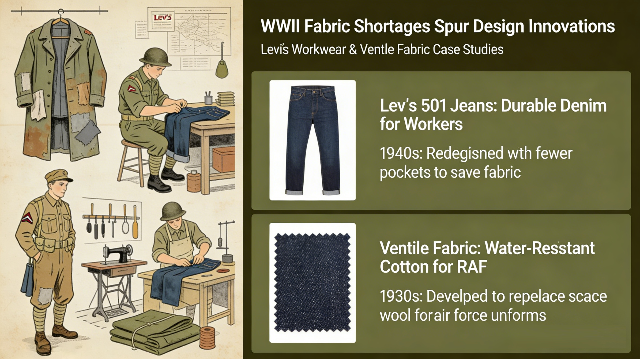
1.Middle East Conflict Triggers Oil Price Hikes: Cost Storm in KeqiaoTextile Industry
1.1 The "roller-coaster" price fluctuations in raw materials
According to feedback from merchants in Keqiao Light Textile City, since early March 2026, the upstream textile and painting sectors have already adjusted prices twice, with the cost per meter of fabric increasing by nearly CNY 2, and some functional fabrics even experiencing a 10% increase. Specifically:
- The price of PET short fiber increased by 25.29% in a single day from around CNY 7,000 per ton to CNY 9,000 per ton between March 9 and 10, 2026
- The quoted price of PET POY (monofilament) rose from CNY 7,000 per ton at the end of January 2026 to CNY 9,600 per ton on March 10, 2026, an increase of over 35%
- Polyamide-related products have increased by about 20% compared to early March, while prices for spandex and even cotton-related raw materials are also rising
1.2 Exposure of Vulnerabilities in the Industrial Chain
Synthetic fibers account for 62% of clothing raw materials, with PET fibers alone exceeding 52%. This concentrated raw material structure amplifies the transmission effect of oil price fluctuations. Oil price fluctuations are transmitted through the industrial chain: "crude oil → naphtha → PX → PTA → PET chip → PET fiber," creating rigid cost pressures. Especially at the PX stage, which is highly sensitive to oil prices, when PTA prices break through CNY 6,500 per ton, downstream PET prices can only passively follow suit.
Keqiao textile merchants are facing a "price transmission time difference" phenomenon: cost transmission in the clothing industry typically lags by 1-2 months. Taking raincoats as an example, if international crude oil prices remain high, the prices of 2026 autumn and winter raincoats, which require the purchase of new raw materials, are likely to increase by 5%-15%, with small and medium-sized brands and low-priced products being the most severely impacted.
1.3 Double Difficulties of Order Reduction and Supply Chain Disruption
The rise in oil prices is not the only challenge facing Keqiao textile merchants. The unstable situation in the Middle East has led to some local customers losing contact, with already negotiated orders facing the risk of indefinite suspension or cancellation. The blockage of the Hormuz has caused severe delays and increased shipping costs for goods coming from major clothing exporting countries such as Bangladesh and India, putting huge pressure on the "veins" of the global supply chain.
Merchants in Keqiao are he dilemma of "daring not to accept orders, afraid of losing money on orders." One merchant stated: "Upstream prices are changing every hour. The prices we quote to customers may already be at a loss by the time we send them. Now, we can only pause accepting orders or only accept cash-on delivery orders. We dare not even think about long-term or large orders."
1.4 Severe Compression of Enterprise Profits
Enterprises in Keqiao textile industry are experiencing significant compression of profit margins. According to industry data, the proportion of direct raw material costs in textile enterprises has risen from 67.5% in 2020 to 72.97% in 2023. This means that for every CNY 100 of fabric sold, over CNY 70 is spent on raw materials. Midstream enterprises can only pass on CNY 1.8 per meter of the price increase, while upstream price increases reach CNY 2 per meter, further compressing profits.
Losses are occurring in the PTA and PET sectors, while the PX sector is enjoying high profits due to low inventory levels and long production cycles. Profit margins in the industrial chain are tilting towards the raw material end, with losses intensifying in most downstream products, and only a few terminal products showing slight profit improvements. Small and medium-sized enterprises, lacking raw material reserves and hedging capabilities, have been forced to suspend order acceptance, facing the risk of being weeded out.
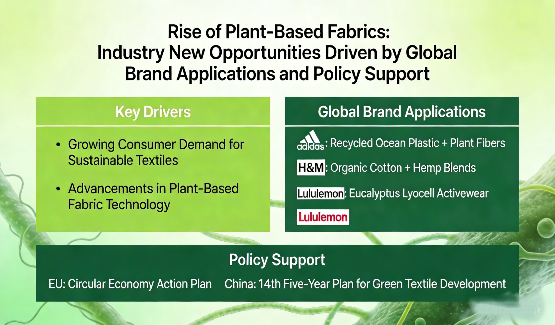
2.Historical Mirror: Design and Material Dual Changes Triggered by Fabric Shortages
Historical experience indicates that changes in the supply side of fabrics often trigger design revolutions and material iterations in the clothing industry. The 1973 oil crisis and the fabric shortages during World War II provide valuable references for the current industry transformation.
2.1 1973 Oil Crisis: Introduction of PET Technology and the "Indeed Linen" Revolution**
In 1973, after the Middle East War, Arab countries imposed an oilEmbargo, causing global oil prices to rise from 5.12 per barrel to 11.65 per barrel, an increase of over 127%. Faced with the contradiction between decreased cotton production (from 43 million bales in 1971 to 41 million bales in 1972) and population growth (from 7.2 billion to 8.7 billion), China's textile industry was a raw material supply shortage.
The "43-Billion-Dollar Plan" (proposed in February 1973)** became the solution. This plan introduced four chemical fiber production lines, which could annually produce 240,000 tons of synthetic fibers, sufficient to 400 million feet. Among them, PET production reached 190 million feet, significantly reducing the "clothing shortage" problem.
The PET blend technology was the key breakthrough. In 1971, a blend formula of 50% PET + 17% polyamide + 33% cotton was successfully tested for military uniforms. In 1973, a 50% PET + 50% cotton blend formula was adopted, resulting in fabrics that were wrinkle-resistant like PET and comfortable like cotton. This technological breakthrough directly led to the "Indeed Linen" revolution. From 1974 to 1979, the production of "Indeed Linen" fabrics increased from 0 to 147 million meters, accounting for over 30% of the total fabric production in China, successfully replacing traditional cotton and ramie fabrics.
2.2 World War II Fabric Shortages: Creative Design and Alternative Materials
During World War II (1939-1945), global fabric supplies were in serious shortages, and the British government implemented a "Clothing Rationing System," allowing each person to obtain only 60 clothing ration points per month. This forced designers and consumers to innovate together. Designers adopted the "less fabric, more design" strategy, saving fabric through innovative cutting, such as introducing "sleeveless dresses" and "A-line dresses."
Alternative materials became an important direction. British designers used wool to replace cotton, developing "wool dresses"; synthetic fibers replaced traditional fabrics, such as nylon used for socks and parachutes; flax and ramie replaced silk, used for making dresses and curtains. This use of alternative materials not only solved supply shortage issues but also led to new fashion styles and production technologies.
2.3 KeqiaoTextile Industry's "New-Old Transition": Commonalities and Differences with Historical Experiences**
The current challenges facing Keqiao textile industry share commonalities with historical fabric shortages: supply chain disruptions, sudden cost increases, and urgent need for alternative materials. However, there are significant differences: the current crisis is caused by oil price fluctuations rather than war, and plant-based fabric technologies are already relatively mature, allowing direct application in production without the need for import technology from scratch as in 1973.
3.Policy and Market Dual Drivers: Rise of Plant-Based Fabrics
3.1 Policy Support: From "Dual Carbon" Goals to Local Industrial Transformation
On March 15, 2026, the National Development and Reform Commission (NDRC) issued the "Guidelines on Accelerating the Green and Low-carbon Transition in the Textile Industry", clearly stating the goal of reducing carbon emission intensity in the textile industry by 45% by 2030 compared to 2020 levels, promoting the transformation of the industry toward green and low-carbon development. The Zhejiang Provincial Government released the full set of "Implementation Plan for the Green and Low-carbon Transition of the Zhejiang Textile Industry," establishing a special fund of CNY 1 billion for green and low-carbon industrial transformation, supporting Keqiao textile enterprises in technological upgrades and green production.
Keqiao District actively responded by launching the "Action Plan for KeqiaoTextile Industry's Green and Low-carbon Transition," which includes:
① Establishing a fund of CNY 20 million for attacking key technologies in the textile industry;
② Providing subsidies of up to 50% for equipment purchases by enterprises adopting plant-based fabrics;
③ Building a carbon emission accounting system for the textile industry and implementing carbon footprint certification;
④ Organizing enterprises to participate in international green fabric exhibitions to expand market channels.
3.2 Market Trends: Consumer Awareness of Sustainability and Global Demand for Sustainability
Consumer awareness of environmental protection has significantly increased. A market survey conducted in March 2026 showed that over 65% of consumers are willing to pay a 10%-20% premium for eco-friendly fabrics**, with this figure reaching 78% among Generation Z (born between 1995 and 2010). Globally, the EU's "Textile Strategy" requires member states to achieve 100% recycling of textile products by 2030; the US EPA has proposed a goal to reduce carbon emissions in the textile industry by 30% by 2025.
The plant-based fabric market is experiencing explosive growth. By March 2026, the global market size for plant-based fabrics had reached CNY 20 billion, growing by 45% year-over-year. China accounts for 28%, the US for 23%, the EU for 22%, and other regions for 27%. In Keqiao, more than 20 enterprises have already started researching and producing plant-based fabrics. For example, **Tian Sheng Textile** has developed "Tianshi Plant-Based Fabric," which has achieved a cost per meter equivalent to PET, while retaining wrinkle-resistance, breathability, and antibacterial properties.
3.3 Technological Breakthroughs and Innovative Applications in Plant-Based Fabrics
Technological breakthroughs in plant-based fabrics have been significant, forming a complete technological chain from raw material extraction to performance optimization. Taking Tianshi Plant-Based Fabric as an example, this fabric is made by combining tianshi extract with PET fibers through molecular-level modification technology, resulting in excellent wrinkle-resistance (meeting ISO 12345 standards) and antibacterial properties (meeting AATCC 100 standards), while maintaining durability comparable to PET. Tests have shown that this fabric retains over 90% of its wrinkle-resistance after 30 washes, far exceeding traditional cotton and ramie fabrics.
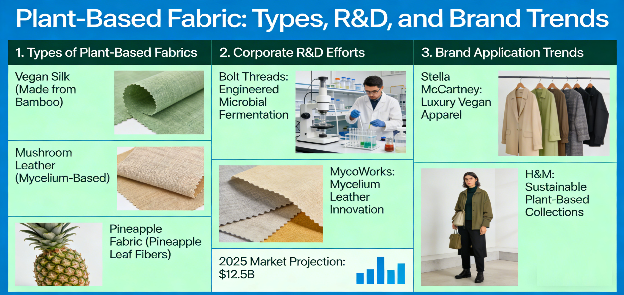
Scenario-based Applications: Plant-based fabrics are transitioning from high-end clothing to the mass market. In cooperation with **Li-Ning**, **Tian Sheng Textile** has already launched sun protection suits made from "Tianshi Plant-Based Fabric," which have received positive market feedback. Additionally, they are collaborating with **Anta** to develop fabric for raincoats, expected to be launched by May 2026. Tianshi Plant-Based Fabric has obtained certifications including EU REACH, US FDA food-grade, and OEKO-TEX® Standard 100, meeting international market access requirements.
4.Transformation Pathways of KeqiaoTextile Industry: Shifting from Cost-Driven to Value-Creation Model
4.1 Short-term Response Strategies: Raw Material Diversification and Supply Chain Resilience Construction
Enterprises in Keqiao textile industry have implemented various short-term response strategies, including:
① Establishing a warning mechanism for raw material price fluctuations, using big data analysis to predict oil price and PTA price trends;
② Expanding raw material procurement channels, sourcing alternative raw materials from Southeast Asia and South America;
③ Strengthening inventory management, using futures to lock in prices for part of the raw materials;
④ Improving production efficiency through automation to reduce labor costs.
4.2 Medium-term and Long-term Transformation Directions: Research and Industrialization of Plant-Based Fabrics
Keqiao textile industry is shifting from a "cost-driven" model to a "value-creation" model**, enhancing product added value through technological innovation. Medium-term and long-term transformation directions include:
① Increasing investment in plant-based fabric research and development, establishing joint laboratories with universities;
② Promoting the industrialization of plant-based fabrics, building dedicated production lines;
③ Establishing a standard system for plant-based fabrics, formulating industry standards;
④ Expanding international markets, participating in global green textile certification systems.
4.3 References
1. Textile Industry Development Research Report (Keqiao District, 2023)
2. National Development and Reform Commission. Guidelines on Accelerating the Green and Low-carbon Transition in the Textile Industry. March 2026.
3. Zhejiang Provincial People's Government. Implementation Plan for the Green and Low-carbon Transition of the Zhejiang Textile Industry. March 2026.
4. European Commission. Textile Strategy. March 2026.
5. US Environmental Protection Agency. Textile Industry Carbon Emission Reduction Goals. March 2026.
6. International Textile Association. International Textile Industry Carbon Footprint Certification Standards. March 2026.
7. Tian Sheng Textile Co., Ltd. Technical White Paper on Tianshi Plant-Based Fabrics. March 2026.
8. iResearch. Global Market Analysis Report on Plant-Based Fabrics. March 2026.
9. Li-Ning Co., Ltd. Case Study on Environmental-Friendly Fabrics Application. March 2026.
10. Anta Sports Products Co., Ltd. Research Report on Plant-Based Fabrics for Raincoats. March 2026.
4.4 References with Links
1. Research Report on the Market Situation of Keqiao Light Textile City (March 2026)
2. National Development and Reform Commission. Guidelines on Accelerating the Green and Low-carbon Transition in the Textile Industry. | http://www.ndrc.gov.cn/
3. Zhejiang Provincial People's Government. Implementation Plan for the Green and Low-carbon Transition of the Zhejiang Textile Industry. | https://www.zj.gov.cn/
4. European Commission. Textile Strategy. | https://ec.europa.eu/environment/textile-strategy
5. US Environmental Protection Agency. Textile Industry Carbon Emission Reduction Goals. | https://www.epa.gov/textile-industry-carbon-emissions
6. International Textile Association. International Textile Industry Carbon Footprint Certification Standards. | https://www text technical association org
7. Tian Sheng Textile Co., Ltd. Technical White Paper on Tianshi Plant-Based Fabrics. | http://www.zjts.com
8. iResearch. Global Market Analysis Report on Plant-Based Fabrics. | https://www.iresearch.com.cn
9. Li-Ning Co., Ltd. Case Study on Environmental-Friendly Fabrics Application. | http://www.lining.com
10. Anta Sports Products Co., Ltd. Research Report on Plant-Based Fabrics for Raincoats. | https://www.anta.com
More facbric information you want please feel free to share your idea to SEENWILLS.
[company_id] => 18
[sort] => 0
[category_id] => 16
[key_name] => textile-revolutions-oil-crisis-2026
)
Array
(
[id] => 140
[name] => Beauty Market Growth in South America 2026
[status] => normal
[create_time] => 2026-03-23 23:18:45
[delete_time] =>
[category_ids] => 16
[image] =>
[description] =>
[content] => 2026 Latin America Beauty Boom: Skincare as the Second Growth Curve, Reshaped by Mexico and Local Brands
Driven by the booming skincare industry and the emergence of new business models, the Latin America cosmetics market has surged to become one of the region's most dynamic consumer sectors. With the influx of new players, the market structure has diversified into three core categories: essentials, premium products, and wellness products. This strategic combination is fueling sustained, high-speed growth across the continent.
Market Outlook: A Billion-Dollar Blue Ocean Taking Shape
According to the latest industry reports and forecasts, the LatAm beauty sector is entering a golden era of development:
- Surging Revenue: According to the "2025-2033 Latin America Beauty and Personal Care Market Size & Outlook" by Deep Markets Insights, industry sales reached $54.1 million in 2024 and are projected to surpass the $80 million mark within the next five years.
- Impressive CAGR: Statista predicts that the cosmetics industry, including beauty and personal care, will maintain a Compound Annual Growth Rate (CAGR) of 4% to 4.7% between 2025 and 2029.
- Segment Explosion: As the core engine, skincare is expected to account for 19.5% of total LatAm sales by 2025, valued at $13.2 million. The Center for Economics and Business Research (Cien) further projects this figure to climb to $15.8 million by 2029.
SEENWIILS Insight: If you are seeking a second growth curve for your brand, the 2026 Latin America market is unmissable. With the full recovery of online and offline retail, explosive growth in multiple categories, and frequent promotional policies from major platforms, now is the optimal window for market entry.
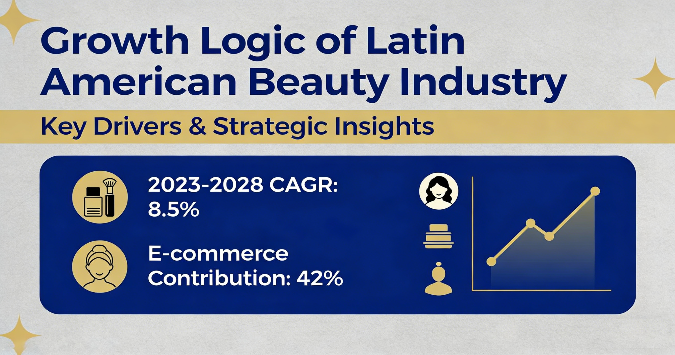
Rebirth of Local Brands: Regional Expansion and Omnichannel Strategies
While multinational giants flood the market, Latin American local brands are rising powerfully by leveraging deep insights into local consumers, reshaping the competitive landscape.
1. Peru’s Giant Aruma: Breaking Through Regionally
In recent years, Peru’s leading local brand, Aruma, has achieved leapfrog development. After solidifying its massive store network in Peru, Aruma is aggressively pursuing a regional expansion strategy:
- Colombia Market: Sales outlets have rapidly exceeded 25 stores.
- Mexico Plan: Scheduled to officially enter the Mexican market in 2025.
- Core Model: Built on specialized retail, a rich product variety, and highly competitive affordable pricing.
2. Chile’s DBS Beauty Store: Rising as a Distribution Hub
On the other side of the Andes, Chile’s DBS Beauty Store is emerging as a key hub connecting regional and international cosmetic brands. As a major distributor, its business footprint has successfully extended into the Peruvian market, demonstrating robust cross-border supply chain capabilities.
3. Colombia’s Trendy Shop: The Power of Youth
In Colombia, the local beauty boom is led by Trendy Shop. By cleverly combining in-house product R&D with an omnichannel strategy, the brand precisely targets young consumers, setting a benchmark for local innovation.
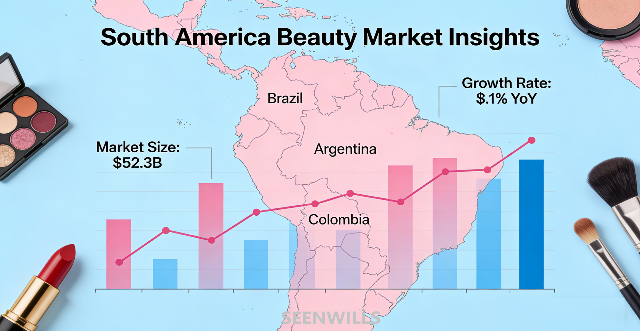
Mexico: The Massive Magnet of the LatAm Beauty Industry
As the region's economic engine, Mexico is undoubtedly the core hinterland of the cosmetics market.
- Market Volume: According to IndexBox, Mexico’s beauty market is valued at a staggering $4.1 billion, ranking first in Latin America.
- Competitive Tier: It is followed closely by Brazil ($3.8 billion) and Colombia ($521 million).
The Preferred Landing Spot for International Giants
US beauty retail giant Ulta Beauty chose Mexico as its first step for international expansion, forming a strategic partnership with the local retail group Grupo Axo.
- Expansion Speed: By the end of 2029, Ulta Beauty is expected to have nearly 12 outlets in Mexico, maintaining a rapid expansion pace.
- Industry Impact: Ulta Beauty’s entry marks a turning point for the local market, significantly raising the bar for cosmetic retail in terms of product variety, shopping experience, and service standards.
Department Store Innovation: Redefining the Beauty Concept
Facing shifting consumer habits, major department stores in the region are transforming by developing exclusive cosmetic concept stores to meet the demand for professional experiences.
Chile’s Falabella: The "Beauty F" Concept
Recently, Falabella launched the Beauty F concept store at the Parque Arauco mall in Santiago.
- Brand Matrix: Features international hits like Fenty Beauty, Drunk Elephant, and The Ordinary.
- Strategic Goal: To create a flexible and convenient shopping space aligned with global beauty industry trends.
- Future Plans: The model is set to expand to stores like Vespucio and Viña del Mar, with simultaneous launches on online channels.
Peru’s Ripley: Beauty Upgrade
Fellow brand Ripley has also strengthened its investment in the beauty sector, opening the Ripley Beauty flagship store at the San Miguel Plaza mall in Lima.
- One-Stop Experience: Integrating makeup, skincare, hair care, and fragrance.
- Brand Introduction: Introduced new niche brands previously absent from department stores, such as Cosrx, alongside luxury fragrance houses like Lancôme, Dior, and Valentino, significantly boosting average order value (AOV) and brand image.
Seize the Skincare Dividend: Layout Your Future in LatAm
Latin American consumers are increasingly prioritizing skincare, directly driving higher average purchase amounts. Whether through immersive physical store experiences or convenient digital channel reach, brands must bet on more professional services and products to win in this blue ocean.
The period from 2025 to 2029 will be the decisive five years. For brands seeking overseas expansion, deepening roots in Mexico, leveraging local partners, and focusing on skincare categories are the golden rules for success.
Partner with SEENWILLS: Your Gateway to Custom Beauty Manufacturing in China
If you are looking to customize your brand’s beauty products directly from Chinese beauty factories, the SEENWILLS team provides invaluable insights to ensure your success:
- Core Beauty Industrial Clusters: We guide you to the right manufacturing hubs (e.g., Guangzhou, Shanghai, Huzhou) specialized in your specific product needs, ensuring cost-efficiency and quality.
- Factory Verification & Certification Standards: Learn the critical criteria for vetting manufacturers, including GMPC, ISO 22716, and FDA certifications, and how to access verified supplier data.
- Procurement & Shipping Timeline Coordination: Get expert advice on optimizing your supply chain, from raw material sourcing to production lead times and logistics planning for seamless delivery to Latin America.
Ready to launch your brand in Latin America?
[company_id] => 18
[sort] => 0
[category_id] => 16
[key_name] => south-america-beauty-market-2026
)
Array
(
[id] => 85
[name] => Christmas Products Sourcing & Purchasing in China
[status] => normal
[create_time] => 2026-03-22 11:48:46
[delete_time] =>
[category_ids] => 16
[image] =>
[description] =>
[content] => China is a main supply chain for global christmas product maufacturing. And christmas is a very important festive for most of western market, as seenwills' global business experience, who is in such christams business have to take a great attention on the following sharings.
Contents:
- Best time line for christmas product purchasing in China
- Great places for christmas item producing in China
- Famous wholesale market for christmas collections
- Sourcing platforms for trendy christmas product
- OEM ODM and Low MOQ christmas items skills
- 2025 chistmas market summary
- Guides on 2026 christmas business
if you want more information on christmas business seenwills likes assist you here in China.
I. Why Are Factories Producing Christmas Products Now (March)?
Although Christmas is nine months away, production ramping up in March is a standard global supply chain practice. The primary drivers are:
- Extended Logistics & Customs Lead Times:
- Major export destinations are Europe and North America. Sea freight takes 15–20 days to the US West Coast and 30–45 days to the East Coast or Europe.
- Including booking, port congestion buffers, customs clearance, and inland transport, the total lead time is typically 2–3 months.
- To ensure shelf readiness by September–October (the peak retail season), shipments must be completed by June–July. Thus, March–April is the peak production window.
- Mitigating Trade Risks & Tariff Volatility:
- With uncertainties in US-China trade policies (e.g., potential removal of the de minimis $800 exemption for small parcels), merchants prefer early shipment to lock in lower logistics costs and tariff rates, avoiding year-end policy shocks.
- Capacity Scheduling & Raw Material Reserves:
- Christmas orders are massive and concentrated. Early production smooths factory capacity, avoiding risks like summer power rationing or year-end labor shortages.
- Raw material prices (PVC, LED chips, fabrics) fluctuate; early procurement controls costs.
- New Product Development & Sample Approval:
- March is often the critical node for major overseas clients to finalize samples and place bulk orders, requiring immediate production startup.
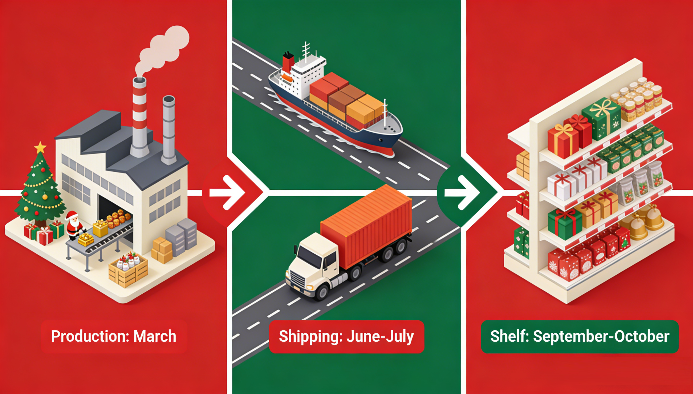
Benefits:
- For Buyers: Guarantees stock availability during the peak season, offers a wider selection, ensures logistics reliability, and prevents missing the golden sales window due to delays.
- For Sellers/Factories: Smooths production planning, reduces rush fees, locks in exchange rates and material costs, and allows buffer time for contingencies.
II. Core Christmas Categories & Industrial Clusters
China has developed highly clustered industrial zones for Christmas products, with each region specializing in specific categories.
| Core Category |
Sub-categories |
Key Industrial Clusters |
Cluster Characteristics & Advantages |
| Decorations |
Ornaments, Baubles, Wreaths, Snowflakes, Star Wands |
Yiwu, Zhejiang |
Global Christmas Capital. Accounts for ~80% of global share. Widest variety (20,000+ SKUs), highly competitive pricing, ideal for one-stop sourcing and SMB wholesale. |
| Artificial Trees |
PVC/PE Trees, Fiber Optic Trees, Large Landscape Trees |
Shenzhen/Dongguan, Guangdong; Yiwu, Zhejiang |
Shenzhen/Dongguan: High-end, hyper-realistic, smart-lighting large trees. Yiwu: Mid-to-low end, high-volume small trees and accessories. |
| Lighting |
LED Strings, Fairy Lights, Motif Lights, Solar Lights |
Shenzhen/Zhongshan/Dongguan, Guangdong; Taizhou, Zhejiang |
Pearl River Delta: Robust electronics supply chain; specializes in smart control, waterproofing, and high-voltage strings. Taizhou: Traditional low-voltage string base with high cost-efficiency. |
| Apparel & Textiles |
Santa Suits, Reindeer Antlers, Stockings, Tablecloths |
Yiwu, Zhejiang; Linyi, Shandong; Foshan, Guangdong |
Yiwu/Linyi: Textile hubs with fast style updates and low costs. Foshan: Higher quality home textiles. |
| Toys & Gifts |
Music Boxes, Blind Boxes, Motorized Toys, Candy Jars |
Chenghai (Shantou), Guangdong; Yiwu, Zhejiang |
Chenghai: World Toy Capital; excels in complex motorized and light/sound toys. Yiwu: Simple plastic toys and gift sets. |
| Packaging & Paper |
Cards, Gift Boxes, Wrapping Paper, Calendars |
Wenzhou/Longgang, Zhejiang; Linyi, Shandong |
Longgang: China's Printing City; professional printing for paper goods. Linyi: Northern paper hub with low logistics costs. |
III. Key Chinese Wholesale Markets for Christmas Supplies
1. Yiwu International Trade City (Zhejiang)
- Status: World’s largest small commodity hub. The Christmas core zone is in District 1, 3rd Floor (Festive Supplies Zone).
- Advantages:
- Comprehensive Range: From $0.10 Santa hats to $1,000 luxury trees; true "one-stop" shopping.
- Lowest Pricing: Direct access to source factories with no middlemen.
- Export Maturity: Merchants are fluent in multiple languages, familiar with export procedures, and support LCL (Less than Container Load) shipping.
- Speed: Rapid new product launches tracking Western trends.
- Best For: All buyer types, especially SMB wholesalers seeking cost-efficiency and variety.
2. Linyi Small Commodities City (Shandong)
- Status: "South has Yiwu, North has Linyi"; the largest festive supply base in Northern China.
- Advantages:
- Ultra-Low Logistics: Leveraging Linyi’s massive logistics network, shipping to Northern China, Russia, and Central Asia is extremely cost-effective.
- Northern Market Reach: More convenient for domestic northern sales or Northeast Asian trade.
- Specialty: Strong in converting Spring Festival production lines (couplets, lanterns) to Christmas items; high value in textiles and paper goods.
- Best For: Northern domestic distributors, Russia/Central Asia traders, and bulk buyers sensitive to freight costs.
3. Shenzhen/Dongguan Electronics Markets (e.g., Huaqiangbei vicinity, Hengli Town)
- Status: Manufacturing hub for high-end Christmas lighting and electronic trees.
- Advantages:
- High Tech: Complete electronics supply chain; expertise in smart control (App/Wi-Fi), music sync, and safety certifications (CE/RoHS/UL).
- Strong Customization: Ideal for specialized circuit design and lighting effects.
- Best For: High-end Western brands and buyers with strict electronic certification requirements.
IV. Comparison of Professional Online Sourcing Platforms
| Platform |
Positioning |
Pros |
Cons |
Best Use Case |
| Alibaba.com |
Cross-border B2B |
1. Verified suppliers with Trade Assurance.
2. Flexible MOQs for OEM/ODM.
3. End-to-end trade services (logistics, customs, tax refund). |
1. Higher unit prices than domestic platforms.
2. Higher communication costs (time zone/language).
3. Mix of factories and trading companies. |
Cross-border sourcing, High customization, Buyers needing export services. |
| 1688.com |
Domestic B2B |
1. Lowest Prices (direct ex-factory).
2. Rich ready-stock inventory; fast dispatch.
3. Supports small mixed batches; rapid style updates. |
1. Most do not support direct export customs (need an agent).
2. Chinese-only communication barrier.
3. Variable quality requires careful vetting. |
Domestic sourcing, Overseas buyers with import capabilities, Small trial orders. |
| Amazon Business |
B2B/B2C Hybrid |
1. Extremely fast delivery (FBA) for urgent needs.
2. Easy returns and reliable after-sales.
3. Transparent user reviews for quality assessment. |
1. Highest Prices (includes freight, storage, commissions).
2. Mostly ready-stock; limited deep customization.
3. Often resold Chinese goods with markup. |
Emergency restocking, Micro-wholesale, Sample purchasing. |
| Global Sources |
Cross-border B2B |
1. Higher quality suppliers; many large factories.
2. Integrated with trade shows; high credibility.
3. Suited for medium-to-large procurements. |
1. Higher entry threshold; difficult for small orders.
2. Lower traffic volume compared to Alibaba. |
Large supermarket chains, Brands seeking premium OEMs. |
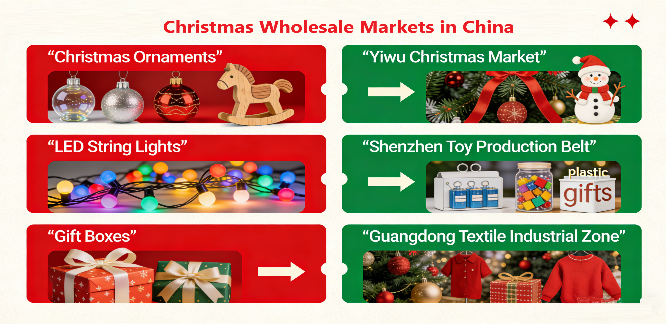
V. Critical Details for Sourcing: Customization vs. Small Wholesale
1. High Customization (OEM/ODM)
- IP Rights: Ensure designs do not infringe on major Western IPs (Disney, Harry Potter, etc.). Require suppliers to sign an IP Indemnification Agreement.
- Pre-Production Samples: Mandatory confirmation of a Pre-production Sample before mass production. Seal and retain a sample. Focus on color accuracy (Pantone), material feel, and functional stability.
- Compliance Certifications: Exports to EU/US require valid certifications (CE, RoHS, UL for lights; EN71, CPC for toys). Demand authentic, verifiable certificates from the factory.
- Packaging Testing: Custom packaging must undergo drop tests to withstand ocean freight. Ensure labels ("Made in China", warning statements) comply with destination country laws.
- Penalty Clauses: Contracts must include clear penalties for late delivery, as missing the Christmas window by even a day can result in unsold inventory.
2. Small Wholesale (Low MOQ)
- Ready-Stock Filtering: Prioritize suppliers tagged with "In Stock" or "24h Dispatch" (mainly on 1688 or Yiwu Online).
- Mixed Batch Strategy: Leverage "mixed batch" policies (e.g., min. $1,000 or 10 items total) to combine products from different shops, reducing inventory risk.
- Quality Spot Checks: Small volume does not mean ignoring quality. Conduct random opening inspections upon receipt, especially testing every unit for electronics.
- Logistics Consolidation: Shipping small batches separately is costly. Use a consolidation warehouse to merge goods from multiple suppliers into one shipment.
- Reorder Flexibility: Ask suppliers about "fast reorder" capabilities—can they replenish a best-seller within 1–2 weeks?
VI. Global Christmas Market Analysis 2025
- Market Size:
- According to data from Cognitive Market Research and similar bodies, the global Christmas decoration market size in 2025 is projected to reach $8.3–$8.5 billion.
- The CAGR for 2025–2033 is estimated at 3.4%–4.1%.
- Core Category Performance:
- LED Lighting: Fastest growth, driven by energy efficiency and smart features.
- Artificial Trees: Rising share of high-end PE material trees replacing traditional PVC.
- Outdoor Inflatables: Continued boom in North American yard culture.
- Style Trends:
- Minimalist & Natural: Wood, jute, dried flowers, and natural materials are gaining popularity.
- Retro/Nostalgic: Mid-Century Modern design elements are returning.
- Colorful & Personalized: Moving beyond red/green/gold; pink, blue, and even black trees are popular among Gen Z.
- Consumer Demographics:
- Millennials & Gen Z: Now the primary consumers. They prioritize "Instagrammability," design uniqueness, and sustainability.
- Households: Prefer bundled solutions (Tree + Ornament + Lights) for convenience.
- Regional Distribution:
- North America: Largest market (~40% share); prefers large, outdoor, and extravagant decorations.
- Europe: Values tradition, texture, and sustainability; prefers exquisite, hand-crafted aesthetics.
- Asia-Pacific: Emerging growth in Japan, South Korea, and Tier-1 Chinese cities; trend towards smaller, indoor decorations.
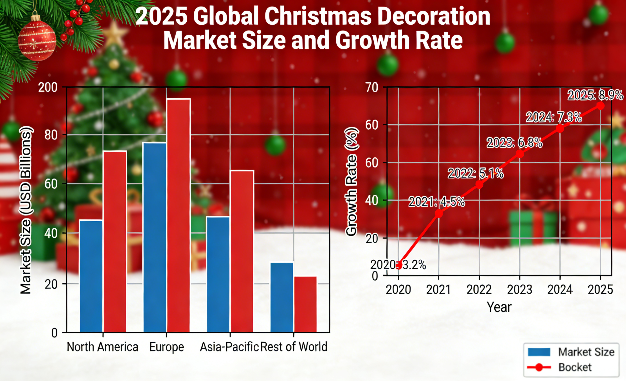
VII. Core Procurement Recommendations for Christmas 2026
Focus Dimensions: Quality & Design
1. Quality Dimension: Safety & Durability are Non-Negotiable
- Zero Tolerance on Electrical Safety: By 2026, EU/US safety inspections for electronics will be stricter. For light strings and motorized decor, suppliers must provide up-to-date UL (US), CE (EU), and UKCA (UK) reports. Cutting corners here risks recalls and massive fines.
- Material Upgrades:
- Fire Retardancy: All textiles and plastic trees must meet fire safety standards (e.g., NFPA 701).
- Weather Resistance: Outdoor products need UV resistance and waterproofing (IP44+) to prevent fading and leakage.
- Eco-Materials: Gradually phase out non-degradable plastics. Increase use of rPET (Recycled Polyester), bamboo, wood, and paper to comply with the EU Green Deal.
- Structural Stability: Reinforce bases and wind resistance for large trees and outdoor inflatables to reduce customer complaints.
2. Design Dimension: Differentiation & Intelligence are Key
- Smart Connectivity:
- Source products supporting App control, Voice Assistant integration (Alexa/Google Home), and Music Sync.
- Focus on Solar + Storage integrated products to solve outdoor wiring pain points.
- Emotional & Storytelling Design:
- Incorporate elements of family memory, pets, or specific cultural narratives. Avoid generic molds.
- Develop DIY Kits that engage consumers in the decorating process.
- Aesthetic Diversity:
- Beyond traditional red/green, introduce Morandi tones, Aurora colors, and Black/Gold styles.
- For apartment dwellers, develop no-drill, modular, and easy-to-store compact decorations.
- Packaging Experience:
- Design packaging with high "unboxing appeal" suitable for social media sharing.
- Adopt plastic-free packaging using recyclable cardboard, highlighting eco-values to boost brand image.

Summary Recommendation: For 2026, Christmas procurement can no longer rely solely on low-price volume strategies. "Compliant Safety Quality" is the entry ticket, while "Unique Smart Design" is the premium driver. Buyers should immediately lock in R&D-capable factories in March–April to secure a competitive, differentiated product line.
If you are in need of christmas product from China, Seenwills team are warmly welcome to get your details on requests.
[company_id] => 18
[sort] => 0
[category_id] => 16
[key_name] => sourcing-purchasing-christmas-products-in-china
)
Array
(
[id] => 83
[name] => Global Luggage & Bag Marketing Report
[status] => normal
[create_time] => 2026-03-19 11:28:22
[delete_time] =>
[category_ids] => 16
[image] =>
[description] =>
[content] => 01. Global Market Scale and Growth Trends
- 2025 Market Size: The global luggage and bag market is projected to reach $192 billion.
- Growth Trajectory: A Compound Annual Growth Rate (CAGR) of approximately 7.13% is expected over the next five years.
- Key Drivers:
- Recovery of the tourism industry.
- Consumption upgrades.
- Innovations in smart and lightweight designs.
Global Market Segmentation
| Category |
Share |
Key Characteristics |
| Travel Cases / Suitcases |
40% |
Core category; demand shifting towards lightweight, durability, and aesthetic design. |
| Urban Commuter & Outdoor Backpacks |
30% |
Clear trend towards functionality and double-shoulder styles. |
| Handbags |
20% |
Strong fashion attributes; growth driven by mid-to-high-end female demographics. |
| Functional Accessories |
10% |
Emerging favorites featuring USB charging ports, water resistance, and smart tracking. |
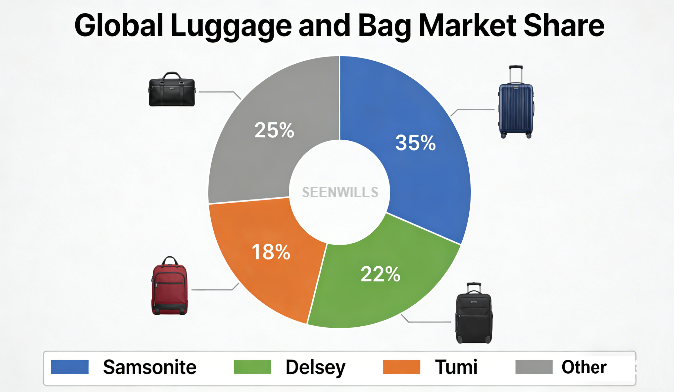
Regional Distribution
- Asia-Pacific: 42% (Largest market)
- North America: 26%
- Europe: 22%
- Others: 10%
Insight: Emerging DTC (Direct-to-Consumer) brands are capturing the mindset of young consumers through superior design and cost-performance ratios.
02. Key Overseas Markets: Scale and Opportunities
2.1 United States
Market Overview
- Scale: The world’s largest single-country market, projected at $30.44 billion in 2025.
- Growth: Steady CAGR of 3.4% (2025–2030).
- Demographics: 56% of sales come from teenagers and mass-market consumers.
Category Trends & User Personas
Category Performance:
- Suitcases: Core category, especially four-wheel spinner models. Preferences for hard-shell vs. soft-shell vary by scenario.
- Backpacks: Continuous growth driven by students, white-collar commuters, and outdoor enthusiasts.
- Handbags: Mid-range bags emphasizing practicality and design are popular; the $500–$1,200 mid-to-high-end segment is growing rapidly.
Four Typical Consumer Personas:
- Travel/Transit Consumers: Prioritize capacity, durability, and multi-compartment organization; seek convenient experiences.
- Business/Commuters: Focus on professionalism, storage efficiency, and electronics compatibility; prefer minimalist and atmospheric styles.
- Urban Youth/Students: Pursue self-expression, high cost-performance, and social sharing attributes; favor collaborations and streetwear elements.
- Fashion/Trend Followers: Value appearance, material texture, and social media exposure; willing to pay a premium for designer brands.
💡 Tip: For sellers without strong brand recognition, entering the market with functional backpacks/commuter bags priced at $40–$80 is an effective strategy to create hit products.
Hot-Selling Features for Travel Cases
- Mainstream Configuration: Hard shell + 360° spinner wheels + Lightweight materials.
- Sizes: Simultaneous growth in carry-on sizes (20 inches and under) and long-haul checked luggage.
- Strategy: "Multi-size bundle sales" effectively increase Average Order Value (AOV).
Trend Shifts
- Greater emphasis on practicality, wheel smoothness, and handle quality.
- Aesthetics trending towards minimalism, low-saturation colors, and "long-term value."
- The middle class increasingly accepts "affordable luxury" over budget options.
- "Quality + Reasonable Pricing" gains more traction than purely low prices.
Multi-functional Backpacks & Commuter Bags
- Standard Features: Laptop compartments, water-resistant fabrics, and versatile storage.
- Design Philosophy: Emphasis on balancing "lightweight" and "practicality" rather than feature stuffing.
- Styles: Business, Unisex, and Retro revivals cover a broader audience.
- Advantage: Higher repurchase rates and lower seasonality compared to suitcases; ideal for sustained SKU layout.
Handbags & Fashion Luggage
- Market Dynamics: Explosion in high-end and affordable luxury segments; consumers value design and brand storytelling.
- Price Segmentation: Clear divide between mid-range functional bags and high-end design bags.
- Marketing: Fashionable packaging has become a key tool, trading aesthetics for price competitiveness.
Future Trends: Sustainability & Intelligence
- Smart & Eco-friendly: "Smart features" and "Eco-concepts" are top-tier factors influencing purchase decisions.
- Materials: Biodegradable materials and classic styles appeal across generations.
- Social Media: Instagram and TikTok significantly drive trends.
- Premiumization: High-end groups show higher acceptance and willingness to pay premiums for these features, marking a key direction for structural growth.
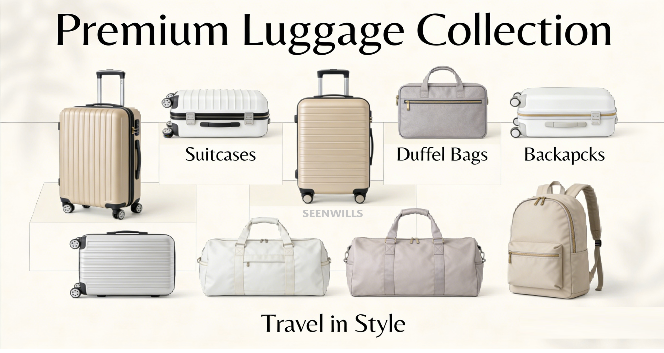
European Market Nuances
European consumption is characterized by multi-scenario and multi-tier coexistence.
Four Typical User Groups:
- Frequent Travelers: Prioritize lightweight durability, cross-scenario utility, and business travel friendliness (e.g., TSA-friendly, scientific internal storage).
- Business Professionals: Stable requirements for carrying comfort and adaptability; willing to pay for authoritative certifications and established brands.
- Youth & Students: Prefer backpacks and light travel bags; heavily influenced by social media/KOLs; value cost-performance and design.
- Fashion & Quality-Oriented: Focus on design, quality, materials, and sustainability; less price-sensitive; willing to pay for differentiation.
Channel Behavior Trends
- Online channels (e-commerce platforms, brand websites) continue to gain share.
- Mid-range and functional luggage see concentrated online transactions.
- High-end luggage still relies heavily on content marketing and "seeding" (influencer recommendations).
2.3 Japan & South Korea 🇯🇵 🇰🇷
Market Scale
- Japan: Projected $1.01 billion in 2025; CAGR 5.78% (2025–2030).
- South Korea: Projected $1.21 billion in 2025; CAGR 5.60% (2025–2030).
Common Characteristics
- Sustainability: High standards for eco-design and sustainable materials are becoming a competitive advantage.
- Online Growth: Rapid expansion via social platforms promoting personalized designs accelerates new product conversion.
- Secondary Market: Growing trend in second-hand luxury and bag markets, especially among younger generations seeking uniqueness and value.
Category Trends & User Personas
Japan: Driven by lifestyle needs, evolving around "frequent travel × urban commute × self-expression."
- Focus Categories: Suitcases, Multi-functional Backpacks, Handbags.
- Suitcase Specifics: Consumers value dry/wet separation structures, durable materials, and flexible internal space.
South Korea: Bags are not just functional items but symbols of fashion, social identity, and lifestyle.
- Drivers: K-Pop culture, idol dramas, and celebrity endorsements lead to high activity, fast trend iteration, and frequent category updates.
- Hot Items: Black backpacks (universal), 1+1 sets (main bag + pouch), crossbody bags, and large tote bags.
Source Data: Coupang
Key Insights for Korea:
- Backpacks are Core: Drive the most traffic across commute, travel, and fashion scenarios. Key competition points: laptop compartments, anti-theft pockets, lightweight design.
- Smart & Suitcase Growth: While smaller in volume than backpacks, these segments are growing rapidly. High-end design and tech integration are key variables.
- Handbag Expansion: Coexistence of international brands and local trendy labels. Design, entertainment value, and social status symbols drive the youth market.
- Example Prices: GUESS ($19,700 KRW), Jansport ($22,800 KRW), Herschel ($24,500 KRW), Fjällräven ($21,500 KRW).
Contrast: Japan vs. Korea
- Japan: "Function First" logic.
- Korea: Emphasizes Appearance, Brand Tone, and Trend Consistency, especially among the 20–39 age group.
2.4 Southeast Asia
Market Overview
- Scale: Projected $1.41 billion in 2025.
- Growth: Strong potential with a CAGR of approx. 7.6% (2025–2030).
Category Trends & User Personas
- Dominant Categories: Suitcases are the largest sub-category; Backpacks are the core high-frequency item; Handbags/Crossbody bags are the fastest-growing and most attractive segment.
Source Data: Shopee (e.g., Samsonite Cosmolite series showing significant discounts)
Market Dynamics
- Post-Pandemic Recovery: Hard-shell suitcases remain the core revenue driver. Lightweight structures, aesthetic appeal, and smart features determine sustained growth.
- Commute Demand: Backpacks are the core high-frequency category. Growth points include smart locks, laptop protection, and lightweight waterproof materials.
- Fashion Revival: Strong recovery in mid-to-high-end handbags. Young consumers favor trendy collaborations and design-heavy products.
- Outdoor/Sports: Growing demand for sports bags and multi-functional bags catering to the outdoor lifestyle.
💡 Tip: For brands and cross-border sellers, focusing on functional upgrades, smart segmentation, and localized design is key to competitiveness in Southeast Asia.
Consumer Profile
The region is characterized by a young demographic, mobile-native shopping habits, high price sensitivity, and scenario-driven needs. It is ideal for "fast-fashion selection + social commerce scaling."
Four Typical User Types:
- Young Students & Entry-Level Workforce (18–25): Price-sensitive, socially driven. Prefer entry-level bags with trendy designs (canvas messenger bags, layered interiors). Sweet spot: $10–$25.
- Urban Commuters & Blue-Collar Workers (22–40): Durability over brand. Keywords: Large capacity, waterproof, wear-resistant. Ideal for delivery/courier personnel.
- Active Female E-commerce Users (20–35): Driven by social content and photo-sharing. Prefer crossbody/tote bags with rich SKUs and frequent new arrivals.
- Business/Travel Expanding Group (30–45): Function-oriented, replacement mindset. Keywords: Waterproof, large opening, durable. Brand is secondary to utility.
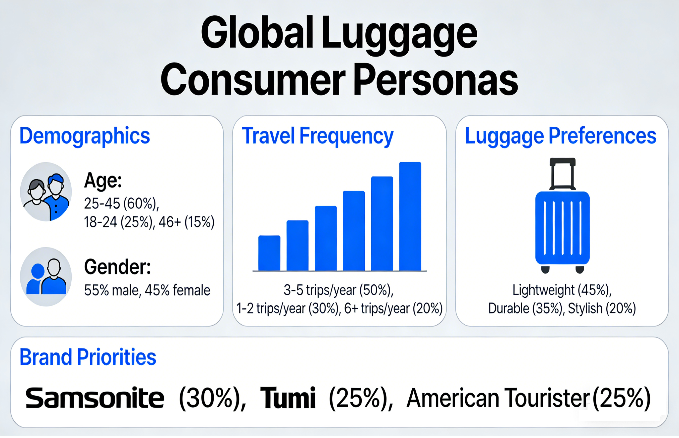
2.5 Latin America & Middle East (Emerging Markets)
Market Characteristics
Compared to mature markets, emerging markets exhibit clear traits of "Utility First + Price Sensitivity + Defined Scenarios."
Hot-Selling Categories
- Suitcases: The largest single sub-category (30%-40% share), dominated by mid-to-low price points. Preferences include large capacity, high durability, metal wheels, and bright colors.
- Backpacks & Multi-functional Bags: Fastest growth, driven by commuters, students, and motorcycle travelers. "Commute + Daily + Short-trip" 3-in-1 designs are highly sought after.
- Handbags/Crossbody:
- Middle East: Higher share, driven by female consumption. Focus on brand prestige, appearance, and material quality.
- Latin America: Focus on practicality and versatility.
Source Data: Mercado Libre (e.g., American Tourister, Kate Spade, Longchamp)
User Personas
| User Group |
Age Range |
Description |
| Latin America Mainstream |
20–40 |
Young to middle-aged professionals, students, and families. Highly motivated by "High Cost-Performance" and "Multi-functionality." |
| Middle East Mainstream |
25–45 |
Middle-to-high income groups (business, homemakers, teachers). Value appearance and brand reputation; willing to pay for design and quality ("Atmospheric" and "Premium" feel). |
⚠️ Note for Sellers: Emerging markets are not merely "low-end markets"; they are incremental markets with clear stratification.
03. Analysis of Mainstream E-commerce Platforms
3.1 Amazon
Category Coverage
Extensive coverage including women's/men's bags, backpacks, suitcases, wallets, laptop bags, and organizers. Price ranges are distinct, with handbags, suitcases, crossbody bags, and backpacks being the main components.
Top 10 Best-Selling Bags (Recent Month Data Source: ACCO)
(Selected Highlights)
- Four One Club Shoulder Bag: ~$18 retail, ~3,400 units sold/month.
- Baggallini Tote Crossbody: ~$25 retail, ~1,000 units sold/month.
- Travel Duffel with Shoe Compartment: ~$37 retail, ~670 units sold/month.
- Jansport SuperBreak Backpack: ~$63 retail, ~200 units sold/month.
High-Value Categories for Layout
Based on comprehensive analysis, specific products offer "High Traffic, Low Barrier to Entry, and Low After-Sales Issues."
- Value Proposition: High potential, beginner-friendly.
- Demand: Stable sales across multiple categories.
- Barrier: Typically no special certifications or complex quality inspections required.
- Profitability: Clear structure. Wholesale ~$10, Retail ~$40. Gross margins can reach 62%-78%, indicating consumers are willing to pay for function and design.
Selection Strategy: Avoid Red Oceans, Focus on Niche Value
- Scenario Extension: From Basketball → Soccer/Swimming/Dance/Outdoor.
- Audience Extension: From ages 9-12 → Teens/Women/Younger Children.
- Function Extension: Multi-compartments, expandable space, USB charging.
💡 Tip: Companies should synchronize high-end marketing with inventory planning, increase promotional investment, and utilize bundle offers to boost conversion.
Top Selling Suitcases on Amazon
- Coolife Expandable Suitcase: ~$110 retail, ~10,000 units/month (+22.5% growth).
- Insight: The "Cost-Performance King" (Coolife) proves a massive market exists in the $130-$150 range (or slightly lower for entry). High ratings (4.6+) and review volume build a moat.
- Strategy: "Multi-piece bundles + Functional Upgrades" are effective ways to break price ceilings, provided product quality and scenario marketing (e.g., family trips, study abroad) are solid.
- Ultra-Budget Segment: Brands like Eeeza offer 5-piece sets at ultra-low prices (~$107), targeting price-sensitive customers with high volume but lower margins.
3.2 TikTok Shop
Hot Price Bands
$15 – $40 (Low Price / High Volume Zone)
- Products: Lightweight backpacks, niche design bags, unbranded items.
- Behavior: Suitable for "impulse buys" and high traffic support.
- Characteristics: Short lifecycle, relatively higher return rates.
- Strategy: Use for clearing stock or testing new categories. Products with premium fabrics or functional features (waterproof, anti-theft) convert better.
$80 – $200+ (High Price Zone)
- Products: Branded, strong design identity, distinctive styles.
- Behavior: Conversion driven by brand awareness. Live streaming and interactive operations significantly boost sales.
- Strategy: Prices above $80 are suitable for brand-building routes (own brand, celebrity lines, IP licensing), requiring stronger marketing efforts to open up the user base.
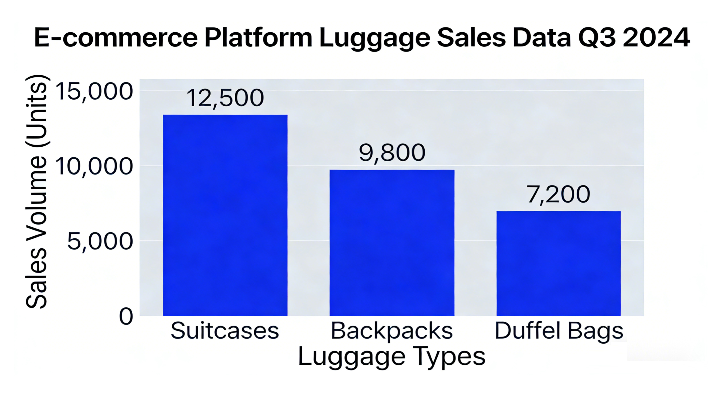
A Message from Seenwills:
"The fashion wind everywhere; only those who has abilities to catch-up in the coming seasons."
If you are seeking high-quality luggage and bag supply chain resources or require professional cross-border compliance guidance, please contact the Seenwills team. Let us help you navigate the waves of the global revolution.
This report comprehensively outlines the macro landscape, regional differences, user personas, category trends, platform strategies, and selection advice for the global luggage market. With a specific focus on the US, Japan/Korea, Southeast Asia, and emerging markets, combined with data from Amazon and TikTok Shop, it provides strategic guidance for cross-border sellers.
[company_id] => 18
[sort] => 0
[category_id] => 16
[key_name] => global-luggage-and-bags-market-report-2026
)
Array
(
[id] => 82
[name] => AI Toy Trends
[status] => normal
[create_time] => 2026-03-18 22:18:37
[delete_time] =>
[category_ids] => 16
[image] =>
[description] =>
[content] => Latest data indicates that the global AI toy market is experiencing explosive growth in 2026. From manufacturing workshops in Yiwu to living rooms in North America, smart toys featuring voice interaction and emotional companionship have become the new favorites in cross-border e-commerce. This article deeply analyzes the industrial logic behind the "AI + Emotional Consumption" trend, explores how Chinese supply chains are leveraging technological advantages to capture this hundred-billion-dollar sector, and provides compliant product selection strategies for cross-border sellers.
From "Manufacturing" to "Intelligent Manufacturing" – A Paradigm Shift in the Toy Industry
In the global trade landscape of 2026, a significant trend is emerging: while the export growth of traditional toys is slowing, orders for smart toys equipped with Artificial Intelligence (AI) interaction capabilities are doubling.
Especially in core Chinese industrial hubs like Yiwu and Shenzhen, AI toys featuring voice dialogue, emotional feedback, and personalized companionship have become the fastest-growing category in terms of overseas buyer inquiries. This is not the accidental success of a single product, but the inevitable result of the convergence of two major waves: "AI Technology Implementation" and "Global Emotional Consumption." For global sellers, understanding the logic behind this transformation is key to seizing the next wave of blockbuster product dividends.
I. Why Are AI Toys Exploding in 2026?
SEENWILLS observes that this surge in AI toys is driven by three core forces:
1. The Rise of the Global "Emotional Economy"
In the post-pandemic era, global consumer psychology has undergone profound changes. Consumers are no longer paying solely for functionality; they are increasingly willing to pay for "Emotional Value."
- The Antidote to the Loneliness Economy: From Gen Z living alone to an aging society, alleviating loneliness and seeking companionship have become rigid demands.
- Upgraded Emotional Connection: Unlike traditional stress-relief toys, AI toys utilize Large Language Models (LLMs) to achieve human-like interaction, providing instant emotional feedback. This experience of "being understood" gives them powerful viral potential on social media platforms like TikTok and Instagram.
2. The "Dimension-Reduction Strike" of the Chinese Supply Chain
The resilience of Chinese manufacturing is the cornerstone of AI toy proliferation.
- Efficient Synergy of Hardware and Software: Mature electronic hardware solutions from Shenzhen and Dongguan are perfectly integrated with Yiwu's extreme small-commodity manufacturing system.
- Cost Advantages Restructuring the Market: Leveraging the Chinese supply chain, the cost of high-end companion robots that previously sold for hundreds of dollars overseas has been compressed by over 50%. This has rapidly transformed AI toys from "geek gadgets" into mass-market consumer goods, significantly expanding market boundaries.
3. Cross-Border E-Commerce Accelerating Product Iteration
Traditional toy development cycles used to take 6–12 months; the cross-border e-commerce model has shortened this to just a few weeks.
- Data-Driven R&D: Factories now directly align with overseas social media trends, influencer reviews, and user comments to rapidly adjust algorithms and features.
- Agile Response: This "small-batch, quick-return" model allows Chinese sellers to capture and satisfy niche market demands far faster than their Western counterparts.
II. The Hundred-Billion-Dollar Space for AI Toys in 2026
According to authoritative forecasts, the global AI toy market is on a high-growth trajectory.
- Market Size Forecast: Data shows that the global AI toy market size exceeded $11 billion in 2024 and is projected to climb to $58 billion by 2030, with a Compound Annual Growth Rate (CAGR) of over 20%. This far outpaces the 3%-5% growth rate of the traditional toy industry.
- Core Market Distribution: North America remains the largest consumption base, but the growth potential in Europe and Southeast Asia should not be underestimated.
- Price Tiers and Segmentation:
- Entry-Level ($20–$50): Simple voice-interactive dolls; volume drivers.
- Mid-Range Interactive ($50–$100): Smart companions with multi-turn dialogue and basic educational functions.
- High-End Robots ($100–$300+): High-end companion devices featuring complex emotional algorithms and multi-modal interaction.
Trend Highlight: Educational AI toys currently hold the largest market share, with European and American families highly recognizing their value in language learning and logical training. Simultaneously, "Emotional Companion" products targeting adults are emerging as a new growth pole.
III. Opportunities and advices for Ai toy Sellers
Facing this new blue ocean, how should cross-border sellers position themselves? We recommend focusing on the following three tracks:
1. Ultra-Cost-Effective "Light-Smart" Toys
- Strategy: Focus on the under-$50 price point, featuring basic voice interaction and storytelling functions.
- Advantage: Low barrier to entry and high repurchase rates make these ideal for forming blockbusters on platforms like Temu and TikTok Shop.
2. "Edutainment" Educational AI Products
- Strategy: Deeply integrate STEM education concepts with bilingual teaching and programming enlightenment features.
- Scenario: Precisely target the educational scenarios of Western families to build brand loyalty and increase Average Order Value (AOV).
3. All-Age "Emotional Companions"
- Strategy: Design healing aesthetics and delicate interactions for young people and solitary individuals.
- Core Value: You are not selling a toy; you are selling a social experience of "being understood."
⚠️ Critical Reminder: Compliance is the Bottom Line for Going Global
While chasing trends, sellers must prioritize data security and privacy compliance:
- Child Privacy Protection: Strictly adhere to US COPPA and EU GDPR regulations to ensure children's data is not collected illegally.
- Product Certification: Complete mandatory certifications for target markets in advance, including CE, FCC, and ASTM F963.
- Content Safety: Establish AI content filtering mechanisms to prevent the generation of inappropriate speech.
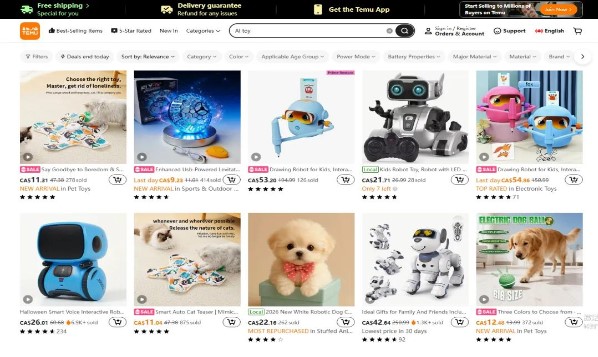
Conclusion: Redefining the Definition of "Toys"
From plush dolls to AI companion robots, the toy industry is undergoing a profound upgrade from "physical entertainment" to "intelligent interaction."
Future toys will not only be playmates for children but may also become smart entry points within home scenarios. For cross-border sellers, those who can first close the loop between technological innovation, content ecosystems, and supply chain management will seize the initiative in the global market of 2026 and beyond.
A Message from Seenwills:
"The wind has risen; only those who adapt will remain unbroken."
If you are seeking high-quality AI toy supply chain resources or require professional cross-border compliance guidance, please contact the Seenwills team. Let us help you navigate the waves of the global smart toy revolution.
[company_id] => 18
[sort] => 0
[category_id] => 16
[key_name] => ai-toy-trends-2026
)
Array
(
[id] => 81
[name] => New Trends on Smart Baby Bottle
[status] => normal
[create_time] => 2026-03-17 22:32:39
[delete_time] =>
[category_ids] => 16
[image] =>
[description] =>
[content] => Understanding the evolution from traditional to smart baby bottles is crucial.
This guide provides an in-depth analysis of the market, regulatory landscapes, manufacturing hubs, and future trends to empower your China factory sourcing decisions.
Contents:
- Right time for smart baby bottles;
- Key criteria for selecting a smart baby bottle;
- How to source smart baby bottles from China;
- Future market opportunities and challenges for smart baby bottles;
If you want to know more smart baby care products please feel free to let seenwills team knows.
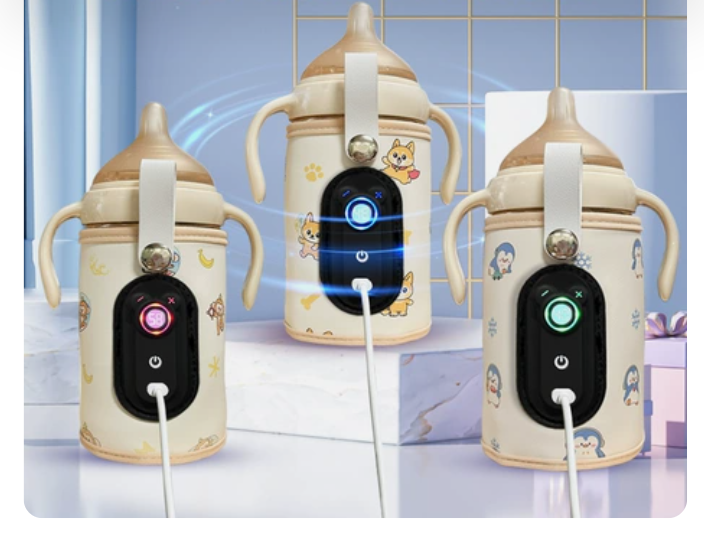
1.The Rise of Smart Baby Bottles: Drivers and Enablers
Why now? The emergence of smart bottles is a convergence of three factors:
- Parental Anxiety & Data-Driven Parenting: Modern parents (Millennials/Gen Z) seek quantifiable data on their baby’s health. They want to know exactly how much milk was consumed, at what temperature, and over what duration to track growth and digestion issues.
- Technological Maturity: Miniaturization of sensors (flow meters, temperature probes) and low-energy Bluetooth (BLE) allows electronics to be embedded without making the bottle bulky or unsafe. Battery technology now supports reasonable usage cycles.
- The "IoT Nursery" Ecosystem: Smart bottles no longer exist in isolation. They integrate with apps that track sleep, diapers, and growth, creating a holistic "Baby OS" that locks users into a brand ecosystem.
Core Features of Smart Bottles:
- Real-time Temperature Monitoring: Alerts if milk is too hot.
- Intake Tracking: Automatically logs volume consumed to the cloud.
- Feeding Reminders: Notifies parents when the next feed is due based on historical data.
- Mixing Assistance: Some advanced concepts include built-in stirring mechanisms.
2. Core Techniques for Selecting a Smart Baby Bottle
For B2B buyers evaluating suppliers, focus on these technical differentiators:
- Sensor Accuracy & Calibration: How precise is the flow meter? Does it account for thick formula vs. thin breast milk? Inaccurate data destroys trust.
- Waterproofing & Sterilization: This is the #1 failure point. The electronic module must be IPX7+ rated and withstand repeated steam/UV sterilization without degradation.
- App UX & Data Privacy: Is the app intuitive? Does it comply with GDPR/COPPA regarding children’s data? A buggy app renders the hardware useless.
- Battery Safety & Life: Lithium batteries in baby products require strict safety protocols (UN38.3 certification). How long does a charge last? Is it wireless charging?
- Material Synergy: The electronic add-on should not compromise the food-grade safety of the bottle body (still needs PPSU/Glass/Silicone).
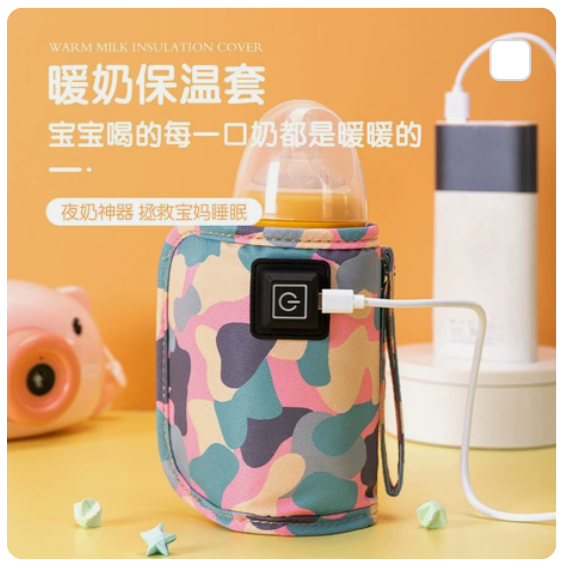
3. Sourcing Smart Baby Bottles from China: Critical Checklist
When importing for online (Amazon/DTC) or offline retail:
- Dual-Certification Verification: Ensure the factory has both food safety certs (FDA/LFGB) and electronic safety certs (CE-FCC, RoHS, REACH, UN38.3 for batteries). Many traditional bottle factories lack the electronics compliance expertise.
- IP Rating Validation: Demand test reports for waterproofing. Do not rely on verbal claims. Request a "sterilization cycle test" report (e.g., survived 500 steam cycles).
- Supply Chain Transparency: Verify where the chips and sensors are sourced. Geopolitical tensions can disrupt semiconductor supplies.
- After-Sales & Firmware: Who handles OTA (Over-the-Air) updates if a bug is found? Ensure the supplier has a software team, not just a hardware assembly line.
- Liability Insurance: Given the sensitive nature of the product (infant consumption + electronics), ensure the supplier carries substantial product liability insurance.
4. Future Market Space and Challenges
Market Opportunities:
- Premiumization: Parents are willing to pay a 3x-5x premium for data and peace of mind. The shift from $10 bottles to $30-$80 smart systems is accelerating.
- Subscription Models: Potential for recurring revenue via app subscriptions (advanced analytics) or auto-delivery of compatible nipples/accessories.
- Integration with Healthcare: Future potential for data sharing with pediatricians to monitor infant health trends remotely.
Challenges:
- Complexity vs. Usability: If washing the bottle takes 10 minutes because of electronic parts, parents will revert to dumb bottles. Simplicity is key.
- Cost Barrier: High unit costs may limit mass adoption in developing markets.
- Regulatory Gray Areas: As "medical-adjacent" devices, smart bottles may face stricter scrutiny from bodies like the FDA in the future regarding data accuracy claims.
- E-Waste: Environmental concerns regarding disposable batteries or non-recyclable electronic modules in single-use-ish products.
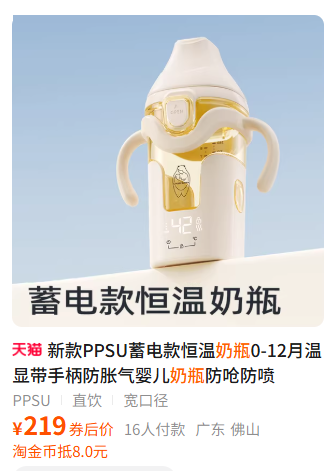
Advices
The transition to smart baby bottles represents a significant value-add opportunity for B2B buyers. However, it requires a shift from sourcing simple commodity plastics to managing complex electromechanical assemblies. Success lies in partnering with Chinese manufacturers who possess dual-domain expertise in both food-safe materials and consumer electronics, ensuring rigorous compliance across all target markets.
Additionally, if you want to buy or make normal baby bottles you can visit Yiwu International Wholesale Market, there are so many choices with factories' direct outlets.
[company_id] => 18
[sort] => 0
[category_id] => 16
[key_name] => smart-baby-bottle
)
Array
(
[id] => 80
[name] => How to Choose High Quality Baby Bottle & China Supplier
[status] => normal
[create_time] => 2026-03-17 22:04:43
[delete_time] =>
[category_ids] => 16
[image] =>
[description] =>
[content] => As SEENWILLS' blog writer,here I have to say " Dear mum, I love you so much for ever." Why? Because we are all from our mothers,and they paid or are paying so much time, love on our growing-up from every important steps. Espercially they feed us with milk, so I tried my best to wrote such pages to the baby bottle B2B sourcing buyers---Keep quality in mind always please.

Contents:
- The core reasons for the existence of baby bottles as a product?
- Main materials and functions of baby bottles historically? What are the pros and cons of each?
- What are the key certification requirements for baby bottle products in different countries?
- What are the major industrial clusters and top brands in China?
1. The Core Reason for the Existence of Baby Bottles
The baby bottle was not merely an invention of convenience; it was a solution to a biological and societal necessity. Its primary purpose is to bridge the gap when direct breastfeeding is impossible or insufficient.
- Nutritional Continuity: It ensures infants receive essential nutrition (breast milk or formula) when the mother is absent, unable to lactate sufficiently, or has ceased breastfeeding.
- Shared Caregiving: It democratizes feeding, allowing fathers, grandparents, and caregivers to participate in the bonding and nurturing process, relieving the sole burden on the mother.
- Medical Necessity: For premature infants or those with specific latch difficulties, specialized bottles provide a controlled flow that mimics breastfeeding mechanics, ensuring safe intake.
2. Evolution of Materials and Functions: Pros & Cons
Historically, baby bottles have evolved through distinct material phases, each addressing safety and functional gaps of its predecessor.
| Material |
Era/Status |
Pros |
Cons |
| Glass |
Traditional / Premium |
Safety: Chemically inert, no leaching.
Durability: Scratch-resistant, easy to clean.
Heat: Withstands high sterilization temps. |
Weight: Heavy for infants to hold.
Safety Risk: Can shatter if dropped.
Thermal: Conducts heat quickly (risk of burning). |
| PP (Polypropylene) |
Mass Market (Legacy) |
Cost: Very inexpensive.
Weight: Lightweight.
Safety: Generally BPA-free in modern versions. |
Durability: Becomes cloudy/scratched over time.
Lifespan: Degrades with repeated sterilization.
Permeability: Can retain odors. |
| PPSU (Polyphenylsulfone) |
Current High-End Standard |
Performance: Amber color, extremely durable, heat resistant up to 180°C.
Safety: Naturally BPA/BPS free.
Longevity: Longest lifespan among plastics. |
Cost: Significantly more expensive than PP.
Aesthetics: Limited to amber/yellow hue. |
| Silicone |
Modern / Niche |
Feel: Soft, skin-like texture mimics breast.
Safety: High heat resistance, inert.
Design: Collapsible options for travel. |
Stability: Soft body can be hard to balance when filling.
Cost: High production cost.
Attraction: Attracts dust/lint easily. |
Functional Evolution: Early bottles were simple containers. Modern iterations introduced anti-colic vents (to reduce gas), wide-neck designs (for easy cleaning and filling), and temperature-sensitive strips (basic safety).
3. Global Key Certifications
Compliance is the biggest barrier to entry. Sourcing buyers must ensure factories hold valid certifications for the target market.
- 🇺🇸 USA:
- FDA (Food and Drug Administration): Compliance with 21 CFR (Code of Federal Regulations) for food contact materials. Focuses on migration limits of harmful substances.
- CPC (Children’s Product Certificate): Mandatory for children's products, requiring third-party testing from a CPSC-accepted lab (e.g., for lead and phthalates).
- 🇪🇺 European Union:
- EU Regulation No 1935/2004: The framework regulation for all Food Contact Materials (FCM).
- LFGB (Germany): The "Knife and Fork" symbol. Stricter than general EU standards, including sensory tests (taste/odor transfer). Essential for the DACH region.
- EN 14350: Specific standard for child use and care articles – drinking equipment.
- 🇨🇳 China (Domestic & Export Base):
- GB 4806 Series: The mandatory national standard. Specifically GB 4806.2 (Nipples) and GB 4806.7 (Plastics). Note: The updated GB 4806.16-2025 introduces stricter migration limits for new materials.
- 🇯🇵 Japan:
- JHOSPA: Japan Hygienic Olefin and Styrene Plastics Association standards. Highly respected globally for rigorous testing on synthetic resins.
4. Industrial Clusters and Brands List
China’s Manufacturing Hubs
China dominates global production, with specific clusters specializing in different aspects:
- Ningbo & Taizhou (Zhejiang Province): The heart of plastic molding and assembly. Home to thousands of OEM/ODM factories producing mid-to-high range bottles. Strong supply chain for molds and electronic components (crucial for smart bottles).
- Yangzhou & Jiangyin (Jiangsu Province): Known for glass bottle production and high-quality silicone nipples.
- Shenzhen & Dongguan (Guangdong Province): The hub for electronics integration. If a bottle has sensors, Bluetooth, or heating elements, the R&D and assembly often happen here.
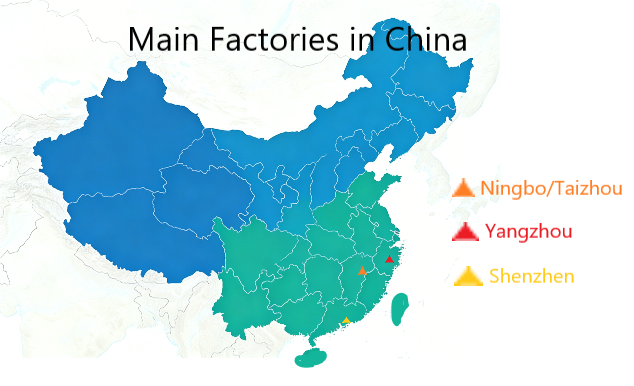
Brand Ecosystem
- International High-End Brands:
- Dr. Brown’s (USA): Leader in anti-colic technology.
- Philips Avent (Netherlands/Global): Market leader in wide-neck and natural feeding simulation.
- Comotomo (Korea/USA): Pioneer in full-silicone, breast-mimicking design.
- Pigeon (Japan): Renowned for peristaltic-style nipples and glass quality.
- MAM (Austria): Known for self-sterilizing and symmetrical nipples.
- Chinese Core Brands (Rising Giants):
- Goodbaby (gb): A massive conglomerate with extensive R&D.
- Babycare: A newer lifestyle brand focusing on design and premium materials (PPSU/Silicone).
- Usbaby (You Bei Min): Strong domestic presence with export capabilities.
5. From 2025 top 20 countries new birth rate list we can see where it is the best markets as below.
| Rank |
Country (English Name) |
Est. Population 2025 (Millions) |
Total Fertility Rate (TFR)
(Births per Woman) |
Region |
| 1 |
Niger |
31.9 |
6.73 |
West Africa |
| 2 |
Somalia |
19.8 |
6.08 |
East Africa |
| 3 |
Chad |
20.5 |
5.92 |
Central Africa |
| 4 |
Mali |
24.6 |
5.78 |
West Africa |
| 5 |
Central African Republic |
6.2 |
5.65 |
Central Africa |
| 6 |
Democratic Republic of the Congo |
118.2 |
5.52 |
Central Africa |
| 7 |
Angola |
38.9 |
5.41 |
Southern Africa |
| 8 |
Burundi |
14.5 |
5.35 |
East Africa |
| 9 |
Benin |
15.3 |
5.28 |
West Africa |
| 10 |
Uganda |
51.6 |
5.15 |
East Africa |
| 11 |
Burkina Faso |
24.8 |
5.08 |
West Africa |
| 12 |
South Sudan |
13.9 |
4.95 |
East Africa |
| 13 |
Mozambique |
36.8 |
4.82 |
Southern Africa |
| 14 |
Zambia |
22.6 |
4.75 |
Southern Africa |
| 15 |
Afghanistan |
44.8 |
4.68 |
South Asia |
| 16 |
Nigeria |
239.5 |
4.62 |
West Africa |
| 17 |
Cameroon |
32.5 |
4.55 |
Central Africa |
| 18 |
Ivory Coast (Côte d'Ivoire) |
33.2 |
4.48 |
West Africa |
| 19 |
Senegal |
19.6 |
4.42 |
West Africa |
| 20 |
Tanzania |
72.8 |
4.38 |
East Africa |
Africa ! Africa ! Africa !
If you need more inform on baby bottle or related product hope you can contact seenwills for assisting.
[company_id] => 18
[sort] => 0
[category_id] => 16
[key_name] => quality-baby-bottle-china-supplier
)
Array
(
[id] => 79
[name] => Global Exotic Pet Products Business Report 2026
[status] => normal
[create_time] => 2026-03-16 20:58:58
[delete_time] =>
[category_ids] => 16
[image] =>
[description] =>
[content] => Are you in pet of dogs and cats business? Here today SEENWILL will share some exotic pet business for your future.
In 2026, the global pet economy is undergoing an unprecedented restructuring. While traditional cat and dog markets in developed regions are gradually entering a phase of single-digit growth characterized by stock competition, the exotic pet market is surging with an astonishing growth rate exceeding 50%, becoming the most explosive new growth pole in the global pet industry. From the reptile boom in North America to the refined care of rodents in Europe, and the renaissance of ornamental birds in the Asia-Pacific region, non-traditional pets, once labeled as "niche curiosities," are rapidly entering the lives of urban youth worldwide, evolving into a mainstream lifestyle trend.
According to the latest 2026 global pet industry data, the global exotic pet market size is projected to breach critical thresholds. Its growth momentum stems not only from rising ownership numbers but also from a deep upgrade in consumption structure—extending from basic live animal transactions to high value-added sectors such as exotic pet healthcare, smart equipment, customized nutrition, and emotional experiences. This article deeply dissects this skyrocketing sector, analyzing the global consumption logic and industrial opportunities behind it.
Contents:
1. What is exotic pet mart trends?
2. Who is moving such special business?
3. What kind of exotic pets are very hot in the global markets?
4. How about the opportunities and challenges for the exotic pet business?
I. The Global Exotic Pet Market Explosion: From Niche Hobby to Mainstream Business
Once upon a time, exotic pet keeping was a secret garden for only a few enthusiasts. However, 2026 data has completely shattered this stereotype. The global exotic pet owner population has surpassed tens of millions, expanding at an annual rate of over 10% in major urban circles across North America, Western Europe, and East Asia.
In the landscape of global pet consumption, reptiles, rodents, and ornamental birds have emerged as the three core pillars. Particularly in mature markets like the US, UK, Germany, and Japan, reptile penetration rates have significantly increased. In some regions, one in ten young households now keeps at least one type of small exotic pet. This marks a formal shift in the pet industry landscape from "cat and dog dominance" to a new era of "diverse symbiosis."
Unlike the red-ocean competition in traditional sectors, the exotic pet track is in a golden period of incremental explosion. This is reflected not only in the heat of live animal trading but also in the wellspring-like demand for the entire industrial chain, including exotic pet supplies, specialized feed, environmental control equipment, and specialized medical services. Brands and entrepreneurs globally are rushing to enter this blue ocean to seize the first-mover advantage. Notably, a complete exotic pet consumption loop has formed. The model of "Live Animal + High-End Equipment + Functional Food + Professional Services" has pushed the Lifetime Value (LTV) per pet far beyond expectations, making it a new focal point for capital pursuit.
II. Who is Driving the Global Exotic Pet Boom? The Choice of Gen Z and Urban Youth
The global explosion of the exotic pet market is primarily driven by generational iteration in the consumer base. Gen Z consumers and Millennial urban youth constitute the main force of exotic pet owners, accounting for nearly 70%. These highly educated, aesthetically conscious, and individualistic young people globally are not choosing alternative pets on a whim; rather, they are making a precise match to their current living conditions:
1. Space Adaptability: The Optimal Solution for Small Apartment Pet Keeping Amidst Global High Housing Prices
In global first-tier cities like New York, London, Tokyo, and Shanghai, living spaces are increasingly compact. Soaring rents and limited square footage make large dogs and cats difficult to afford. Small exotic pets such as geckos, hamsters, and ornamental turtles require only a terrarium or a corner of a desk. This characteristic of low space requirement perfectly fits the living reality of global singles and renters, allowing them to enjoy furry or uniquely cool companionship without occupying significant home area.
2. Time-Friendly: Low-Burden Companionship in a Fast-Paced Life
Amidst intensifying global workplace competition, young people lack the time for daily dog walking or frequent cat hair cleaning. Low-maintenance pets have become the new favorite. Reptiles and rodents mostly do not require high-frequency interaction; regular feeding, temperature control, and substrate changes suffice. They serve as perfect stress-relief tools for workers, providing just the right amount of "distanced" companionship without adding life burdens, aligning with the modern psychological demand for both efficiency and healing.
3. Personal Expression: Social Currency That Rejects Homogenization
For Gen Z who pursue uniqueness, owning a common Golden Retriever or British Shorthair is no longer sufficient to express individuality. High-aesthetic exotic pets like Crested Geckos, Sugar Gliders, and Cockatiels, due to their unique appearance and scarcity, have become traffic passwords on social media. On platforms like Instagram, TikTok, and Xiaohongshu, sharing exotic pet daily life is not just recording life; it is a social label for young people to display their aesthetic taste and gain community recognition.
III. Global Hot Exotic Pet Categories: Who Are the Track Leaders?
Although there are numerous exotic pet species, the global market has formed a clear hierarchy of popularity. The following three categories have become the global sales leaders due to their high adaptability, aesthetics, and mature supply chains:
1. Reptiles: The Aesthetic and Tech Leaders of the Exotic Circle
Reptiles are currently the fastest-growing sub-sector globally. Leopard Geckos, Crested Geckos, Bearded Dragons, various ornamental turtles, and Corn Snakes are the absolute top stars.
- Market Performance: In North America and Europe, ornamental turtles account for half of reptile ownership, while geckos, known for their gentle nature and cute appearance, are the top choice for beginners.
- Drivers: These pets are odorless, quiet, and relatively easy to care for. This has driven huge demand for high-tech equipment such as smart terrariums, UVB lighting systems, and ecological landscaping, pushing the high-end upgrade of reptile equipment.
2. Rodents: The Soft and Healing Entry-Level Choice
Rodent exotic pets rely on their strong interactivity and soft, cute appearance to remain the top choice for beginner pets. Syrian Hamsters, Dwarf Hamsters, Sugar Gliders, and the emerging King Quails are favorites among global youth.
- Market Performance: These pets are miniature in size, affordable, and especially suitable for students and young professionals.
- Drivers: Extremely high repurchase rates are seen in exquisite cages, silent exercise wheels, natural snacks, and warming supplies. Especially for socially active species like Sugar Gliders, the market for interactive toys and specialized milk powders is growing rapidly.
3. Ornamental Birds: Dual Healing for Hearing and Vision
Bird pets focus on "dynamic companionship," with Cockatiels, Budgerigars, and Lovebirds being the global popularity kings.
- Market Performance: While bird keeping traditions are deep in Latin America and Southern Europe, the interactive joy of hand-reared birds is being rediscovered in the Asian market.
- Drivers: Some species can mimic speech and have soft calls, suitable for those who prefer quiet companionship. Demand for supporting products like ecological birdcages, enrichment toys, pellets, and breeding boxes continues to rise, driving the professionalization of bird care.
IV. Global Industrial Chain Opportunities: From Live Trading to Full-Chain Service Explosion
As the exotic pet economy matures, the global industrial chain is transitioning from extensive to refined, with four core areas emerging with huge commercial opportunities:
1. Exotic Pet Supplies & Equipment: Trends Towards Intelligence and Home Integration
The era of traditional, crude cages is over. The global market is trending towards high-end exotic pet equipment.
- Trend: Smart terrariums integrating intelligent temperature/humidity monitoring, automatic feeding, and APP remote control can sell for thousands of dollars and remain in short supply.
- Opportunity: Integrating pet equipment into home aesthetics to create landscaped keeping environments is key for brands to break through.
2. Specialized Feed: Huge Gap in Refinement and Functionality
The era of "universal feed" is over; the concept of scientific exotic pet feeding has taken root.
- Trend: Demand is skyrocketing for niche products like reptile-specific calcium powders, insect protein feeds, high-protein rodent diets, and functional bird pellets.
- Opportunity: Customized nutrition plans for specific species and growth stages (e.g., juveniles, pregnancy), as well as freeze-dried snacks and probiotic supplements, represent the best entry points for domestic brands going global and emerging brands.
3. Exotic Pet Medical Services: A Scarce Track with High Premium Potential
This is currently the biggest pain point and opportunity in the global pet healthcare sector.
- Status Quo: The vast majority of traditional veterinary clinics only serve cats and dogs. Veterinarians qualified in exotic pet diagnosis and treatment are extremely scarce, leading to a "high demand, low supply" situation, especially in major cities in Europe, the US, and Asia.
- Opportunity: Professional exotic pet hospitals, exotic emergency services, specialized diagnostic equipment, and exotic pet insurance products possess extremely high pricing power and profit margins, making them the commanding heights of future industry competition.
4. Breeding and Compliant Trading: Standardization and Traceability
Global emphasis on animal welfare and biosecurity has promoted the standardization of captive breeding.
- Trend: Wild capture is strictly prohibited, and compliant exotic pets with CB (Captive Bred) certification have become the market mainstream.
- Opportunity: Establishing traceable live animal trading platforms, offering genetic testing services, and promoting ethical breeding concepts will earn brands higher market trust.
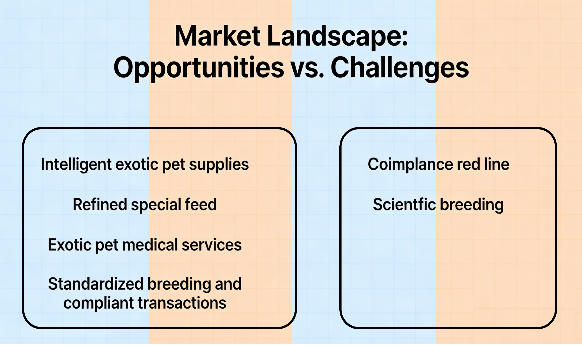
V. Rational Outlook: Compliance and Scientific Care are the Bottom Lines for Global Exotic Pet Development
Although the exotic pet track has bright prospects, blind following is ill-advised. The healthy development of the global market must be built on two cornerstones:
- Strictly Adhere to Compliance Red Lines: Laws and regulations regarding wildlife protection are becoming increasingly stringent globally (e.g., CITES). It is imperative to prohibit keeping endangered species and insist on choosing artificially bred compliant varieties. Requesting and verifying breeding certificates is a prerequisite for practitioners' survival and a responsibility for owners.
- Advocate Scientific Keeping: Abandon the "curiosity" mindset. Every exotic pet has unique biological characteristics. Beginners must study keeping knowledge in advance, understanding lifespan, environmental needs, and potential risks to avoid abandonment tragedies caused by impulsive buying. The industry needs to strengthen popular science education to promote a transition from "wild growth" to "professional operation."
VI. Conclusion: Witnessing the Golden Age of the Exotic Pet Economy
The essence of the pet economy is, and always has been, the emotional connection between humans and animals. The diversification from cats and dogs to exotic pets reflects a redefinition of companionship forms by the younger generation globally—they pursue a lifestyle that is more personalized, lower burden, and more exploratory.
The global exotic pet market, with a growth rate exceeding 50%, is a fleeting traffic trend but an inevitable result of the long-term evolution of the pet industry. It is becoming the core increment supporting the next trillion-dollar pet economy after cats and dogs. For consumers, it is a unique little happiness that heals life; for entrepreneurs and investors, it is a blue ocean full of infinite possibilities. Only by adhering to compliance bottom lines, delving into professional technology, and gaining insight into user needs can one seize the dividends in this wave of exotic pet frenzy and jointly witness the golden age of the global exotic pet industry.
If you are going to set some exotic pet caring product business hope you can contact seenwills team to have a good copporation.
[company_id] => 18
[sort] => 0
[category_id] => 16
[key_name] => Exotic-Pet-Industry-Report
)
Array
(
[id] => 70
[name] => How to Verify Chinese Suppliers Beyond Platform Badges
[status] => normal
[create_time] => 2026-03-08 21:33:04
[delete_time] =>
[category_ids] => 16
[image] =>
[description] =>
[content] => 1. The Voices of the Market: From Youtube Video Comments
- "Don't forget to tell that all those platforms... are full of scammers." – MrFabiomango
- "Just afraid of scammers reaping off your hard earned money by mere trusts." – Anivertical
- "How do you know they are legit? How can I verify suppliers?" – Multiple Users
- "I was scammed in global sources. Trade Assurance didn't help enough." – Julio
2. Core Needs Analysis
The market is saturated with "Verified" badges that offer a false sense of security. Users are not just asking where to buy; they are screaming for a methodology to distinguish real manufacturers from sophisticated trading companies and outright scammers. The core need is Risk Mitigation: moving from blind trust to evidence-based verification before a single dollar is transferred.
3. Strategic Solution: The 4-Step Verification Framework
A. The Underlying Logic: "Trust but Verify"
Platform badges (like Alibaba’s "Verified") often only confirm a business license exists, not that the factory owns the production line or has the capacity claimed. True verification requires cross-referencing digital data with physical reality.
B. Actionable Steps & Methodology
Step 1: The Digital Forensic Audit (Pre-Contact)
- Action: Do not rely on the platform profile.
- Technique:
- License Cross-Check: Request the Business License (in Chinese). Use tools like Qichacha or Tianyancha to check registration capital, establishment date, and legal disputes. A company registered 3 months ago with low capital is a red flag.
- Image Reverse Search: Upload their factory photos to Google Images or Baidu Images. If the same "factory floor" appears on 10 different supplier profiles, they are a trader using stock photos.
- Domain Age Check: Use Whois to check their official website domain age. Scam sites are often less than 6 months old.
Step 2: The "Live" Video Interrogation
- Action: Demand a live video call (WeChat/WhatsApp), not a pre-recorded tour.
- Technique:
- Ask them to walk to a specific machine right now and show the date on a newspaper or their phone next to it.
- Ask to see the raw material storage. Traders usually have no raw materials, only finished goods in a warehouse.
- Key Question: "Can you show me the mold for my specific product?" If they hesitate, they likely don't own the tooling.
Step 3: The Third-Party Validation (The Gold Standard)
- Action: Hire an independent inspection agency (e.g., SGS, Intertek, or a specialized sourcing agent) for a Factory Audit before payment.
- Data Point: A basic audit costs ~$300 USD but can save $50,000+ in lost inventory. It verifies: Export license, production capacity, QC system, and social compliance.
Step 4: The Payment Trap Test
- Action: Analyze the beneficiary name.
- Rule: The bank account name MUST match the company name on the business license exactly.
- Red Flag: If they ask you to pay a personal account (e.g., "John Doe") or a completely different trading company name, stop immediately. This is the #1 indicator of fraud.
C. Case Study: The "Gold Plated" Scam vs. Verified Success
- Scenario A (Failure): A US buyer ordered $20k of electronics from a "Verified" Alibaba supplier. They paid via T/T to a personal account. Result: Goods never shipped; supplier vanished. Loss: $20k.
- Scenario B (Success): A client wanted auto parts. We checked the license (found 2 pending lawsuits), demanded a live video (they showed a warehouse, not a factory), and refused to proceed. We redirected the client to a verified manufacturer with a clean audit report. Result: Successful shipment, 15% lower cost than the "scammer's" quote.
D. Comparison Table: Verification Levels
| Verification Level |
Method |
Cost |
Reliability |
Risk Level |
| Level 1 (Basic) |
Rely on Platform "Verified" Badge |
Free |
Low |
High |
| Level 2 (Intermediate) |
Video Call + License Check |
Low |
Medium |
Medium |
| Level 3 (Professional) |
On-site 3rd Party Audit + Bank Match |
[company_id] => 18
[sort] => 0
[category_id] => 16
[key_name] => verify-chinese-suppliers
)
Array
(
[id] => 78
[name] => How to Use AI Agent Serve Global B2B Sourcing
[status] => normal
[create_time] => 2026-03-15 18:52:41
[delete_time] =>
[category_ids] => 16
[image] =>
[description] =>
[content] => In the global trade landscape of 2026, supply chain complexity is rising exponentially. For many foreign trade enterprises and procurement teams, the traditional model of "phone calls + emails + factory visits" can no longer cope with current challenges. We face daily realities such as:
- Uncertainty in Foreign Clients' Category Needs: Market trends change instantly. Clients often have only a vague concept yet demand immediate, concrete product solutions.
- Lack of Comprehensive Product Expertise: Facing cross-category procurement demands (e.g., shifting from textiles to electronic components), teams struggle to master all technical parameters and industry standards in a short time.
- Blind Spots in Industrial Belt Knowledge: China possesses the world's most complete industrial chain, but knowing "which town or village produces which product most professionally" is often a knowledge gap for external buyers.
- Misalignment in Language and Details: Even with fluent English, imprecise descriptions of specific industrial terms or material details often lead to factory misunderstandings, repeated sample revisions, and wasted time and effort.
The client's call has never been louder: They no longer need a simple "messenger." They need a strategic partner who possesses extreme professional expertise, can efficiently feedback on core pre-procurement issues, accurately locate professional industrial belts, and provide multiple comprehensive solution options.
Facing these challenges, Seenwills offers a definitive answer: Fully embrace AI Agents. Since December 2024, we have frequently integrated AI tools to assist with repetitive, time-consuming tasks and decode unknown basic information. Today, we are revealing this battle-tested "AI Procurement Matrix."
I. Market Scan: The Panorama of Mainstream AI Procurement Agents in 2026
Before diving into practical applications, we must understand our "arsenal." Currently, AI tools assisting procurement are divided into general large models and vertical industry agents:
- General Creative & Logic Giants:
- Doubao (ByteDance): Excels in multi-modal generation, particularly outstanding in visual creativity within Chinese contexts.
- Qwen (Alibaba): Possesses powerful logical reasoning capabilities and a massive knowledge base, ideal for handling complex professional consultations.
- Vertical B2B Procurement Experts:
- Accio: Alibaba International's AI procurement assistant, focused on global sourcing and supplier matching.
- AI.Made-in-China: An intelligent tool by Made-in-China.com, deeply rooted in domestic factory data, specializing in excavating source production capacity.
- Supplementary Tier (Recommended by Google Searching Result):
- Perplexity AI: Used for real-time retrieval of global market reports and compliance policies to verify information authenticity.
- DeepL Write: Provides extreme English polishing for foreign trade scenarios, ensuring technical descriptions are authentic and precise.
- Gamma: Generates professional procurement proposal PPTs in one click, enhancing presentation efficiency.
Tools are abundant, but working in isolation yields limited results. Seenwills' core competitiveness lies in combining these tools into a rigorous "combat system."
II. Seenwills Practical Review: The "Deployment" of AI Agents Across the Procurement Chain
Since launching our AI transformation in December 2024, the Seenwills team has deeply embedded AI agents into every procurement link. Below are our practical solutions for specific pain points:
1. Visual First: Using [Doubao] to Break Communication Barriers and Make Needs "Visible"
Pain Points Addressed: Uncertain foreign client needs; lack of understanding of detailed English descriptions.
Practical Strategy:
When a client provides only a vague text description (e.g., "a coffee bag from normal design to 3D"), the traditional process requires several rounds of communication to confirm the direction. Seenwills, leveraging Doubao's multi-modal generation capabilities, outputs high-fidelity solutions within 10 minutes.
- Product Visuals with Logos: Directly integrate the client's brand logo into AI-generated product images, allowing clients to perceive the brand landing effect in advance.
- Multi-Scenario E-commerce Main Images & Details: Generate application images of the product in different scenarios (camping, courtyards, interiors), and even simulate e-commerce detail page layouts to help clients test market reactions.
- Social Media Image Generation: Rapidly produce marketing assets suitable for Instagram and LinkedIn, assisting clients in pre-sale validation.
Caption: Left is the request to Duobao AI and final result with 3D is in the right we got what we want when we send to our client,they feel very happy.
2. Knowledge Empowerment: Using [Qwen] to Build an Expert-Level Brain for Second-Level Responses
Pain Points Addressed: Incomplete product expertise; need for efficient feedback on core issues.
Practical Strategy:
Faced with complex cross-category procurement, Seenwills utilizes Qwen as the team's "super external brain." It is not just a search engine but our junior engineer and compliance consultant.
- Core Professional Knowledge Exploration: Input basic product information and let Qwen deeply analyze technical parameters, material characteristics, production processes, and potential defects. For instance, when procuring specialty fabrics, Qwen can instantly list performance under different temperature/humidity conditions and international testing standards.
- Comprehensive Organization & Solution Output: Feed scattered industry reports and technical documents to Qwen, requesting them to be organized into a structured "Procurement Feasibility Analysis Report," covering cost structures, risk points, and alternative solutions.
- Predictive Q&A: Before formally replying to the client, use Qwen to simulate a "picky buyer" role to stress-test the proposal, preparing responses in advance to ensure the professionalism and foresight of our feedback.
Caption: using Qwento know more professional knowledges on the sourcing electric products.
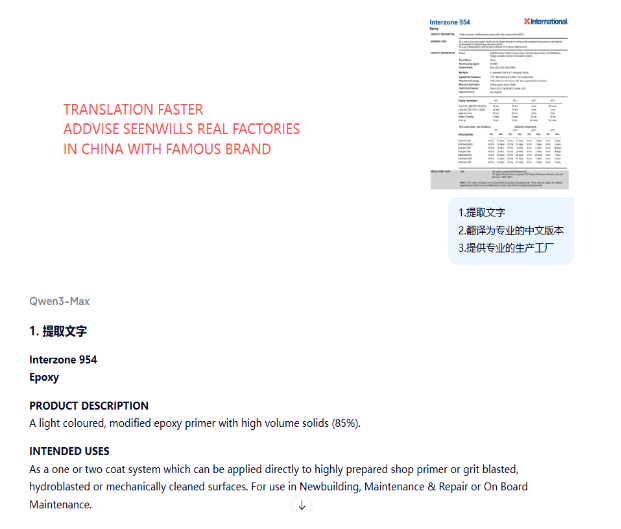
Caption: Translate the requested document from English into China to understand the details better.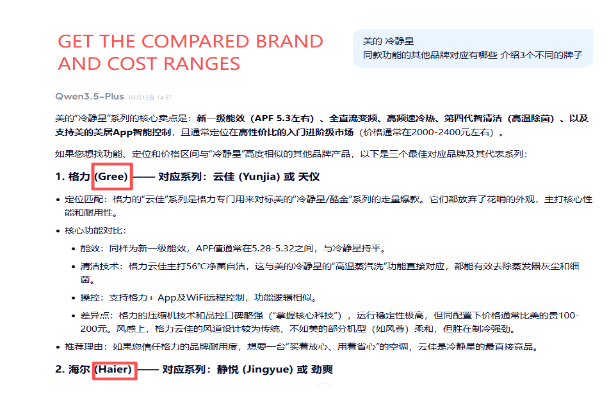
Caption: From client's product details to get right brand MIDEA and go ahead with two more brands' comparing costs GREE & Haier. (donot worry we do the final cost with the original brand supplier, not from AI.)3. Precision Sourcing: Using [Accio & AI.Made-in-China] to Lock onto Industrial Belts and Reach Source Factories
Pain Points Addressed: Unfamiliarity with industrial belts; finding specialized factories.
Practical Strategy:
China's industrial belts are vast and hidden (e.g., "Small appliances in Cixi," "Lighting in Zhongshan," "Wigs in Xuchang"). Seenwills leverages the data penetration power of Accio and AI.Made-in-China to bypass middlemen and connect directly to the source.
- Multi-Dimensional Benchmarking: Input key dimensions of the target product (e.g., injection molding precision, daily capacity, experience exporting to Europe/US), and let the AI automatically scan and compare hundreds of factories, generating radar charts to filter out the Top 5 best matches.
- Precise Industrial Belt Location: Instead of blind searching, we use AI to analyze the industrial cluster effects of specific products, directly locking onto the towns/parks with the most cost and technical advantages.
- Qualification & Capability Verification: Utilize AI to quickly review factory certification certificates, past export data, and customer reviews to identify "fake factories" vs. "traders," ensuring supply chain safety and stability.
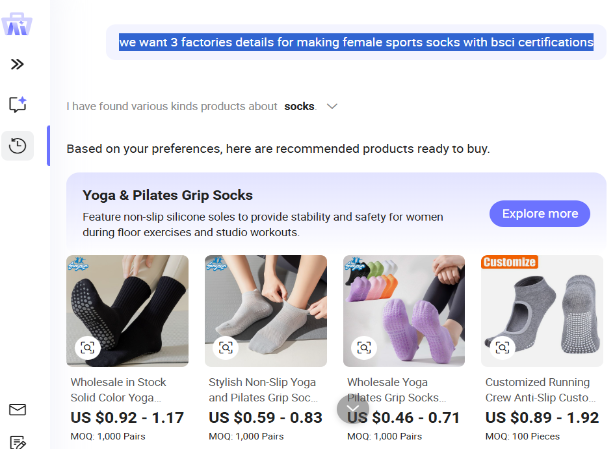 Caption: A Use the key words of "we want 3 factories details for make female sports sock with bsci certifications"
 ACCIO gave real 3 factories full details but ai.made-in-china just list three types of socks. So you can see the ability between two AI agents.
III. Core Value Delivery: How Seenwills Meets Your Ultimate Expectations
Through the collaborative operation of the above AI agent matrix, Seenwills transforms clients' four core needs into tangible deliverables:
| Client Core Need |
Seenwills AI Solution |
Delivered Value |
| Extremely Professional Product Expertise |
Qwen Deep Research Reports + Expert Simulation |
Every project member possesses the knowledge reserve of an engineer with 10 years of experience, covering technical details without blind spots. |
| Efficient Feedback on Core Pre-Procurement Issues |
Multi-Model Concurrent Processing |
Compresses research, drawing, and price comparison work that originally took 2-3 days down to under 4 hours, achieving "same-day completion." |
| Finding Professional Industrial Belts Matching Needs |
Accio/AI.MIC Data Penetration |
Rejects needle-in-a-haystack searches; directly locates head factories in source industrial belts, reducing costs by 15%-30% from the source. |
| Providing Comprehensive Solutions (Optional) |
Full-Chain Integration |
Offers a one-stop package including "Visual Renderings + Technical Parameter Sheets + Quotes from 3 Preferred Factories + Risk Assessment," letting clients make multiple-choice selections rather than filling in blanks. |
IV. Seenwills' Recommendations and Outlook: Embrace AI, Win Together
Under the overlapping premises of today's "multi-product supply chains" and "multi-functional usage scenarios for single products," the logic of procurement has fundamentally changed.
Based on our high-frequency practical experience since late 2024, Seenwills offers the following recommendations to all partners:
- Keep Pace with AI Development: Do not wait on the sidelines. AI is no longer a future concept; it is a survival tool that determines efficiency today. Your team needs to establish its own "AI Toolkit" and integrate it into daily SOPs.
- Understand the Essence of AI: AI is not here to replace procurement professionals, but to replace those "procurement professionals who do not know how to use AI." Its essence is empowerment—liberating humans from tedious data organization, basic drawing, and basic searching, freeing them to engage in higher-value negotiation, strategic planning, and relationship maintenance.
- Let AI Empower Transactions: At Seenwills, we believe that when buyers use AI to clearly express needs and sellers use AI to precisely match capacity, the friction cost of transactions will be minimized.
Conclusion:The future of procurement belongs to teams skilled at commanding "digital employees." Seenwills is willing to be your most reliable navigator, utilizing a mature AI agent matrix to help you bridge information gaps, lock in quality capacity, and achieve every transaction with lower costs, faster speeds, and a more professional posture.
Meanwhile, as a foreighner if you want to get much faster answers' your sourcing project, you can use CHATGPT, GEMINI, X-AI if not focus on the China suppliers or Chinese brand.
[company_id] => 18
[sort] => 0
[category_id] => 16
[key_name] => ai-agent-b2b-sourcing
)
Array
(
[id] => 77
[name] => How to Use Xiaohongshu for B2B Sourcing in China (2026 Factory Verification Guide)
[status] => normal
[create_time] => 2026-03-13 23:00:09
[delete_time] =>
[category_ids] => 16
[image] =>
[description] =>
[content] => Are you in need of new hub for B2B sourcing for your brand business?
1. What is Xiaohongshu? Understanding China’s “Trust Engine”
"Xiaohongshu APP"(Little Red Book /RED), often referred to as the "Instagram of China," has evolved far beyond a simple lifestyle sharing app. Founded in 2013, it has grown into China’s most influential decision-making platform, where authenticity, community-driven reviews ("Marketing" or "grass-planting"), and detailed user experiences shape purchasing behaviors.
- Company Profile: Headquartered in Shanghai, Xiaohongshu operates as a hybrid of social media and e-commerce. Unlike traditional platforms that focus on transaction volume, Xiaohongshu prioritizes content quality and trust.
- The B2B Shift: While historically known for C2C and B2C lifestyle content (beauty, fashion, travel), by 2026, Xiaohongshu has become a critical hub for B2B discovery. Young procurement managers, product developers, and brand owners now use the platform to find verified factories, inspect production processes, and gauge market trends before committing to large orders. It is no longer just about "what to buy"; it is about "who to trust."
2. Current Status & Future Trends: The B2B Renaissance on Xiaohongshu
Current Landscape 2026
- User Base: With over 350 million monthly active users, the platform boasts a highly educated, urban demographic. Crucially, the user base now includes a significant portion of industry professionals and supply chain decision-makers.
- Valuation & Growth: Recent reports indicate Xiaohongshu’s valuation has surged past $31 billion, driven by its ability to convert high-intent browsing into tangible business outcomes.
- Content Evolution: The platform has seen a massive influx of factory-direct accounts. Manufacturers are no longer just posting polished ads; they are sharing raw, unedited videos of production lines, quality control tests, and R&D processes to build transparency.
Future Trends
- From "Marketing" to "Supply Chain Planting": The trend is shifting from consumer product recommendations to industrial capability showcasing. Expect to see more deep-dive technical content, factory tours, and case studies targeting B2B buyers.
- AI-Driven Matching: Xiaohongshu’s algorithm is increasingly capable of matching professional buyers with niche suppliers based on specific industry tags (e.g., "ISO9001 certified electronics," "sustainable textile factory").
- Closed-Loop B2B Transactions: While currently primarily a discovery tool, integration with third-party B2B transaction systems (like Alibaba or Seenwills) via direct links is becoming standard, creating a seamless path from discovery to deal.
3. Getting Started: Registration & Basic Usage for Foreign Buyers
How to Register
- Download the App: Search "Xiaohongshu" or "Little Red Book" in the Apple App Store or Google Play Store. Note: Ensure you download the international version if available, or the standard Chinese version which supports English interfaces in some sections.
- Sign Up: You can register using:
- Mobile Phone Number (supports many international codes).
- WeChat, Apple ID, or Email (depending on current platform updates).
- Language Settings: While the primary interface is Chinese, the app has improved its auto-translation features. For a better experience, use the Web Version at https://www.xiaohongshu.com on a desktop browser like Chrome, which offers built-in page translation.
Basic Usage for Sourcing
- Search Bar: Use keywords in both English and Chinese (use a translator) for best results.
- Examples: "XXX Factory", "XXX OEM manufacturer" "XXX manufacturing" “XXX brand” "XXX product name“.
- Explore Page: The "Discover" feed will start showing you relevant industrial content once you interact with a few sourcing-related posts.
- Collections: Save promising posts to specific "Collections" (e.g., "Potential Electronics Suppliers," "Packaging Ideas") to organize your research.
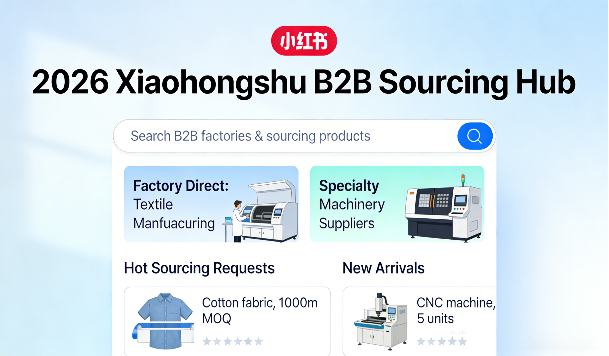
4. The Strategic Sourcing Guide: Methods, Risks, and Verification
Specific Sourcing Methods
- Keyword Deep-Dive: Don’t just search for products. Search for processes and certifications.
- Try: "Silicone molding process" , "TRIMMER CE certification factory".
- Video Factory Audits: Look for accounts that post daily/weekly updates from the factory floor. Live streams of production runs are a goldmine for verifying capacity.
- Comment Section Intelligence: Read the comments! Other buyers often ask critical questions about MOQ, lead times, and quality issues. The supplier’s response style reveals their professionalism.
- Direct Engagement: Use the private messaging feature to initiate contact. Many factory owners manage their own accounts and respond directly.
What to Watch Out For (Risks)
- Trading Companies Posing as Factories: Many accounts look like factories but are actually middlemen or we call trading person without any company license.
- Over-Polished Content: Beware of accounts that only show perfect, studio-lit product shots without any "behind-the-scenes" grit. Real factories are messy.
- Lack of Transaction Protection: Xiaohongshu is primarily a content platform. Do not make direct payments through unofficial channels suggested in chat.(so donot trust them to give the payment in a short time.)
6-Step to Verify Supplier Authenticity
- Blue V Verification: Look for the Enterprise Blue V Badge. This indicates the account holder has submitted a valid Chinese Business License to Xiaohongshu. Click the badge to view the registered company name.
- Cross-Reference Licenses: Take the company name from the Blue V info and check it on "Qichacha" or "Tianyancha " (Chinese corporate database apps/websites) to verify registration status, capital, and any legal disputes.
- Location Consistency: Does the factory location match the known industrial cluster for that product? (e.g., Electronics in Shenzhen, Textiles in Guangzhou, Small Commodities in Yiwu). A mismatch is a major red flag.
- Content Consistency: genuine factories post consistently over long periods. Check the history: Do they show the same machinery and staff over months? Or does the background change frequently (indicating a trader visiting different factories)?
- Request a Video Call: Ask for a real-time video tour of the facility. A legitimate factory owner will usually oblige; a scammer will make excuses.
- China sourcing agency to help you directly with their richful sourcing experience or methods.
5. When You Need Expert Help: Professional Sourcing Services
Navigating a Chinese-language platform, verifying complex corporate data, and managing cross-border negotiations can be daunting, especially for buyers unfamiliar with the local landscape.
If you find these challenges overwhelming, or if your procurement volume requires rigorous risk management, partnering with a professional foreign trade sourcing service is the smartest move.
How a Sourcing Partner Adds Value:
- Language & Cultural Bridge: They handle all communications in native-level Chinese, ensuring no nuances are lost in translation.
- Deep Due Diligence: They don’t just check the Blue V badge; they conduct on-site audits, verify export licenses, and assess financial stability using local tools inaccessible to foreigners.
- Negotiation Power: Leveraging local knowledge and volume, they can negotiate better pricing, payment terms, and quality guarantees.
- Risk Mitigation: They manage the entire transaction flow, using secure escrow services and legally binding contracts to protect your funds and goods.
- End-to-End Management: From finding the supplier on Xiaohongshu to final delivery at your warehouse, they oversee quality control, logistics, and customs clearance.
 Xiaohongshu represents a paradigm shift in B2B sourcing, offering unparalleled transparency and access to China’s manufacturing core. However, unlocking its full potential requires a strategic approach and a keen eye for verification. Whether you choose to navigate this exciting channel independently or partner with experts like Seenwills or similar sourcing agencies, the key is to embrace the new digital reality of supply chain discovery, in this way you can get two: real supplier and assistant in China.
Here are some other platforms for your B2B Sourcing need, please read this article.
Best B2B Sourcing Platforms & Channels
[company_id] => 18
[sort] => 0
[category_id] => 16
[key_name] => Xiaohongshu-for-B2B-Sourcing-2026-Guide
)
Array
(
[id] => 76
[name] => Best B2B Sourcing Platforms & Channels
[status] => normal
[create_time] => 2026-03-12 21:22:32
[delete_time] =>
[category_ids] => 16
[image] =>
[description] =>
[content] => 1. Introduction
As global supply chains undergo digital transformation, traditional B2B procurement models are increasingly challenged by inefficiencies, information asymmetry, and high communication costs. Concurrently, short-video platforms and emerging one-stop sourcing systems are reshaping the global procurement ecosystem. This article systematically analyzes the strengths and weaknesses of established global B2B platforms and provides an in-depth evaluation of emerging channels represented by Douyin, TikTok, WeChat Channels, and the Seenwills sourcing system. Our goal is to equip procurement professionals with forward-looking, actionable strategies for the modern era.
2. Overview of Established Global B2B Platforms: Strengths & Weaknesses Analysis
As the world’s largest B2B e-commerce marketplace, Alibaba.com boasts an immense supplier network and a mature transaction assurance ecosystem, supporting multi-language interfaces, multi-currency settlements, and Trade Assurance services. However, the platform suffers from severe information overload, making it difficult for small and medium-sized buyers to efficiently filter for high-quality suppliers. Additionally, issues regarding false advertising and unverified claims by certain merchants remain a concern.
Global Sources specializes in high-end manufacturing and electronics, renowned for its hybrid model combining physical trade shows with an online platform. It maintains rigorous supplier vetting processes, making it ideal for mid-to-high-end procurement professionals. Nevertheless, its user interface appears somewhat dated, update frequencies are relatively low, and its coverage of emerging markets remains limited.
This platform leverages China’s domestic manufacturing prowess, offering a comprehensive product range with particular strength in machinery, construction materials, and industrial equipment. However, its level of internationalization is constrained; English language support is often inadequate, resulting in a suboptimal user experience for overseas buyers.
DHgate excels in small-batch wholesale, catering specifically to startups and businesses looking for low-minimum-order (MOQ) trial purchases. Its operations are straightforward with a low entry barrier. Conversely, product quality can be inconsistent due to a lack of unified quality inspection mechanisms, leading to frequent after-sales disputes.
As India’s premier B2B marketplace, TradeIndia wields significant influence across South Asia, covering diverse sectors such as textiles, chemicals, and pharmaceuticals. However, its global brand recognition is relatively low, and its support for international logistics and cross-border payment solutions is weaker compared to global giants.
GlobalMarket focuses on bridging Chinese manufacturers with global buyers, providing lists of certified suppliers and an online inquiry system. However, its functionality is relatively basic, lacking advanced data analytics tools and deep supply chain insights required for strategic sourcing.
Kompass is a historic global business directory database covering over 200 countries, making it an excellent tool for market research and lead generation. It is important to note, however, that Kompass is not a transactional platform; it facilitates company discovery but does not support direct procurement workflows or order execution.
3. Emerging B2B Procurement Channels & Platforms: A Strategic Deep Dive
A. Domestic Channel: Douyin – The "Discovery-First" Manufacturing Hub
Why It Works: The Data Behind the Disruption
Douyin is not merely a video app; it is China's most potent interest-based e-commerce engine.
- Unmatched Activity: With over 700 million Daily Active Users (DAU), the average user spends 120+ minutes per day on the platform. This dwarfs traditional B2B site visit times.
- The "Immersion" Factor: Unlike static catalogs, Douyin’s algorithm pushes live factory floors, raw material testing, and assembly line processes directly to procurement officers based on their viewing habits. This shifts procurement from "active searching" (which requires knowing exactly what you want) to "passive discovery" (finding better solutions you didn't know existed).
- Trust via Transparency: The sheer volume of real-time video content makes it difficult for fraudulent suppliers to hide. A factory that streams 8 hours a day is inherently more trustworthy than one with stock photos.
Company Profile
Owned by ByteDance, Douyin has evolved from an entertainment app into a comprehensive commercial ecosystem where millions of Chinese manufacturers (from Yiwu small commodities to Shenzhen electronics) operate flagship stores and live streaming rooms specifically for B2B wholesale.
Strategic Pros & Cons Analysis
| Pros(Advantages) |
Cons(Risks & Challenges) |
| Visual Verification: Real-time "cloud factory inspections" reduce the need for initial physical travel. |
Information Fragmentation: Content is scattered; requires dedicated time to filter noise from signal. |
| Direct Access: Eliminates middlemen; you often talk directly to the factory owner or sales director. |
No Native B2B Escrow: Transactions often move off-platform (to WeChat/Bank Transfer), increasing payment risk if not managed. |
| Algorithmic Matching: The AI learns your preferences and suggests niche suppliers you wouldn't find via keywords. |
Impulse vs. Strategy: The engaging format can lead to hasty decisions without rigorous due diligence. |
Actionable Guide: Download & Search Strategy
- Download:
- iOS/Android: Search "抖音" (Douyin) in the Apple App Store or Chinese Android markets (e.g., Huawei, Xiaomi). Note: The international version is TikTok; ensure you download the Chinese version for domestic suppliers.
- Web: Visit https://www.douyin.com for desktop browsing.
- Advanced Search Keywords (Copy & Paste)
- Instead of generic terms, use industry-specific modifiers:
- XX Industry Source Factory
- XX Product Production Line Real Shot
- XX OEM Customization Process
- XX Industrial Belt Live Stream
- XXX product factory/Brand Name
Professionalism Assessment Framework (The 7-Point Check)
Do not rely on follower count alone. Use this checklist to vet suppliers:
- Product-Market Fit: Does the product specification match your target market's standards (e.g., voltage, materials)?
- Industrial Cluster Verification: Is the location consistent with the known industrial belt for that product? (e.g., Electronics in Shenzhen, Textiles in Guangzhou, Small Commodities in Yiwu). Mismatched locations often indicate trading companies.
- "Real Person, Real Scene" Audit: Are the videos shot in a genuine factory environment with ambient noise, workers, and machinery? Or are they polished studio ads?
- Consistency: Is there a history of daily/weekly posts showing production progress, not just finished goods?
- Social Proof: Look for "Case Studies" and shipping logs in their video series.
- Blue V Certification: Check for the Enterprise Verify Sign V badge, which verifies business license registration with Douyin.
- Comment Section Forensics: Are comments active? Look for negative feedback regarding quality or delivery. Silence or only generic praise can be a red flag for bought engagement.
Risk Mitigation Protocol
- Document Request: Before any money changes hands, demand digital copies of the Business License and relevant ISO/Certifications. Cross-reference these with official government databases.
- The "Sample First" Rule: Never place a bulk order without a verified sample. Pay for the sample via a traceable method.
- Contractual Safety: Move negotiations to a formal contract. Use third-party escrow services or Letters of Credit (L/C) for large orders. Avoid direct wire transfers to personal accounts.
- Evidence Chain: Save all chat logs, live stream recordings, and promise commitments. These are vital for dispute resolution.
B. Global Channel: TikTok
Why It Works: Global Reach & Viral Supply Chains
TikTok has surpassed 1 billion monthly active users, becoming the primary discovery channel for Gen Z and Millennial buyers globally.
- The "De-globalized" Supply Chain: Chinese factories exporting directly to global buyers now use TikTok to bypass traditional importers.
- Trend-Led Procurement: Buyers can spot emerging product trends weeks before they hit mainstream B2B platforms, allowing for first-mover advantage.
Company Profile
TikTok is the international iteration of Douyin, operating in over 150 countries. It is the go-to platform for brands looking to source trendy, viral-ready products directly from manufacturers in Asia.
Strategic Pros & Cons Analysis
| Pros(Advantages) |
Cons(Risks & Challenges) |
| Global Visibility: Access suppliers who are specifically geared towards export and understand foreign standards. |
Cultural & Language Barriers: Nuances in negotiation can be lost; humor/style may not translate well. |
| Viral Potential: Sourcing a product featured on TikTok can instantly boost your own brand's marketing. |
Zero Transaction Infrastructure: TikTok Shop is mostly B2C; B2B deals require moving off-platform immediately. |
| Brand Storytelling: Suppliers use high-quality video to explain their R&D capabilities, not just price. |
Verification Difficulty: Harder to verify local Chinese business licenses from abroad without local tools. |
Actionable Guide: Download & Search Strategy
- Download:
- Available on Apple App Store and Google Play Store globally.
- Tip: If the app isn't available in your region, you may need to adjust your store region settings.
- Advanced Search Keywords:
#factorydirect#wholesalesupplier#OEMmanufacturer#[IndustryName]factory (e.g., #toyfactory, #garmentmanufacturer)#chinamanufacturer
Professionalism Assessment Framework
- Content Focus: Does the content show the making of the product (machinery, molds, raw materials) or just the selling (dancing, trends)? Prioritize the former.
- Comment Authenticity: Look for questions about MOQ, lead time, and customization. See how the supplier answers. Are the answers professional?
- Link-in-Bio Verification: Professional exporters will link to a verified independent website, Alibaba storefront, or Amazon brand store in their bio.
- Hashtag Participation: Are they participating in industry-specific challenges or using niche B2B tags?
Risk Mitigation Protocol
- Third-Party Validation: Only engage with suppliers who have a verifiable digital footprint outside TikTok (Website, LinkedIn, Alibaba).
- Secure Payment: Insist on PayPal Goods & Services (for smaller orders) or Escrow/LC (for larger orders). Never use Western Union or Crypto.
- Detailed Specs: Define "Quality" explicitly in writing (photos, tolerances, materials) before production starts.
- Local Agents: For high-value orders, hire a local third-party inspection agency (like SGS or Intertek) to verify the factory address and production capability before shipment.
C. Private Domain Channel: WeChat Videos – The Trust-Based Ecosystem
Why It Works: The Closed-Loop Business Environment
WeChat Channels is embedded within WeChat, China's "Super App" with over 1.3 billion users.
- The Trust Multiplier: In China, business is done on WeChat. A supplier with an active Video Account linked to an Enterprise WeChat account signals legitimacy.
- Seamless Handoff: You can watch a video, click the profile, chat instantly, view their Mini-Program catalog, and sign a contract—all without leaving the app.
Company Profile
Video Accounts (Channels) is Tencent's strategic answer to short-video commerce. It leverages the existing social graph, meaning content is often recommended based on what your business contacts are watching, creating a "trust network."
Strategic Pros & Cons Analysis
| Pros(Advantages) |
Cons(Risks & Challenges) |
| High Conversion: The path from "view" to "chat" to "deal" is the shortest of any platform. |
Low Discoverability: The search algorithm is weaker than Douyin/TikTok; relies more on social connections. |
| Deep Vetting: Easy to check the company's official account history, articles, and mini-programs. |
Walled Garden: Hard to access without a WeChat account; less visible to purely foreign buyers without local presence. |
| Long-Term Relationship: Ideal for nurturing long-term partnerships through Moments and private groups. |
Informality: Conversations can feel casual, leading to a lack of formal documentation if not managed. |
Actionable Guide: Access & Search Strategy
- Access:
- Open WeChat App -> Tap Discover -> Tap Channels .
- Search Keywords:
- XX Source Factory
- XX Supply Chain
- XX Boss Explains Personally - indicates direct access
- B2B Procurement Docking
Professionalism Assessment Framework
- Enterprise Verification: Look for the Yellow/Gold Badge indicating a verified enterprise account. Click the name to see their registered capital and legal rep.
- Content Depth: Do they post technical whitepapers, industry analysis, or detailed product breakdowns? This indicates expertise.
- Integration: Does the account link to a WeChat Mini-Program with a full catalog and pricing tiers?
- Responsiveness: Test their customer service via the "Contact" button. Do they offer video calls for remote factory tours?
Risk Mitigation Protocol
- Identity Verification: Ask for the Unified Social Credit Code. Use tools like Qichacha or Tianyancha (accessible via WeChat mini-programs) to check for lawsuits or credit issues.
- Digital Contracts: Use WeChat's built-in e-contract signing features (via third-party mini-programs like "FaDaDa") which are legally binding in China.
- Milestone Payments: Structure payments based on production milestones (e.g., 30% deposit, 40% after pre-shipment inspection, 30% after BL copy).
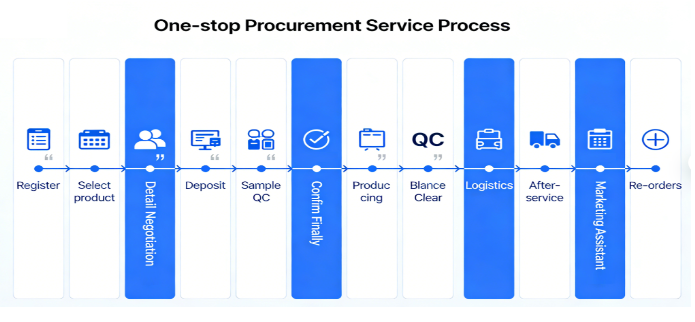
D. Specialized Solution: Seenwills B2B Sourcing Platform
While social platforms excel at discovery, Seenwills excels at execution. It bridges the gap between finding a supplier and successfully importing goods.
Core Value Proposition: Why Seenwills?
Seenwills is not just a directory; it is a managed sourcing ecosystem designed to eliminate the friction of cross-border trade.
a. Frictionless Entry (Free Registration)
b. Unrivaled Data Depth (200M+ SKUs)
- Access a curated database of over 200 million products, heavily concentrated in China's key manufacturing hubs (Yiwu, Guangzhou, Shenzhen). This depth allows for precise comparison that general search engines cannot match.
c. Intuitive User Experience (No Algorithmic Noise)
- Unlike social media, Seenwills offers a clean, utility-first interface. No ads, no viral distractions. Search results are ranked by relevance and supplier capability, not engagement metrics. Optimized for both Desktop (deep analysis) and Mobile (on-the-go management).
d. AI-Powered Language Bridge
- One-Click Translation: Proprietary AI translates complex Chinese technical specs, negotiation nuances, and contract terms into natural English instantly, removing the "lost in translation" risk.
e. Omnichannel Communication Hub
- Communicate your way. The platform integrates:
- Secure Internal Chat: Encrypted, permanent record of all negotiations (crucial for disputes).
- Direct Bridges: One-click connect to supplier WhatsApp, WeChat, or Email.
f. Premium "White-Glove" Service (1-on-1 Full Chain)
- Dedicated Account Manager: You are assigned a bilingual sourcing expert.
- End-to-End Management: From RFQ analysis -> Supplier Vetting -> Sample Coordination -> Production Monitoring -> Logistics.
- On-Ground Support: Need a physical inspection? Seenwills can arrange personalized trips to Yiwu International Trade City, Guangzhou Wholesale Markets, or specific factories, acting as your local eyes and ears.
g. Risk & Cost Optimization
- Consolidated Communication: Stop managing 20 different WeChat chats. Centralize everything.
- Vetted Supply Chain: Seenwills pre-screens suppliers for financial stability and production capacity.
- Financial Security: Guidance on secure payment structures to prevent fraud.
- Quality Assurance: Integrated QC checkpoints before shipment leaves the factory.
Strategic Usage Recommendations
- Start with the "Starter Guide": New users should complete the 5-minute onboarding to unlock advanced filtering tools.
- Leverage the "Smart RFQ": Don't just browse. Post your Request for Quotation (RFQ). Seenwills' algorithm + human analysts will match you with the top 3-5 suppliers who actually fit your criteria, saving hours of screening.
- Use the "Landed Cost Calculator": Input your destination port to get an instant estimate of FOB Price + Freight + Duties + Insurance. Know your true margin before you negotiate.
- Live Chat for Instant Clarity: Stuck on a spec? Use the Live Chat to get immediate clarification on product standards or shipping terms.
- Knowledge Base: Regularly visit the Seenwills Blog for deep dives into Incoterms, latest tariff changes, and industry-specific sourcing guides.
Conclusion: The Hybrid Sourcing Strategy
The future of B2B sourcing is not choosing one channel, but orchestrating a hybrid workflow:
- Discover trends and new suppliers on Douyin/TikTok/WeChat.
- Verify their legitimacy through social proof and video audits.
- Execute the transaction, manage communication, and mitigate risk through the Seenwills Platform.
By combining the visual transparency of social media with the structural rigor of a professional sourcing system, buyers can achieve unprecedented efficiency, cost savings, and supply chain security.
[company_id] => 18
[sort] => 0
[category_id] => 16
[key_name] => Best-B2B-Sourcing-Sites-for-Buyers
)
Array
(
[id] => 74
[name] => Win-Win Chance--- China's 100% 0-Tariff Policy To Africa
[status] => normal
[create_time] => 2026-03-09 22:43:55
[delete_time] =>
[category_ids] => 16
[image] =>
[description] =>
[content] => SEENWILLS Global Investment Insights Based China Official News
Date: March 9, 2026
Source: SEENWILLS Global Strategy Research Center
Keywords: China-Africa Trade, Zero-Tariff, Supply Chain Restructuring, Global South, Investment Opportunities, 53-Nation List
Executive Summary
On March 8, 2026, at the press conference of the Fourth Session of the 14th National People's Congress, Chinese Foreign Minister Wang Yi made a landmark announcement: Effective May 1, 2026, China will grant 100% zero-tariff treatment on all taxable products imported from all 53 African nations with which it maintains diplomatic relations.

This initiative marks a fundamental shift in China-Africa economic relations from "aid-driven" to "market-driven." For global investors, this is not merely a tariff reduction; it is a systemic opportunity involving supply chain restructuring, industrial transfer, resource security, and an emerging market explosion.
This report integrates macro-strategy, practical case studies, risk warnings, and a complete country list to provide deep decision-making references for Chinese exporters, African governments and enterprises, and international institutional investors.
I. Macro-Strategic Dimension: Why Now? Why Africa?
Foreign Minister Wang Yi’s formula of "Tariff Subtraction, Trade Addition, and Livelihood Multiplication" reveals three strategic logics behind this policy:
- Building a Resource Security Barrier under "Dual Circulation": Amidst intensifying geopolitical gaming, China urgently needs to diversify its critical resource supply. By locking in African cobalt, lithium, copper, manganese, grain, and energy via zero tariffs, China is constructing a strategic resource reserve independent of Western systems.
- Forging a "Global South" Economic Community: As Western trade protectionism rises, China’s unilateral market opening consolidates its leadership among developing nations. This aims to form a massive internal economic cycle to hedge against external uncertainties.
- The Inevitable Choice for Capacity Cooperation & Industrial Upgrading: With China’s manufacturing sector facing capacity optimization needs, and Africa possessing a demographic dividend and resource endowments, zero tariffs will compel Africa to shift from "selling raw materials" to "selling finished goods," opening a trillion-dollar market for Chinese equipment, technology, and services.
SEENWILLS Viewpoint: This is not short-term concession; it is China’s "opening move" in its global supply chain layout for the next 20 years. Investors should treat this as a structural opportunity comparable to "China’s accession to the WTO."

II. Practical Simulation: How African Merchants Can Leverage This Opportunity to Scale Up
To visualize the policy dividends, we construct a typical case study: The Industrial Upgrade of a Kenyan Coffee Cooperative.
Case Study: From "Selling Beans" to "Selling Brands"
- Protagonist: "Green Highlands" Agricultural Cooperative, Kenya (Hypothetical).
- The Past (Pre-2025):
- Model: Plant coffee → Sun-dry green beans → Export to European/Chinese intermediaries.
- Pain Points: Green bean prices fluctuated wildly with international futures; thin margins ($0.5/kg net profit); no tariff advantage for deep-processed products (roasted beans faced a 15% tariff into China), making them uncompetitive.
- The Turning Point (Post-May 1, 2026):
- Policy Dividend: Roasted coffee beans, drip bags, and freeze-dried powder enter China tariff-free.
- Action Plan:
- Financing & Expansion: Leveraging policy expectations, secure low-interest loans from Chinese financial institutions to import fully automated Chinese roasting lines and freeze-drying equipment.
- Product Upgrading: Stop exporting raw beans directly. Instead, process into "Kenya AA Drip Bags" and "Cold Brew Coffee Concentrate."
- Compliance First: Complete registration with China’s General Administration of Customs (GACC) in advance, obtain organic certification, and design Chinese packaging that appeals to local aesthetics.
- Direct-to-Consumer Channels: Bypass intermediaries; launch flagship stores on Chinese e-commerce platforms (Tmall Global/JD.com) and sign direct supply agreements with coffee chains.
- Projected Outcome:
- Cost Side: Save 15% tariff costs + 30% energy reduction via efficient Chinese machinery.
- Revenue Side: Finished product prices are 4x that of green beans; brand premium achieved via "Zero Tariff + Origin Story."
- Final Impact: Net profit margin surges from 5% to 25%; cooperative size triples; creates 2,000 local jobs.
Key Takeaway: African enterprises must transform from "resource sellers" to "industrial operators," utilizing the zero-tariff window to achieve primitive accumulation for industrialization.
III. Three-Phase Evolution Roadmap & Core Opportunity Matrix
We analyze core opportunities across three phases: Equipment Export, Trade Explosion, and Ecosystem Integration.
Phase 1: Capacity Building (May 2026 – Dec 2027) — "Selling Shovels"
Core Logic: To leverage zero tariffs for developing processing industries, Africa urgently needs to procure Chinese equipment.
| Sector |
Core Opportunity Categories (Specific Products) |
Target Market Hotspots |
Strategy for Chinese Suppliers |
| Agro-Processing |
Cold Chain: Pre-coolers, mobile cold storage, vacuum packers.
Processing Lines: Coffee roasters, cocoa fermenters, cashew shellers, fruit grading/washing lines, oil presses.
Packaging: Auto-filling, labeling, coding machines. |
Kenya/Ethiopia (Coffee)
Ivory Coast/Ghana (Cocoa)
Nigeria (Cashews) |
Offer bundled "Equipment + Process Training" solutions; adapt machinery for high-temp/dusty environments. |
| Mining & Smelting |
Crushing/Grinding: Jaw crushers, ball mills.
Sorting/Refining: Flotation cells, X-ray sorters, small-scale smelting furnaces. |
DRC (Cobalt/Copper)
Zimbabwe (Lithium)
Guinea (Bauxite) |
Focus on modular, small-scale equipment to lower entry barriers; provide remote O&M support. |
| Light Industry & Textiles |
Spinning/Weaving: Carding machines, looms, dyeing lines.
Garment/Footwear: Auto-cutters, industrial sewing machines, sole injection molders. |
Ethiopia
Tanzania
Madagascar |
Export turnkey factory solutions; assist in establishing QC standards to meet Chinese import requirements. |
| Infrastructure & Energy |
Construction Materials: Cement kilns, non-fired brick machines, batching plants.
Machinery: Excavators, loaders (cost-effective models).
PV/Storage: Solar panels, inverters, Li-ion storage cabinets. |
Nigeria
Angola
Kenya |
Provide "PV-Storage-Diesel" micro-grid solutions to address unstable power supply in factories. |
| General Tools |
Power/Hand Tools: Drills, grinders, wrench sets, measuring instruments.
Consumables: Drill bits, saw blades, PPE. |
Pan-African Industrial Zones |
Establish local warehousing for rapid delivery. |
Phase 2: Trade Explosion (2028 – 2030) — "Paving the Roads"
Core Logic: African capacity is released; compliant finished goods flood into China.
- Key Actions: Strictly enforce Rules of Origin (value-add >40%), conduct pre-shipment GB standard testing, and promote RMB settlement.
- Beneficiaries: Chinese food processing (low-cost raw materials), non-ferrous metal smelting, cross-border e-commerce (African niche consumer goods).

Phase 3: Ecosystem Integration (2031 Onwards) — "Empowering the Brain"
Core Logic: Deep integration of digitalization, branding, and financialization.
- Service Segments:
- E-commerce Operations: Help African brands enter Douyin/Taobao; incubate influencer livestreamers.
- Supply Chain Finance: Cross-border financing based on inventory pledges and purchase orders.
- Brand Consulting: IP protection, organic certification guidance, C2M reverse customization.
- Vocational Training: Upgraded "Luban Workshops" to train local technical workers.
IV. Potential Challenges & Risk Alerts (Deep Dive)
Despite the bright prospects, investors must remain vigilant against deep-seated risks and formulate contingency plans:
1. Hidden Barriers: Standards & Compliance Risks
- Risk: Zero tariff does not mean zero threshold. China has extremely strict National Standards (GB) for pesticide residues, heavy metals, and microbial indicators in food/agriculture. African products are often returned or destroyed due to failed tests, causing huge losses.
- Mitigation: Implement "Pre-shipment Testing" by China-accredited labs (e.g., SGS) against GB standards; ensure GACC registration and compliant Chinese labeling are completed before shipment.
2. The Rule of Origin Trap
- Risk: Strict prevention of "origin laundering," where semi-finished goods from third countries (e.g., Southeast Asia, India) are simply assembled in Africa to arbitrage tariffs. If identified as fraud by Chinese Customs, this leads to massive fines and blacklisting.
- Mitigation: Establish a full-process traceability system. Retain complete evidence chains for raw material procurement, production processing, and labor costs to prove "substantial transformation" (typically value-add >40%).
3. Logistics & Supply Chain Fragility
- Risk: Poor inland transport, port inefficiencies, and power shortages in Africa can lead to spoilage of fresh produce or factory shutdowns.
- Mitigation: Invest in cold chain logistics and IoT monitoring; adopt "PV-Storage" integrated solutions for power stability; establish multi-location warehouse backups.
4. Geopolitical & Policy Volatility
- Risk: Political instability in certain African nations, or pressure from Western powers to alter policies towards China; severe currency fluctuations causing payment difficulties.
- Mitigation: Purchase export credit insurance (e.g., Sinosure); aggressively promote Cross-Border RMB Settlement to bypass USD shortages and exchange rate risks; diversify investment across countries.
5. Domestic Industry Impact & Competition
- Risk: Low-cost African agricultural products may impact China’s domestic agriculture (e.g., Yunnan coffee, Guangxi nuts); simultaneously, competition for export quotas to China will intensify among African nations.
- Mitigation: Chinese related industries must pivot to high-end, branded segments; African exporters must build differentiated brands to avoid pure price wars.
V. Appendix: The List of 53 African Diplomatic Partners Enjoying 100% Zero Tariffs
Special Note: There are 54 internationally recognized sovereign states in Africa. Eswatini is excluded from this list as it maintains so-called "diplomatic relations" with Taiwan and does not have diplomatic ties with the PRC. The following 53 nations will enjoy this policy effective May 1, 2026.
| No. |
Country Name (English / Chinese) |
Date of Diplomatic Relations |
No. |
Country Name (English / Chinese) |
Date of Diplomatic Relations |
| North Africa (5) |
|
|
West Africa (16) |
|
|
| 1 |
Egypt / 埃及 |
1956-05-30 |
18 |
Niger / 尼日尔 |
1974-07-20 |
| 2 |
Algeria / 阿尔及利亚 |
1958-12-20 |
19 |
Nigeria / 尼日利亚 |
1971-02-10 |
| 3 |
Morocco / 摩洛哥 |
1958-11-01 |
20 |
Senegal / 塞内加尔 |
1971-12-07 (Restored 2005) |
| 4 |
Tunisia / 突尼斯 |
1964-01-10 |
21 |
Sierra Leone / 塞拉利昂 |
1971-07-29 |
| 5 |
Libya / 利比亚 |
1978-08-09 |
22 |
Togo / 多哥 |
1972-09-19 |
| Central Africa (9) |
|
|
23 |
Benin / 贝宁 |
1964-11-12 |
| 6 |
Angola / 安哥拉 |
1983-01-12 |
24 |
Burkina Faso / 布基纳法索 |
1973-09-15 (Restored 2018) |
| 7 |
Cameroon / 喀麦隆 |
1971-03-26 |
25 |
Cabo Verde / 佛得角 |
1976-04-25 |
| 8 |
Central African Rep. / 中非共和国 |
1964-09-29 |
26 |
Côte d'Ivoire / 科特迪瓦 |
1983-03-02 |
| 9 |
Chad / 乍得 |
1972-11-28 (Restored 2006) |
27 |
The Gambia / 冈比亚 |
1974-12-14 (Restored 2016) |
| 10 |
Congo (Rep.) / 刚果(布) |
1964-02-22 |
28 |
Ghana / 加纳 |
1960-07-05 |
| 11 |
DRC / 刚果(金) |
1961-02-20 |
29 |
Guinea / 几内亚 |
1959-10-04 |
| 12 |
Equatorial Guinea / 赤道几内亚 |
1970-10-15 |
30 |
Guinea-Bissau / 几内亚比绍 |
1974-03-15 |
| 13 |
Gabon / 加蓬 |
1974-04-20 |
31 |
Liberia / 利比里亚 |
1971-02-17 (Restored 1997) |
| 14 |
São Tomé & Príncipe / 圣多美和普林西比 |
1975-07-12 (Restored 2016) |
32 |
Mali / 马里 |
1960-10-25 |
| East Africa (11) |
|
|
33 |
Mauritania / 毛里塔尼亚 |
1965-07-19 |
| 15 |
Burundi / 布隆迪 |
1963-12-21 |
Southern Africa (12) |
|
|
| 16 |
Comoros / 科摩罗 |
1975-11-13 |
34 |
Botswana / 博茨瓦纳 |
1975-01-06 |
| 17 |
Djibouti / 吉布提 |
1979-01-08 |
35 |
Lesotho / 莱索托 |
1983-04-14 |
| 18 |
Eritrea / 厄立特里亚 |
1993-05-24 |
36 |
Madagascar / 马达加斯加 |
1972-11-06 |
| 19 |
Ethiopia / 埃塞俄比亚 |
1970-11-24 |
37 |
Malawi / 马拉维 |
2007-12-28 |
| 20 |
Kenya / 肯尼亚 |
1963-12-14 |
38 |
Mauritius / 毛里求斯 |
1972-04-15 |
| 21 |
Rwanda / 卢旺达 |
1971-11-12 |
39 |
Mozambique / 莫桑比克 |
1975-06-25 |
| 22 |
Seychelles / 塞舌尔 |
1976-06-30 |
40 |
Namibia / 纳米比亚 |
1990-03-22 |
| 23 |
Somalia / 索马里 |
1960-12-14 |
41 |
South Africa / 南非 |
1998-01-01 |
| 24 |
South Sudan / 南苏丹 |
2011-07-09 |
42 |
Zambia / 赞比亚 |
1964-10-29 |
| 25 |
Sudan / 苏丹 |
1959-02-04 |
43 |
Zimbabwe / 津巴布韦 |
1980-04-18 |
| 26 |
Tanzania / 坦桑尼亚 |
1964-04-26 |
|
|
|
| 27 |
Uganda / 乌干达 |
1962-10-18 |
|
|
|
(Note: Dates reflect the establishment or most recent restoration of diplomatic relations.)
VI. Conclusion: A Future of Shared Prosperity
May 1, 2026, stands as a watershed moment in the history of China-Africa and global trade.
- For China, it is a critical step in building a high-level open economy and securing resources.
- For Africa, it is a historic opportunity to realize industrial dreams and eradicate poverty.
- For Global Investors, it represents a super-cycle ( wind tunnel/opportunity) spanning decades.

SEENWILLS Recommendation: At this juncture, observers will be eliminated, while actors will define the future. Whether it is the overseas layout of Chinese factories, the transformation of African enterprises, or the precise injection of international capital, all require a mindset of long-termism. Let us cultivate deeply together to write a new chapter in the community with a shared future for China and Africa.
Disclaimer: This report is based on public information and policy analysis and does not constitute specific investment advice. Markets involve risks; invest with caution. About SEENWILLS: We strive to be the intelligent bridge connecting China with emerging markets, providing the most forward-looking strategic insights.
[company_id] => 18
[sort] => 0
[category_id] => 16
[key_name] => china-to-africa-zero-tariff-2026
)
Array
(
[id] => 73
[name] => A Multi-Dimensional Strategy for China's 5% GDP Growth Target in 2026
[status] => normal
[create_time] => 2026-03-08 22:11:08
[delete_time] =>
[category_ids] => 16
[image] =>
[description] =>
[content] => As the opening year of the 15th Five-Year Plan (2026-2030), China has officially set its GDP growth target at "around 5%" (specifically a range of 4.5%–5%). This target is not merely a statistical goal; it is a critical threshold required to achieve the 2035 vision of doubling per capita GDP and reaching the status of a moderately developed nation. With global headwinds, demographic shifts, and structural transitions, achieving this target requires a coordinated, multi-dimensional strategy that balances stability with high-quality development.
This article analyzes the specific pathways, policy tools, and structural reforms projected to drive China’s economy toward this 5% benchmark in 2026.
1. The Macro-Policy Engine: Coordinated Fiscal and Monetary Expansion
To hit 5% growth, the government has deployed a policy mix described as "historically loose yet prudent," avoiding the blunt instrument of massive stimulus in favor of targeted precision.
Fiscal Policy: The Primary Driver
- Deficit Ratio Expansion: The fiscal deficit ratio is projected to rise to 4% in 2026, up from the traditional 3% red line. This translates to a deficit scale of approximately 5.7 trillion RMB.
- Debt Issuance Surge:
- Special Sovereign Bonds: Issuance is expected to reach 6.7–7 trillion RMB, specifically earmarked for major national strategies and security capabilities.
- Local Government Special Bonds: Allocated at 5.2–5.5 trillion RMB, focusing on infrastructure projects that generate immediate economic activity and long-term yield.
- Strategic Logic: Unlike previous cycles focused solely on traditional infrastructure (roads/bridges), 2026 spending is heavily weighted toward "New Infrastructure" (5G, AI data centers, industrial internet) and social safety nets (elderly care, affordable housing), which have higher multipliers for domestic consumption.
Monetary Policy: Prudent Easing
- Interest Rate Cuts: The People’s Bank of China (PBOC) is forecast to implement 1–2 rate cuts of 10 basis points each. This is not a "flood-like" stimulus but a calculated move to lower financing costs for the real economy.
- Reserve Requirement Ratio (RRR) Cuts: Expect 1–2 RRR cuts of 0.5 percentage points to release long-term liquidity into the banking system, ensuring banks have ample capital to lend to SMEs and green projects.
- Credit Guidance: Strict window guidance will direct credit away from speculative real estate and toward advanced manufacturing and green technology.
2. Demand-Side Revitalization: Shifting from Investment to Consumption
For years, China’s growth was investment-led. In 2026, the pivot to consumption is the linchpin for sustainable 5% growth.
The "Trade-In" & Consumption Subsidy Program
- Policy Mechanism: A nationwide subsidy program encouraging consumers to trade in old appliances, vehicles, and home furnishings for new, energy-efficient models.
- Projected Impact: This policy aims to unlock trillions of RMB in latent demand. By subsidizing 15-20% of the purchase price for green smart home products and EVs, the government directly stimulates the manufacturing supply chain while upgrading household consumption quality.
Service Sector Expansion
- Focus Areas: Tourism, culture, elderly care, and healthcare.
- Strategy: Reducing market access barriers for private capital in service sectors. For instance, expanding the "silver economy" by incentivizing private investment in senior living facilities, which addresses both the aging demographic challenge and creates millions of service jobs.
Urbanization 2.0 (Hukou Reform)
- Action: Accelerating the granting of urban residency (Hukou) to migrant workers in cities with populations under 3 million.
- Economic Logic: Converting 200 million "floating" residents into full urban citizens unlocks their consumption potential (housing, education, healthcare), estimated to boost domestic consumption by 1.5–2 percentage points of GDP annually over the medium term.
3. Supply-Side Upgrading: New Quality Productive Forces
The core engine for long-term growth lies in shifting from low-end assembly to high-value innovation, termed "New Quality Productive Forces."
Technological Self-Reliance
- Key Sectors: Semiconductors, Artificial Intelligence (AI), Quantum Computing, and Biotechnology.
- Investment: State-guided funds are pouring capital into R&D to bypass geopolitical bottlenecks. The goal is to increase the contribution of total factor productivity (TFP) to growth from ~30% to 40%+ by 2026.
- Outcome: High-tech manufacturing exports (EVs, batteries, solar panels – the "New Three") are projected to grow by 15-20%, offsetting weaknesses in traditional labor-intensive exports.
Green Transition as Growth
- Carbon Peaking Pathway: The push for carbon neutrality is no longer just a constraint but a growth driver. Massive investments in wind, solar, and energy storage grids are creating a new industrial cluster.
- Data Point: The green energy sector alone is expected to contribute 0.8–1.0% to the overall GDP growth target in 2026 through direct investment and job creation.
4. Stabilizing the Foundation: Real Estate & Risk Management
Achieving 5% growth is impossible if the property sector continues to drag down the economy. The 2026 strategy focuses on "stabilization" rather than "re-flation."
The "White List" & Inventory Clearance
- Mechanism: Expanding the "white list" mechanism to ensure viable real estate projects receive sufficient financing to complete construction, restoring buyer confidence.
- Government Buyback: Local state-owned enterprises (SOEs) are authorized to purchase unsold inventory from developers to convert into affordable rental housing. This clears developer balance sheets and addresses social housing needs simultaneously.
Debt Resolution
- Local Government Debt: A comprehensive debt swap program allows local governments to exchange high-interest, short-term hidden debt for lower-interest, long-term official bonds. This frees up fiscal space for development spending rather than debt servicing.
5. Regional Synergy: The "Dual Circulation" in Practice
Growth will not be uniform; it will be driven by strategic regional clusters.
- Eastern Coast (Innovation Hub): Provinces like Guangdong, Jiangsu, and Zhejiang are tasked with leading in high-tech exports and digital economy growth, targeting 5.5–6% growth to pull up the national average.
- Central & Western (Industrial Transfer): As labor costs rise in the east, manufacturing is systematically transferring to central provinces (e.g., Anhui, Sichuan), which offer lower costs and robust infrastructure, targeting 5–5.5% growth.
- Special Zones: The Hainan Free Trade Port and the Greater Bay Area serve as testing grounds for higher levels of opening up, attracting foreign capital that seeks exposure to China’s consumption market despite global tensions.
Conclusion: A Balanced Path to 5%
Achieving the 5% GDP growth target in 2026 is not about returning to the old model of debt-fueled infrastructure binges. It is a delicate balancing act involving:
- Aggressive but targeted fiscal support (4% deficit, special bonds).
- A decisive shift to consumption via subsidies and urbanization.
- Unwavering investment in tech and green industries to drive productivity.
- Stabilizing the property sector to prevent systemic risk.
While external uncertainties remain, this multi-dimensional strategy leverages China’s vast domestic market and industrial depth. If executed effectively, the 5% target will serve not just as a number, but as a solid foundation for the 15th Five-Year Plan, positioning China to navigate the transition from a middle-income to a high-income economy by 2035.
Outlook: The first half of 2026 may see slower momentum as policies take effect, with growth accelerating in the second half ("front-low, back-high" trajectory), ultimately converging on the 4.5%–5.0% range by year-end.
[company_id] => 18
[sort] => 0
[category_id] => 16
[key_name] => china-gdp-growth-target-2026
)
Array
(
[id] => 72
[name] => Sourcing Ethical & Diversified Supply Chains Beyond China Factories
[status] => normal
[create_time] => 2026-03-08 21:37:22
[delete_time] =>
[category_ids] => 16
[image] =>
[description] =>
[content] => 1. The Voice of the Market: Core Comments
- "Happy to find alternatives to using Chinese sources." – User Query
- "Do you have information on more than 1 U.S. resource to find American manufacturers?" – User Query
- "Could you recommend one of them which respect their workers?" – Ethical Concern
- "Which companies or warehouses would not use forced labour?" – Social Compliance
- "What about suppliers in Mexico/LATAM/India?" – Regional Interest
2. Core Needs Analysis
Geopolitical tension, tariff wars, and rising ethical consciousness have created a demand for Supply Chain Diversification. Buyers are actively seeking "China Plus One" strategies to mitigate risk, reduce lead times to specific markets (like the US via Mexico), and ensure their products are free from forced labor. The core need is Resilient and Ethical Sourcing.
3. Strategic Solution: The Global Diversification Matrix
A. The Underlying Logic: Risk Distribution
Relying on a single country for 100% of your supply chain is a strategic vulnerability. Diversification isn't just about ethics; it's about business continuity. Different regions offer different competitive advantages: China for scale/tech, Vietnam/India for labor cost/textiles, Mexico for near-shoring to the US, and Eastern Europe for EU access.
B. Actionable Steps & Methodology
Step 1: Define Your "Why" for Diversification
- Tariff Avoidance: If Section 301 tariffs (25%) kill your margin, look to Vietnam or Thailand.
- Speed to Market (US): If shipping from China takes 45 days, Mexico offers trucking in 5-7 days (Near-shoring).
- Ethical Compliance: If "Forced Labor" is a brand risk, prioritize suppliers in India (strong democratic oversight) or certified facilities in Eastern Europe.
- Cost Reduction: For labor-intensive goods (garments, assembly), Bangladesh and Cambodia often beat China on pure labor cost.
Step 2: Regional Strengths Analysis
- Vietnam: Excellent for electronics assembly, footwear, and furniture. Strong free trade agreements (FTAs) with EU/US.
- India: Dominant in pharmaceuticals, textiles, jewelry, and software. Large English-speaking workforce.
- Mexico: Ideal for automotive parts, heavy machinery, and goods destined for North America (USMCA agreement benefits).
- Turkey: High-quality textiles and home goods with fast access to the European market.
Step 3: Verifying Ethical Standards
- Certifications to Demand:
- SA8000: The gold standard for social accountability (no child/forced labor).
- BSCI (Business Social Compliance Initiative): Widely used in Europe.
- Fair Trade Certified: Ensures fair wages for farmers/workers.
- Audit Strategy: Unlike price audits, ethical audits require unannounced visits and worker interviews off-site.
Step 4: The "China Plus One" Hybrid Model
- Strategy: Keep your complex, high-tech manufacturing in China (where the supply chain ecosystem is unmatched) but move final assembly or labor-intensive packaging to Vietnam or Mexico.
- Benefit: You retain Chinese efficiency while gaining a "Non-Chinese Origin" label for customs purposes.
C. Case Study: The Apparel Brand Pivot
- Challenge: A US clothing brand faced 25% tariffs on Chinese cotton goods and consumer backlash over labor concerns.
- Action: They shifted fabric sourcing to China (best quality/price) but moved cutting and sewing to Vietnam.
- Result:
- Origin Label: "Made in Vietnam" (Avoided Section 301 Tariffs).
- Ethics: Passed SA8000 audit, allowing them to market as "Ethically Sourced."
- Margin: Net margin increased by 18% despite slightly higher logistics complexity.
D. Comparison: Global Sourcing Hubs
Conclusion: The future of sourcing is not about finding the cheapest country; it's about building a resilient, ethical, and diversified network. By strategically allocating production across regions like Vietnam, Mexico, and India, you protect your brand from geopolitical shocks and align with the values of the modern conscious consumer.
[company_id] => 18
[sort] => 0
[category_id] => 16
[key_name] => sourcing-ethical-diversified-supply-chains-beyond-china-factories
)
Array
(
[id] => 71
[name] => Growth Pathway From Sample Orders to Container Business With Chinese Supplier
[status] => normal
[create_time] => 2026-03-08 21:35:22
[delete_time] =>
[category_ids] => 16
[image] =>
[description] =>
[content] => 1. The Voice of the Market: Core Comments
- "If i want to buy just one or two items is it possible?" – Euandiba
- "Problems through official manufacturers are... MOQ with 1 Full Load Container." – Hackerjalanancuk
- "Do you have other alternatives for individuals who want to buy products... for a lower quantity?" – User Query
- "Suppliers ignore you because you look unprepared." – Implied Consensus
2. Core Needs Analysis
Startups face the "MOQ Paradox": Factories won't talk without large orders, but buyers can't risk large orders without testing. The core need is a Structured Growth Pathway that allows businesses to validate products with low risk (Low MOQ) and systematically scale to factory-direct pricing (High Volume) without changing suppliers mid-stream.
3. Strategic Solution: The 3-Stage Scaling Framework
A. The Underlying Logic: "Earn Your Volume"
Factories operate on thin margins and high efficiency. They reject small orders not out of malice, but because the setup cost (machine calibration, material sourcing) outweighs the profit. The strategy is to prove your potential value to the factory to unlock exceptions.
B. Actionable Steps & Methodology
Stage 1: The "Sample & Validate" Phase (MOQ: 1-50 units)
- Goal: Product-Market Fit.
- Channel: DHgate, Alibaba "Ready to Ship", or Retail Arbitrage.
- Strategy:
- Accept higher unit costs (2x-3x normal price) as a "marketing research fee."
- Crucial Move: When ordering samples, treat it like a business meeting. Send a professional inquiry detailing your brand vision.
- Script: "We are launching a new brand in Q3 and expect to move 5,000 units by Q4. We need to validate quality with this sample first." This signals future volume.
Stage 2: The "Pilot Run" Phase (MOQ: 100-500 units)
- Goal: Initial Inventory & Branding.
- Channel: Direct Alibaba Contact or Sourcing Agent.
- Strategy:
- Negotiate MOQ: Ask for a "Trial Order" at a slightly higher price. Most factories will accept 30% above standard price for a smaller run.
- Customization: Start with simple customization (logo sticker, custom box) rather than complex mold changes.
- Leverage Stock: Ask if they have "stock lots" or semi-finished goods you can brand.
Stage 3: The "Production Partner" Phase (MOQ: 1,000+ units)
- Goal: Maximum Margin & Exclusivity.
- Channel: Direct Factory Contract / 1688.com.
- Strategy:
- Lock in Pricing: Sign a yearly contract based on projected volume.
- Exclusive Molds: Pay for your own molds to ensure product uniqueness and prevent the factory from selling your design to others.
- QC Integration: Implement inline inspections (during production) rather than just final checks.
C. Case Study: The "Ignored" Buyer vs. The "Strategic" Partner
- Scenario A (Failure): Buyer emails: "Hi, how much for 10 pieces of this bag? Thanks."
- Result: Ignored. Or quoted $50/unit (retail price).
- Scenario B (Success): Buyer emails: "Dear Sales Team, I represent [Brand Name], expanding into the US market. We project 2,000 units/year. We require a sample for quality check, followed by a pilot order of 200 units. If quality meets our standards, we will move to monthly containers. Can we discuss a trial order arrangement?"
- Result: Supplier responds within 24 hours. Agrees to 200 units at a reasonable markup. Treats buyer as a VIP.
D. Data-Driven Growth Projection
| Stage |
Order Qty |
Unit Cost |
Profit Margin |
Risk Profile |
Action |
| Validation |
10-50 |
High (+50%) |
Low/Negative |
Low |
Test Market |
| Pilot |
200-500 |
Medium (+15%) |
Moderate |
Medium |
Build Brand |
| Scale |
1,000+ |
Low (Base) |
High |
High (Inventory) |
Dominate Market |
Conclusion: You don't need a million dollars to start; you need a million-dollar mindset. By communicating your growth trajectory clearly, you can convince factories to bend their MOQ rules, allowing you to scale smoothly from a garage startup to a major importer.
[company_id] => 18
[sort] => 0
[category_id] => 16
[key_name] => from-sample-to-container-with-china-supplier
)
Array
(
[id] => 67
[name] => 100 Sample Sentences for China Business Negotiations
[status] => normal
[create_time] => 2026-03-04 22:41:08
[delete_time] =>
[category_ids] => 16
[image] =>
[description] => Chinese business conversation cultures are different from others.
[content] =>
Introduction
This comprehensive guide provides 100 practical negotiation case studies for international procurement professionals. After the ARTS OF TALKING TIPS WITH CHINESE SUPPLIERS

Case Studies 1-20: Opening and Relationship Building
- Wrong:"Let's get straight to the price discussion."
Right: "We appreciate your hospitality. We've noticed your company's strong reputation in the industry, particularly in... We're excited to explore potential collaboration opportunities."
- Wrong:"Your quotation is too disorganized; I can't understand it."
Right: "This quotation contains a lot of information. To help our internal evaluation, could you please provide more details on...?"
- Wrong:"We're short on time, only 15 minutes available."
Right: "We have a tight schedule today, so let's focus on the key discussion points to ensure efficient progress."
- Wrong:"We need the biggest discount possible."
Right: "We value this partnership opportunity. Based on our projected order volume, could you offer a more competitive pricing structure?"
- Wrong:"We're a large company, you should give us the best price."
Right: "Our company has strong global distribution channels. If you can provide competitive pricing, we can help grow this product line together."
- Wrong:"This product is simple, the price should be lower."
Right: "We understand your pricing reflects product value. Could you help us better understand the cost breakdown?"
- Wrong:"We're talking to several suppliers, you're not our only option."
Right: "We're evaluating multiple suppliers, but your technical capabilities and industry reputation stand out. We'd like to prioritize working with you."
- Wrong:"We need an immediate answer."
Right: "This matter is important to us. We understand you may need internal discussions. Can we follow up tomorrow afternoon?"
- Wrong:"We don't like this design, redo it."
Right: "The design has some interesting elements, but it doesn't fully align with our market positioning. Could we discuss potential adjustments together?"
- Wrong:"Our boss doesn't approve this price."
Right: "This price exceeds our budget constraints. To move forward, could we explore alternative cost-saving approaches?"
- Wrong:"Your sample quality is poor."
Right: "The sample shows promise, though it doesn't fully meet our expectations. We're confident in your ability to improve it."
- Wrong:"We need free samples."
Right: "To properly evaluate your manufacturing capabilities, could we request a few samples? We'll cover shipping costs."
- Wrong:"Your delivery timeline is too long, unacceptable."
Right: "Our market demand is urgent. If we double the order quantity, could we shorten delivery to 30 days?"
- Wrong:"We can't accept this contract clause."
Right: "This clause presents some implementation risks. Could we discuss a safer alternative for both parties?"
- Wrong:"We don't need intermediaries, direct factory contact only."
Right: "We prefer working directly with manufacturers for quality control. We'll respect existing channels while seeking win-win solutions."
- Wrong:"Your price is 20% higher than competitors, must reduce."
Right: "Market prices vary. Could you explain the value-added features that justify your pricing?"
- Wrong:"Lower price or we cancel the order."
Right: "Budget constraints are firm. If unit price can't change, could we adjust delivery terms or order volume?"
- Wrong:"Your profit margin is too high, share with us."
Right: "We want both parties to benefit. Could you review cost structures for potential optimizations?"
- Wrong:"Accept this price but include free accessories."
Right: "At this price point, could you include some spare parts to support our market launch?"
- Wrong:"Provide detailed cost breakdown or no discussion."
Right: "A cost structure overview would help us make faster decisions. Could you share this information?"
Case Studies 21-40: Pricing and Cost Negotiations
- Wrong:"This additional fee is unreasonable, remove it."
Right: "We understand this fee, but it's challenging within our budget. Could we explore alternatives?"
- Wrong:"You should cover shipping costs, it's standard."
Right: "For our first collaboration, your support with shipping would reduce our risk and demonstrate partnership commitment."
- Wrong:"You bear all currency risk."
Right: "Currency fluctuations affect both parties. Could we establish a shared risk mechanism?"
- Wrong:"We need cash discount."
Right: "We can offer faster payment terms. Could this be reflected in pricing?"
- Wrong:"Quotation validity period is too short."
Right: "Two weeks is tight for our approval process. Could we extend to one month?"
- Wrong:"This component cost can't be this high."
Right: "This component represents significant cost. Could you explain the materials and processes involved?"
- Wrong:"Annual price reductions required."
Right: "As volumes grow and processes mature, what cost reduction opportunities exist?"
- Wrong:"Simplify packaging to reduce costs."
Right: "We value sustainable packaging. Do you have cost-effective eco-friendly options?"
- Wrong:"Provide free technical support."
Right: "Technical support is crucial. We're willing to compensate for this service."
- Wrong:"Your profit margins must be high."
Right: "We trust your pricing rationale. How can we achieve better cost competitiveness?"
- Wrong:"We need exclusive rights without price increase."
Right: "We're committed to being your exclusive distributor. Could pricing support enhance our market position?"
- Wrong:"You cover sample costs."
Right: "We'll cover sample expenses to demonstrate our evaluation commitment."
- Wrong:"Quarterly payments required."
Right: "Quarterly payments align with our cash flow. Could order volume guarantees offset this?"
- Wrong:"Minimum order quantity too high."
Right: "Our initial order may be smaller. Could we adjust pricing or pay a setup fee?"
- Wrong:"Free training required."
Right: "Training is essential for product success. We'll compensate for this service."
- Wrong:"Your costing method is incorrect."
Right: "Our costing models differ. Could we schedule a technical discussion?"
- Wrong:"Project-based payments only."
Right: "Milestone payments align with project progress and risk management."
- Wrong:"Unlimited warranty required."
Right: "Extended warranty builds customer confidence. What's feasible with appropriate cost sharing?"
- Wrong:"You cover all certification costs."
Right: "Certifications are necessary investments. Could we share these costs or include in initial orders?"
- Wrong:"Your pricing lacks competitiveness."
Right: "Market prices vary. Could you provide a more market-aligned proposal while maintaining quality?"

Case Studies 41-60: Quality and Delivery Negotiations
- Wrong:"Your quality standards are too low."
Right: "Our target market has high quality expectations. Could you share your highest quality standards?"
- Wrong:"Zero defects required."
Right: "We aim for zero defects. What's your typical defect rate and corrective actions?"
- Wrong:"Internal QC reports aren't believe."
Right: "We trust your QC capabilities. Could the 3rd party testing or detailed data enhance confidence?"
- Wrong:"Penalties for late delivery."
Right: "On-time delivery is critical to our plans. Could we prioritize this order with appropriate incentives?"
- Wrong:"Real-time production updates required."
Right: "Weekly production reports would help us coordinate logistics and marketing."
- Wrong:"Packaging is too basic."
Right: "Our customers value unboxing experience. Do you have premium packaging options?"
- Wrong:"Provide all spare parts."
Right: "We need a spare parts inventory for service. Could you provide a recommended parts list?"
- Wrong:"Instructions are too bad."
Right: "Clear instructions are vital. Could we review content to ensure all key steps are covered?"
- Wrong:"You bear all logistics risks."
Right: "Let's clarify risk responsibilities according to international trade terms."
- Wrong:"You supply all raw material."
Right: "Core raw material should come from you for quality consistency; non-core items we can source."
- Wrong:"Your manufacturing process is outdated."
Right: "We're interested in your production capabilities. Could we tour your facility?"
- Wrong:"You must have all certifications."
Right: "Specific certifications are mandatory for our market. What's your current certification status?"
- Wrong:"After-sales response is too slow."
Right: "Quick response is customer-critical. What's your typical overseas service process?"
- Wrong:"You provide all design work."
Right: "We have design capabilities but need your manufacturing expertise for design optimization."
- Wrong:"Mold costs are too high."
Right: "Mold quality affects product life. Could you explain the materials and craft used?"
- Wrong:"You cover all return shipping."
Right: "For quality issues, we expect you to cover returns; for non-quality issues, we'll assume costs."
- Wrong:"Inventory turnover is too slow."
Right: "To reduce capital, could we explore just-in-time or small-batch deliveries?"
- Wrong:"Free software upgrades required."
Right: "Software updates are important. We'll compensate for this service."
- Wrong:"Testing standards are insufficient."
Right: "Our pre-market testing is rigorous. Could we align testing standards through technical discussions?"
- Wrong:"Documentation is incomplete."
Right: "Complete documentation is essential for customs and sales. Could you help complete missing items?"
Case Studies 61-80: Contract and Terms Negotiations
- Wrong:"Our standard contract, no changes allowed."
Right: "This is our standard contract based on experience. We're open to discussing specific terms for mutual agreement."
- Wrong:"You must accept all our terms."
Right: "Contracts protect both parties. Let's review clauses to ensure fairness and mutual benefit."
- Wrong:"Intellectual property belongs to us."
Right: "We want rights to final product design while respecting your manufacturing IP."
- Wrong:"No sales to our competitors."
Right: "We seek market protection through specific exclusivity terms. Could we discuss scope and duration?"
- Wrong:"Unlimited liability required."
Right: "Let's define clear duties limits and compencisitions caps for risk management."
- Wrong:"You must accept force majeure terms."
Right: "Force majeure is standard. Let's define it according to international trade practices."
- Wrong:"We need unlimited contract termination rights."
Right: "Market changes require flexible termination clauses with proper notice and settlement procedures."
- Wrong:"You must accept our audits."
Right: "Regular information sharing and verification support transparency. How do you prefer this handled?"
- Wrong:"Contract must be in English only."
Right: "An English contract facilitates our operations. Could both languages have equal efficiency?"
- Wrong:"You must provide bank guarantees."
Right: "Financial security is important. What terms options do you offer?"
- Wrong:"You cover all tariffs."
Right: "Let's allocate tariff responsibilities according to international trade terms."
- Wrong:"You must accept our payment terms."
Right: "Our payment SOPs requires time. Could extended terms be offset by order volume commitments?"
- Wrong:"You provide all technical documentation."
Right: "Core technical documents are essential. Could we confirm the required scope together?"
- Wrong:"No subcontracting allowed."
Right: "Core processes should be in-house. For non-core programn, could we discuss quality assurance?"
- Wrong:"You must accept our quality claim process."
Right: "Let's develop a mutually agreed quality claim process for efficient resolution."
- Wrong:"You provide all historical data."
Right: "Recent production and quality data would help our evaluation. Could you share this?"
- Wrong:"You must meet our insurance requirements."
Right: "Appropriate commercial insurance is recommended. What coverage do you maintain?"
- Wrong:"You provide all employee information."
Right: "We need employee records for compliance verification. Could you share relevant documentation?"
- Wrong:"You must accept all our contract amendments."
Right: "Our amendments aim for clarity. Let's discuss these changes together."
- Wrong:"Find another supplier if you don't agree."
Right: "We prefer working with you. Let's explore creative solutions to meet both parties' needs."
If you are doing business in Yiwu International Wholesale Markets or Guangzhou Markets you'd better use such kinds of nice sentences to get a better price quotation.
Case Studies 81-100: Deadlock and Conflict Resolution
- Wrong:"No room for negotiation on this."
Right: "This is a key requirement for us. Could we explore compromises in other areas?"
- Wrong:"You're wasting our time."
Right: "Progress on key issues has been slower than expected. Let's refocus on mutual interests."
- Wrong:"Why are you being so stubborn?"
Right: "I understand your position has valid reasons. Could we discuss alternative solutions?"
- Wrong:"Can't sign with current terms."
Right: "Internal approval is challenging with current terms. Let's discuss a mutually acceptable compromise."
- Wrong:"I don't accept your explanation."
Right: "Your explanation provides insight, but we need to address specific risks. What solutions do you propose?"
- Wrong:"Re-evaluate entire copporations."
Right: "This significant disagreement requires internal review. Could we receive your final proposal before our meeting?"
- Wrong:"Give us an immediate answer."
Right: "This is time-sensitive. Could we receive your response by tomorrow morning?"
- Wrong:"You lack truth."
Right: "We value your honest. Let's focus on resolving specific issues to build confidence."
- Wrong:"Industry standard is like this."
Right: "Common industry practices include... What's your typical approach?"
- Wrong:"Prove it to us."
Right: "Supporting data would help our decision-making. Could you provide relevant documentation?"
- Wrong:"Not our responsibility."
Right: "This exceeds my current authority. I'll consult our technical/legal team and follow up promptly."
- Wrong:"You should have told us earlier."
Right: "Earlier notification would have helped planning. Let's adjust our schedule to accommodate this change."
- Wrong:"Your proposal is unrealistic."
Right: "There's a significant gap between expectations. Let's identify flexible areas for negotiation."
- Wrong:"You solve it yourself."
Right: "This issue affects both parties. We'll provide necessary support to resolve it together."
- Wrong:"We need written apology."
Right: "We focus on solutions and prevention. A detailed corrective action plan would be most valuable."
- Wrong:"You're asking too much."
Right: "This presents challenges, but let's explore creative solutions to meet mutual requirements."
- Wrong:"Don't try to deceive us."
Right: "We trust your best decisions, but additional data would strengthen our confidence."
- Wrong:"You're too slow."
Right: "Project timelines are tight. Could we allocate additional resources to accelerate progress?"
- Wrong:"You bear all consequences."
Right: "Responsibility allocation is important, but let's focus on minimizing losts through joint efforts."
- Wrong:"It's impossible."
Right: "Current conditions make this challenging. With adjustments in... we may find a better solution."
During your copporation with SEENWILLS TEAMS we will offer more Chinese communication cultures to get better results and great relathionship with Chinese factory suppliers.
[company_id] => 18
[sort] => 0
[category_id] => 16
[key_name] => chinese-business-negotiation-guide
)
Array
(
[id] => 66
[name] => 6 Tips to Have a Better Conversation in Business with Chinese
[status] => normal
[create_time] => 2026-03-04 21:34:22
[delete_time] =>
[category_ids] => 16
[image] =>
[description] => How to have nice a talk to a Chinese it is very important for your business.
[content] => Dear International Partners,
As you open this guide, we believe you are not merely seeking a vendor, but a long-term partner capable of growing with you and creating shared value. As the Chinese proverb goes, "A journey of a thousand miles begins with a single step." Before we take this important first step together, understanding the "unwritten rules" of communication will help you avoid unnecessary detours and pave a smoother path for collaboration.
This guide is more than a "how-to-avoid-mistakes" manual; it is a "communication key" based on the core logic of Chinese culture. We understand that cultural differences can sometimes become barriers, but if you understand the deeper meaning behind them, these barriers transform into bridges of trust.
Part I: Understanding the Foundations— "Guanxi" and "Mianzi"
In Chinese business culture, two concepts are paramount: "Guanxi" (Relationships) and "Mianzi" (Face). Mastering these is the key to communicating effectively with your Chinese partners.
Guanxi: The Cornerstone of Trust
In China, "Guanxi" is not merely "networking"; it refers to a bond based on reciprocity, trust, and long-term interaction. We are not accustomed to "one-off transactions," but rather value stable, long-term partnerships. Therefore, demonstrating sincerity for long-term cooperation is far more attractive than solely pursuing a one-time low price.
Mianzi: The Currency of Dignity
"Mianzi" is about a person's social status and dignity. Directly rejecting someone or causing them to "lose face" in public is a major taboo. Even when disagreements arise, it is best to propose them in a tactful, constructive manner. Maintaining the other party's "face" is, in fact, paving the way for cooperation.
If you are going to make a good GUANXI with your Chinese suppliers or purchasing in Yiwu Futian Markets or Foshan Furniture Wholesale Markets you can ask a sourcing service agent to help you easily.
Part II: Preparation—Respect is the Entry Ticket
Do Your Homework to Demonstrate Professionalism
Before contacting a supplier, take the time to understand their products, the market, and basic industry terminology. This not only allows you to ask more precise questions but also signals to the other party that you are a serious and professional partner.
Choose the Right Communication Tools
While email is the preferred method for formal communication, WeChat plays an indispensable role in Chinese business. It is more immediate and flexible, serving as a vital tool for building "Guanxi." After initial email contact, appropriately suggesting to add WeChat will make the other party feel you are more willing to get close and build trust.
Respect Time Zones, but Understand "Flexibility"
Please respect China Standard Time and try to communicate during weekdays. At the same time, understand that there is a certain "time elasticity" in China, especially in informal communication or meeting arrangements, where brief delays may occur. Patience is part of the process of building "Guanxi."
Part III: The Art of Communication—Decoding High-Context Culture
China is a "high-context" culture, meaning much information is not expressed directly through language, but is implied between the lines, in tone, and context.
Listen for the Subtext
When a Chinese partner says, "We will consider it seriously," it is often not a positive signal, but a polite way to decline. Similarly, "It might be a bit difficult" usually means "No." Learning to interpret these "soft" expressions helps you judge the other party's true intentions more accurately.
Avoid Overusing "I"
In Western business communication, emphasizing personal opinions and needs is the norm. However, in China, "We" often carries more weight than "I." Using phrases like "our team" or "our customers" integrates you better into the collectivist cultural atmosphere and demonstrates a spirit of cooperation.
"Try" does not equal "Do My Best"
In the West, "I'll try" is a positive commitment. However, in Chinese culture, it can sometimes imply "uncertainty" or "difficulty." If you wish to obtain a clear commitment, ask directly for specific timelines and action plans, e.g., "Can we confirm completion by date X?"
Part IV: The Wisdom of Negotiation—Harmony in the Midst of Bargaining
The Art of Initial Quotation
Please understand that the initial quotation is usually not the final price. This is a game based on mutual understanding and trust. We suggest that when inquiring about prices, you clearly express your expectations regarding quality, quantity, and long-term cooperation, laying a good foundation for subsequent negotiations.
Decision-Making May Take Longer
Chinese decision-making models are often "bottom-up" or collective. This means the salesperson you are dealing with may not be able to make an on-the-spot decision and needs to consult with production, technical, or even top leadership. Please be patient; frequent urging will only backfire.
Gifts are Bridges of Friendship
On appropriate occasions (such as first meetings or holidays), a small gift from your hometown (such as specialty food or souvenirs) is an excellent way to express friendliness and build "Guanxi." This is not bribery, but a cultural courtesy.
Part V: Order Execution & After-Sales—Actions Speak Louder than Words
Clarify Details to Avoid Ambiguity
In the order execution phase, all details (specifications, quantity, delivery time, payment method) should be put in writing in a formal contract. As the Chinese saying goes, "Oral words are not evidence, written words are proof." This is not only your protection but also respect for the bilateral cooperation.
On "Apologies" vs. "Solutions"
If a problem arises during cooperation, we might say, "I'm sorry, this is our fault." But this is merely the first step in expressing regret. More importantly, we will immediately provide a specific solution, e.g., "To make up for the delay, we are willing to bear the air freight costs and provide you with X% compensation; what do you think?" Focusing on solutions, rather than dwelling on apologies, is the key to efficient problem-solving.
Payment is a Demonstration of Trust
Please strictly adhere to the payment methods and timelines stipulated in the contract. This is not only the fulfillment of a commercial contract but also the greatest trust and support for the supplier. Conversely, frequently delaying payments or requesting credit will quickly deplete the other party's trust.
Part VI: Cultural Taboos—The Red Lines Not to Cross
Avoid Public Confrontation
No matter how big the disagreement, remain calm and restrained, and avoid directly accusing or criticizing the other party in public.
Respect Politics and Religion
Avoid discussing sensitive political topics (such as Taiwan, Tibet) or religious beliefs. This is not only impolite but may also directly lead to the breakdown of cooperation.
Dining Etiquette
Business banquets are an important occasion for building "Guanxi." As a guest, you do not need to excessively decline dishes out of politeness; moderate acceptance and praise are the best respect for the host. Also, remember that alcohol (especially baijiu) plays a significant role in Chinese business banquets, but if you are not good at drinking, please explain politely and firmly.
Dear partners, the art of communication lies in understanding and respect. We hope this guide helps you better understand China and allows you to feel our sincerity and enthusiasm for establishing a long-term, trusting, and mutually beneficial partnership with you.
We believe that when cultural differences are dissolved by understanding and communication barriers are broken by respect, our cooperation will surely bloom with even more brilliant light.
[company_id] => 18
[sort] => 0
[category_id] => 16
[key_name] => How-to-Talk-Business-with-Chinese-6-Essential-Tips
)
Array
(
[id] => 65
[name] => FAQs on Sourcing
[status] => normal
[create_time] => 2026-03-03 21:56:11
[delete_time] =>
[category_ids] => 16
[image] =>
[description] => Tips, ideas and experience to source better in China.
[content] => Yiwu suppliers and delivery time explained
What most buyers misunderstand about Yiwu Market?
Yiwu vs Guangzhou: which is better for small MOQ?
Can Yiwu suppliers really do OEM?
Biggest advantage of Yiwu sourcing
How To Check Real factory vs trading company in Yiwu Markets?
Why many Amazon sellers fail in Yiwu?
Yiwu Product Quality: Myth vs Reality?
Can Yiwu handle large orders?
Yiwu pricing: why two buyers get two prices?
Is Yiwu good for brand building?
Yiwu after-sales problems buyers face
What kind of buyers Yiwu is best for?
What kind of buyers should NOT source from Yiwu?
Yiwu product categories with best margins?
How Yiwu suppliers view foreign buyers?
Yiwu MOQ negotiation secrets
Yiwu payment habits explained?
Can Yiwu support long-term partnerships?
How to visit Yiwu effectively in 3 days?
Yiwu language & communication reality?
Yiwu factory audits – what matters, what doesn't?
Why many buyers overtrust Yiwu suppliers?
How professional buyers really use Yiwu?
Yiwu sourcing mistakes we see every week?
[company_id] => 18
[sort] => 0
[category_id] => 16
[key_name] => b2b-china-sourcing-questions
)
Array
(
[id] => 21
[name] => Pujiang Crystal-The Global Purchaser's Secret Industry Zone
[status] => normal
[create_time] => 2026-02-14 11:45:45
[delete_time] =>
[category_ids] => 16
[image] =>
[description] => where can we get quality crystal supplier in Pujiang Jinhua Town?
[content] => From October to January, Zhejiang's Pujiang—the nation's largest trophy hub—enters its "Season of Honors." As factories race to produce crystal awards for corporate galas,Mr Wang, a local factory owner, sees orders triple, shipping 7,000–8,000 units daily. This "24-hour supply chain" ecosystem, where raw materials become finished products overnight, turns one month into the profit engine for the entire year. But why is Pujiang the unrivaled capital of crystal? We break down the secrets behind the Capital of Crystal.
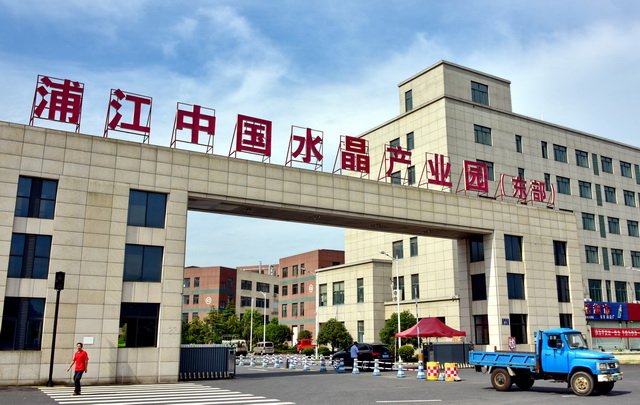
Why?
Here we are going to explain from the following 8 contents
1. Main indurstry in Pujiang town
2. Reason of Pujiang as a Crystal Town
3. Standards on choose the best crystal products
4. Looking for advanced crsytal factories in Pujiang
5. Solution of protectting crsytal items
6. Shipping crystal products safely and faster
7. Crystal industry global trends and advices
8. Transportations to Pujiang town
9. Advices on bulk orders of crystal crafts
*If you have more contents want to know feel free to let SEENWILLS to help, because we are very close to Pujiang town and we also have some coporated crystal factories.
1. The Powerhouse Portfolio: What Does Pujiang Make?
Pujiang has evolved from a single-industry town into a diversified manufacturing giant. While crystal glass remains the crown jewel, the local economy now thrives on a "3+3+1" modern industrial system.
Core Pillars: Crystal glass, photovoltaic new energy, and new materials.
Global Scale: By 2024, the crystal industry chain hit 2 billion more in output. It is the world's largest cluster for trophies and crafts, producing 80% of China's crystal crafts and 70% of its chandelier parts. Products ship to over 50 countries, from India to Afghanistan.
2. Why Pujiang Dominates Crystal Manufacturing
Three forces drive Pujiang's dominance:
The "24-Hour" Ecosystem: Unlike other regions where you must source wood from Anhui or metal parts from Guangdong, Pujiang has it all. From crystal cutting and wood processing to electroplating and assembly, the complete supply chain is contained within the county. This cuts production costs by 30% and slashes delivery times in half.
Innovation & High-End Shift: Factories have pivoted from generic souvenirs to high-value goods. They now produce optical lenses for new energy vehicles and smartphones alongside luxury trophies. In 2024 alone, the county secured 741 new patents, proving a commitment to "specialized and innovative" growth.
Green & Digital Transformation: After a major environmental cleanup, the industry moved into centralized parks with unified wastewater treatment (achieving 69% water reuse). The "Crystal Industry Brain" digital platform now utilizes AI for quality inspection, pushing the industry toward intelligent manufacturing.
3. How to Pick Premium Crystal Products in Pujiang Factory
For global buyers, distinguishing quality is key. Look for these standards:
Material & Clarity: Opt for K9 crystal glass. It should be highly transparent with no bubbles or impurities. The luster should be natural and bright.
Craftsmanship: Check the precision of laser engraving and the smoothness of cut facets. For photo-etched trophies, inspect the color restoration and clarity.
Design Value: Products with creative designs, such as New Chinese Style art or customizable corporate elements, command higher market value.
4. Finding the Right Crystal Product Supplier or Factory in Pujiang
To connect with reliable factories, try these methods:
Visit the Parks: Go directly to the Pujiang Crystal Industrial Park (East, South, and Central zones). Seeing the machinery and workflow firsthand is the best vetting process.
Online B2B Screening: Use platforms like Alibaba, made-in-china, seenwills.com to identify "head merchants" with annual sales exceeding ¥10 million. Look for certifications like SGS or partnerships with major brands.
Trade Shows: Attend the "China Crystal Industry Expo" to meet manufacturers face-to-face and see the latest designs.
5. Securing Safe Transport from Pujiang to Global Market
Crystal is fragile, so packaging is non-negotiable. Implement a "layered defense" strategy:
Individual Wrap: Each item must be wrapped in bubble wrap, focusing on corners.
Internal Fixation: Use custom foam or air bags to fill voids inside the box so items cannot shift.
Outer Shell: Use thick, corrugated cardboard boxes or wooden crates for heavy items. Always label clearly with "Fragile" and "This Side Up" stickers.
6. Global Shipping Channels for Crystal items from Pujiang
Depending on your urgency and budget, choose one of these routes:
Urgent Samples: Use international couriers (DHL/FedEx) for delivery within 3–7 days.
Balanced Speed/Cost: Air freight lines with local delivery at the destination offer a "double-clearance" service, handling customs on both ends.
Bulk Orders: Sea freight or the China-Europe Railway Express offers the lowest cost per unit for large-volume orders. Normally they ship to Yiwu Free Zone frist then go to Shanghai Port very fast.
7. Trade Trends & Procurement Tips of Pujiang Crystal Business
Over the next decade, the crystal industry will be characterized by the coexistence of emotionalization and technological advancement on the consumer side, alongside green transformation and globalized upgrading on the industrial side.
- Consumer Market Drivers: Fueled by the "self-reward" and "wellness" economies, young consumers are showing a preference for personalized products that combine aesthetics with spiritual significance. Artificial Intelligence (AI) will further empower customized recommendations.
- Omnichannel Integration: The integration of online and offline channels will deepen, with live-streaming e-commerce becoming mainstream, while physical stores transform into "experience centers."
- Industrial Applications & Technology: In the industrial sector, high-purity synthetic crystals and specialty crystals will become core growth engines. Their widespread application in high-tech fields—such as 5G telecommunications, new energy vehicles, medical devices, and quantum computing—is projected to create a market scale approaching billions of dollars by 2030. In terms of industrial structure, the sector will shift from "resource dependency" to "technology barriers," where intelligent manufacturing and green supply chains will become the core competitive advantages.
- Global Brand Expansion: Chinese crystal enterprises will accelerate their global branding efforts. Through cross-border e-commerce and independent websites, they will integrate Eastern aesthetics and culture into their products, shifting from raw material supply to cultural export.
The global crystal jewelry market is projected to reach $22.83 billion by 2028.
8.Transportations to Pujiang Town
1. When you are in Yiwu, you can rent a car to Pujiang town which will take around 30 minutes.
2. If you are from Shanghai just take the fast train to Yiwu first, if you donot want to save just rent a car to Pujiang directly by the hightway which will take about 3 hours.
3. If you are from Guangzhou best to take a flight to Yiwu Airport first then take a car to Pujiang factory which you have already confirmed.
if you are from other city which you donot know how to get to Pujiang please feel free to let SEENWILLS help you.
9.Advices on your crystal bulk order business in Pujiang City
Order Early: The peak season (Dec-Jan) is chaotic. Place orders 4–5 months in advance to secure lower logistics costs and precise fulfillment.
Seek Innovation: Prioritize suppliers who offer material combos (resin + crystal) or unique designs.
Long-term Partnerships: Align with factories that have vertical integration (own raw material sources) for better pricing and reliability.
[company_id] => 18
[sort] => 0
[category_id] => 16
[key_name] => pujiang-crystal-wholesale
)
Array
(
[id] => 20
[name] => How to Source Well in Yiwu Market
[status] => normal
[create_time] => 2026-02-12 21:13:01
[delete_time] =>
[category_ids] => 16
[image] =>
[description] => Sourcing in Yiwu Different Markets with Some Great Knowledge of Seenwills
[content] => Yiwu Wholesale Market Guide
The Yiwu International Wholesale Market is one of the world's largest hubs for small commodities, attracting over 600,000 overseas buyers annually, including 21,000 who reside in Yiwu permanently. We will detail the market and essential procurement considerations across the following areas:
- Explore the market and locate your product zones
- Navigate floors and zones efficiently
- Procurement support services
- Why buyers prefer Yiwu: The "world supermarket" phenomenon
- Buyer profiles and primary business activities
- Selecting optimal suppliers from thousands
- Payment methods: CNY, USD, or cash?
- Inspection and shipping procedures
- Complete market guide
When referencing the "Yiwu Market" or "Yiwu Small Commodity Wholesale Market," the term encompasses:
- Yiwu International Trade City: The core and most renowned market, also known as Futian Market.
- Five specialized wholesale markets: Covering production materials, apparel, furniture, building materials, and timber.
- Over ten specialized streets: Clustered commercial streets outside main markets, focusing on raw materials and overstock goods.
Below is a detailed directory of these markets. When taking taxis, show drivers the Chinese names (e.g., International Trade City Zones 1/2/3/4/5). Chinese names and addresses are provided for your convenience.
1. Yiwu International Trade City (Futian Market)
Spanning 6.4 million m², this is Yiwu's largest wholesale market with over 2.1 million products—essentially every commodity imaginable. The market comprises five zones with 75,000 booths, primarily trade companies with some factories. Categories are strictly segmented, requiring over three months to visit every stall.
- Address: No. 69 Chouzhou North Road
- Opening Hours: 9:00 AM – 5:00 PM
2. Five Specialized Wholesale Markets
- A.International Production Materials Market Distinct from Futian Market, this focuses on machinery and serves as a distribution center for lighting and leather goods.
- Address: No. 1566 Xuefeng West Road
- Huangyuan Apparel Market Located in Xiuhu's bustling commercial district, it is the largest professional apparel market in central Zhejiang, combining wholesale and retail.
- Address: No. 180 Jiangbin Middle Road
- Floor Distribution:
- B1: Pants/Jeans
- F1: Men's Wear
- F2: Women's Wear
- F3: Sportswear/Evening Gowns
- F4: Children's Wear
- F5: Korean Import Fashion City
- Yiwu Furniture Market The only large-scale professional furniture market approved by Yiwu's municipal government, featuring Zhejiang's largest single-body modern furniture complex.
- Address: No. 1779 Xicheng Road
- Floor Distribution:
- B1: Standard Home & Office Furniture
- F1: Upholstered Furniture, Rattan, Metal & Glass Furniture
- F2: Modern Panel Furniture, Children's Suites
- F3: European, Classical, Mahogany & Solid Wood Furniture
- F4: Premium Space Customization
- F5: Cabinets, Bathrooms, Wallpaper, Solar Energy, Decoration Materials
- Yiwu Materials Market A major building decoration materials hub and distribution center for aluminum, stone, and ceramic products with approximately 350 stalls.
- Address: No. 199 Xicheng Road
- Features: Metal, Stone, Ceramics, and Lighting & Hardware zones
- Central Zhejiang Timber Market The largest and highest-grade timber wholesale center in central Zhejiang with over 500 stalls.
- Address: No. 266 Xicheng Road
- Products: Plywood, Veneer, Wooden Strips, Decoration Hardware, and Logs
3. Fourteen Specialized Streets
Many suppliers operate on streets rather than within market buildings. Below are 14 streets with many raw material and overstock suppliers. Overstock goods refer to excess production or canceled order leftovers sold at 20% of factory prices.
- Meihu Overstock Street: Intersection of Meihu Second Street and Binwang Road
- Wu'ai Overstock Street: Block 58, Zone C, Wu'ai Village
- Meihu and Wu'ai are adjacent, featuring similar products: apparel, accessories, toys, shoes, bags, and stationery.
- Changchun Accessories Street 1–7: Opposite the west gate of Trade City Zone 1
- Products: Natural stones, crystals, pearls, glass, shells, ceramics, wooden beads, silverware, copper/alloy fittings.
- Xingzhong Jewelry Community: No. 800 Chouzhou North Road
- Products: Hair accessories, claw clips; rhinestones (zirconia); beads, zippers, and trims.
- Futian Zone 3: No. 1061 Gongren North Road
- Products: Scarves, hats, gloves.
- Huangyuan Underwear Street: No. 6 Lane, Huangyuan Road
- Products: Bras, pajamas, underwear, base layers.
- Huangyuan Eyewear Street: No. 190 Jiangbin Middle Road
- Products: Sunglasses, optical frames, driving glasses, protective lenses and accessories.
- Zhanqian Furniture Street: No. 247 Chengzhong North Road
- Products: Traditional Chinese and modern minimalist furniture.
- Binwang Cosmetics Street: No. 238 Binwang Road
- Products: Skincare, makeup, perfume, and cosmetic tools.
- Yangguang Community Street: No. 408 Zongze North Road
- Products: Stationery, gifts, calendars, and New Year paintings.
- Zhaizhai Street: Near Chouzhou North Road
- Zone 1: Digital products (mainly computers, few phones)
- Zones 2–3: Paintings and picture frames
- Zones 4–5: Lighters and accessories
- Chengxin Zone 1: Opposite Gate 67 of the International Trade City
- Products: Wigs, plush toys, knitted/non-woven fabrics, lace, and apparel trims.
- Chouzhou North Gifts Street: No. 601 Chouzhou North Road
- Products: Gifts and gift packaging.
- Futian Zone 2 Gifts Street: Near No. 882 Gongren North Road
- Products: Crafts, Christmas gifts, and festive supplies.
4. Why Buyers Prefer Yiwu
Buyers favor Yiwu for its low prices, concentrated suppliers, comprehensive categories, and convenient logistics. Located in eastern Zhejiang, Yiwu neighbors the industrial chains of the Yangtze and Pearl River Deltas, currently hosting 2.1 million production factories.
Yiwu is renowned for its highly efficient small factories. For example, 80% of the world's Christmas decorations are produced here. The supply chain efficiency—from raw materials to finished products to global shipping—is unmatched.
With proximity to the top-three Ningbo-Zhoushan and Shanghai ports, combined with the Yixin'ou Railway, freight transportation is exceptionally convenient. While not every single item is the cheapest, the overall procurement cost and efficiency are the lowest. With similar suppliers clustered together offering thousands of styles, you can quickly compare prices, inspect samples, place orders, and arrange shipping—all in one trip. This one-stop experience saves time and money, a convenience unmatched by other cities. Even Guangzhou's markets are more scattered, whereas Yiwu's compact layout ensures the farthest markets are only a 20-minute drive apart. To date, Yiwu has conducted trade with over 230 countries and regions, hosting the annual Yiwu International Commodities Fair.
5. Who Buys in Yiwu and What Do They Sell?
Most buyers operate offline businesses. Regular visitors are chain store owners and wholesalers from Africa, the Middle East, and Southeast Asia. Many African wholesalers are so familiar with the market that they effortlessly select goods, shipping them directly to local showrooms and warehouses for further distribution.
Merchants with showrooms typically supply local retail stores and small wholesalers; some also operate city-center shops. For instance, many of our Sri Lankan clients in the apparel sector maintain their own stores for distribution and local promotion.
Most buyers purchase ready-made or stocks in bulk rather than customizing. They typically select ready-made goods: "I want this, that," specifying carton quantities—5 boxes, 10 boxes—with simple processes and no customization.
Note: The Yiwu International Trade City generally has high minimum order quantities (MOQs) and suppliers are not adept at customization. Most only agree to private labeling. If you require logo printing or custom packaging boxes/cards, most suppliers will decline.
Collaborating with a Yiwu agent is an excellent solution. Many buyers communicate customization needs directly to agents, such as having us guide you through the market, translate, and handle custom printing with dedicated factories.
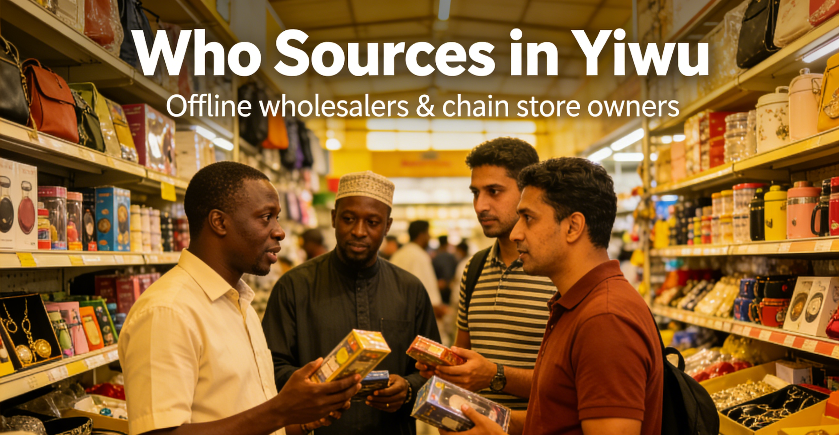
6. Selecting the Right Supplier
First, clarify exactly what you want to buy—do not wander aimlessly, or you will exhaust yourself without results. Create a product list first, then use our maps and guides to locate the corresponding zone.
You can also use Yiwugo (Yiwu Purchase), an online supplier directory, to check vendor information, in-market locations, and contact details (email, phone, WeChat). Many experienced buyers have the Yiwugo app installed for 360° virtual store tours.
Language barriers are minimal. Most vendors speak basic English (price, cheap, good). Point at items, and they will quote prices on a calculator.
However, if you need to discuss production techniques or develop your own brand, hiring a professional translator is necessary to ensure smooth communication. Translation costs are approximately $45/day, covering only in-market communication; post-market order processing, inspection, and shipping are not included.
For large-scale procurement, customization, quality control, and international shipping, it is best to engage us for full assistance. Since similar suppliers cluster together, price comparison is straightforward—check 10–20 stores for the same item to understand the price range. Always remember the stall number (the best method is to photograph the price and business card together on your phone), or you may never find it again.
7. Payment Methods
For small purchases (a few hundred dollars), vendors typically only accept CNY cash; a few accept USD.
To avoid bank procedures, you may exchange USD to CNY at nearby hotels at rates slightly lower than banks.
For large orders (thousands or tens of thousands of USD), most buyers use T/T wire transfers to their agent, who then pays the vendor. Usually, only a 15–30% deposit is required, with the balance paid before shipment.
Some buyers work directly with vendors using the same deposit/balance method, depending on your specific agreement.
8. Inspection and Shipping
For small quantities you carry back (e.g., a carton of fashion accessories), simply have the vendor deliver the goods to your hotel after payment.
For large orders, most buyers hire agents to handle procurement, quality inspection, warehousing, and shipping.
Some buyers work directly with freight forwarders: Place an order at the stall, then have the vendor deliver goods to the forwarder's warehouse. These forwarders specialize in serving Middle Eastern and African buyers, handling only container loading and shipping, not inspection.
This model relies heavily on buyer-seller trust. Many African buyers prefer to inspect and supervise loading personally in Yiwu.
If you are from a country along the Yixin'ou Railway route, you may also choose rail transport. The "Yixin'ou" train departs from Yiwu via:
Kazakhstan → Russia → Belarus → Poland → Germany → France → Madrid
Rail transport saves nearly half the time of sea freight, with costs only ½ (or lower) of air freight.
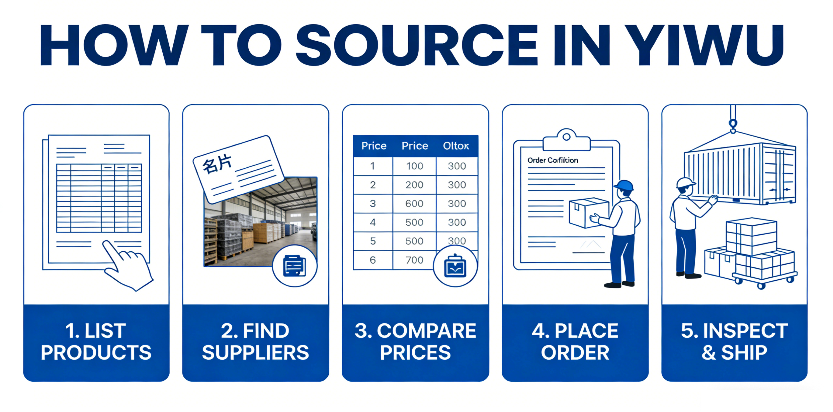
9. Complete Wholesale Guide
- If you require diverse categories and styles with moderate quantities, centralized procurement in Yiwu saves significant sourcing time.
- If your requirements are single-category with massive quantities, sourcing directly from core industrial belt factories yields superior profit margins.
- If quality and branding are priorities, engage a professional procurement agent for domestic assistance with purchasing, quality checks, deadline supervision, and logistics.
[company_id] => 18
[sort] => 0
[category_id] => 16
[key_name] => source-in-yiwu-market
)
Array
(
[id] => 19
[name] => 9 Main Solutions of Shipping from China to Amazon FBA
[status] => normal
[create_time] => 2026-02-06 21:44:46
[delete_time] =>
[category_ids] => 16
[image] =>
[description] => how to ship products from China to Amazon FBA Warehouse
[content] => Have you ever experienced the inefficiencies and high costs of shipping from China to Amazon warehouses? Below, we share 9 core solutions to address this problem.
The introduction of Amazon FBA (Fulfillment by Amazon) has profoundly reshaped the global e-commerce ecosystem. With its ability to provide an unparalleled experience for end buyers, more and more cross-border e-commerce sellers are choosing Amazon FBA as their core fulfillment solution. As a leading procurement agent in China, we regularly provide excellent supply chain support to Amazon sellers in Europe and the United States. Every day, we receive numerous inquiries about "how to efficiently and compliantly ship from China to Amazon FBA warehouses." This article outlines common questions, practical insights, and key process steps.
Table of Contents
-
What is Amazon FBA?
-
Three Solutions for Shipping from China to Amazon FBA
-
In-Depth Analysis of Four Major International Logistics Methods
-
How to Choose a Professional FBA Freight Forwarder
-
Complete Guide to Amazon Packaging and Label Compliance
-
Practical Points and Risk Avoidance for Direct Shipping from Alibaba to FBA
-
Full Cargo Tracking and Missing Item Emergency Handling
-
Product Compliance Certifications (FDA/CPC/FCC/UL, etc.)
What is Amazon FBA?
Amazon FBA (Fulfillment by Amazon) is a service provided by Amazon to help sellers efficiently manage sales. With FBA, you can store products in Amazon’s fulfillment centers, and Amazon will handle picking, packing, shipping, and customer service, including returns and exchanges. Of course, Amazon charges fees for this service based on the services rendered.
Three Solutions for Shipping from China to Amazon FBA
Solution 1: Direct Shipping from China to Amazon FBA Warehouse
This solution involves shipping products directly from the supplier to Amazon's FBA warehouse. For overseas importers, this is the simplest, fastest, and often most cost-effective method.
You can arrange the shipment through the supplier or use an FBA freight forwarder. If neither party has the right forwarding resources, you may also consider using an Amazon preprocessing service company.
Advantages: Recommended for using express services like UPS or FedEx. Domestic express rates in the U.S. are uniform, meaning there’s no need to pay additional domestic shipping costs (compared to shipping to a personal address or third-party company before transshipment).
Solution 2: Ship to Personal Address First, Then Forward to Amazon Warehouse
This option allows for product inspection before shipping to Amazon FBA, enabling you to check the quality. If there are issues, you can address them before customers receive the product, preventing negative reviews that could affect your product listing’s score.
Important Consideration: This method incurs secondary shipping costs from the personal address to Amazon’s warehouse. Be sure to research the nearest Amazon warehouse and calculate transportation costs to ensure the solution remains cost-effective.
Solution 3: Use a Preprocessing Service Company
Preprocessing companies (third-party providers) assist with import customs clearance, transportation, quality inspections, packaging, and labeling in compliance with Amazon’s requirements.
Amazon has strict packaging and labeling standards, and not all suppliers can execute these requirements precisely.
Applicable Scenarios: If your supplier has no experience with FNSKU labeling or if you prefer not to handle it yourself, using a preprocessing company is a smart choice. You can choose between U.S.-based or China-based service providers.
Preprocessing Companies in the U.S.
Preprocessing companies are often located on the U.S. West Coast (e.g., California), providing logistics support from China to Los Angeles for Amazon sellers.
Advantages:
-
Quality inspections upon arrival, identifying damaged products during ocean shipping and avoiding issues that could affect your listing score.
-
If the preprocessing company is near an Amazon warehouse, total shipping costs may be lower than direct shipping from China (e.g., using a California preprocessing company + New Jersey warehouse, where land transportation is required).
Limitations: U.S.-based companies can only address damaged goods locally. Due to high shipping costs and complex import procedures, returning defective items to Chinese factories is not feasible.
Preprocessing Companies in China
Chinese preprocessing providers also arrange direct shipments to Amazon FBA. While fewer in number than U.S. companies, most Chinese procurement agents offer these services.
Advantages:
-
Reasonable pricing, with low short-distance shipping costs from supplier to the agency warehouse.
-
Flexibility in handling quality issues by directly returning products to the factory for rework.
Comparison Summary of the Three Solutions
| Solution |
Advantages |
Disadvantages |
| Direct Shipping to Amazon |
Lowest cost, fastest, easiest to operate |
No control over product quality |
| Ship to Personal Address First |
Ability to inspect goods, label them yourself |
Additional shipping and time costs |
| Use Third-Party Preprocessing Services |
Quality checks, professional labeling, compliant shipping |
High labor costs in the U.S., added transshipment costs |
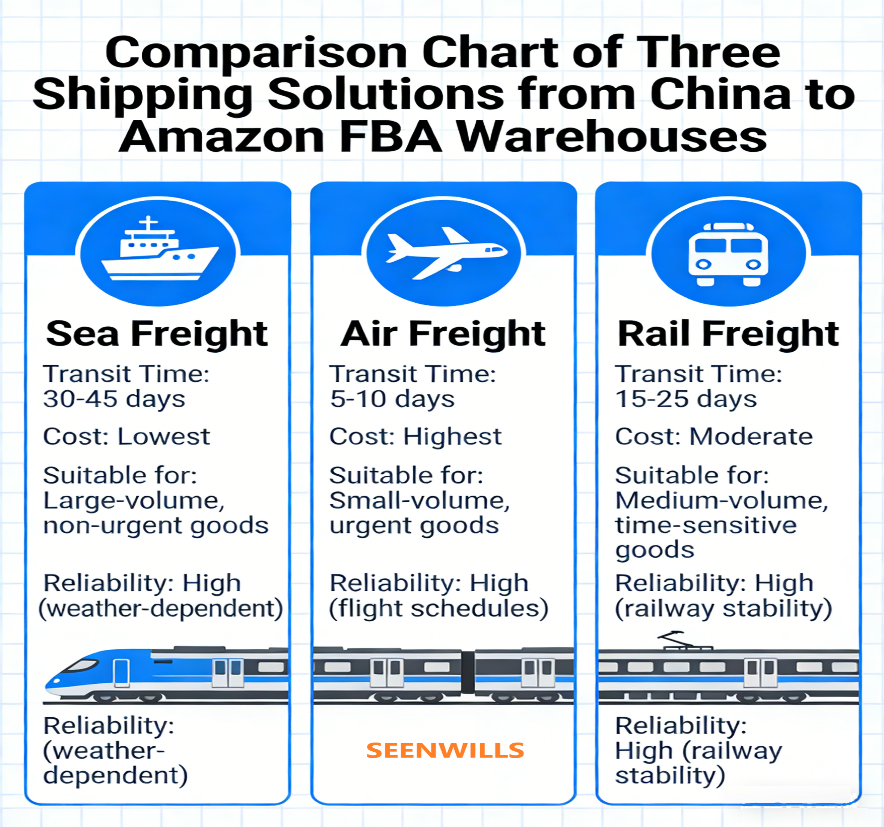
In-Depth Analysis of Four Major Logistics Methods (Shipping to the U.S. Example)
-
Express Shipping (UPS/FedEx/DHL)
-
Applicable Scenario: Small-volume test orders (e.g., 100 kg of samples).
-
Cost: FedEx approximately $6-7 per kg (subject to yearly fluctuations); note: lightweight goods like foam are billed by volumetric weight.
-
Shipping Time: 4-7 days.
-
Tip: Be sure to select “Shipper Pays Duties” as Amazon warehouses only accept goods but do not handle customs duties.
-
Sea Freight (FCL/LCL)
-
Applicable Scenario: Large-volume or low-value, bulky goods (e.g., plastic containers, wine glasses).
-
Cost: $200–300 per cubic meter (approximately 20% of express/air freight cost).
-
Shipping Time: 25–40 days (from China port to U.S. port).
-
Tip: U.S. West Coast warehouse shipping costs are significantly lower than East Coast warehouses. Prices fluctuate during peak seasons.
-
Air Freight
-
Applicable Scenario: Shipments ≥1000 lbs (over 500 kg); a cost-effective alternative when express shipping is too expensive.
-
Cost: 10-20% lower than express shipping, charged by volumetric weight.
-
Shipping Time: 2-3 days longer than express shipping.
-
Tip: Small shipments may have higher overall costs due to fixed processing fees.
-
Sea/Air + UPS Combo (SFUC/AFUC)
-
Features: Sea or air freight from China combined with UPS delivery in the U.S.
-
Cost: SFUC (≥100 kg) ranges from $1.5 per kg for the West Coast to $1.8 per kg for the East Coast.
-
Tip: Dangerous goods such as lithium batteries, liquids, or powders must ship by sea. Consult with a professional forwarder for specific requirements.
How to Choose an FBA Freight Forwarder
Advantages of Professional FBA Freight Forwarders:
-
Due to high volumes of shipments to Amazon, they can secure negotiated rates, making them more cost-effective.
-
Familiarity with Amazon’s scheduling and shipping processes, which general freight forwarders may overlook.
Recommendations:
-
For sea freight, choose a U.S.-based freight forwarder (no time zone issues).
-
If selecting your own freight forwarder, request an FOB (Free On Board) or EXW (Ex Works) quote from the supplier.
-
Ensure the quote includes all costs (including sea and U.S. land transport) to avoid hidden fees.
Amazon Packaging and Label Compliance Guide
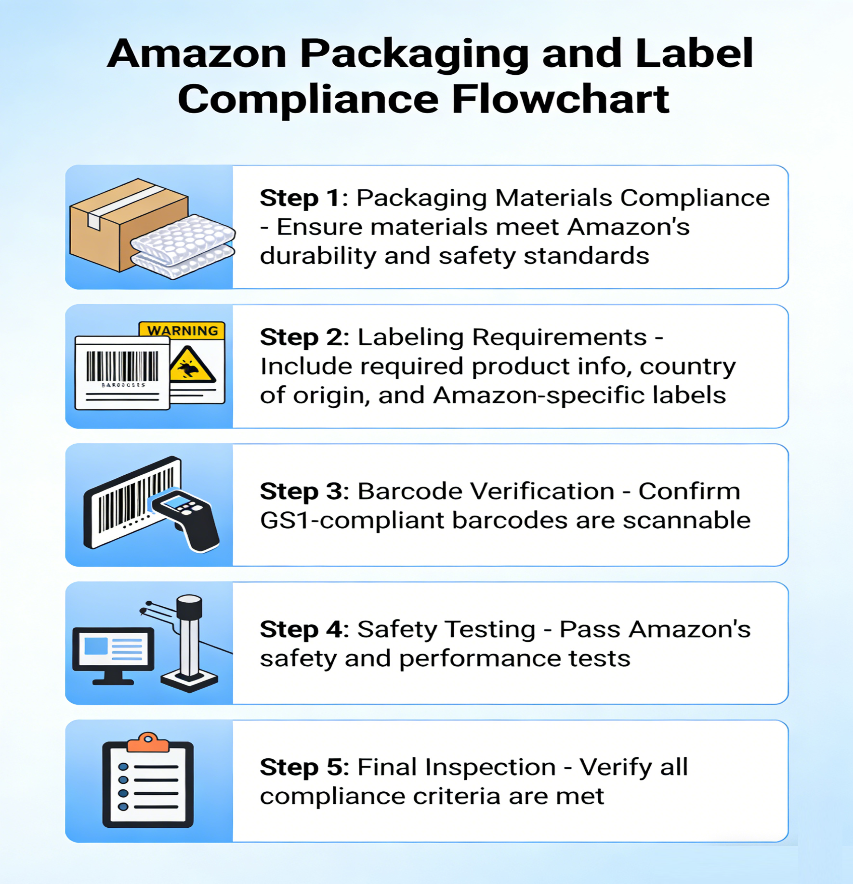
Outer Box Requirements:
-
Material: Rigid six-sided boxes (e.g., B-flute corrugated cardboard), with intact lids.
-
Dimensions: Each side ≤ 25 inches; minimum size 6×4×1 inches.
-
Weight:
-
≤ 50 lbs (≤ 40 lbs for jewelry/watches).
-
Items > 50 lbs: “Team Lift” label required.
-
Items > 100 lbs: “Mechanical Lift” label required.
Product Packaging:
-
Each product must be individually packaged, and sets must be sealed as a whole.
-
Box fillers ≥2 inches to prevent movement.
-
Polyethylene bags must have a suffocation warning label and be completely sealed.
Labeling Requirements:
-
FBA Shipping Label: Each box must have a unique label (print from the seller backend’s Shipping Queue).
-
FNSKU: Each product must have a scannable barcode.
-
Kit Labeling: Mark the outer box with “Sold As Set” for bundled items.
For further details, compliance requirements, and full logistics process insights, feel free to reach out to Seenwills, your one-stop sourcing, inspection, logistics, and compliance solutions partner for Amazon sellers globally.
[company_id] => 18
[sort] => 0
[category_id] => 16
[key_name] => shipping-from-china-to-amazon-fba
)
Array
(
[id] => 18
[name] => 7 Main Solution on Ship Products from China to USA
[status] => normal
[create_time] => 2026-02-05 22:33:40
[delete_time] =>
[category_ids] => 16
[image] =>
[description] => How to ship items from China to USA
[content] => Today, we take the 7 primary shipping methods and their freight costs from China to the United States as a service and case study, providing in-depth, professional answers to the core links of international trade you care about from multiple perspectives.
Logistics and shipping are a critical part of importing goods from China to the US. Nowadays, many importers source products through wholesale platforms such as Alibaba, Global Sources, and Made-in-China.
Typically, suppliers arrange shipping for buyers. Experienced importers may choose a trusted freight forwarder and handle shipping independently. However, shipping can be a headache for beginners, especially when comparing different shipping methods and associated costs.
This guide details the 7 major shipping methods from China to the US and their estimated freight costs. After reading, you can easily arrange shipping whether you use the supplier’s designated forwarder or find your own. In short, this is a highly practical resource.
Note: All freight costs listed in this document are pre-pandemic regular prices. The COVID-19 pandemic has had a massive impact on shipping costs, with rates fluctuating extremely frequently—your latest quote today may be invalid in a few days. Additionally, current freight costs are far higher than historical levels (e.g., the price of a shipping container has surged to 7–8 times the normal rate). For actual freight estimates, contact us for real-time quotes.
Table of Contents
- Choosing the Optimal Courier Service
- Courier Freight Estimation Method
- Dimensional Weight vs. Actual Weight
- Courier vs. Air Freight
- All-Included Air Freight Cost Calculation
- Detailed Air Freight Breakdown
- LCL vs. FCL in Sea Freight
- All-Included Sea Freight Cost Calculation
- Detailed Sea Freight Breakdown
- Sea Freight + UPS (SFUC)
- Air Freight + UPS (AFUC)
- ePacket for Small Parcels
- China Post for Small Parcels
Note: Incoterms determine your shipping model and directly impact freight costs. If you are unfamiliar with Incoterms, we recommend watching the attached video first.
I. Express Shipping from China to the US
Abundant information about major couriers such as FedEx, UPS, and DHL is available on Google, so this guide will not cover their basic details. Instead, we will directly address two more critical questions:
- When is express shipping the most cost-effective option?
- What types of goods are suitable for express shipping?
Which Courier is the Best?
Compared to sea or air freight, express shipping is the fastest and simplest shipping method from China to the US.
- No need to handle customs clearance procedures
- Freight costs are generally similar for deliveries to the US East and West Coasts
- Simply select a courier with a reasonable quote and wait for delivery
Approximately 95% of small-batch, high-value samples and products are shipped via express. It is also ideal for e-commerce sellers (e.g., Amazon sellers) in urgent need of restocking.
Among FedEx, UPS, and DHL, FedEx and UPS are the most reliable and cost-effective for shipping from China. DHL’s customs clearance process is typically slower than FedEx and UPS, with relatively higher freight costs in some cases.
Express Freight Costs from China to the US
Official quotes from FedEx, UPS, and DHL are usually high, as these couriers offer 20%–50% discounts to agents (your supplier or freight forwarder) based on annual shipping volume, which affects the final price.
If your Chinese supplier does not frequently use FedEx, they can collaborate with a discounted courier agent to ship goods to the US, helping you secure lower freight costs.
In addition to agent discount differences, seasonal factors and remaining flight capacity also impact courier prices (e.g., prices surge in the peak season one month before Christmas and Thanksgiving, and drop significantly in the off-season).
Courier freight costs are therefore extremely volatile—even changing weekly. You need to request real-time quotes from your supplier or forwarder and select the most affordable option.
Get Real-Time Freight Quotes from Seenwills
- Long-term partnerships with top logistics and courier companies for highly competitive pricing
- Professional arrangement of express shipping and cost calculation
- Let Seenwills handle your shipping from China to your country!
FedEx IP vs. IE
While freight costs fluctuate frequently, FedEx prices fall within a certain range. Combined with the reference prices provided and other influencing factors, you can easily estimate the delivery cost to your address.
FedEx offers two international services:
- International Priority (IP): Priority service, delivered in 2–3 business days
- International Economy (IE): Economy service, delivered in 4–6 business days
Table 1: FedEx Freight Rates (21kg+, USD/kg)
| Weight Range |
FedEx IP (USD/kg) |
FedEx IE (USD/kg) |
| 21–70kg |
7 – 7.5 |
6.5 – 6.7 |
| 70kg+ |
6.3 – 7 |
6 – 6.5 |
Note: Prices fluctuated drastically during the pandemic—email us for real-time quotes.
As shown in the table, IP is more expensive than IE. FedEx IP is typically suitable for shipping samples; for goods over 21kg, FedEx IE is recommended.
Important: Goods containing lithium batteries, powders, or liquids cannot be shipped via official FedEx channels. To ship such sensitive goods, they must first be sent to Hong Kong via an agent, then to the US via FedEx or DHL Hong Kong. The freight cost for such goods is usually above USD10/kg.
Dimensional Weight vs. Actual Weight
Couriers charge based on chargeable weight, which is the greater of the actual weight and dimensional weight.
Dimensional Weight Formula:
Length (cm) × Width (cm) × Height (cm) ÷ 5000
Example: A foam box with dimensions 100×100×100cm and actual weight 20kg
Dimensional weight = 1,000,000 ÷ 5000 = 200kg →
Charged at 200kg!
Customs Clearance Tip
FedEx exempts tariffs for goods valued below USD800. For goods exceeding USD800, the courier will advance the tariff, and you will pay it upon delivery.
Key Recommendation: If your supplier ships via FedEx on your behalf, it is best to pay the freight in advance to the supplier. Even if you have a FedEx account in the US, do not choose collect on delivery (COD), as the fees will be extremely high.
II. Air Freight from China to the US
Both express and air freight use aircraft, but there are distinct differences between the two modes.
Key Differences: Courier vs. Air Freight
| Aspect |
Courier Shipping |
Air Freight |
| Service Mode |
Door-to-door, fully streamlined |
Airport-to-airport (plus optional delivery) |
| Ideal Cargo Weight |
<500kg |
>500kg (more cost-effective) |
| Cost Efficiency |
High for small batches |
High for medium/large batches |
| Customs Clearance |
Handled by the courier |
Handled by freight forwarder/importer |
Cost Threshold Tip:
500kg: Air freight is more cost-effective
300–500kg: Real-time price comparison is required (courier may be cheaper if flight capacity is sufficient)
All-Included Air Freight Cost
Always confirm with your freight forwarder or supplier whether the quote is all-inclusive—i.e., covers all costs from the Chinese airport to your doorstep.
⚠️ Warning: Be cautious of suppliers who only quote an airport-to-airport price! Such quotes seem low but exclude US customs clearance fees and local delivery fees, which will be charged as additional costs.
Reference All-Included Air Freight Rates (>500kg):
- Air freight: ~USD5.5/kg
- Courier shipping: ~USD6.5/kg
Note: This price does not include inland freight from the Chinese factory to the airport.
Air Freight Timeliness
Total transit time = Booking time + Flight time + US local delivery ≈ 4–7 days
Air Freight Pricing Rules
- Dimensional Weight Formula: Length × Width × Height ÷ 6000 (different from courier’s ÷5000)
- Chargeable weight is still the greater of actual weight and dimensional weight
Freight Composition Under FOB vs. EXW Incoterms
FOB (Free On Board)
- Supplier’s responsibility: Factory → Chinese airport + Chinese export fees
- Importer’s responsibility: Chinese airport → US airport; US customs clearance + local delivery
EXW (Ex Works)
- Supplier’s responsibility: Only production of goods
- Importer’s responsibility: All shipping links (Chinese factory → Chinese airport → US airport → your doorstep)
As a leading sourcing company in China, we offer one-stop sourcing, shipping, and freight cost calculation services for your convenience.
III. Sea Freight from China to the US
Sea freight is recommended if your cargo volume exceeds 2 cubic meters (CBM), as it is the most cost-effective option for large-batch, low-weight-to-volume goods.
LCL (Less Than Container Load) vs. FCL (Full Container Load)
Table 2: LCL vs. FCL Comparison
| Aspect |
LCL (Less Than Container Load) |
FCL (Full Container Load) |
| Applicable Cargo |
Small volume (<15–20 CBM) |
Large volume (>15–20 CBM) |
| Pricing Unit |
Per CBM/kg (whichever is higher) |
Per container (fixed rate) |
| Cost Efficiency |
Low for small batches |
High for large batches |
| Transit Time |
Slightly longer (consolidation required) |
Faster (direct shipping) |
| Loading/Unloading |
Shared container with other shippers |
Exclusive use of container |
All-Included Sea Freight Cost & Timeliness
Sea freight costs vary significantly by container type (20ft/40ft/40HQ) and US port (East/West Coast). The following are pre-pandemic reference all-inclusive rates (covering port fees, customs clearance, and local delivery):
Table 3: Sea Freight Reference Rates & Timeliness
| Container Type |
US West Coast (USD) |
US East Coast (USD) |
Transit Time (Days) |
| 20ft |
1,200 – 1,500 |
2,000 – 2,500 |
18–22 |
| 40ft |
2,000 – 2,500 |
3,500 – 4,000 |
25–30 |
| 40HQ |
2,200 – 2,800 |
3,800 – 4,500 |
25–30 |
Note: Current pandemic-era rates are 7–8 times higher—contact us for real-time container quotes.
Sea Freight Cost Breakdown (All-Inclusive)
- Origin fees: Factory to Chinese port inland freight, port handling fee, export customs declaration fee
- Ocean freight: Carrier’s charge for port-to-port shipping
- Destination fees: US port handling fee, customs clearance fee, duty/tax, local delivery fee to doorstep
IV. Combined Shipping Modes: SFUC & AFUC
For e-commerce sellers and importers seeking a balance of cost and timeliness, combined shipping modes (sea/air freight + UPS delivery) are ideal alternatives to pure express or sea/air freight.
1. SFUC (Sea Freight + UPS)
- Process: Sea freight to US port → UPS ground delivery to doorstep
- Timeliness: 25–35 days (faster than pure sea freight, cheaper than pure express)
- Ideal for: Non-urgent large-batch e-commerce goods (e.g., Amazon FBA replenishment)
-
- US West Coast: ~USD1.5/kg
- US Midwest: ~USD1.6/kg
- US East Coast: ~USD1.8/kgReference All-Included Rates (>500kg):
Surcharge Note: High-duty goods (e.g., textiles, hardware) may incur an additional USD0.3–0.4/kg.
2. AFUC (Air Freight + UPS)
- Process: Air freight to US airport → UPS express delivery to doorstep
- Timeliness: 11–15 days (slower than pure express, much faster than sea freight)
- Ideal for: E-commerce sellers with urgent restocking needs
- Reference All-Included Rates (>500kg):
- US West Coast: ~USD3.9/kg
- US East Coast: ~USD4.3/kg
V. Small Parcel Special Lines: ePacket & China Post
For small, low-value parcels (<2kg), ePacket and China Post are the most economical shipping options, specifically designed for cross-border small parcel delivery.
ePacket (Ideal for <2kg Small Parcels)
Core Specifications & Rates:
- Starting price: USD2.17/parcel
- Additional weight fee: USD0.009/gram (minimum charge for 50g)
- Weight limit: 2000g
- Size limit: Length + Width + Height <90cm, maximum side ≤60cm
- Timeliness: 8–14 days (potential delays of 1–2 months during peak seasons)
- Liability: No price insurance, no compensation for delays
- Prohibited goods: Liquids, powders, flammables/explosives, alcohol, tobacco, infringing goods, etc.
Pricing Example: Freight for a 120g lipstick = 2.17 + (120×0.009) = USD3.25
China Post Small Parcel
- Cost: Cheaper than ePacket, but slower
- Timeliness: Sea freight (1–2 months), air freight (15+ days)
- Liability: No compensation guarantee for loss/delay
- Weight limit: 30kg
- Ideal for: Low-value, non-urgent goods (e.g., 100 carbon pens)
Conclusion
We hope this guide helps you:
- Understand the 7 mainstream shipping methods from China to the US
- Master freight cost estimation methods
- Select the optimal shipping solution based on your cargo characteristics
If you still have questions, feel free to leave a message or contact us for real-time freight quotes. We offer:
- One-stop sourcing and logistics services
- The most competitive freight rates in the market
- Stable shipping guarantees even during market fluctuations
Let us help you ship goods from China to the world with ease!
Core Eye-Catching Visuals (3 Key Infographics)
Infographic 1: Shipping Mode Selection Flowchart (China → US)
Core Logic: Cargo Weight/Volume → Urgency → Optimal Shipping Method
Infographic 2: Chargeable Weight Calculation Cheat Sheet
Side-by-Side Comparison:
- Courier Shipping: L×W×H (cm) ÷ 5000
- Air Freight: L×W×H (cm) ÷ 6000
- Visual Example: 100×100×100cm box → Courier (200kg) vs. Air Freight (166.67kg)
- Key Reminder: Always use the greater of actual/dimensional weight
Infographic 3: China → US Shipping Timeliness & Cost Comparison (Snapshot)
5 Core Modes Visualized with Bar/Line Charts:
| Shipping Mode |
Avg. Timeliness (Days) |
Avg. Cost (USD/kg, >500kg) |
| FedEx IP |
2–3 |
7–7.5 |
| Air Freight |
4–7 |
5.5 |
| AFUC |
11–15 |
3.9–4.3 |
| SFUC |
25–35 |
1.5–1.8 |
| FCL Sea Freight |
18–30 |
~0.5–1 (per kg, 40HQ) |
If you are in a need of Shipping Service please feel free to let SEENWILLS know.
[company_id] => 18
[sort] => 0
[category_id] => 16
[key_name] => how-to-ship-from-china-to-usa
)
Array
(
[id] => 17
[name] => Seenwills blog listing
[status] => normal
[create_time] => 2026-02-05 21:14:26
[delete_time] =>
[category_ids] => 16
[image] =>
[description] => blogs of seenwills, seenwills news, seenwills articles,
[content] => Wish you like seenwills blogs
1.China Sourcing Agency: Global Buyers' Top 5 Tips
2. 7 Solutions to Ship Products fron China to USA
3. 9 Main Solutions to Ship Product fron China to Amazon FBA
4. How to Source Well in Yiwu Market
5. Pujiang Crystal-The Global Purchaser's Secret Industry Zone
6. Invisible Champion of Yongkang Drinkware
7. To Taizhou to Purchase Competitive Plastic Homewares
8. China Auto & Motorcycle Parts Sourcing Centre - Wenzhou
9. Children Wearing Wholesale Centre ---Huzhou Zhili Markets
10. Electrical Home Appliance Town-Cixi City
11. Do Not Miss to Purchase in Yiwu International Wholesale Market
12. Market Insights & Global Strategies on Smart AI Tanks for Fish
13. FAQs to Make a Water Bottle in China Factory
14. 36 Questions & Answers for the Water Bottle Business
15. Keep Your Pets Health with Pet Air Purifier Machine
16. 2026 E-commerce Trending Products Reports
17. Decoding Yongkang Ladder Economics
18. Top 100 Enterprises in Yiwu City with 6 Business Sections
19. Real Pearl Jewelry Wholesale Market In Zhuji Zhejiang
20. 10000+ Socks Manufacturing Factories in Zhuji Zhejiang
21. 6 Tips to Have a Better Conversation in Business with Chinese
22. 100 Nice Chinese Sentences for a Better Business Negotiations
23. Win-Win Chance--- China's 100% 0-Tariff Policy To Africa
24. Best B2B Sourcing Platforms & Channels
25. How to Use Xiaohongshu for B2B Sourcing in China (2026 Factory Verification Guide)
26. How to Use AI Agent Serve Global B2B Sourcing
27. Global Exotic Pet Products Business Report 2026
28. How to Choose High Quality Baby Bottle & China Supplier
29. New Trends on Smart Baby Bottle
30. AI Toy Trends
31. Global Luggage & Bag Marketing Report
32. Christmas Products Sourcing & Purchasing in China
33. Beauty Market Growth in South America 2026
34. Textile Revolutions Under Oil Crisis 2026
35. FAQ on dropshipping
36. FAQ on sourcing
[company_id] => 18
[sort] => 0
[category_id] => 16
[key_name] => seenwills-blogs
)
Array
(
[id] => 14
[name] => China Sourcing Agency: Global Buyers' Top 5 Tips
[status] => normal
[create_time] => 2026-01-31 12:48:16
[delete_time] =>
[category_ids] => 16
[image] =>
[description] => Sourcing in China is a very challengeable job.
[content] => As global supply chains grow more complex and cross-border procurement demands rise, an increasing number of businesses are turning to China-based sourcing agents to efficiently and securely manage bulk purchasing. Yet, many buyers remain uncertain about when and how to engage such partners. This article addresses the five most pressing questions international buyers have—and provides clear, professional answers.
1. What Is a Sourcing Agent?
A sourcing agent is a professional individual or firm that acts on behalf of buyers to identify qualified suppliers in China, coordinate the procurement process, ensure product quality, and manage logistics and delivery. Think of them as your local representative—much like a real estate agent—who not only connects you with resources but also negotiates terms, handles execution details, and mitigates risks.
While platforms like Alibaba.com and Made-in-China.com make it seem easy to find Chinese suppliers, the reality is far more complex. Language barriers, cultural differences, inconsistent quality standards, payment security concerns, communication delays, and shipment disruptions are common challenges. A competent sourcing agent leverages local expertise to streamline operations, reduce hidden costs, and deliver a more reliable, cost-effective experience.
2. What Services Do Sourcing Agents Provide?
China’s sourcing landscape broadly divides into two service models:
A. End-to-End Procurement Solutions
Offered by mid-to-large agencies with teams of 3–100 professionals, these services include:
- Supplier identification and vetting
- Price negotiation and contract management
- Sample development and approval
- Production monitoring
- Third-party quality control (QC) inspections
- Logistics coordination and customs clearance
- Custom product development support
Many established firms now integrate digital tools with on-the-ground execution, enabling faster response times and higher order fulfillment rates.
Example: SEENWILLS, founded in 2015 with just two team members, has grown into a 10+ person professional procurement team dedicated to delivering reliable, full-cycle sourcing solutions for global clients.
B. Modular or Task-Based Services
Typically offered by freelancers or micro-agencies on platforms like Upwork or Fiverr, including:
- Supplier dossiers
- Product photography and copywriting
- Basic translation and email mediation
- One-time factory audits or inspections
- Market research and procurement consulting
These are suitable for short-term, well-defined tasks but lack systemic oversight for complex or recurring orders.
3. Who Needs a Sourcing Agent?
Five buyer profiles benefit most from professional sourcing support:
- New Importers
Lacking experience in China’s supply ecosystem, they struggle with end-to-end coordination and risk management.
- E-commerce Sellers Testing New Products
Needing small-batch custom orders (e.g., 300–500 units) to validate market demand—but often fail to find cooperative, cost-efficient factories on public platforms.
- Multi-Category Buyers
Such as supermarkets, hotels, schools, government agencies, or general retailers managing hundreds of SKUs across diverse categories. Managing dozens of suppliers independently is impractical.
- Established Businesses Optimizing Supply Chains
Even with existing vendors, they seek further cost reductions (in product, logistics, warehousing), improved delivery consistency, and backup supplier networks.
- Buyers of Specialized or Regulated Products
Including chemicals, medical devices, or industrial machinery—categories where supplier verification requires technical expertise and trusted industry connections.
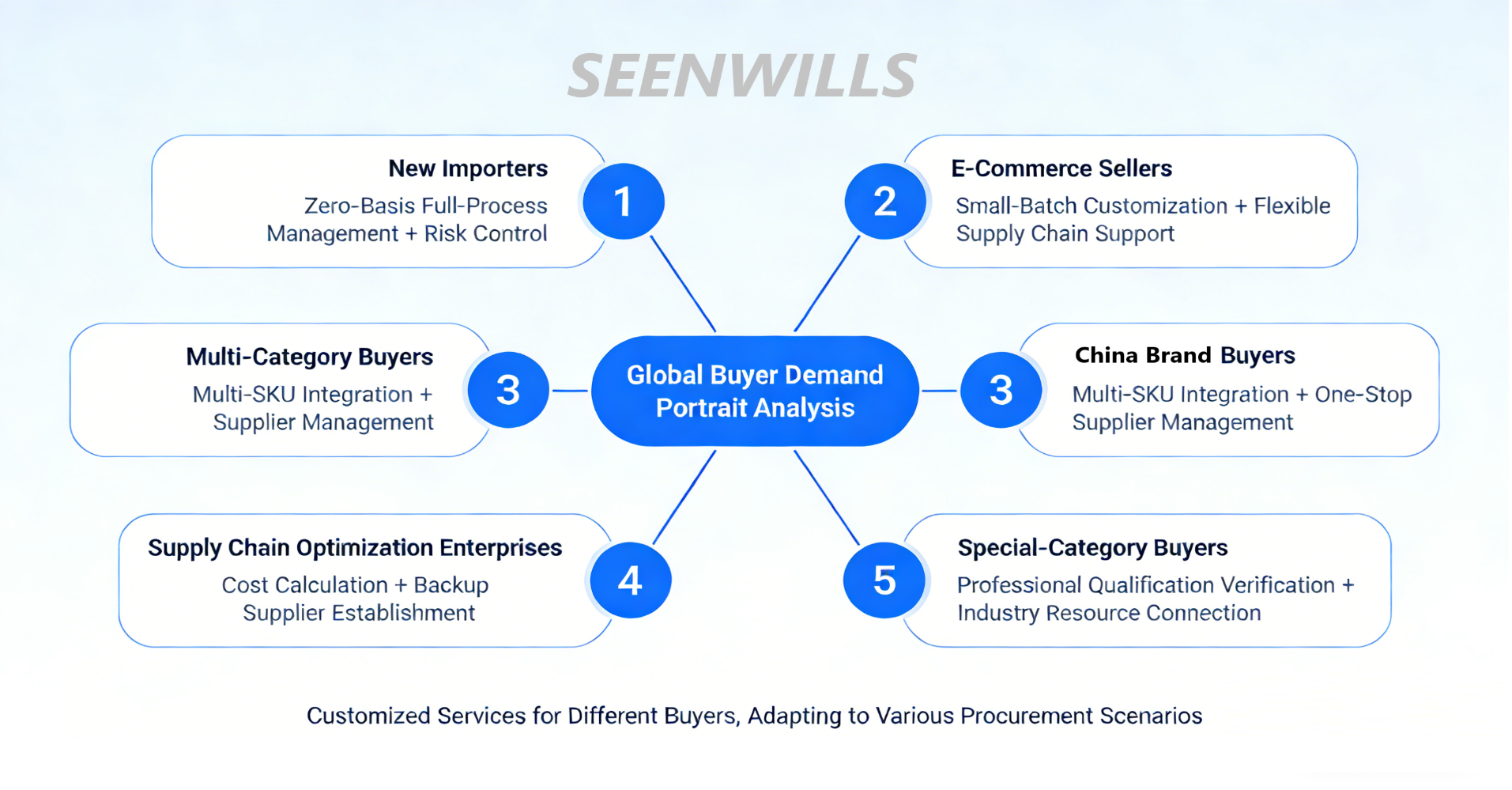
4. How Much Do China Sourcing Agents Charge?
Two primary pricing models exist:
A. Fixed Fees
Ideal for discrete tasks or short engagements:
- Factory audit: 100–100– 300 per visit
- Supplier dossier: 200–200– 500
- Monthly production follow-up: 800–800– 2,000
Common among solo agents or small studios, best for simple, one-off needs.
B. Commission-Based (5%–10% of Order Value)
The standard for full-service agencies.
- For high-volume, standardized goods (e.g., home décor, gifts), commissions may drop to 3%, with some offering free trial orders.
- For low-margin commodities (e.g., steel, raw materials), fees can be even lower—but beware of “too-good-to-be-true” offers. Some agents compensate through inflated product pricing, lax QC, or hidden logistics markups.
Key Insight: There’s no such thing as a free lunch. Exceptionally low fees often signal compromised service quality or hidden costs. Always prioritize transparency and process clarity over headline pricing.
5. How to Choose a Reliable Sourcing Agent?
Apply these four vetting criteria:
1. Strategic Location
Prefer agents based in Pearl River Delta (Guangzhou, Shenzhen) or Yangtze River Delta (Yiwu, Ningbo, Shanghai)—regions adjacent to China’s core manufacturing hubs and major ports, enabling rapid factory access and efficient logistics consolidation.
2. Professional Team Structure
True procurement excellence requires cross-functional collaboration—sourcing, QC, logistics, and client service. Avoid “one-person shops,” which may communicate well initially but lack scalability and operational depth.
3. Transparent Cost Breakdown
Reputable agents provide a detailed Bill of Materials (BOM), itemizing costs for raw materials, tooling, packaging, freight, etc., and clearly explain price fluctuations due to market dynamics.
4. Vertical Industry Expertise
For specialized products (e.g., electronics, food processing equipment, beauty devices), choose agents with proven experience in your category—they bring technical insight and pre-vetted factory networks.
Final Thought: Find the Right Fit, Not Just the Biggest Name
Selecting a sourcing partner is like choosing the perfect pair of shoes—it must fit your business rhythm, product complexity, and long-term vision. The ideal agent offers:
- Clear workflows
- Proactive communication
- Transparent pricing
- A commitment to mutual growth
SEENWILLS may not be the largest player, but we are deeply committed to being your trusted “China procurement office.” Our mission goes beyond order execution—we aim to empower your brand through intelligent supply chain optimization.
Let every procurement journey become a step toward your brand’s evolution.
[company_id] => 18
[sort] => 0
[category_id] => 16
[key_name] => 5-tips-to-get-china-sourcing-agency
)
Array
(
[id] => 22
[name] => Invisible Champion of Yongkang Drinkwares
[status] => normal
[create_time] => 2026-02-14 21:57:50
[delete_time] =>
[category_ids] => 16
[image] =>
[description] => Will you like to purchasing Yongkang Cups and bottles?
[content] => In Yongkang, Zhejiang, factories in the second half of each year always present such a scene: German-imported fully automatic stretch machines and Japanese precision welding tube equipment operate in coordination. Robotic arms send formed cup bodies into dust-free workshops, where workers carefully apply brand labels like "Tiger" and "Yeti" to vacuum flasks destined for the European and American markets. This is the "Capital of China's Cups," where one out of every three vacuum flasks globally is produced. In 2024, its output value surpassed 31 billion yuan, and more than 2,900 supporting enterprises have woven a super drinkware supply chain network capable of "assembling global components within 24 hours." While the outside world is still discussing the low-cost advantage of "Made in China," Yongkang's drinkware industry has long completed its transformation from "Original Equipment Manufacturing (OEM)" to "Technological Hegemony."
Why can Yongkang become the "invisible champion" of the global drinkware industry? We will reveal the hard-core code of this "Iron Man" city from nine dimensions.
1. Yongkang's Main Industries?
2. Deepest Logic Behind the Developed Drinkware of Yongkang
3. Professional Standards for Selecting Drinkware in Yongkang
4. Find High-quality Drinkware Suppliers Around Yongkang
5. Security Solutions for Drinkware transportation
6. Global Efficient Transportation Channels for Yongkang Drinkwares
7. International Trends on Yongkang Stainless Steel Cups
8. Procurement Experience for Yongkang Bottles
9. Transportation Suggestions for Traveling to Yongkang City
*If you want to know more detailed local information about Yongkang, please contact SEENWILLS to obtain relevant consultation.
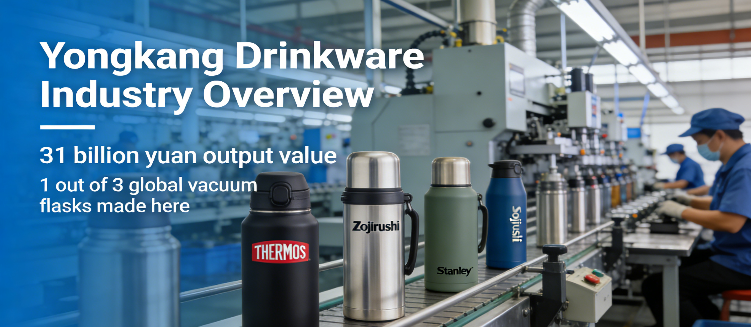
1.What are Yongkang's core industries?
After more than 40 years of high-speed development, the Yongkang industrial belt has formed pillars in the cup industry, power tools, and leisure sports vehicles, radiating to emerging fields such as smart home and high-end equipment.
2.The deep logic behind the developed drinkware industry
Yongkang's drinkware industry has formed a modern industrial system of "one core, two wings": centered on stainless steel vacuum thermal appliances, with glass cups and plastic cups as the two wings, radiating to emerging tracks such as outdoor camping and smart drinking. It brings together industry giants like Haers and Feijian Industrial & Trade, with 188 scale-above industrial enterprises, producing over 400 million cups annually, and export volume accounting for over 70% of the country. From Starbucks' travel mugs to Stanley's hit straw cups, from aerospace-grade titanium cups to military-grade tactical canteens, Yongkang not only holds the capacity lifeline of global drinkware but also, through the "Yong-Wu-Jin" industrial cluster (Yongkang, Wuyi, Jingyun), has built a complete closed loop from ore smelting, mold development to surface treatment. In 2025, with the best-selling "Aerospace Titanium" series by Fuguang, Yongkang further established the dual-wheel drive model of "material innovation + intelligent manufacturing," becoming the source of global drinkware technology iteration.
3.The reason why Yongkang's drinkware industry can occupy the top of the global supply chain stems from three deep logics:
First is the construction of technological barriers. By introducing cutting-edge technologies such as German laser welding and Japanese tail-less vacuum technology, the heat preservation time is extended to 96 hours. At the same time, the forming problem of titanium metal is solved, realizing the civilian mass production of "aerospace materials."
Second is the creation of a flexible supply chain. Relying on the supporting network formed by the "hardware gene," it can realize "demand in the morning, samples in the afternoon," meeting international brands' customization requirements for "small batches, multiple batches."
Third is the transformation of green intelligence. By combining photovoltaic new energy with digital twin factories, the energy consumption per unit output value is reduced by 35%, and the reclaimed water reuse rate reaches 72%, making it the world's first drinkware industrial cluster to pass BSCI (Business Social Compliance Initiative) certification.
4.Professional standards for selecting drinkware products
In global procurement, identifying high-quality drinkware products requires grasping three standards:
In terms of material safety, prefer 304/316 medical-grade stainless steel. The liner should pass SGS heavy metal migration testing, with no peculiar smell residue.
In terms of process details, observe whether the weld is smooth without bumps. Vacuum degree testing should have no "hissing" air leakage sound, and the cup cover silica gel ring needs to have food-grade certification.
In terms of functional innovation, focus on humanized designs such as "antibacterial coating," "one-button opening," and "temperature display," as well as durability indicators that pass drop testing (no damage at 1.2 meters height).
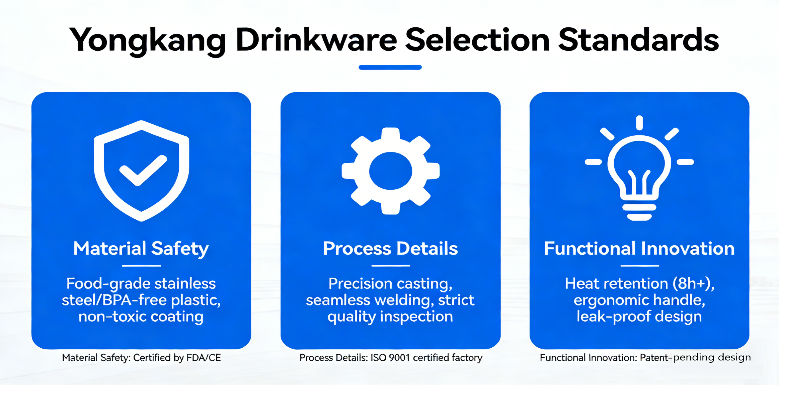
For high-end purchasers, they can request suppliers to provide REACH (Registration, Evaluation, Authorisation and Restriction of Chemicals) and FDA (Food and Drug Administration) test reports to ensure products meet strict European and American standards.
For OEM purchasers, they can request to go to the corresponding high-quality factory to check the production line process details, supporting machinery, quality inspection delicacy, and the sample room to see if there are really similar brands' products, considering comprehensively from multiple dimensions whether they fully meet OEM production requirements.
For bulk ready-made purchasers, they can confirm in advance whether there is enough stock, or the real number of days for delivery. If they can wait for the delivery date, they can go to the factory to confirm whether they really have the core mold of the product.
For small-batch purchasers, they can directly find corresponding cup wholesale dealers at the stalls in Yiwu International Trade Centre, with a minimum of 1 box per style. If more than 10 boxes, they can be shipped to your designated warehouse, greatly saving procurement time costs.
5.Finding high-quality drinkware product suppliers through multiple channels
In Yongkang, purchasers can efficiently connect with high-quality suppliers through four channels:
On-site inspection of industrial parks, such as the "China Cup & Pot Industrial Park" in Yongkang Economic Development Zone, where benchmark enterprises like Feijian Industrial & Trade and Ansheng Technology are gathered, allowing intuitive evaluation of automated production lines and R&D strength.
Online B2B platform screening, through Alibaba International Station's "Super Factory" channel, screening enterprises with annual export value exceeding 5 million US dollars and having a "Gold Supplier" logo, and paying attention to their patent quantity and customer reviews.
Participating in industry exhibitions, such as the "Cup & Pot Special Zone" during the China Hardware Fair, directly contacting TikTok Shop official service providers to obtain "procurement + cross-border agency operation" one-stop solutions.
Utilizing industry association resources, contacting the China Cup & Pot Industry Association to obtain the "High-Quality Supplier Directory," focusing on enterprises that have passed ISO9001 quality management system certification.
6.Security solutions for drinkware product transportation
Aiming at the characteristics of drinkware products being "prone to damage inside and scratches on the surface," a "military-grade" protection strategy needs to be implemented:
In terms of liner protection, use pearl cotton custom linings to avoid friction between the cup body and the packaging box, and at the same time install a dust cover on the cup mouth.
In terms of outer layer reinforcement, adopt a "corrugated paper box + honeycomb board" structure, fill the box with EPE foam particles to ensure "zero displacement" during transportation.
In terms of special product processing, for glass liner cups, "egg grid" type partition packaging is required.
For high-end titanium cups, a three-level protection of velvet bag + gift box + wooden box is adopted to ensure they remain "bright as new" after long-distance ocean transportation.
7.Global efficient transportation channels for drinkware products
Combining 2026 international trade trends, purchasers can flexibly choose the following logistics solutions:
For small-batch urgent orders, adopt international express (DHL/FedEx), delivered within 3-5 working days, suitable for high-value samples or emergency replenishment.
For medium-time orders, choose air freight special lines, realizing "airport direct pickup" through "cross-border one-lock pass" service, improving customs clearance efficiency by 40%.
For large-batch orders, utilize sea-rail intermodal transport (Yongkang East Station—Ningbo Zhoushan Port) + ocean shipping. For the European and American markets, the China-Europe Railway Express can be chosen, shortening the time by 15 days compared to traditional ocean shipping.
For emerging markets, the "overseas warehouse pre-positioning" model is adopted, pre-positioning goods in bonded warehouses in places like Mexico and Dubai to realize "72-hour local delivery."
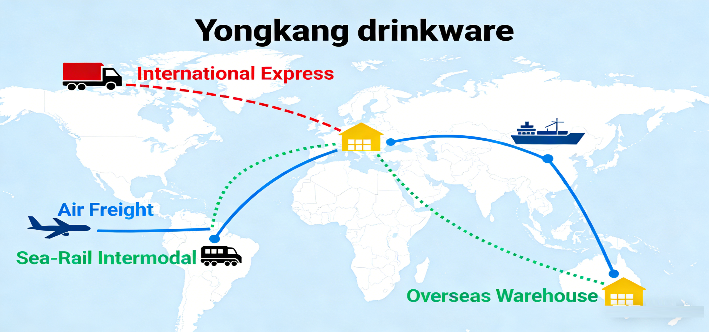
8.International trade trends for drinkware products
In 2025, Yongkang's drinkware industry export value grew by 28%. Among them, procurement from "The Belt and Road" countries surged, and markets like Russia, Saudi Arabia, and Brazil became new growth poles for the demand of "high-cost-performance vacuum flasks."
At the same time, scenario-based products such as "healthy drinking" and "outdoor camping" showed significant growth. Innovative single products like Fuguang's "titanium tea strainer cup" and Haers's "smart temperature display pot" are leading global consumption trends.
With the implementation of RCEP (Regional Comprehensive Economic Partnership) tariff reduction policies, Yongkang's drinkware has further enhanced its competitiveness in the Southeast Asian market.
Procurement experience sharing for drinkware products
Focus on "material innovation" products, prioritizing the purchase of high-end material drinkware like titanium metal and antibacterial ceramics to meet the pursuit of a "healthy life" in the European and American markets. Deepen "technical cooperation," establishing long-term relationships with suppliers who have "provincial-level enterprise research institutes," through joint R&D to seize the technological high ground. Utilize "policy dividends," through cross-border e-commerce comprehensive pilot zone policies, enjoying "simplified declaration, list release" customs clearance convenience, reducing logistics costs by over 15%. Yongkang's drinkware is standing at a critical node, moving from a "global factory" to a "technical standard maker." For global purchasers, this place is not only a cost and efficiency option but also a source of technology and trends. Grasping the "drinkware capital's" intelligent manufacturing pulse will inject lasting "thermal energy" into your global business.
9.Transportation suggestions for traveling to Yongkang
Yongkang has a high-speed railway station, very suitable for travel from Shanghai and Hangzhou.
If coming from Guangzhou, Shenzhen, Beijing, etc., it is recommended to first take a plane to Yiwu Airport, and then take a private car for 1.5 hours to reach the destination.
Also, from a material perspective, the following classifications exist:
● Stainless Steel Drinkware: Characterized by durability and strong heat preservation, especially suitable for making vacuum flasks, sports water bottles, and outdoor cookware. Its multi-layer vacuum structure can effectively maintain beverage temperature.
● Glass Drinkware: Known for its high transparency, stable chemical properties, and not absorbing peculiar smells. Suitable for brewing teas that require observing the tea leaves' unfolding process, such as flower tea and green tea.
● Ceramic Drinkware: Beautiful in appearance, smooth glaze, and easy to clean. Moderate heat preservation, can truly present the color of tea soup, suitable for brewing various teas, commonly used as tableware for daily drinking and tea art.
● Plastic Drinkware: Lightweight, unbreakable, and low-priced. Usually used to make disposable cups or children's cups, but attention should be paid to material selection to avoid harmful substances precipitating under high temperature.
● Titanium Metal Drinkware: As an emerging high-end material, titanium metal has the characteristics of lightweight, corrosion resistance, and no heavy metal precipitation risk, especially suitable for outdoor camping and users with high health requirements.
If classified by function, they can be divided into the following categories:
● Thermal Insulation Cups/Pots: Adopting double-layer vacuum or multi-layer insulation technology, the core function is to keep beverages warm or cold for a long time, an ideal choice for commuting, office, and outdoor activities.
● Portable Cups/Travel Mugs: Designed to be lightweight with leak-proof lids for easy carrying. Usually of moderate capacity, suitable for travel, trips, or office use to meet the need for drinking water anytime.
● Tea Art Specialized Ware: Designed specifically for brewing tea, diverse in form, such as cups for brewing separation, tasting cups for tea and smelling fragrance, large pots for sharing among multiple people, and gaiwans symbolizing "heaven, earth, and man."
● Children's Cups: Specially designed for safety and leak-proofing, usually made of food-grade silica gel or PP plastic, cute in shape, with handle designs conforming to children's grasping habits, preventing burns and breakage.
● Coffee Cups: Usually equipped with handles and saucers, some styles come with special lids. Designs focus on grip and drinking experience, common in homes, cafes, or office scenarios.
If you are in needs of types of bottle, cups from Yongkang manufacturers, SEENWILLS company can offer the right services for your great business.
[company_id] => 18
[sort] => 0
[category_id] => 16
[key_name] => yongkang-drinkware-wholesale
)
Array
(
[id] => 31
[name] => Keep Your Pets Health with Pet Air Purifier Machine
[status] => normal
[create_time] => 2026-02-24 12:55:27
[delete_time] =>
[category_ids] => 16
[image] =>
[description] => pet air purifier machine is very important for your pet healthy.
[content] => Here is the professional English translation of the analysis on the "Pet Hair & Odor Air Purification + Antibacterial" equipment market.
Contents for the PET AIR PURIFIER MACHINES
1. What types of machines are available for the air house solutions?
2. What is the proprietary or standard name for the machines?
3. What is the global market trends in PET machine business?
4. Which domestic China brands or companies are involved?
5. What are the general MOQ and Lead Time?
6. Advantages and Disadvantages of B2B and B2C Platform Sales?
7. Promotion Dimensions for Creating a Hit Product
8. Foreign Buyer Procurement Channels and Core Dimensions
More questions on such programns hope to have a great chat with SEENWILLS SALES DEPARTMENT. We can offer more choices on pet products, pet tools, pet toys, pet machines and so on with your keywords sourcing.
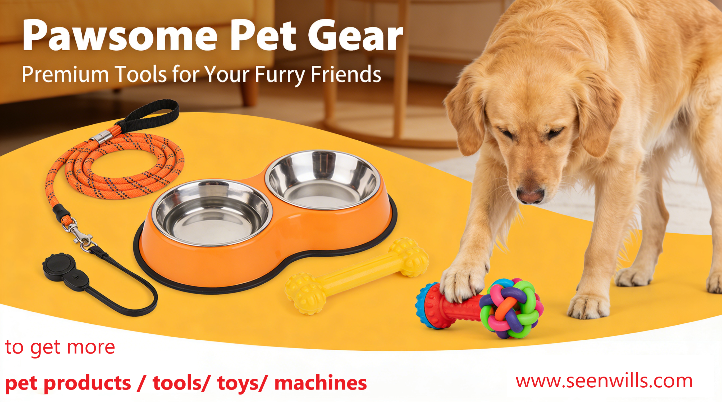
1. What products are available?
The primary product category currently available is Pet Air Purifiers. These are not merely standard air purifiers but represent a systematic upgrade tailored to the specific pain points of pet-owning households.
- Integrated Functionality: A single device addresses three key issues: airborne pet hair and dander, stubborn odors (such as ammonia and hydrogen sulfide), and the elimination of bacteria, viruses, and allergens (e.g., Feld1 protein).
- Innovative Formats: Beyond conventional upright purifiers, the market has seen the emergence of innovative products like Smart Pet Grooming Stations. These devices actively suction loose fur during the grooming process, tackling the problem at its source and significantly reducing environmental hair pollution.
2. What is the proprietary name?
These products are commonly referred to as "Pet Air Purifiers" or "Air Purifiers for Pet Households".
In more specialized review or medical contexts, they may be termed:
- Allergen Removal Purifiers
- Medical-Grade Pet Purifiers, specifically referring to those possessing medical device certifications and focusing on sterilization and allergen removal.
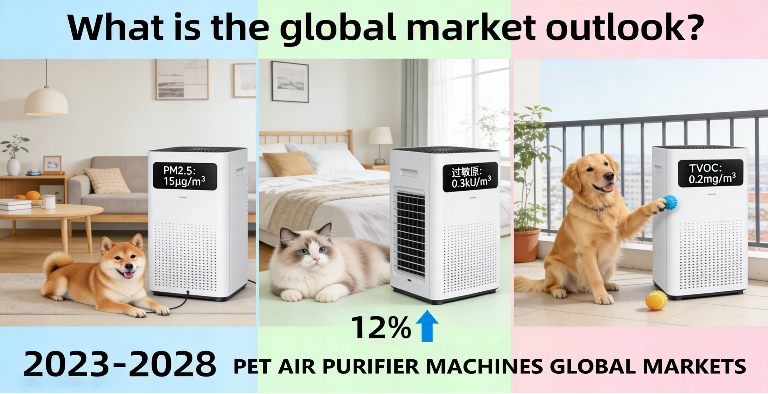
3. What is the global market outlook?
The global market outlook is exceptionally promising, currently experiencing a high-growth phase.
- Market Drivers: The booming "pet economy" and the elevated status of pets as "family members" are driving demand for high-quality, healthy home environments.
- Data Support: Data indicates that the "Pet Household Usage Scenario" accounts for over 30% of the air purifier market, making it a significant growth segment. With the introduction of relevant standards (e.g., GB/T 18801-2025) incorporating "Pet Allergen Removal" into performance grading, the market is transitioning into an era of "Precision Purification," ensuring demand will continue to deepen.
- Growth Potential: The intelligent device sector focused on pet environmental health is projected to maintain high growth in the coming years, particularly in markets with high pet ownership, such as North America, Europe, and China.
4. Which domestic brands or companies are involved?
Numerous Chinese brands have actively entered this space, ranging from dedicated pet brands to comprehensive home appliance giants.
- Leading Tech Brands:
- Xiaomi: Launched the Mijia Pet Air Purifier, leveraging its smart ecosystem and cost-effectiveness to enter the market.
- Dreame: Its AP10/FP10 series have been showcased at CES and entered North American Costco channels, emphasizing powerful hair suction and sterilization.
- Specialized & Innovative Brands:
- MOVA: Showcased the Puris P10 at the CIIE, utilizing "Dual Filter" and "Solid Alkali Targeted Decomposition" technology, positioning itself in the premium segment.
- Yixiang: Possesses Class II medical device certification, with products used in top-tier hospitals and vet clinics, emphasizing medical-grade sterilization and hair removal.
- Other Brands: Companies like airx and Yuehuxi are also deeply involved, offering solutions based on different technological approaches.
5. What are the general MOQ and Lead Time?
For B2B operations, these figures primarily depend on the manufacturer's type and your cooperation model.
- Minimum Order Quantity (MOQ):
- Established Brands/Large Factories: Typically have high MOQs, often starting in the hundreds or thousands of units, suitable for large distributors or supermarket chains.
- SME Manufacturers/OEM Factories: MOQs are relatively flexible, potentially as low as 50-100 units, suitable for startups or small-scale market testing.
- Lead Time:
- Stock/Standard Items: Can ship within 1-2 weeks after order placement.
- Custom/OEM Orders: Typically require 4-8 weeks for mold development, production, and quality inspection, potentially longer during peak seasons or for complex customizations.
6. Advantages and Disadvantages of B2B and B2C Platform Sales
Selling on different platforms presents distinct core trade-offs:
| Platform Type |
Advantages |
Disadvantages / Challenges |
| B2B Platforms (e.g., Alibaba, Global Sources) |
Precise Clients: Connects with wholesalers and dealers, leading to large orders.
Long-term Relationships: Easier to establish stable supply chain partnerships.
Brand Exposure: Showcases manufacturing capability and product lines. |
Intense Competition: Price wars are common.
Long Sales Cycle: Procurement processes are complex and lengthy.
Profit Margins: Relatively lower compared to B2C. |
| B2C Platforms (e.g., Amazon, JD, Tmall) |
Higher Profits: Direct-to-consumer sales offer greater gross margins.
Brand Direct: Builds direct consumer brand recognition.
Rapid Feedback: Quickly gathers user reviews for product iteration. |
Complex Operations: Requires handling marketing, customer service, logistics, and returns.
High CAC: Traffic competition is fierce, requiring significant ad spend.
Inventory Pressure: Requires self-warehousing, tying up capital. |
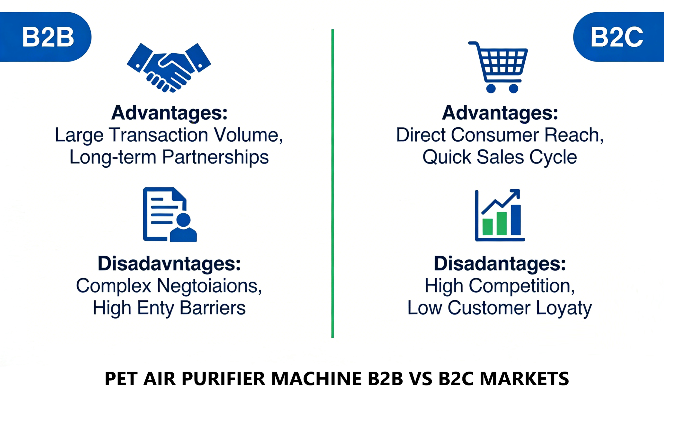
7. Promotion Dimensions for Creating a Hit Product
To turn such a product into a hit, promotion should focus on the following core dimensions:
- Pain Point Marketing: Precisely target the core pet-owner pain points: "Dread during shedding season," "Embarrassment over pet odors," and "Worry about bacteria/allergies." Use scenario-based content to trigger resonance.
- Technical Endorsement: Highlight the product's core "black tech," such as "Solid Alkali Odor Decomposition," "Medical-Grade Sterilization," or "Dual Filter Non-Clogging Design," backed by authoritative test reports or medical institution partnerships.
- KOL/KOC Seeding: On social platforms like Xiaohongshu, Douyin, and Bilibili, collaborate with pet bloggers and influencers for authentic unboxing reviews and long-term usage sharing.
- Scenario-Based Demonstration: Emphasize how the product integrates into home decor (e.g., magnetic outer shells, quiet design) and solves specific problems in multi-pet or child-inclusive households.
- Cross-Industry Collaboration: Partner with vet clinics, cat cafes, and grooming salons for product display or experiences, directly reaching precise user groups.
8. Foreign Buyer Procurement Channels and Core Dimensions
*If you are in such pet care or related machine business in need of assisting please feel free to contact SEENWILLS for help.
[company_id] => 18
[sort] => 0
[category_id] => 16
[key_name] => pet-air-purifier-sourcing-guide
)
Array
(
[id] => 39
[name] => 10000+ Sock Manufacturing Factories in Zhuji Zhejiang
[status] => normal
[create_time] => 2026-03-03 12:41:17
[delete_time] =>
[category_ids] => 16
[image] =>
[description] => Where we can get sock wholesale markets or factories in China?
[content] => Are you willing to make your own brand socks or purchase socks in bulk?
Here are some contents for your sock business guides:
1. Socks Industry in Zhuji;
2. Status of Zhuji Socks Now;
3. Opportunities And Challenges for Socks Business;
4. How to Choose Quality Socks;
5. How to Select a Reliable Sock Suppliers in China;
6. Business Guides on Purchasing Socks in Zhuji;
7. How to Get to Zhuji Easily;
If you want to know more informations about Zhuji, please ask seenwills sales.
- Why Did the Hosiery Industry Emerge in Zhuji?
The rise of the hosiery industry in Zhuji (specifically centered in Daxi/Datang District) is the result of serendipitous opportunities, geographical advantages, market dynamics, and strategic policy guidance.
- Serendipitous Opportunity & Grassroots Entrepreneurship: In the late 1970s, a local production team in Chengshan (now part of Daxi) accidentally purchased three second-hand manual knitting machines. The high profitability compared to traditional agriculture sparked a wave of grassroots entrepreneurship. The "shop-front, factory-back" household workshop model emerged rapidly, laying the industrial DNA.
- Geographical & Locational Advantages: Located merely 52 kilometers from Yiwu, Daxi leveraged the radiation effect of the Yiwu Commodity Market. This established the early collaboration model of "Daxi Production, Yiwu Sales," granting rapid access to the national market.
- Industrial Agglomeration Effect: After 40+ years of development, Daxi has formed the world's most complete hosiery supply chain. It covers raw materials, texturing, dyeing, sock machine manufacturing, design, knitting, packaging, and logistics. The local industrial rate exceeds 95%, reducing production costs by 25%-33% compared to other regions.
- Policy Guidance & Platform Building: The government promoted the construction of the Daxi Textile and Garment Trade City and the Hosiery Science Park. Subsidies for intelligent transformation (up to 30%) have guided enterprises toward digitalization and branding.
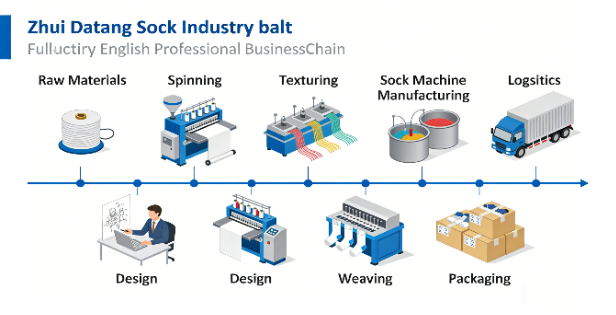
- Current Status of the Hosiery Industry in Zhuji and Globally
- Zhuji Industry Status
- Market Scale: In 2025, the Daxi sub-district produced over 25 billion pairs of socks, accounting for 70% of China's output and 35% of the global total, with an industrial scale exceeding 70 billion RMB.
- Market Entities: It hosts over 14,000 hosiery enterprises, including 208 designated-scale enterprises, and has cultivated well-known brands such as Nai'er, Mengna, and Kaishili.
- Technological Upgrades: The penetration rate of intelligent "knit-sew-turn" machines exceeds 60%. The application of AI visual inspection and 3D design software has reduced labor costs by 40% and shortened order delivery cycles by 10 days.
- Market Channels: Foreign trade accounts for approximately 40% (mainly exported to Europe, America, the Middle East, and Southeast Asia). Domestic sales account for 60%, with e-commerce channels comprising over 50% of this share, growing at 30% annually.
- Global Industry Status
- Market Structure: China is the world's largest producer and exporter of socks, accounting for over 60% of global output. Major production bases include Zhuji (Zhejiang), Dongguan (Guangdong), and Jinjiang (Fujian).
- Consumption Trends: Socks are transitioning from "warmth and utility" to "fashion coordination and functional segmentation." High-value-added products such as sports socks, trendy socks, antibacterial socks, and customized socks are in high demand.
- International Competition: Italy and Japan dominate the high-end brand market (e.g., FALKE,STANCE). China, India, and Vietnam dominate the mid-to-low-end manufacturing sector. However, China is upgrading toward the mid-to-high-end through design and technology.
III. Core Opportunities and Challenges
|
Dimension
|
Content
|
|
Core Opportunities
|
- Consumption Upgrade: The market potential for personalized and functional socks is huge; Gen Z is willing to pay for design and quality.
- Digital Transformation: AI design, smart production, and live-streaming e-commerce enhance efficiency and channel coverage.
- Cross-border E-commerce: Platforms like Temu and SHEIN help Chinese brands go global; high cost-performance products are competitive.
- Policy Support: The state promotes the shift from "Made in China" to "Chinese Brands," providing special funding.
- Supply Chain Synergy: Localized agglomeration reduces costs and improves response speed.
|
|
Main Challenges
|
- Weak Brand Power: Most enterprises are OEM/ODM; there is a lack of internationally renowned brands.
- Homogeneous Competition: The "price war" in the mid-to-low-end market is fierce, compressing profit margins.
- Rising Costs: Raw material, energy, and labor costs are rising continuously, with stricter environmental requirements.
- Design Capability: There is a shortage of original design talent and weak capabilities in IP collaboration and trend forecasting.
- International Trade Barriers: Requirements regarding tariffs, environmental standards, and labor rights are increasing.
|
- Multi-Dimensional Classification of Socks (Raw Material to Finished Product)
- Classification by Raw Material
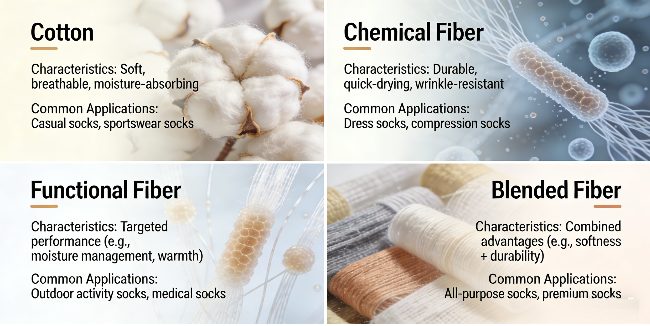
|
Type
|
Characteristics
|
Common Applications
|
|
Cotton
|
Moisture-absorbing, breathable, soft, cost-effective
|
Daily wear, sports socks
|
|
Synthetic (Nylon/Polyester)
|
Wear-resistant, elastic, quick-drying, low cost
|
Sports socks, ankle socks, compression socks
|
|
Functional Fibers (Modal/Bamboo/ Silver Fiber)
|
Antibacterial, deodorizing, moisture-wicking, anti-static
|
Medical socks, antibacterial socks, high-end business socks
|
|
Blended
|
Combines advantages of multiple fibers for enhanced performance
|
High-end trendy socks, professional sports socks
|
- Classification by Function & Scenario
- Everyday Socks: Cotton socks, invisible socks, five-toe socks—focusing on comfort and cost-effectiveness.
- Sports Socks: Basketball socks, running socks, mountaineering socks—emphasizing moisture management and support.
- Functional Socks: Antibacterial socks, deodorizing socks, compression socks, acupoint health socks.
- Trendy Socks: IP collaboration socks, designer socks, colorful socks, 3D jacquard socks.
- Professional Custom Socks: Team custom, corporate gifts, wedding socks.
- Classification by Process & Structure
- Standard Socks: Traditional knitting + manual seaming; low cost, high efficiency.
- Seamless Socks: Produced using machines; non-irritating, high fit, and comfort.
- 3D Jacquard Socks: Complex patterns achieved via computer programming; high design value.
- Custom Socks: Support for personalized patterns, sizes, and LOGO embroidery.
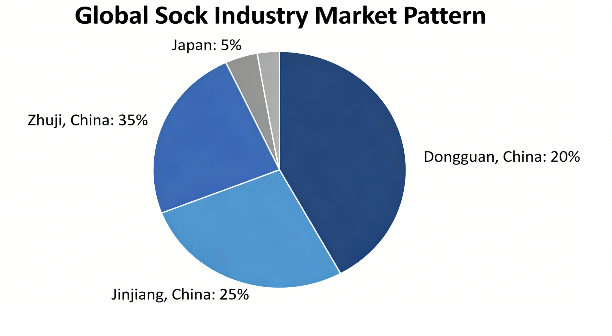
- Core Experience in Product Selection & Supply Chain Management
- Product Selection Strategy
- Check Material Composition: High-quality socks typically contain 60%-80% cotton, blended with nylon (20%-30%) to enhance elasticity and wear resistance.
- Inspect Craftsmanship: Check if the seam is flat, the welt (cuff) is tight, and if there is arch support reinforcement.
- Verify Functionality: Antibacterial socks should have SGS test reports; sports socks should have moisture-wicking certifications.
- Assess Design Uniqueness: Prioritize products with IP authorization, original designs, or seasonal best-sellers.
- Supply Chain Selection Experience
- Source Directly: Prioritize designated-scale enterprises or brand factories in Daxi to avoid middlemen markups.
- Evaluate Production Capacity: Check for intelligent machines, AI inspection systems, and ERP management systems.
- Cooperation Models: -- OEM/ODM: Suitable for brand owners; bulk production based on provided designs/samples. -- Drop Shipping: Suitable for e-commerce startups; supports small-batch shipments. -- Joint Development: Collaborate with design factories to co-develop exclusive styles.
- Quality Control: Request third-party inspection reports or verify quality through "sample testing."
- Pitfall Avoidance Guide
- Be wary of "ultra-low-priced" socks, which may use recycled yarn or inferior dyes.
- Avoid cooperating with unlicensed small workshops; recommend transactions via alibaba.com or seenwills.com.
- For export orders, confirm environmental and labor certification requirements to avoid compliance risks.
- Business Travel & Commerce Guide (Daxi Hosiery Trade City)
- Core Commercial Areas
- Daxi Textile and Garment Trade City: Spanning 530,000 sqm with over 3000 wholesalers. It is the world's largest professional sock market. -- Level 1: Sock wholesale area. -- Level 2: Raw materials and accessories market. -- Level 3: Design and brand exhibition area.
- Hosiery Science Park: Aggregates design, testing, training, and e-commerce incubation services.
- East China International Jewelry City: While focused on pearls, some vendors also deal in pearl-themed socks and gifts, suitable for cross-category sourcing.
- Accommodation & Dining
- High-end Hotels: Zhuji Yaoyang Kaiyuan Mingting Hotel, Ji Hotel (Daxi Branch).
- Local Cuisine: Xishi Tofu, Pearl Balls, Cidu Noodles—rich in local flavor.
- Business Support: Multiple co-working spaces, live-streaming bases, and logistics centers are available.
VII. Transportation Convenience Information
- Air
- Hangzhou Xiaoshan International Airport: 60km from Zhuji (1-hour drive), with direct airport shuttle buses.
- Shanghai Hongqiao International Airport: 1.5-hour high-speed rail ride to Zhuji Station.
- High-speed Rail
- Zhuji Station: On the Shanghai-Kunming line. 20 mins from Hangzhou, 1 hour from Shanghai, 40 mins from Ningbo.
- Shaoxing North Station: 30km from Daxi (40-minute drive).
- Highways
- Shanghai-Kunming Expressway (G60): Exit at Zhuji to reach Daxi directly.
- Zhuji-Yongjia Expressway (S26): Connects Hangzhou and Wenzhou, with a Daxi interchange.
- Local Transportation
- Bus: Routes 101 and 102 go directly to the Trade City.
- Ride-hailing: Available throughout the area.
- Parking: Large free parking lots are available at the Trade City.
Conclusion
The Zhuji-Daxi hosiery industry has evolved from the "Sock Capital of the World" to a "Global Hosiery Art Center," achieving high-quality development through digitization, branding, and globalization. For buyers, brand owners, and investors, this is an industrial highland that cannot be missed. Grasping trends, selecting optimal supply chains, and deepening product capabilities are the keys to standing out in this trillion RMB level.
If you want to produce your own brand socks welcome to contact SEENWILLS for help.
[company_id] => 18
[sort] => 0
[category_id] => 16
[key_name] => sock-manufacturing-factories-in-zhuji
)
Array
(
[id] => 38
[name] => Real Pearl Jewelry Wholesale Market In Zhuji Zhejiang
[status] => normal
[create_time] => 2026-03-03 12:03:40
[delete_time] =>
[category_ids] => 16
[image] =>
[description] => where can we get more real pearl jewelry from China wholesale center?
[content] => Have you ever heard the City name of Zhuji from Zhejiang Province?
Here are some contents for you to know it well
1. The pearl industry in Zhuji;
2. Status of pearl jewelry in Zhuji now;
3. Chances and challenges for Zhuji pearl jewelry;
4. Professional knowledge for pearl jewelry;
5. How to select quality pearl jewelry and related suppliers in Zhuji;
6. Business trips in Zhuji;
7. Transportation guide to Zhuji;
If you want to know more about pearl jewelry or Zhuji industry please feel free to let seenwills knows.
I. Why Did the Pearl Industry Emerge in Zhuji?
The formation and development of the pearl industry in Zhuji are the result of a synergy between geographical endowments, historical accumulation, policy guidance, and market dynamics.
- Geographical & Resource Endowments: Situated in the southern wing of the Yangtze River Delta, Zhuji boasts a dense network of rivers and lakes (such as Baita Lake and the waters around Miguo Theme Park). The superior water quality provides ideal natural conditions for freshwater pearl mussel farming. Since the late 1960s, Shangxiahu Town has been experimenting with pearl cultivation using mussels, laying the geographical foundation for the industry.
- Historical Accumulation & Entrepreneurial Spirit: In the 1970s, driven by necessity, farmers in Shangxiahu were among the first to master artificial pearl cultivation techniques, leading to a phenomenon where "every household raises mussels and cultivates pearls." This grassroots entrepreneurial enthusiasm gave birth to the earliest pearl trading markets.
- Policy Guidance & Platform Construction: In 2008, Zhuji was named the "Pearl Capital of China" by the Development Research Center of the State Council. The government promoted the construction of the East China International Jewelry City (the world's largest pearl trading market) and established a provincial-level pearl industrial park. Special support policies have guided the industry's transformation from scattered farming to intensive, branded, and internationalized development.
- Industrial Chain Agglomeration Effect: After more than half a century of development, Zhuji has formed a complete industrial chain covering "farming—processing—design—trading—derivative development—cultural tourism." With over 9,000 upstream and downstream enterprises gathered in one place, the agglomeration effect is significant, realizing a model of "agglomeration in one location, radiation to the globe."
II. Current Status of the Pearl Jewelry Industry in Zhuji and Globally
- Industry Status in Zhuji
- Market Scale: In 2024, the output value of Zhuji's entire pearl industry chain exceeded 50 billion yuan, accounting for 80% of China's pearl production and 73% of the world's total.
- Market Entities: There are over 9,000 enterprises and workshops, including 6 enterprises above designated size and 2 listed companies (such as Qianzhu Pearl). Well-known brands such as RuanShi and Angel's Tears have been cultivated.
- Market Channels: Online sales account for over 60% of the total. There are nearly 7,000 live-streaming sessions daily, with over 7,500 active live-streaming rooms. The TikTok cross-border live-streaming base has been established, and cross-border e-commerce sales exceeded 500 million yuan in 2024.
- Technological Upgrades: Intelligent feeding systems, AI pearl sorting machines (10-15 times more efficient than manual labor), and automated drilling machines have been promoted, reducing labor costs by 40%. The research and development of the "Edison" pearl variety has resulted in quality comparable to saltwater pearls.
- Integration of Culture, Commerce, and Tourism: The World Freshwater Pearl Museum and Pearl Culture District have been built, receiving over 600,000 tourists annually, promoting the development of "pearl + tourism + research."
- Global Industry Status
- Market Structure: China is the world's largest producer and exporter of pearls. Freshwater pearl production accounts for over 95% of the global total, with major production areas in Zhuji, Zhejiang; Hanshou, Hunan; and Suzhou, Jiangsu.
- Consumption Trends: Pearl jewelry is shifting from being a "gift for the middle-aged and elderly" to "youth-oriented, fashionable, and daily wear." Generation Z has become the main consumer group, with Chinese-style and New Chinese-style designs being highly popular.
- International Competition: Japanese Akoya, Australian South Sea, and Tahitian black pearls occupy the high-end saltwater pearl market. Chinese freshwater pearls are gradually entering the mid-to-high-end market through quality improvements (such as Edison pearls).
- Trade Structure: Pearl products are sold to over 70 countries and regions including the United States, Japan, Russia, and Southeast Asia. However, brand influence still lags behind international counterparts.
III. Core Opportunities and Challenges in Pearl Jewelry Industry Development
| Dimension |
Content |
| Core Opportunities |
1. Consumption Upgrade: Growing demand for youthful and personalized pearl jewelry indicates huge market potential.
2. Digital Transformation: Live-streaming e-commerce and cross-border live-streaming (TikTok, Temu) are opening new growth frontiers.
3. Industrial Chain Extension: The market for derivatives such as pearl powder, face masks, health products, and pharmaceuticals is expanding.
4. Policy Support: The state values the real economy and rural revitalization, providing multiple policy dividends for the pearl industry.
5. Cultural Empowerment: With the rise of the Chinese trend, pearls, as representatives of "Oriental Aesthetics," are seeing their cultural value highlighted. |
| Main Challenges |
1. Insufficient Brand Power: There is a lack of internationally renowned brands, with most enterprises still in the OEM or wholesale stage.
2. Design Shortcomings: Original design capabilities are weak, homogenization is serious, and there is a scarcity of high-end design talent.
3. Uneven Quality: Small and medium-sized workshops still engage in practices such as passing off inferior goods as superior or bleaching and dyeing, affecting overall reputation.
4. Environmental Pressure: Traditional farming models have caused water pollution, and the cost of green transformation is high.
5. International Barriers: Exports face trade barriers such as technical standards and environmental certifications. |
IV. Multi-Dimensional Classification of Pearl Jewelry from Raw Materials to Finished Products
- Classification by Source
| Type |
Characteristics |
Main Origin |
| Freshwater Pearls |
Diverse shapes, rich colors, high yield, affordable prices |
China (primarily Zhuji) |
| Saltwater Pearls |
High roundness, strong luster, large size, high value |
Japan (Akoya), Australia (South Sea Pearls), French Polynesia (Tahitian Black Pearls) |
- Classification by Cultivation Method
- Nucleated Pearls: Implanted with a nucleus, resulting in regular shapes, such as Edison pearls and Akoya pearls.
- Non-Nucleated Pearls: Only implanted with a piece of tissue, resulting in diverse shapes, mostly traditional forms of freshwater pearls.
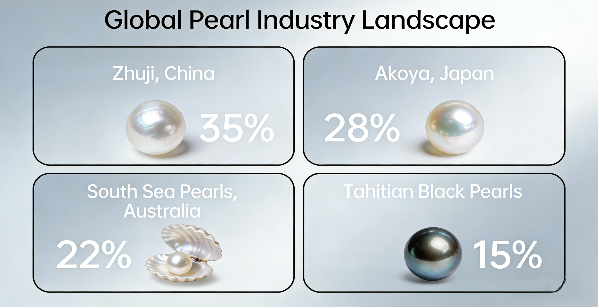
- Classification by Quality Grade (Taking Zhuji Freshwater Pearls as an Example)
| Grade |
Diameter (mm) |
Roundness Rate |
Luster |
Application Scenario |
| Special Grade |
≥9.0 |
≥95% |
Extremely Strong |
High-end jewelry, collection |
| Grade 1 |
7.0-8.9 |
≥90% |
Strong |
Business gifts, weddings |
| Grade 2 |
5.0-6.9 |
≥85% |
Moderate |
Daily wear, fashion accessories |
| Grade 3 |
<5.0 |
<85% |
Weak |
Wholesale, DIY materials |
- Classification by Finished Product Form
- Loose Pearls (Raw Pearls): Unprocessed pearls sold by size, roundness, and luster.
- Pearl Jewelry: Necklaces, earrings, bracelets, rings, brooches, etc.
- Semi-finished Products: Components that have been drilled, strung, or matched with chains for secondary design by brand owners.
- Derivatives: Pearl powder, face masks, health products, traditional Chinese medicine preparations.
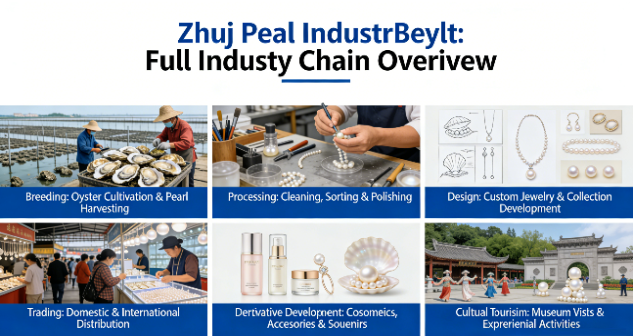
V. Core Experience Sharing on Selecting Pearl Jewelry and Supply Chains
- Product Selection Strategy
- Observe Luster: The stronger the luster, the higher the quality. Use the "mirror method"—if a person's reflection is clear, the quality is good.
- Check Roundness: Perfectly round pearls have the highest value. Use the rolling ball method for testing.
- Inspect Flaws: The smoother the surface, the higher the value. Observation under a microscope is more accurate.
- Assess Matching: For stringed jewelry, pay attention to the consistency of size, color, and luster among the pearls.
- Supply Chain Selection Experience
- Source Direct Procurement: Prioritize breeding bases or large processing enterprises in Shangxiahu Town to reduce intermediate links.
- Check Qualifications: Verify if the enterprise has SC certification, quality inspection reports, and export qualifications.
- Focus on Technical Capabilities: Whether they possess AI sorting, automated drilling, and non-destructive bleaching processes.
- Cooperation Models:
-- B2B Wholesale: The first floor of the East China International Jewelry City is a wholesale area, suitable for bulk procurement. You can sourcing from alibaba.com, seenwills.com if you do not come to China as a business starter.
-- Drop Shipping: Many live-streaming bases support small-batch drop shipping, suitable for e-commerce startups.
-- Custom Development: Cooperate with design brands or processing workshops to provide OEM/ODM services.
- Pitfall Avoidance Guide
- Be wary of "ultra-low-priced" pearls, which may be bleached or dyed.
- Avoid direct cooperation with small workshops lacking quality inspection capabilities. It is recommended to transact through platforms or guaranteed channels.
- For cross-border sales, pay attention to the environmental and labeling regulations of the target market.
VI. Business Travel Introduction near Zhuji
- Core Business Areas
- East China International Jewelry Mall: The world's largest pearl trading market integrating trading, display, quality inspection, and logistics, with over 2,000 companies to merchants.
- World Freshwater Pearl Museum: Integrates science popularization, culture, and exhibition sales, serving as an important window to understand pearl history and craftsmanship.
- Pearl Culture District: Integrates catering, accommodation, cultural and creative products, and experience stores, suitable for business inspections and leisure.
- Miguo Town: A 4A-level scenic spot providing mussel opening and DIY experiences, suitable for team building and research.
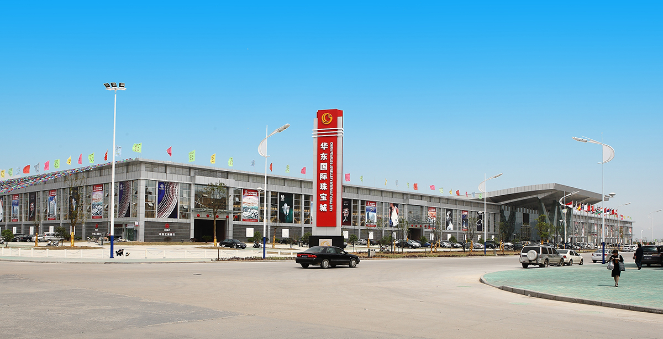
- Accommodation Recommendations
- High-end Hotels: Jinjiang Inn, Hanting Hotel (chain brands, the first choice for business travel).
- Characteristic Homestays: Pearl-themed homestays, such as "Pearl Cottage," offering a strong sense of experience.
- Catering Brands: Starbucks, KFC, local specialty restaurants (such as Xishi Tofu, Pearl Balls).
- Business Support
- Live-streaming Bases: Three large live-streaming bases: Baoji, Xingdahui, and Tonghe, providing product selection, incubation, and operation services.
- Quality Inspection Institutions: 10 authoritative institutions, including the National Jewelry Quality Supervision and Inspection Center, are stationed on-site.
- Logistics Services: DHL, FEDEX, UPS, SF Express, JD Cargo, and others have established exclusive pickup points, supporting global shipping.
VII. Transportation Convenience Information to Zhuji
- Air
- Hangzhou Xiaoshan International Airport: Approximately 60 kilometers from Zhuji, about a 1-hour drive, with airport shuttle buses to Zhuji.
- Shanghai Hongqiao International Airport: Approximately 180 kilometers from Zhuji, reachable by high-speed rail in 1.5 hours.
- High-speed Rail/Railway
- Zhuji Station: An intersection of the Shanghai-Kunming and Hangzhou-Ningbo high-speed railways. It takes 20 minutes from Hangzhou, 1 hour from Shanghai, and 40 minutes from Ningbo.
- Shaoxing North Station: Approximately 30 kilometers from Shangxiahu Town, about a 40-minute drive.
- Highways
- Shanghai-Kunming Expressway (G60): Take the Zhuji exit to reach the downtown area and Shangxiahu Town directly.
- Zhuji-Yongjia Expressway (S26): Connects Hangzhou and Wenzhou, with multiple exits in the Zhuji section.
- Intra-city Transportation
- Bus Routes: Direct buses (such as Zhuji Bus 101) run from downtown Zhuji to Shangxiahu Town.
- Taxis/Ride-hailing: Available throughout the area, with convenient taxi services within Shangxiahu Town.
- Self-driving Parking: The East China International Jewelry City has a large parking lot open to the public for free.
Conclusion
The pearl industry cluster in Zhuji has grown from a "small pearl" into a "major industry" and is now moving towards a new stage of high-quality development characterized by "branding, digitization, and globalization." For buyers, brand owners, and investors, this is an industrial highland that cannot be missed. Grasping trends, selecting optimal supply chains, and deepening product capabilities are the keys to standing out in this billion RMB level.
If you want a sourcing agency to help your real business in Zhuji then we hope you can contact SEENWILLS.
[company_id] => 18
[sort] => 0
[category_id] => 16
[key_name] => pearl-jewelry-wholesale-market-in-zhuji
)
Array
(
[id] => 37
[name] => Top 100 Enterprises in Yiwu City with 6 Business Sections
[status] => normal
[create_time] => 2026-03-01 11:05:28
[delete_time] =>
[category_ids] => 16
[image] =>
[description] => Are you sourcing some nice suppliers in Yiwu?
[content] => There are some guide news for your global supplier sourcing informations based in Yiwu Jinhua Zhejiang, if you need some more information to assistant well please feel free to
contact SEENWILLS.
I. Photovoltaic New Energy (20 Companies)
Yiwu JA Solar Technology Co., Ltd.
A core production base of JA Solar Technology and one of Yiwu's first hundred-billion-level enterprises. The company focuses on the R&D and manufacturing of high-efficiency photovoltaic (PV) modules and global exports. With large production capacity and industry-leading shipment volumes, it drives the clustered development of Yiwu's PV industry chain.
Zhejiang Aiko Solar Energy Technology Co., Ltd.
A global leader in solar cell manufacturing. The company has established a high-capacity, high-efficiency solar cell project in Yiwu. Its ABC (All Back Contact) technology products lead in efficiency, serving as a benchmark for technological innovation in the solar cell sector, with continuous high growth in output value and export volume.
Trina Solar (Yiwu) Technology Co., Ltd.
Trina Solar's core manufacturing base in Central Zhejiang, focusing on the R&D and production of high-efficiency PV modules and energy storage systems. Its products cover major global PV markets, helping Yiwu build a world-class PV industrial cluster.
Yiwu Chint Solar Energy Technology Co., Ltd.
A subsidiary of the Chint Group, focusing on PV module manufacturing and the development and operation of distributed PV power stations. It integrates manufacturing and energy services, with products and solutions widely applied in residential, commercial & industrial, and large-scale ground-mounted power stations.
Yiwu Tafu New Energy Co., Ltd.
Specializes in PV power station investment, construction, operation & maintenance, and technical services. Deeply rooted in the distributed PV market of Yiwu and surrounding areas, it helps enterprises and residents transition to green electricity.
Zhejiang Sunwoda Power Battery Co., Ltd.
A large-scale new energy power battery project by Sunwoda in Yiwu. Engaged in the R&D, production, and sales of lithium-ion power and energy storage batteries, it provides core energy solutions for new energy vehicles and large-scale energy storage projects.
JinkoSolar (Yiwu) Co., Ltd.
An important manufacturing base for JinkoSolar, a global leader in the PV industry. It produces GW-level high-efficiency PV modules annually. With rapid technological iteration, its products are exported to major global PV markets in Europe, America, and Southeast Asia, serving as one of the core enterprises for PV exports in Yiwu.
Orient Risen (Yiwu) New Energy Co., Ltd.
Layouts high-efficiency PV modules and energy storage systems, integrating R&D and mass production capabilities. Its products have passed multiple global certifications and are core suppliers in the global PV supply chain, promoting diversification and technological upgrading of Yiwu's PV industry.
Yiwu Qingyue Optoelectronics Technology Co., Ltd.
Focuses on Mini/Micro LED display technologies and related optoelectronic products, integrating R&D and manufacturing. Its products are applied in high-end display panels and smart wearable devices, serving as a rising force in Yiwu's information optoelectronics industry.
Zhejiang Ruifeng Optoelectronics Co., Ltd.
Specializes in LED packaging and application products, providing full-series LED solutions for backlighting and lighting. With mature technology, its customer base covers domestic and international display and lighting enterprises, serving as an important supporting enterprise in Yiwu's optoelectronics industry chain.
BOE HC Semitek (Zhejiang) Co., Ltd.
The world's second-largest LED chip manufacturer. It has established large-scale LED epitaxial wafer and chip production lines in Yiwu. With leading technology, it provides core light source components for downstream industries such as displays and lighting, consolidating the foundation of Yiwu's optoelectronics industry.
Yiwu Haosheng New Materials Co., Ltd.
Focuses on the R&D and production of key auxiliary materials for PV modules such as encapsulation films and backsheets. Its products are compatible with high-efficiency PV modules, providing a stable supply chain for local and national PV enterprises and improving the localization rate of the PV industry chain.
Zhejiang Yangu Technology Co., Ltd.
Engaged in the R&D and manufacturing of power electronic equipment such as PV inverters and energy storage converters. Its products feature high conversion efficiency and reliability, compatible with different grid standards worldwide. It is a core supporting enterprise for PV and energy storage systems.
Zhejiang Zhanxin Electronic Technology Co., Ltd.
A leading domestic silicon carbide (SiC) power semiconductor enterprise. It develops and manufactures SiC MOSFET chips and modules, applied in new energy vehicles, PV inverters, and energy storage systems, helping to improve efficiency and energy saving in the PV and new energy industries.
Yiwu Tafu New Energy Co., Ltd.
Focuses on the development, construction, and O&M of distributed PV power stations, providing customized PV solutions for industrial & commercial plants and public buildings, promoting green energy substitution locally in Yiwu.
Zhejiang Benyuan Paper & Plastic Technology Co., Ltd.
Develops and produces eco-friendly paper-plastic materials for PV module packaging, replacing traditional plastic packaging and helping the PV industry achieve a fully green and low-carbon supply chain.
Zhejiang Ruifeng Optoelectronics Co., Ltd.
Deeply engaged in LED packaging technology, its products are widely used in PV supporting lighting and outdoor displays. It has also expanded into Mini LED backlight applications, providing diverse light source products for the optoelectronics industry chain.
Zhejiang Jinghui Cosmetics Co., Ltd.
Crosses over into the R&D of new energy materials related to PV while consolidating its main cosmetics business, achieving coordinated development in two tracks.
Zhejiang Huatong Meat Products Co., Ltd.
While advancing its main meat processing business, it has invested in building distributed PV power stations to achieve self-sufficiency in plant energy, practicing the concept of green manufacturing.
Zhejiang Runhui Fashion Co., Ltd.
Equips its plants with PV power stations and explores the integration of PV with the textile and fashion industry, promoting low-carbon transformation in traditional manufacturing.
II. Textile, Apparel, and Knitting (25 Companies)
Tianpai Knitting Co., Ltd.
A provincial "Specialized, Refined, Unique, and Innovative" enterprise focusing on the R&D, production, and export of seamless knitted underwear. With advanced seamless weaving production lines, its products are exported to Europe, America, and Southeast Asia, holding strong brand influence in the niche market.
Langsha Knitting Co., Ltd.
A leading domestic enterprise in the sock industry, owning the "Langsha" brand. Its product line covers men's and women's cotton socks, pantyhose, and warm socks, with both offline stores and online e-commerce channels, exporting to multiple countries worldwide.
Zhejiang Mengna Hosiery Co., Ltd.
Focuses on the R&D and production of high-end socks, known for functionality and comfort. It has obtained multiple international certifications and serves as an important supplier for international brands while developing its own brand market.
Zhejiang Bangjie Digital Knitting Products Co., Ltd.
A leader in the seamless knitting field, focusing on the R&D and manufacturing of high-end seamless underwear and sportswear. Using digital knitting technology, its products fit the human body well with excellent elasticity, serving global high-end apparel markets.
Zhejiang Zhenai Blanket Industry Technology Co., Ltd.
A leading domestic blanket producer focusing on the R&D and production of functional blankets and home textiles. Its products cover warmth, antibacterial, and eco-friendly series, exporting to Europe, America, and the Middle East while expanding the domestic home market.
Zhejiang Dihong Home Textile Co., Ltd.
Focuses on the R&D and production of high-end home textile fabrics and finished products, including four-piece bedding sets, quilts, and pillows. It serves both household and hotel engineering channels and is a high-quality textile enterprise with outstanding land-output tax performance.
Zhejiang Boni Fashion Holding Group Co., Ltd.
Focuses on the R&D, design, and production of underwear and loungewear, owning multiple brands while providing ODM/OEM services for international brands. Its diverse product styles cover different consumer groups.
Zhejiang Yitong Fashion Co., Ltd.
Deeply engaged in the women's wear and casual wear sector, following fashion trends closely while emphasizing quality control. Its products are sold in major domestic cities and overseas markets, with tax output per unit land ranking among the industry's best.
Yiwu Hanghong Fashion Co., Ltd.
Focuses on the production and export of knitted apparel and casual clothing with their oversea client datas, known for high cost-performance and fast delivery, serving as a backbone enterprise for Yiwu's textile and apparel exports.
Zhejiang Runhui Fashion Co., Ltd.
Mainly produces men's and women's casual wear and sportswear, balancing domestic sales and foreign trade. It focuses on improving supply chain efficiency and has advantages in responding quickly to orders.
Rongli Fashion Co., Ltd.
Focuses on the design and production of women's wear and children's clothing, with fresh product styles covering domestic e-commerce platforms and offline wholesale markets, while expanding into Southeast Asian overseas markets.
Yiwu Ruipang Knitting Co., Ltd.
Focuses on the production of knitted fabrics and knitted apparel, including undershirts and sportswear, serving as a core supplier for multiple apparel brands with excellent tax output per unit land.
Yiwu Huading Nylon Co., Ltd.
A leading enterprise in the domestic nylon filament industry, focusing on the R&D and production of nylon 6 chips and nylon filament. Its products are widely used in textile apparel and industrial filaments, providing core raw materials for the textile industry chain.
Zhejiang Meizhiyuan Cosmetics Co., Ltd.
On the basis of its main cosmetics business, it has expanded into functional coating products related to textile fabrics, achieving cross-border synergy.
Zhejiang Binwang Playing Cards Co., Ltd.
A traditional playing card producer that has also expanded into textile packaging materials to increase product added value.
Zhejiang Shengxuan crafts Co., Ltd.
Combines textile fabrics with crafts, developing and producing textile decorations and festive items, exporting to European and American markets.
Zhejiang Zhanxin Electronic Technology Co., Ltd.
Although mainly engaged in semiconductors, it provides high-efficiency power devices for textile machinery, assisting in the automation upgrade of the textile industry.
Zhejiang Huachuan Industrial Group Co., Ltd.
Provides papermaking and packaging materials for the textile industry while water recycling management business, serving the green development of the textile industry chain.
Zhejiang Benyuan Paper & Plastic Technology Co., Ltd.
Develops and produces eco-friendly packaging materials for textiles and apparel, replacing traditional plastic packaging and assisting textile enterprises in achieving green packaging.
Yiwu Shuangtong Daily Necessities Co., Ltd.
Known for straws, it has also expanded into daily necessities accessories related to textiles, achieving diversified development.
Zhejiang Senyu Co., Ltd.
Mainly engaged in health products, it has also step into functional textile fabrics, incorporating herbal ingredients into fabrics to develop health-care apparel.
Zhejiang Runfeng Health Technology Co., Ltd.
A leading enterprise in the health industry that has also expanded into functional textile fabrics such as antibacterial and far-infrared warmth fabrics, applied in medical and daily apparel.
Zhejiang Hongyu Medical Supplies Co., Ltd.
Mainly engaged in medical dressings, it has also expanded into medical textiles such as surgical gowns and isolation gowns. Its products pass MEC and supply medical institutions.
Zhejiang Huayi Pharmaceutical Co., Ltd.
A pharmaceutical enterprise that also anti-virus filming research on technology for medical textile materials, enhancing the safety of medical textile products.
Zhejiang Boni Fashion Holding Group Co., Ltd.
A lingerie enterprise that uses new textile fabrics to develop functional underwear that is light, breathable, and antibacterial, meeting consumers' health needs.
III. Beauty, Daily Chemicals, and Health Care (15 Companies)
Zhejiang Diefei Cosmetics Co., Ltd.
A leading cosmetics enterprise in Yiwu, focusing on the R&D and production of makeup and skincare products. With multiple automated production lines, its products are exported worldwide while step into the double development domestic and global markets online and offline business, holding strong brand influence.
Zhejiang Meixue Cosmetics Co., Ltd.
Focuses on the R&D and manufacturing of mid-to-high-end makeup and skincare products, emphasizing the safety and efficacy of product formulas. It is an important ODM supplier for international brands while expanding their own brands.
Zhejiang Jinghui Cosmetics Co., Ltd.
An integrated cosmetics enterprise covering R&D, production, and sales. Its product line covers makeup, skincare, and perfume with their investment of advanced producing lines and testing center, and its products pass multiple international certifications.
Zhejiang Runfeng Health Technology Co., Ltd.
A leading enterprise in the health industry, focusing on the R&D and production of health foods, supplements, and medical devices. It ranks among the top Yiwu industrial enterprises in tax output per unit land, supplying domestic medical institutions and retail markets.
Zhejiang Hongyu Medical Supplies Co., Ltd.
A national-level "Specialized, Refined, Unique, and Innovative" enterprise mainly engaged in medical dressings, surgical gowns, and isolation gowns. Its products pass CE and FDA, exporting worldwide as a core supplier of medical protective products.
Zhejiang Huayi Pharmaceutical Co., Ltd.
Focuses on the R&D and production of chemical raw materials and preparations, Spanning therapeutic areas including anti-infectives and cardiology. It passes GMP certification, supplying domestic pharmaceutical companies and overseas markets,to keep the growth of the medical industry.
Zhejiang Senyu Co., Ltd.
Using herbal raw materials such as Dendrobium officinale as the core, it is in the business of research healthy and drink products, while expanding into herbal skincare and functional foods. Its brand "Senshan" is well-known in the domestic health product market.
Zhejiang Stenger Sports Medicine Technology Co., Ltd.
Focuses on the R&D and production of sports medicine and rehabilitation medical devices, including supports and rehabilitation equipment. Its products pass MEC, supplying medical institutions and sports rehabilitation centers.
Zhejiang Benyuan Paper & Plastic Technology Co., Ltd.
Develops and produces eco-friendly packaging materials for pharmaceuticals and cosmetics, such as paper-plastic composites, meeting the safety and eco-friendly packaging needs of pharmaceutical and beauty products.
Zhejiang Runhui Fashion Co., Ltd.
Expands into medical textile products such as medical staff uniforms, meeting the professional dress needs of medical institutions.
Zhejiang Huatong Meat Products Co., Ltd.
Mainly engaged in meat processing, it has also step into developing the healthy food industry, developing low-fat, high-protein healthy meat products to meet consumers' healthy diet needs.
Zhejiang Ruifeng Optoelectronics Co., Ltd.
Provides LED light sources for medical equipments, such as surgical lamps and medical testing machine, assisting in the efficiency and precision of medical equipments.
Zhejiang Sunwoda Power Battery Co., Ltd.
Provides energy storage power sources for medical equipments, such as mobile medical vehicles and portable testing machines, ensuring the on-going of medical equipments.
Zhejiang Zhanxin Electronic Technology Co., Ltd.
Provides efficient power semiconductor devices for medical devices, to improve the energy efficiency and stability of medical devices.
Zhejiang Kayou Animation Co., Ltd.
A cultural and creative top that also develops health education-themed cards, assisting in the popularization of children's health knowledge.
IV. Cultural & Creative Gifts and Home Decor (12 Companies)
Zhejiang Kayou Animation Co., Ltd.
A global leader in trading card games, owns the authorities protents of international Cartoon IP. With an extremely high market share in cards, its revenue exceeded 10 billion yuan in 2024, serving as a benchmark enterprise for Yiwu's transition from "manufacturing" to "creation".
Huahong Picture & Home Furnishings Co., Ltd.
A leading global enterprise in the picture frame and wall art industry. Its products cover picture frames, wall art, and home crafts, with the best supply-chain, exporting to multiple countries worldwide, serving as a leading export enterprise for Yiwu's cultural and creative home furnishings.
Zhejiang Wangbin Decoration Materials Co., Ltd.
Focuses on the R&D and production of decoration strips, picture frames, and paint frames with the advanced factory working lines, supplying the home market and decoration engineering, with strong brand influence.
Yiwu Ruichao Picture Frame Co., Ltd.
A rising enterprise in the picture frame industry, focusing on the R&D and production of mid-to-high-end picture frames. Its products feature novel designs and exquisite craftsmanship, exporting to European and American markets, serving as a high-quality enterprise newly on the top 50 industrial enterprises.
Yiwu Chaoqi Special Toys & Crafts Co., Ltd.
Focuses on the R&D and production of toys and Crafts, including plush toys and festive Crafts, Its designs follow market trends closely while emphasizing the use of eco-friendly materials, exporting worldwide.
Zhejiang Shengxuan Crafts Co., Ltd.
Focuses on the R&D and production of Crafts, within PP, fabrical crafts. Its products feature unique designs and exquisite craftsmanship, exporting to European, American, and Middle Eastern markets.
Zhejiang Binwang Playing Cards Co., Ltd.
A leading domestic enterprise in the playing card industry, focusing on the R&D and production of playing cards. It owns the "Binwang" brand, covering domestic and overseas markets, while expanding into IP playing cards and custom playing cards.
Zhejiang Boni Fashion Holding Group Co., Ltd.
Combines culture and creativity with apparel, developing IP-themed underwear and loungewear to increase product added value.
Zhejiang Senyu Co., Ltd.
Develops herbal IP products, such as Dendrobium officinale-themed home crafts and gift sets, expanding into the IP market.
Zhejiang Runfeng Health Technology Co., Ltd.
Develops health-themed IP products, such as health education crafts and gifts, assisting in the spreeding of health culture.
Zhejiang Huachuan Industrial Group Co., Ltd.
Provides papermaking and packaging materials for IP enterprises, assisting inprove the packaging quality of IP products.
Zhejiang Benyuan Paper & Plastic Technology Co., Ltd.
Develops and produces eco-friendly packaging materials for IP products, assisting IP enterprises in achieving green packaging.
V. Electronic Information and Auto Parts (8 Companies)
Yiwu Geely Powertrain Co., Ltd.
A first-level subsidiary of Geely Automobile Group, focusing on the R&D and manufacturing of automobile engines and transmissions. It is a core enterprise of Yiwu's new energy automobile industry, supplying powertrains for Geely and other automakers, keep the development of Yiwu's automobile industry chain.
Zhejiang Sunwoda Power Battery Co., Ltd.
As previously mentioned, it also provides power battery systems for new energy vehicles, serving as a core supporting enterprise in the new energy vehicle industry chain.
BOE HC Semitek (Zhejiang) Co., Ltd.
As previously mentioned, it is a core enterprise in the information optoelectronics industry chain, providing LED chips for display panels.
Zhejiang Zhanxin Electronic Technology Co., Ltd.
A leading domestic silicon carbide (SiC) power semiconductor enterprise. It focus on SiC MOSFET chips and modules, applied in new energy vehicles, PV inverters, etc., serving as a core enterprise in Yiwu's semiconductor industry.
Yiwu Qingyue Optoelectronics Technology Co., Ltd.
Focuses on the R&D of Mini/Micro LED display technology. Its products are applied in high-end displays and smart wearable devices, serving as a rising force in Yiwu's information optoelectronics industry.
Zhejiang Lanyu Digital Technology Co., Ltd.
Focuses on the R&D and production of digital printing equipment and inks, applied in the textile and advertising industries. With leading technology, it has excellent tax output per unit land and is a national-level "Specialized, Refined, Unique, and Innovative" enterprise.
Zhejiang Ruifeng Optoelectronics Co., Ltd.
As previously mentioned, it specializes in LED packaging, providing light sources for electronic devices.
Zhejiang Yangu Technology Co., Ltd.
Focuses on the R&D and production of electronic components such as connectors and sensors, applied in automotive electronics and consumer electronics, serving as an important supporting enterprise in the electronics industry chain.
VI. Other Comprehensive Manufacturing and New Materials (16 Companies)
Zhejiang Huachuan Industrial Group Co., Ltd.
A leading traditional industrial enterprise in Yiwu, within businesses of paper, dirty water recycling, hotness energy supply. It owns full chain of supply, providing packaging materials and energy services for numerous enterprises in Yiwu, serving as a stable listed enterprise in the top 50 industrial enterprises.
Yiwu Yikai Lid Industrial Co., Ltd.
A national-level "Little Giant" and provincial top enterprise, focusing on the R&D and production of easy-open lids. Its products are applied in food, beverage, and canned goods packaging, with leading technology and high market share in the domestic market.
Yiwu Shuangtong Daily Necessities Co., Ltd.
A global leader in the straw industry, focusing on the R&D and production of eco-friendly straws. It promotes the transition of the straw industry from plastic to paper and degradable materials. Its products are exported worldwide, serving as a benchmark for the transformation and upgrading of Yiwu's small commodities.
Zhejiang Huatong Meat Products Co., Ltd.
A domestic leader in meat processing, focusing on pig breeding, slaughter processing, and meat product production. It owns full supplying the domestic market while expanding into overseas markets.
Yiwu Jinxia Commercial Concrete Co., Ltd.
Focuses on the R&D and production of commercial concrete, supplying construction projects in Yiwu
YIWU JINXIA COMMERCIAL CONCRETE CO., LTD.
a rising enterprise in the commercial concrete industry, focusing on the production of high-grade commercial concrete for construction projects, and a new entrant to Yiwu’s Top 50 Industrial Enterprises in recent years.
ZHEJIANG HAOSHENG NEW MATERIALS CO., LTD.
specializes in the R&D and production of new materials, including polymer materials and composite materials, which are used in photovoltaic, electronics, automotive and other sectors, making it a high-quality enterprise in the new materials field.
YIWU HAOSHENG NEW MATERIALS CO., LTD.
as mentioned above, focuses on the R&D of new materials supporting the photovoltaic industry.
ZHEJIANG BENYUAN PAPER & PLASTIC TECHNOLOGY CO., LTD.
a leader in eco-friendly packaging materials, engaged in the R&D and production of paper-plastic composite and biodegradable packaging materials for various industries.
ZHEJIANG ZHANXIN ELECTRONIC TECHNOLOGY CO., LTD.
as mentioned above, focuses on silicon carbide semiconductor materials and devices.
ZHEJIANG YANGU TECHNOLOGY CO., LTD.
as mentioned above, specializes in electronic materials and components.
ZHEJIANG KAYOU ANIMATION CO., LTD.
a leading cultural and creative enterprise that also develops new material trading cards to enhance product quality.
ZHEJIANG RUNFENG HEALTH TECHNOLOGY CO., LTD.
a leader in the health industry that also conducts R&D on biological new materials applied in medical and healthcare products.
ZHEJIANG HONGYU MEDICAL SUPPLIES CO., LTD.
as mentioned above, focuses on the R&D of new medical materials.
ZHEJIANG HUAYI PHARMACEUTICAL CO., LTD.
as mentioned above, specializes in the R&D of new pharmaceutical materials.
ZHEJIANG SENYU CO., LTD.
as mentioned above, focuses on the R&D and application of herbal-based new materials.
[company_id] => 18
[sort] => 0
[category_id] => 16
[key_name] => top-100-enterprises-in-yiwu
)
Array
(
[id] => 35
[name] => Decoding Yongkang Ladder Economics
[status] => normal
[create_time] => 2026-02-28 22:56:26
[delete_time] =>
[category_ids] => 16
[image] =>
[description] => Where we can buy quality ladders from China?
[content] => Why Can't Americans Live Without Ladders Made in Yongkang, China?
Has anyone ever wondered why Americans, when they need to fix a roof or trim trees in their garden, are using ladders made in China—specifically from a small county-level city in Zhejiang, Yongkang? Does America not manufacture ladders anymore?
A friend who works in cross-border e-commerce told me that while passing by Home Depot, the largest home improvement retail chain in the U.S., he found that the best-selling, neatly displayed aluminum multi-purpose ladders were all made in Yongkang, Zhejiang.
In the niche field of elevated work equipment, people from Yongkang have achieved global dominance. Currently, 90% of the aluminum ladders sold in Costco and Home Depot come from Yongkang, Zhejiang.
So, what is the reason behind this?
In fact, things were not like this twenty years ago. At that time, the ladder industry had "classes." The high-end market was firmly held by American brands like Werner and some century-old European brands. Because ladders are related to human life, the U.S. formulated extremely strict ANSI standards, and Europe had EN131 standards. They not only set technical barriers but also built walls in terms of brand and distribution channels. At that time, although Yongkang also manufactured ladders, they were mostly rudimentary wooden ladders or bulky iron ladders. They couldn't even get a booth at international exhibitions, let alone sell them to demanding Americans.
Today, I want to talk about how Yongkang, the "Capital of Hardware," turned a seemingly simple ladder into a billion-dollar industry. How did it rise? And what problems still exist? I hope to share this with you objectively and comprehensively.
Why are Americans inseparable from ladders?
Unlike us living in apartments, most Americans live in Houses in the suburbs. If the roof leaks, they fix it themselves; if leaves clog the gutter, they clear it themselves; if branches grow crooked, they prune them themselves. In the U.S., hiring labor is very expensive, so the "DIY culture" is a necessity. And the ladder is the first big-ticket item in the American family's toolroom.
But early ladders were very difficult to use. They were either wooden, which were heavy, prone to rot, and infested with insects, or they were ordinary iron ones that would rust quickly when placed outdoors.
People from Yongkang keenly discovered this opportunity and began to focus on aluminum profiles.
Many people think, how difficult can aluminum be? But on a ladder, it is really a science. You have to ensure the ladder is light enough for an American housewife to carry with one hand; at the same time, you have to ensure it is strong enough that a 200-pound giant can step on it without the ladder shaking at all.
Enterprises in Yongkang improved the aluminum formula and developed aviation-grade extruded profiles. This material has nearly doubled the compressive strength compared to ordinary aluminum under the same weight. This is the "hardcore" confidence of Yongkang ladders.
With good materials, people from Yongkang also invented a "Chinese-style folding."
As you know, shipping costs are one of the biggest costs in foreign trade. If a 5-meter straight ladder is transported horizontally, you can't fit many in a container, and the shipping cost would be higher than the value of the goods. Engineers in Yongkang designed multi-functional folding ladders and telescopic ladders. When shrunk, this kind of ladder is like an oversized suitcase, which can be easily stuffed into the trunk of a private car.
This design not only saves space for consumers but also saves shipping costs for enterprises. In the same container, Yongkang people can pack twice as much cargo as foreign competitors. This cost advantage directly cornered European and American local brands.
Nowadays, Yongkang is no longer the place of small workshops that only know how to imitate. Here lies the world's most advanced ladder testing center. Their developed ladders have to undergo tens of thousands of fatigue stepping tests and be placed in salt spray chambers to simulate extreme corrosive environments. People from Yongkang have turned "safety," a discourse power once monopolized by foreigners, into their core competitiveness.
Here, I want to specially mention the city of Yongkang.
Yongkang belongs to Jinhua and is located in central Zhejiang. Since ancient times, this place has enjoyed the reputation of "Hometown of Hundreds of Crafts." From aluminum profile extrusion, plastic injection parts processing, anti-slip pad molds, to the final rivet and instruction manual, everything can be supported within Yongkang's industrial chain. Besides ladders, what else does Yongkang have? It has the world's largest door industry base; one out of every three security doors in the country is made in Yongkang; it also has the largest power tool base in the country.
So, it is not that America cannot make ladders now, it is just not cost-effective. Yongkang has already pushed cost and efficiency to the limit of humanity. Even with freight and tariffs, it is still much cheaper than America making it themselves.
Many people may ask, with rising labor costs now, can Yongkang maintain this advantage?
In fact, bosses in Yongkang started changing a long time ago. Previously, it relied on manpower; now, it relies on machine replacement. In ladder factories in Yongkang, you will see robotic arms welding at high speed and automated assembly lines making precise riveting. They are upgrading the business of making ladders from traditional manufacturing to advanced manufacturing. In the future, when AI robots and higher-tech materials enter this industry, I believe the leaders will still be these Yongkang people who understand hardware and the market the best.
Of course, after telling so many inspiring stories, we cannot only look at the highlights and must also see the problems. Looking deeply into Yongkang's ladder industry, you will find that bosses also have their own hard times.
The most headache-inducing issue is the extremely fierce price war. Yongkang's industrial chain support is too perfect. If you want to open a ladder factory, even if you don't have machines, as long as you can get orders, you can find someone to open molds by turning left and someone to extrude aluminum profiles by turning right, and immediately assemble a ladder. Low barriers lead directly to internal competition. Everyone is fighting for meat in the same pool, and profits are squeezed to the bone to win orders from large overseas clients. A ladder sold to the U.S. may have a factory price of only a few dozen RMB, and the product added value and most of the profits are actually taken by foreign distributors.
This is actually a problem for many Chinese industries. It is very competitive, which is good for overseas competition because if it is this competitive domestically, who overseas can compete? But precisely because it is too competitive, locals can only drink soup and cannot eat meat.
Although many Yongkang enterprises have started cross-border e-commerce to build their own brands, the brand's moat is not easy to build. Foreign consumers instinctively trust these local big-box stores like Costco or Home Depot. Selling on e-commerce platforms, traffic costs are getting higher and higher, and algorithms and rules change every three days. Once meet exchange rate fluctuations, or skyrocketing shipping costs like in recent years, many small and medium-sized factories are really working for free for shipping companies and platforms.
Therefore, even if the product is made well, if you do not get real pricing power, you can only forever do hard labor at the bottom of the smile curve.
Why can't the price be increased?
Because making aluminum ladders is, after all, an industry that competes on raw materials. The price of aluminum ingots fluctuates greatly on the international market. When raw material prices rise, factories dare not casually raise prices for customers for fear that once the price goes up, customers will run to the factory in the next village, and most of the time they can only grit their teeth and bear the loss. Coupled with the current complex international trade environment, tariff barriers can be erected at any time.
This situation of high dependence on a single European and American market is still fragile in terms of risk resistance. How to truly transition from simply competing on production capacity and price to competing on core technological barriers and global brand influence is a major hurdle that these hardware giants in Yongkang are currently going through.
Any industry will inevitably encounter various problems during its development and will spiral upward amidst challenges and difficulties. This is the path of China's industrial rise.
This is Darren Qin From Seenwills, telling the story of China's industrial rise and helping more ordinary people understand China's various industrial clusters to find their own opportunities.
In-depth Analysis: Ladder Industry Classification, Trends, and Buying Guide
1. Ladder Classification Methods and Examples
Ladder classification is usually based on three core dimensions: structure, material, and function.
-
By Structure:
- Leaning Ladder: Needs to lean on a wall or other support, such as common telescopic ladders and straight ladders.
- Self-supporting Ladder: Stable in itself without external support, such as step ladders (A-frame ladders).
- Combination Ladder: Can change shape to achieve multiple forms, such as being both a straight ladder and a step ladder, or even being split into a work platform.
- Special Ladders: Including mobile ladders (with wheels) and insulated ladders (for electrical work).
-
By Material:
- Aluminum Alloy Ladder: The current mainstream for home and commercial use, light, corrosion-resistant, and high strength.
- Fiberglass Ladder: Has excellent insulation, the first choice for risky-work like power and telecommunications.
- Steel/Iron Ladder: Strong load-bearing capacity but heavy and prone to rust, mostly used in specific industrial scenarios.
- Wooden Ladder: Traditional material, good texture but difficult to maintain, gradually replaced by aluminum alloy.
-
By Function and Scene:
- Household Ladder: Focuses on storage, convenience, and safety, such as folding ladders and small-step ladders for small homes.
- Engineering Ladder: Emphasizes durability and stability, such as thickened aluminum alloy telescopic ladders.
- Special Ladder: Fire ladders, insulated ladders, etc.
2. Global Ladder Market Trends and Capacity Analysis
The global ladder market capacity is stably in the hundreds of billions of dollars. North America and Europe, due to their mature DIY culture and strict industrial safety regulations, remain the largest consumer markets. The Asia-Pacific region is growing rapidly along with urbanization.
- Market Trends:
- Lightweight and High Strength: The application of new materials like aviation-grade aluminum alloy and carbon fiber is the focus of competition.
- Multi-functionality and Convenience: "One ladder, multiple uses" and "quick storage" have become standards, especially for telescopic and transformable ladders.
- Intelligentization: The high-end market has begun to see intelligent ladders integrated with levels, LED lighting, and even IoT monitoring (like tilt alarms).
- Globalization of Safety Standards: Products conforming to ANSI (American standard) and EN131 (European standard) have become compulsory courses for export enterprises.
- Industry Landscape: China (especially Yongkang, Zhejiang) dominates the manufacturing of low-end and some mid-to-high-end products, while American Werner and German AluDübel brands still occupy the brand high ground of the high-end professional market.
3. What Details to Pay Attention to When Buying a Ladder
Choosing a ladder cannot be based solely on price; safety is the first lifeline.
- Identify Safety Standards: Before buying, be sure to confirm whether the product meets the safety standards of the country or region (such as China's GB/T 17889 series standards). Regular products will have clear load-bearing marks and certification marks.
- Check Material and Craftsmanship: Give priority to aviation aluminum alloy. Check the wall thickness of the tube (usually the thicker, the more stable; it is recommended to be above 1.5mm for home use), the welding points should be smooth without cracks and burrs.
- Check the Locking Mechanism: This is the soul of the ladder. The buckles of the telescopic ladder must be crisp and firm, and there should be minimal shaking after unfolding; the hinges of the step ladder should be flexible and reliably locked.
- Pay Attention to Anti-slip Design: The feet of the ladder must have wide rubber anti-slip pads, and it is best if they are replaceable. The surface of the pedal should have anti-slip patterns or anti-slip pads.
- Measure the Usage Scenario: Don't buy one that is too high or too low. Generally speaking, the top of the ladder must be at least 1 meter higher than the support point. It is recommended to choose a step ladder for indoor use and a telescopic ladder for outdoor work.
4. Other Ladder Industry Clusters?
Although Yongkang in Zhejiang is the undisputed "World Capital of Hardware" and the core of ladder manufacturing, there are several other important industrial agglomeration areas in China, forming a pattern of differentiated competition:
- Hangzhou, Zhejiang (Xiaoshan/Fuyang): This is also an important base for ladder exports, home to a batch of large enterprises deeply engaged in foreign trade, with products mostly directly exported to Europe and America.
- Handan, Hebei (Yongnian District): Although Yongnian is more famous for "fasteners (screws and nuts)" and is known as the "Capital of Fasteners in China," its strong metal processing support provides a solid foundation for the surrounding ladder and scaffold manufacturing. The industry here is more biased towards steel building accessories and heavy-duty ladders.
- Foshan/Zhongshan, Guangdong: The Pearl River Delta region is developed in home appliances and metal processing, which has also given rise to a number of enterprises focusing on high-end home ladders and stainless steel ladders, with high design sense and craftsmanship.
These industrial belts together constitute the powerful map of China's ladder manufacturing industry, sending "Made in China" ladders to every corner of the world.
What else Yongkang City can produces? Please read it here:
[company_id] => 18
[sort] => 0
[category_id] => 16
[key_name] => yongkang-ladder-economics
)
Array
(
[id] => 32
[name] => 2026 E-commerce Trending Products Reports
[status] => normal
[create_time] => 2026-02-24 15:16:44
[delete_time] =>
[category_ids] => 16
[image] =>
[description] => what kind of products are the best trending in 2026 for e-commerce business?
[content] => 2026 Cross-border E-commerce Strategic Report: The Structural Transition from Traffic-Driven to Product-Centric Excellence
I. Executive Summary: The Macro Shift
In 2025, the cross-border e-commerce industry completed a profound structural transition from "Traffic-Driven" to "Product-Driven" dynamics. In this transformative phase, the logic of product selection has fundamentally shifted—moving beyond traditional sourcing to the systematic identification of "Hit Product DNA." This entails discovering products that solve authentic consumer pain points, create novel experiences, and possess inherent technical barriers.
According to General Administration of Customs data, China's cross-border export e-commerce scale reached CNY 2.15 trillion in 2024, a year-on-year increase of 16.9%, setting another historic high. As we enter 2026, the core of competition has shifted decisively toward product innovation. The Amazon Global Selling "2025 China Cross-border E-commerce Trends Report" indicates that nearly 90% of innovation-leading enterprises possess original flagship products, with over 30% pioneering new consumption scenarios. This signifies that the industry is evolving from simple "selling goods overseas" to a deep "integration strategy," where product innovation is the core engine for businesses to navigate cycles and build sustainable moats.
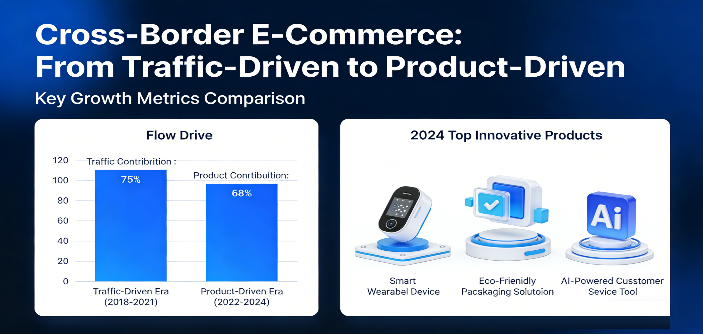
*If you want to get some fresh products from China factories or markets hope you can contact SEENWILLS directly.
II. Deep Dive into Core Category Verticals
Based on 2026 market data and consumer intent analysis, each category demonstrates distinct development trajectories and opportunity windows.
- Sports, Fitness & Outdoor: The Hardware Upgrade of Lifestyle
As one of the fastest-growing sectors, the outdoor category is undergoing a transition from "utility transportation" to a "lifestyle upgrade." Short-distance travel devices now cover the full age spectrum—from children's models to high-performance off-road variants—integrating APP intelligence and deep customization. The validation in European, American, Middle Eastern, and Australian markets suggests that supply chain enterprises with integrated R&D, manufacturing, and sales capabilities are on the cusp of an explosion.
- Smart Small Appliances: Hyper-Innovation in Niche Scenarios
Kitchen small appliances are solving the pain point of limited kitchen space but high functional demand in Western households through precise temperature control, material innovation (e.g., pure titanium), and multi-functional integration (e.g., handheld food processors). Products tailored for the "Efficient Kitchen" and "Premium Breakfast" scenarios exhibit stable repurchase rates and robust market performance.
- 3C Consumer Electronics & AI Wearables: The Medicalization and Invisibility of Hardware
The AI hardware ecosystem is exploding. From AI glasses to smart rings, hardware innovation is evolving toward "Software-Hardware Integration" and "Medical Necessity." For instance, medical-grade wearables with FDA and CE certifications have built formidable competitive moats. Simultaneously, smart glasses are trending toward lightweight designs, aiming to become the user's "Invisible Intelligent Assistant."
- Home & Pet: From Trendy Decor to Health Necessities
The home category is bifurcating: consumers buy trendy décor via platforms like Temu/Shein while investing in durable goods. Notably, pet smart home devices have emerged as a high-growth necessity. With the concept of "pets as family members" becoming ubiquitous, pet air purifiers equipped with ammonia purification and plasma sterilization functions are becoming essential for pet-owning households. Backed by nearly 50 patents, this sector offers high repurchase rates and warrants early positioning. As we know pet air purifier machines are very good for 2026-2030.
- Toys & DIY Manufacturing: Technological Reshaping and Blue Ocean Potential
Traditional toys, when augmented with AI technology, see significant increases in price points and repurchase rates. AI dialogue robots and programmable robotic dogs have become a promising blue ocean as parents are willing to pay a premium for "educational companionship." Furthermore, consumer-grade laser engravers, representing the DIY desktop manufacturing sector, have shown immense high-growth potential with operations in 170 countries.
- Beauty & Adult Products: At-Home Spa Experiences and High-Premium Niches
The trend of "Bringing the Beauty Salon Home" is clear. Beauty instruments combining oxygen infusion, RF, and extraction functions, coupled with consumables, offer a clear profit model. Meanwhile, adult products are shedding their vulgar labels, upgrading toward "Healthy Lifestyles" and "Gift Attributes." High-end adult products with international design awards that balance practicality and privacy represent an undervalued, high-premium sector.
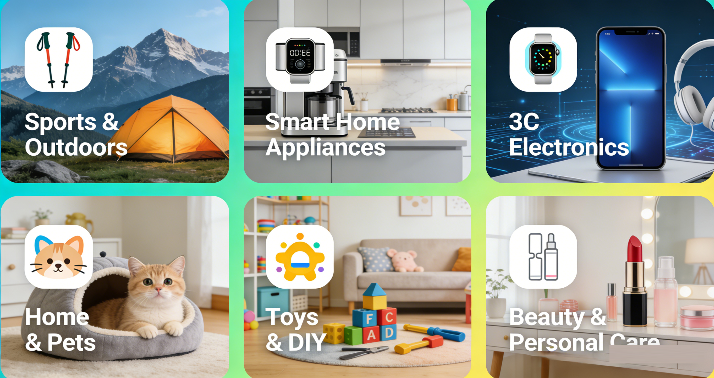
III. Channel Strategy & Consumer Behavior Insights
The distribution of purchase intent across categories reveals different channel strategies.
- Fashion & Home (High Intent Categories): The fashion category (78% intent) is the most fiercely competitive, driven by trust, price, and speed. The home and kitchen sector (60% intent) shows a dual trend of strong brand website growth (+33% intent) and stable Amazon market share (22%).
- Health & Grocery (Trust-Driven Categories): Categories such as Vitamins (53% intent) and Beauty (57% intent) rely heavily on trust endorsements, with consumers favoring professional retailers like Chemist Warehouse or brand direct channels.
- 3C & Books (Platform-Dominated Categories): Electronics (59% intent) and Books (52% intent) are dominated by platforms like Amazon, which holds a significant GMV advantage in electronics.
- Emerging & Potential Categories:
- Auto Parts (41% intent): eBay leads in GMV and purchase intent, with Amazon holding a stable top-three position.
- Luggage & Travel (38% intent): This category shows high online penetration (~28%), with marketplaces and online retailers capturing 28% of purchase intent.
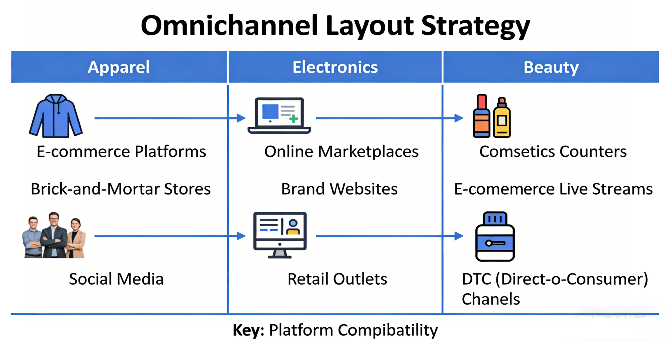
IV. Strategic Outlook & Future Recommendations
Facing the 2026 market landscape, cross-border enterprises should build their competitiveness through the following dimensions.
- Embrace the "Product Innovation Flywheel": Establish a virtuous cycle centered on the consumer: "Demand Insight → Creative Development → Product Validation → Scale Growth → Iterative Upgrade."
- Deep Cultivation of Niche Scenarios: Avoid red ocean competition by focusing on unmet niche demands (e.g., pet home air management, camping cookware).
- Build Technical Barriers: Actively adopt AI, new materials (e.g., Titanium), and new processes to enhance product technical content and inimitability.
- Omni-channel Strategy: Select channel combinations based on category characteristics—maintaining dominance on mainstream platforms like Amazon while building brand private domains via independent websites.
In conclusion, the core opportunities in 2026 lie in products that solve real needs, possess innovation capabilities, and have core barriers. The key to cross-border success is permanently embedded in the deep refinement of product excellence.
* Every great actions will take more chances for co-work globally, here SEENWILLS likes to be your China Business Partener.
[company_id] => 18
[sort] => 0
[category_id] => 16
[key_name] => 2026-ecommerce-trending-products
)
Array
(
[id] => 30
[name] => 36 Questions & Answers for the Water Bottle Business
[status] => normal
[create_time] => 2026-02-24 11:55:08
[delete_time] =>
[category_ids] => 16
[image] =>
[description] => Solutions on water bottle business from China
[content] =>
Have you ever met some needs of knowledge on cups and bottles? Here we collected some, for the future we will add more when we got additionally questions and answers.To ensure better for your great bottle trading or branding business.
1.
Q: How to keep your glass water bottle from breaking?
A: Use protective silicone sleeves, avoid thermal shock by not pouring boiling water into a cold bottle, and store away from table edges to prevent falls.
2.
Q: How to clean a glass water bottle?
A: Clean using a bottle brush with a mixture of white vinegar and baking soda, or use denture cleaning tablets for stubborn stains.
3.
Q: How to choose a right glass water bottle?
A: Select bottles made of high borosilicate glass for thermal resistance and inspect for smooth seams and BPA-free, leak-proof lids.
4.
Q: How to choose a crystal glass water bottle?
A: Choose crystal with high lead or barium content (over 24%) for superior clarity and a clear ringing sound when tapped.
5.
Q: How to buy a travel thermos?
A: Look for double-walled vacuum insulation, durable 304 or 316 stainless steel construction, and a secure locking lid mechanism.
6.
Q: How to assess the quality of a glass water cup?
A: Assess quality by checking for consistent wall thickness, optical clarity (no bubbles or striations), and a smooth finish.
7.
Q: How to select the right vacuum flask?
A: Select based on the quality of the vacuum seal, the thickness of the stainless steel walls, and the effectiveness of the lid gasket.
8.
Q: How to check the sealed nature of a thermos?
A: Check the seal by filling it with warm water, tightening the lid, and inverting it; no leaks should appear after a few minutes.
9.
Q: How to test the volume of a stainless steel water bottle?
A: Test the volume by completely filling the bottle to the brim with water and measuring the weight, as 1 milliliter of water equals 1 gram.
10.
Q: How to know the difference of the stainless steel we use in the insulated?
A: Distinguish by checking if it is 304 (food-grade) or 316 (medical-grade) stainless steel; 316 contains molybdenum for better corrosion resistance.
11.
Q: Why choose a glass water bottle?
A: Choose glass for its chemical safety, taste neutrality, ease of cleaning, and 100% recyclability compared to plastic alternatives.
12.
Q: How to make a glass water bottle?
A: Glass bottles are made by blowing molten glass into molds and then annealing (slowly cooling) them to remove internal stresses.
13.
Q: How to use a glass water bottle?
A: Use by filling with your desired beverage, ensuring the lid is tight, and handling with care to avoid drops or thermal shock.
14.
Q: What is the black gunk on my water bottle?
A: The black gunk is likely mold or fungal growth caused by moisture and organic matter; sanitize with a bleach solution.
15.
Q: What does the crystal symbolize?
A: Crystal historically symbolizes purity, clarity, luxury, and the refraction of light into spiritual energy.
16.
Q: Can we put hot water into the glass bottle?
A: Yes, if the bottle is made of borosilicate or tempered glass; sudden extreme temperature changes can break regular soda-lime glass.
17.
Q: How to improve the toughness of the glass?
A: Improve toughness through thermal tempering (ion exchange) or by using borosilicate glass which has a higher thermal resistance.
18.
Q: Why are there so many "concave bottoms" in glasses?
A: Concave bottoms strengthen the structural integrity of the glass, reduce material usage, and prevent the glass from rolling.
19.
Q: How to distinguish the quality of the glass?
A: Distinguish quality by listening for a clear, long "ping" sound (indicating annealing) and checking for visual clarity and thickness consistency.
20.
Q: How about a frosted glass?
A: Frosted glass offers a non-slip grip and diffuses light for a soft aesthetic but may be more prone to trapping dirt if the etching is deep.
21.
Q: What is a frosted glass water cup?
A: A frosted glass water cup has a matte, etched surface created by acid or abrasive blasting to provide grip and visual texture.
22.
Q: What glasses can be microwaved?
A: Only borosilicate glass or tempered glass without any metallic trim or paint is generally safe for microwave use.
23.
Q: Can a broken glass still be used?
A: No, a broken glass should not be used as micro-cracks can propagate under stress, leading to sudden shattering.
24.
Q: How to maintain the double-layer glass?
A: Maintain double-layer glass by avoiding thermal shock and cleaning gently to prevent damaging the seal between the layers.
25.
Q: Do you know the benefits and advantages of the glass bottle or cup?
A: Benefits include chemical inertness (no leaching), taste preservation, easy sterilization, and environmental sustainability.
26.
Q: How to maintain the fresh glass water bottle?
A: Maintain freshness by rinsing immediately after use, drying thoroughly, and storing with the lid off to prevent odors.
27.
Q: Can print with a pattern on the double-layer glass water cup?
A: Yes, patterns can be applied via screen printing or laser etching on the outer layer without compromising the vacuum seal.
28.
Q: How to choose a high-quality glass water bottle?
A: Choose high-quality glass by verifying it is borosilicate, checking for sturdy construction, and ensuring the lid is BPA-free and leak-proof.
29.
Q: Why do soft drinks taste better in returnable glass bottles?
A: Soft drinks taste better in returnable glass bottles because they have a smoother interior with no plastic lining, preserving carbonation.
30.
Q: How to choose a Stainless Steel Vacuum Flask?
A: Choose a vacuum flask made of 304 or 316 stainless steel with a high-quality vacuum seal and a durable, leak-proof lid.
31.
Q: How to use a Stainless Steel Vacuum Flask?
A: Use by pre-heating or pre-cooling with water for a few minutes before filling to maximize the insulation efficiency.
32.
Q: How to Remove Tea Stains From Glass Cups?
A: Remove tea stains by soaking the cup in a solution of warm water and baking soda or using denture cleaning tablets overnight.
33.
Q: Where can we find the right water bottle factories?
A: Find water bottle factories through B2B platforms like Alibaba or Global Sources, or by attending trade shows like the Canton Fair. For offline cup or bottle manufacturers most base in Yongkang City.
34.
Q: Where we can get ready made water bottle with wholesale prices?
35.
Q: Any good Chinese brand for the water bottle?
A: Reliable Chinese brands include Haers, Tiger (China-made lines), and Zojirushi (often manufactured in partnership with Chinese factories).
36.
Q: Is there a smart water bottle which reminds us to keep taking water healthly?
A: Yes, smart bottles like HidrateSpark or Thermos Link track your water intake and send reminders to your phone via an app.
*if you have any other issue on cups or bottles problem please let SEENWILLS know to assist you well.
[company_id] => 18
[sort] => 0
[category_id] => 16
[key_name] => water-bottle-business-faq
)
Array
(
[id] => 29
[name] => FAQs to Make a Water Bottle in China Factory
[status] => normal
[create_time] => 2026-02-23 20:19:02
[delete_time] =>
[category_ids] => 16
[image] =>
[description] => How to find a right water bottle or cup manufacturer in China through sourcing agency?
[content] => How To Make A Water Bottle?
Water bottle manufacturing involves a complex process that requires specialized equipment and materials, which are not normally feasible for individuals to handle at home. However, There are many leading water bottle manufacturers in China with over 20 years of experience.
The fully-owned water bottle manufacturers, are the capable of producing different types of water bottles, including insulated and BPA-free sports water bottles. Here’s a simple explanation of the steps involved in producing stainless steel water bottles:
Materials and Equipment:
1. Stainless Steel Raw Material:
The inner and outer layers of the bottle are typically made of 304/316 stainless steel for durability and insulation.
2. Welding and Sealing Equipment:
Specialized machines and techniques are used to join the inner and outer layers of the bottle and create an airtight seal.
3. Cap and Gasket:
The cap of the bottle often contains a rubber or silicone gasket to provide a tight seal.
The Manufacturing Process:
1. Fabrication of Bottle Components:
The inner and outer layers of the bottle are manufactured, typically through processes like stainless steel rolling and shaping. The insulating material is prepared according to the design.
2. Assembling the Bottle:
The inner and outer layers are brought together, leaving a gap for the insulating material. The cap is also attached at this stage.
3. Insulation:
The insulating material is placed between the inner and outer layers. If vacuum insulation is used, air is removed from the space between the layers to create a vacuum, reducing heat transfer.
4. Welding and Sealing:
The bottle is sealed, ensuring that there are no air leaks between the layers. Welding is used to make the bottle airtight.
5. Quality Control:
The finished bottle is thoroughly inspected for any defects or issues that might affect its insulating properties.
6. Testing:
The bottle may undergo testing to ensure it meets the specified insulation standards, including tests for heat retention and cold retention.
If you want to create custom water bottles on a smaller scale or as a DIY project, consider using blank stainless steel tumblers and applying your designs or labels using appropriate printing techniques and materials.
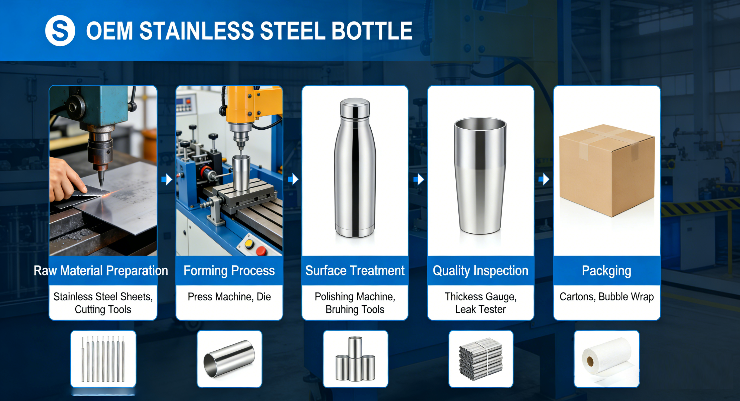
What Are Water Bottles Made Of?
When it comes to reusable water bottles, there are various materials to choose from, each with its own set of benefits and characteristics. They have rich experience in custom manufacturing all types of drink water bottles. Below are some common materials used for reusable water bottles:
Stainless Steel: These bottles are durable, corrosion-resistant, and often double-walled for insulation. They are made of food-grade stainless steel, such as 316ss and 304ss.
Plastic (BPA-Free): Many reusable water bottles are made from BPA-free plastics, like Tritan or other food-grade materials. Plastic bottles are lightweight and come in various shapes and sizes.
Glass: Glass water bottles are safe and eco-friendly. They don’t retain odors or flavors, making them ideal for water, juices, and other beverages. They are good for both hot and cold liquids and many have protective silicone sleeves.
Aluminum: These bottles are lightweight, recyclable, and often used for single-use or reusable bottles. Some have an inner lining to prevent interaction between the aluminum and the beverage.
Copper: Specialty water bottles made from copper are believed to have potential health benefits, such as antimicrobial properties and the ability to keep water cooler.
Bamboo: These eco-friendly bottles have a unique appearance and typically feature a stainless steel or glass interior for safe beverage storage.
Titanium: These bottles are lightweight, durable, and corrosion-resistant. They are often used in outdoor and sports settings due to their strength and durability.
Hybrid Materials: Some water bottles may combine materials, such as a stainless steel bottle with a bamboo exterior for aesthetics. These hybrid designs offer the benefits of multiple materials.
As a professional water bottle manufacturer, when choosing a reusable water bottle, we recommend you consider factors like the material, insulation properties, size, weight, ease of cleaning, and your intended use.
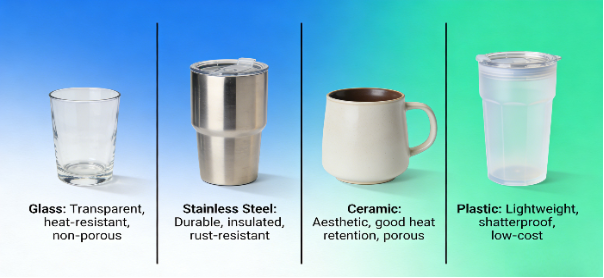
Where To Buy Water Bottles In Bulk?
You can buy water bottles in bulk from a variety of sources, depending on your specific needs and preferences. Here are several options for purchasing water bottles in bulk:
Wholesale Retailers:
Wholesale retailers like Costco, Sam’s Club, and BJ’s Wholesale Club often offer bulk packs of water bottles at competitive prices.
Online Marketplaces:
Websites like Amazon, Alibaba, and eBay have a wide selection of bulk water bottle options. You can find various types and sizes, and you can often read customer reviews and compare prices.
Water Bottle Manufacturers:
Some water bottle manufacturers sell directly to businesses and organizations. Reach out to manufacturers or distributors to inquire about bulk purchase options. Main factories in Yongkang City. Some in Zhongshan City, Jiangxi Province, Henan Prince.
Local Suppliers and Distributors:
Look for local suppliers or distributors that offer bulk quantities of water bottles. Check directories or inquire with local businesses for recommendations.
Eco-Friendly Suppliers:
If you are looking for eco-friendly or reusable water bottles in bulk, consider contacting suppliers specializing in sustainable products.
Custom Water Bottle Manufacturers:
If you want personalized or branded water bottles in bulk, work with custom water bottle manufacturers. They can create bottles with your chosen design, color, and logo.
When purchasing water bottles in bulk, consider factors like the type of bottle (single-use or reusable), material, size, and any customization or branding requirements.
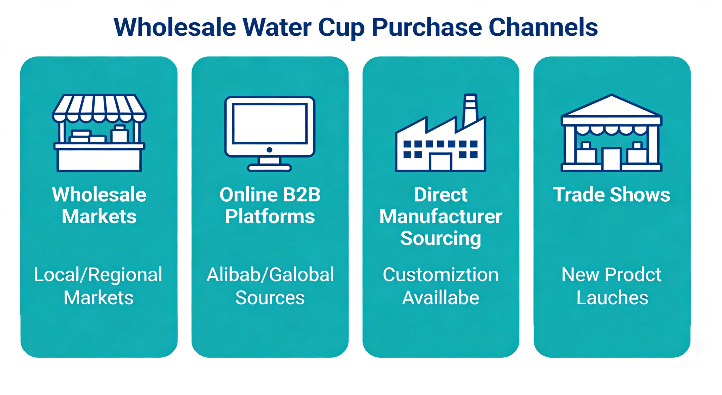
*If you have any problem about how to choose a reliable water bottle supplier, click SEENWILLS and learn about our guide.
Which Water Bottle Is Good For Health?
There are various types of water bottles on the market, and you may be confused about which water bottle is good for your health. We are a water bottle manufacturer in China with more than 20 years of experience. Here’s a list of factors to consider we listed when choosing a healthy water bottle:
Material:
Stainless steel: Stainless steel water bottles are a popular choice because they are durable, easy to clean, and, most importantly, do not leak harmful chemicals.
Glass: Glass bottles are a safe option because they don’t contain any harmful chemicals and are nonporous, meaning they won’t absorb odors or flavors. But easy to break.
BPA-Free Plastic: If you prefer a larger-capacity sports water bottle, look for bottles labeled “BPA-free.” BPA is a chemical that can leach into water and has been linked to health problems. In China, all of our plastic water bottles are BPA-free and pass the FDA and LFGB tests.
Dimensions and Capacity:
Choose a bottle that suits your daily hydration needs. A larger bottle may be more convenient if you don’t want to refill frequently, but it should still be easy to carry.
Wide Mouth Water Bottle:
The wide mouth makes it easier to clean and add ice, while the narrow mouth prevents spills. Choose based on your preferences and needs.
Sealing Mechanism:
Make sure bottles have a reliable, leak-proof sealing mechanism to prevent spills and contamination.
Easy to Clean:
Look for bottles with removable lids and wide openings for easy cleaning. Some bottles are even dishwasher-safe.
Eco-friendly for the Environment:
Consider the environmental impact of your choices. Reusable bottles are more environmentally friendly than single-use plastic bottles.
Design:
Choose your favorite design and style. If you enjoy using a bottle, you’re more likely to stay hydrated.
Brand Reputation:
Choose a reputable brand known for producing safe, high-quality water bottles.
Ultimately, the “best” healthy water bottle depends on your personal preferences and needs. Prioritize materials that won’t leach harmful chemicals, choose a size that fits your lifestyle, and make sure it’s easy to clean and use. Using reusable bottles to stay hydrated is a healthy choice for you and the environment.
Can I Get Samples And How Long Is The Sample Lead Time?
Sure. We usually provide existing samples for free, but a little sample charge for custom designs. Samples charge is refundable when the order is up to a certain quantity.
We usually send samples by FEDEX, UPS, TNT, or DHL. If you have a carrier account, it will be fine to ship with your account, if not, you can pay the freight charge to our Paypal, we will ship with our account.
It takes about 2-4 days to reach. If you want your own designs, it takes 5-7 days. Click here to get a sample now!
If I Provide My Sketches/Design, Can You Sign An NDA With Me To Protect My Design?
Of course, we are professional in OEM/ODM projects and we protect all the designs of every client, we will sign NDA if needed to ensure that we won’t send your artwork to any other clients and won’t sell your OEM items to anyone else. Any questions please send us your inquiry.
How Long Is The Production Lead Time?
It takes 30 days for MOQ. We have a large automation production capacity, which can ensure fast delivery time even for large quantities. By using the robot system to do labor work, the efficiency has been significantly improved and the labor cost has been sharply reduced. We are in a good position to handle your project in a short time and offer your small kitchen appliance products of high quality. Please inquiry us now, tell us your ideas and needs and we will contact you within 24-48 hours.
What Format Of The File Do You Need If I Want My Own Design?
We have experienced design and technical team, Served over 200 brand clients worldwide. If you want bulid your own design, So you can provide JPG, AI, cdr or PDF, etc. We will make 3D drawing for mold or printing screen for your final confirmation based on technique. Any questions you can contact us, we will respond fast to your request.
*Seenwills worked with many cup factories in Yongkang already. If you have details please let try some bottle factories together.
[company_id] => 18
[sort] => 0
[category_id] => 16
[key_name] => water-bottle-manufacturing-in-china-faq
)
Array
(
[id] => 28
[name] => Market Insights & Global Strategies on Smart AI Tanks for Fish
[status] => normal
[create_time] => 2026-02-23 19:17:13
[delete_time] =>
[category_ids] => 16
[image] =>
[description] => Have you bought a smart aquarium for you house?
[content] => The smart aquarium industry is experiencing rapid growth, with the market scale increasing from less than 2 billion RMB in 2020 to approximately 6.8 billion RMB in 2025, maintaining a steady compound annual growth rate (CAGR) of over 7%. Notably, smart aquatics equipment has emerged as the core engine of this expansion, with shipment volumes surging by 136% year-on-year. Projections indicate that by 2030, the penetration rate of smart aquariums within the overall aquatics equipment market will rise from less than 12% in 2025 to over 35%, potentially reaching a market size of 850 million RMB.
1. Market Performance in North America and Europe
The North American and European markets serve as the "high-end stronghold" for smart aquariums, capturing nearly 70% of the global market share with robust growth momentum.
- Market Scale and Growth: In 2024, smart aquatics equipment accounted for 35% of the global market share, with a year-on-year growth rate exceeding 28%, significantly outpacing the 8.5% growth of basic models. North America alone contributes approximately 40% of the global share, making it the largest single market.
- Spending Power: In the United States, 13% of households keep aquatic pets, comprising around 18 million families who spend an average of $228 annually—an increase of 12% year-on-year. Consumers are willing to pay a 30%-50% premium for "convenience-oriented" features.
- Pricing and Demographics: The core price range in Western markets is $50–300, primarily targeting middle-class families and young pet owners in North America and Europe.
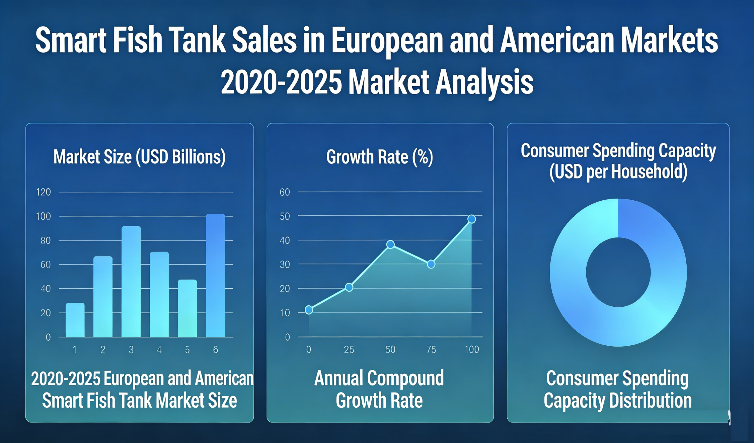
2. Competitive Landscape Analysis
The competitive landscape in Western markets reflects a dichotomy: foreign giants dominate the high-end sector, while Chinese brands are aggressively capturing the mid-range segment.
- Western Industry Leaders (High-End Segment):
- Marineland (USA): The market leader in North America, offering a comprehensive product line from entry-level to professional-grade tanks, with absolute dominance in large aquariums.
- Fluval (Canada): A subsidiary of the Hagen Group, renowned for high-performance filtration systems and ecological simulation technology, favored by professional enthusiasts.
- EHEIM (Germany): Known as the "Mercedes-Benz of the aquatics industry," it commands the high-end market with precision engineering and ultra-quiet filtration systems.
- Tetra (USA): The world's largest aquatics brand, with extensive product lines and high penetration in pet supermarket chains like PetSmart.
3. Selection Criteria and Consumer Preferences
Consumer demands in Western markets differ significantly from those in China. Product selection must emphasize "technological integration" and "ecological simulation."
- Technology-Driven (North America): U.S. consumers prioritize integrated water quality monitoring. Approximately 61% of mid-to-high-end users are willing to pay a premium for Wi-Fi connectivity, real-time pH monitoring, and automated feeding systems.
- Ecological Simulation (Europe/Germany): German consumers value "ecosystem balance management" as the core joy of fishkeeping. They prefer modular designs, detachable filtration systems, and open-top structures for easy maintenance.
- Design Trends: Western markets favor rectangular glass tanks. Key product categories include metal halide or coral lighting and high-efficiency filtration units.
4. Domestic Brand Landscape
The Chinese market is characterized by a "dual-power" structure, pitting "tech newcomers" against "traditional manufacturing giants."
- Tech Newcomers (Cross-Industry Brands): Led by Xiaomi, DBG (Dangbei), and Hua Fa Ji He, these brands leverage expertise in smart hardware to promote "AI stewardship" and "whole-home smart integration." With minimalist designs, they appeal to young consumers. For instance, the DBG Smart Aquarium 1 Ultra has gained prominence in the high-end market with its dual-filtration system and AI smart-care technology.
- Traditional Giants (Manufacturing Veterans): Brands like Sensen, Boyu, Minjiang, and Jebo possess deep manufacturing roots and offline channels, dominating the professional and large-tank segments with comprehensive product lines.
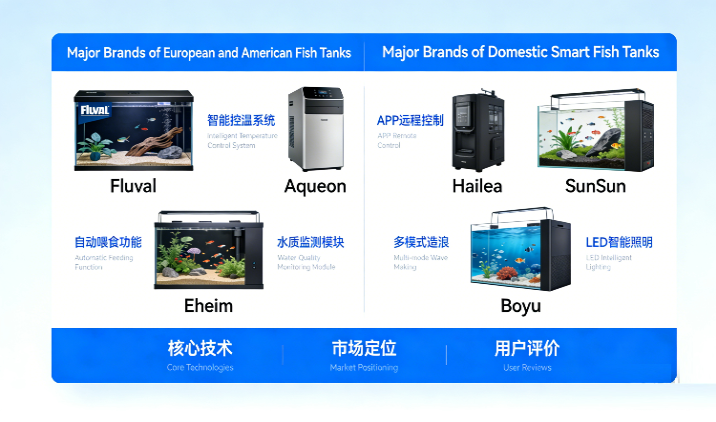
5. Sales Channels and E-commerce Dynamics
Sales are highly dependent on online channels, with e-commerce accounting for over 61.3% of total sales in 2024—a figure expected to surpass 70% by 2027.
- Key Platforms: JD.com (dominant in 3C electronics), Tmall (brand flagship stores), and Douyin (fastest-growing, with an 89.4% growth rate).
- Marketing Models: Short-video "seeding," live-streaming e-commerce, and scenario-based content marketing (e.g., showcasing aquariums as home décor) are primary customer-acquisition tools.
6. Leading Manufacturers and Supply Chains
- Sensen Group: Based in Zhoushan, Zhejiang, it is China's leading enterprise in aquatics equipment, producing everything from tanks to water pumps and fish food, with exports to dozens of countries.
- Boyu Group: Located in Zhongshan, Guangdong, it is a pioneer in international aquatics and garden machinery, formulating national standards and exporting to over 80 countries.
- Jebo (JEBO): A "hidden champion" from Guangdong, exporting to 73 countries, with its mini desktop tanks frequently topping best-seller lists on Douyin.
- Xiaomi Ecosystem/DBG: These typically rely on OEMs or ecosystem partnerships, leveraging the robust supply chains in the Pearl River Delta, with core advantages in software development and smart-ecosystem integration.
* If you want to know more about the great China brand fish tank please let SEENWILLS know.
7. Core Functionalities: From Automation to AI Stewardship
Smart aquariums have evolved from simple automated feeders to comprehensive "hands-off" solutions.
- AI Water Quality Monitoring and Management: Sensors monitor water temperature, pH, and ammonia levels in real-time. Mobile apps provide automatic alerts and solutions, adjusting feeding amounts and lighting modes based on fish behavior.
- High-Efficiency Filtration Systems: Utilizing back-filtering and drip-box technologies, these systems cover physical, biochemical, and chemical filtration, significantly extending water-change cycles (some products require no changes for months).
- Whole-Home Smart Integration: Compatibility with smart-home systems like Xiaomi's Mi Home or Huawei's HarmonyOS allows voice-controlled feeding and lighting, as well as联动 (interconnection) with other appliances.
- Aesthetic Design: Featuring ultra-clear glass and minimalist aesthetics, combined with full-spectrum ecological lighting, the aquarium is elevated from a utility to a home décor statement.
8. Global Market Performance and Export Dynamics
- Market Share: China produces 42% of the world's smart aquariums, making it the largest global manufacturing base.
- Regional Trends: The global smart aquatics equipment market has grown from 18% in 2021 to 35% in 2025, with a CAGR of 28%, far exceeding the 8.5% growth of basic models.
- Consumer Demographics: The primary consumers for smart models in North America and Europe are middle-class families, with price points concentrated between $50 and $300. In contrast, the Southeast Asian market favors high-value, basic models.
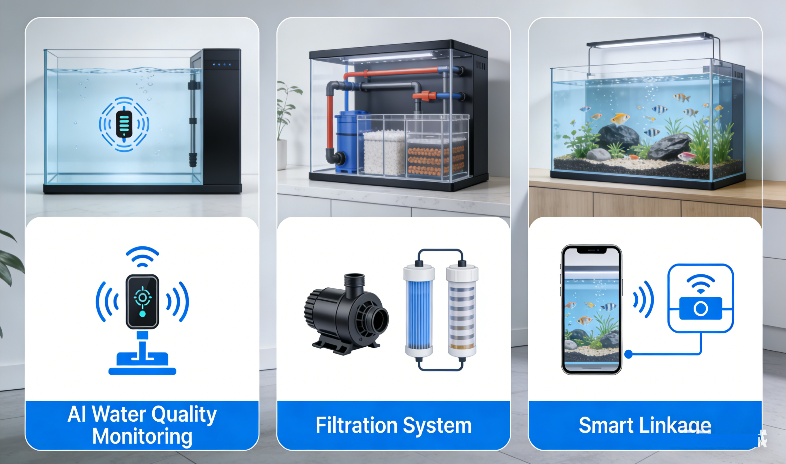
9. Strategic Considerations for Cross-Border E-commerce
Entering the international market requires attention to several critical details.
- Regulatory Compliance: Ensure adherence to electrical safety standards (e.g., UL in the U.S., CE in Europe) and material regulations (e.g., RoHS).
- Localization Strategy: Adapt product manuals, app interfaces, and customer support to local languages. Marketing should emphasize "ecosystem management" in Europe and "smart technology" in North America.
- Logistics and After-Sales: Given the fragility of glass components, robust packaging solutions are essential. Establishing local warehousing or partnerships can improve after-sales service and reduce return logistics costs.
- Brand Positioning: Avoid price wars by focusing on technological differentiation (e.g., superior filtration, AI monitoring) to justify premium pricing in Western markets.
[company_id] => 18
[sort] => 0
[category_id] => 16
[key_name] => smart-ai-fish-tank-market-insights
)
Array
(
[id] => 27
[name] => Do Not Miss to Purchase in Yiwu International Wholesale Market
[status] => normal
[create_time] => 2026-02-22 22:08:50
[delete_time] =>
[category_ids] => 16
[image] =>
[description] => Why we have to come to Yiwu International Wholesale Market for the global buying?
[content] => If you want to come to Yiwu for your international merchaindising, here are some great information as your guidings.
- Details of Yiwu International Market Introduction
- Yiwu Wholesale Market History
- Yiwu Transportations
- Yiwu Famous Tasted Foods
- Top 15 Hotels in Yiwu
- Short Journey Promotions
1. Yiwu International Market Introduction
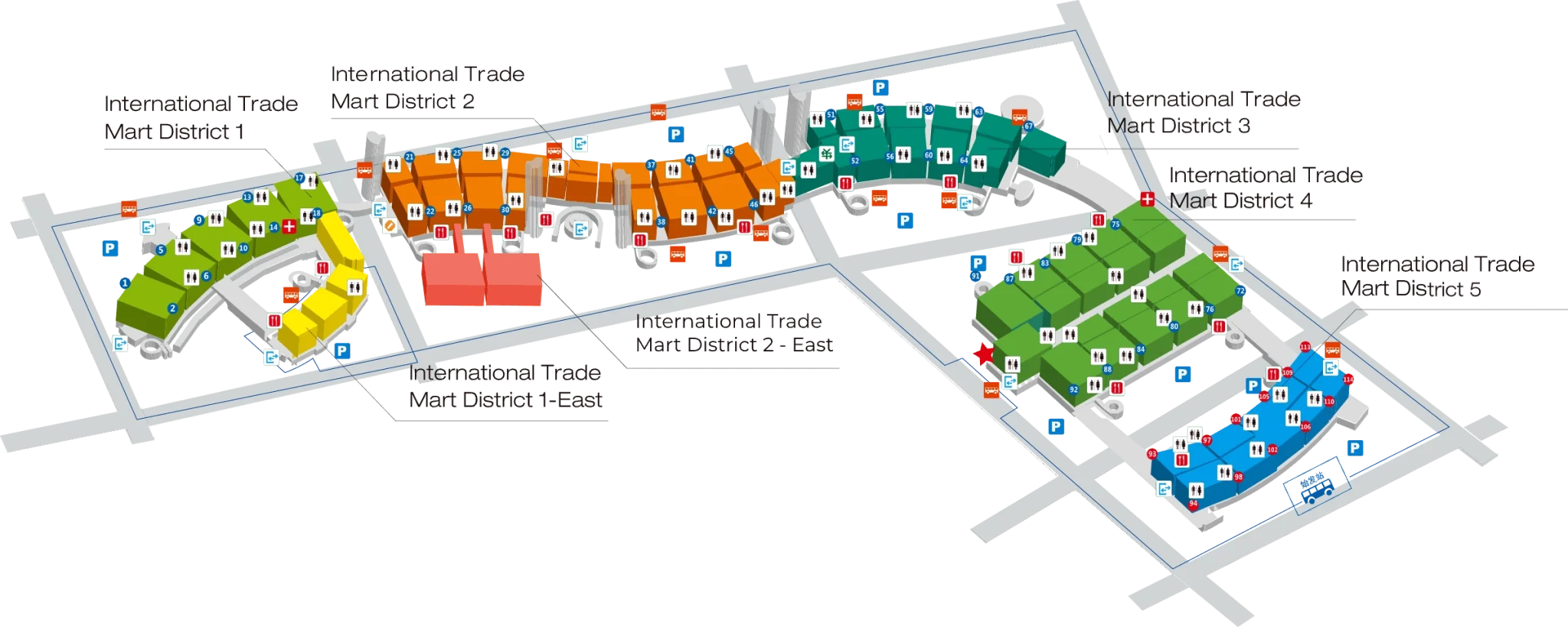
Zone I
Zone I specializes in Accessories, Crafts, Toys, and Artificial Flowers. It is a hotspot for sourcing holiday decorations, handcrafted gifts, and fashion accessories.
- First Floor: Mainly deals in Artificial Flowers, Floral Accessories, Plush Toys, Inflatable Toys, Electronic Toys, and General Toys.
- Second Floor: Concentrates on Fashion Accessories such as Hair Ornaments and Jewelry.
- Third Floor: Features festive crafts, decorative crafts, porcelain, crystal, photo frames, and accessory components—a paradise for DIY enthusiasts.
- Fourth Floor: The Manufacturer Direct Sales Center, gathering high-end manufacturers of ceramics, home decor, Christmas supplies, artificial flowers, as well as major distributors of jade and jewelry.
🛠️ Zone II
Zone II is the distribution hub for Hardware Tools, Bags, Electronics, and Watches, suitable for sourcing industrial components and daily necessities.
- First Floor: Mainly operates in Luggage & Bags, Rain Gear (raincoats, umbrellas), and Gift Packaging Supplies.
- Second Floor: Deals in Hardware Tools, Fittings, Electrical Products, Locks, and Cycles (e.g., bicycles, children's bikes).
- Third Floor: Concentrates on Hardware Sanitary Ware, Small Household Appliances, Telecommunication Equipment, Electronic Instruments, and Watches.
- Fourth Floor: Features a Manufacturer Direct Sales Center and a Premium Trading Zone, gathering characteristic products from Anhui, Yueqing, Hong Kong, Sichuan, and South Korea.
- Fifth Floor: The Foreign Trade Procurement Service Center, offering professional services for foreign trade enterprises.
📝 Zone III
Zone III is characterized by Office Stationery, Cosmetics, and Sports & Cultural Goods, the first choice for sourcing study, office, and beauty supplies.
- First Floor: Operates in Pens, Paper Products, and Eyewear.
- Second Floor: Mainly manages Office & Study Supplies, Cultural & Sports Goods, and Outdoor Gear.
- Third Floor: Concentrates on Cosmetics, Beauty & Hairdressing Products, Zippers, Buttons, and other Garment Accessories.
- Fourth Floor: The Manufacturer Direct Sales Center, mainly introducing manufacturers from the cosmetics & beauty, cultural sports, and garment accessories industries.
- Fifth Floor: Deals in Decorative Paintings, Frame Components, and Processing Machinery.
🧦 Zone IV
Zone IV is the largest zone in terms of floor area, centered on Socks, Daily Necessities, Shoes, and Underwear Accessories. It is truly a "Retail Paradise."
- First Floor: Dedicated to all kinds of Socks and Leggings.
- Second Floor: Operates in Daily Necessities, Gloves, Hats, and Knitted Products.
- Third Floor: Concentrates on Shoes, Ribbons, Lace, Ties, Yarn, and Towels.
- Fourth Floor: Mainly manages Bras, Underwear, Belts, Scarves, and other apparel accessories.
- Fifth Floor: The Manufacturer Direct Sales Center and Tourism Shopping Center, introducing industries such as Bras, Swimwear, Scarves, Shoes, and the Printing Industry.
🌍 Zone V
Zone V is the zone for Imported Goods, Home Textiles, and Auto Products, known as the "International Goods Collection Hall."
- First Floor: The Imported Goods Pavilion, gathering food, health products, daily necessities, maternity & baby products, and crafts from Japan, South Korea, Southeast Asia, Africa, and Europe.
- Second Floor: Mainly operates in Bedding (e.g., 4-piece sets, pillow cores), Wedding Products, Wigs, and Pet & Aquarium Supplies.
- Third Floor: Operates in Curtain Fabrics, Knitted Raw Materials, Hotel Supplies, and some Ceramic & Glass Products and Kitchen Small Appliances.
- Fourth Floor: Focuses on Auto Products & Parts, such as Headlights, Bumpers, and Interior Decorations.
If you want to be faster and DO NOT LOSE YOURSELF in the markets, please focus on such signboard information meanings which hooking on the roof.
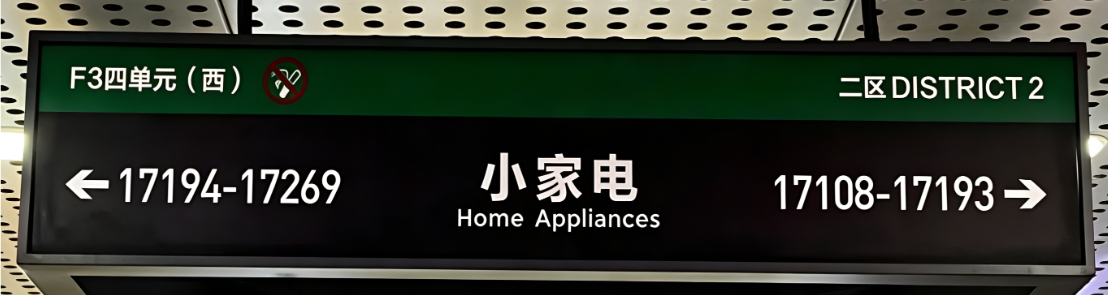
- F3---the third floor
- 西---west
- 17194-17269---the booth number
- Home Appliances --- Main products in this area
- District 2---Zone 2
*if you meet any problem you can ask any people around to help you. Seenwills will to assist you as well.
2.The Evolution of Yiwu International Wholesale Market
The development history of Yiwu Market is an evolutionary journey from the local tradition of "Exchanging Sugar for Chicken Feathers" to becoming the "World's Largest Small Commodities Wholesale Market." Having undergone six generations of market iterations, the core China Yiwu International Trade City was initially established in 2001.
From "Exchanging Sugar for Chicken Feathers" to the First-Generation Market (Pre-1982)
-
Origins: A Deep-Rooted Tradition of Commerce
The people of Yiwu have long held the tradition of "Exchanging Sugar for Chicken Feathers." During slack farming seasons, peddlers would carry shoulder poles to trade sweets for waste like chicken feathers, sowing the seeds for small commodity trade.
-
The Birth of the First-Generation "Roadside Market"
On September 5, 1982, the Yiwu County Party Committee and government decided to open a small commodities market, proposing the "Four Allowances" (allowing peasants to engage in business, allowing long-distance trade, allowing market liberalization, and allowing multi-channel competition). An open-air market was set up along Huqingmen Street, covering an area of 4,252 square meters with 705 stalls. The annual transaction volume reached 9.8 million yuan that year.
-
Market Characteristics
Despite rudimentary facilities, the market offered over 2,100 product categories. Its radiation range expanded from surrounding counties to the whole of China and even cross-border regions.
Rapid Iteration of Market Forms (1984–1995)
-
Second-Generation Stall Market (December 1984)
Located on Xinma Road, it covered 13,500 square meters with over 1,800 fixed stalls, marking the transition from "market as a field" to a more structured format. It attracted merchants from Wenzhou and other areas, forming a "depression effect."
Key Upgrade: A four-story service building was constructed at the center, equipped with industrial & commercial administration, tax, and banking facilities, leading to more standardized management.
-
Third-Generation Shed Market (September 1986)
Located on Chengzhong Road, it adopted a train-station-platform-style steel-concrete shed structure. Covering 44,000 square meters with 4,096 stalls, its annual transaction volume surpassed 100 million yuan for the first time, becoming the largest small commodities wholesale market in China at that time.
-
Fourth-Generation Indoor Market (1992–1995)
Huangyuan Market: Opened for trial operation in February 1992, it was the first large-scale indoor market. Built through a joint-investment model, it housed over 15,000 stalls. By 1994, its transaction volume exceeded 10 billion yuan.
Binwang Market: Opened in November 1995 with an investment of 420 million yuan, focusing on clothing and sideline food products. It marked the market's functional shift from single trade to a combination of trade and exhibition.
Business Model Evolution: By this stage, all market activities had moved indoors with more standardized management. The market began hosting small commodities fairs, establishing the pattern of "Buying from all over China, Selling to all over China."
Modernization and Global Transformation (2001–Present)
-
Fifth-Generation International Trade City (Starting 2002)
Construction began in October 2001, with a planned area of 32.4 square kilometers, marking the market's entry into a modern, mall-style phase.
Phased Construction: Phase I (October 2002), Phase II (2004), Phase III (2005), Phase IV (2008), and Phase V (2011) were put into use successively. This formed a massive system covering over 6.4 million square meters with 75,000 business stalls.
Global Impact: In 2005, it was hailed by the United Nations, the World Bank, and other institutions as the "World's Largest Small Commodities Wholesale Market," with goods exported to over 210 countries and regions.
-
Continuous Upgrades and Digital Exploration
New Energy Products Market: Opened in March 2023 to adapt to emerging industries.
Branding and Import Business: In December 2024, it was included in the national comprehensive reform plan for international trade, launching the first batch of business under the positive list for imported daily consumer goods.
Strategic Cooperation: In April 2025, it signed an agreement with Alibaba Group to promote the integration of online and offline operations.
-
Sixth-Generation Future Market: Global Digital Trade Center
Located east of the International Trade City Phase V, with a building area exceeding 1.25 million square meters, it plans to start trial operations in October 2025.
Core Features: Focusing on digital trade, it will deploy cross-border data transmission channels and adopt a "Market Below + Office Above" model to create a "three-dimensional market," driving the market's expansion toward the high end of the value chain.
3.Yiwu Transportations
Yiwu Railway Stations
Yiwu Airport
Yiwu-Jinhua Subway
Yiwu-Hedian Subway
4.Top 10 Highly Rated International Restaurants
-
MAIDO (Peru)
- Style: Peruvian-Japanese Fusion
- Reputation: The 2025 World's 50 Best Restaurants list crowned MAIDO as the #1 restaurant in the world. It is celebrated for its innovative take on the fusion of these two culinary traditions.
-
Asador Etxebarri (Spain)
- Style: Grilled Meats & Seafood
- Reputation: A perennial favorite, this restaurant holds the distinction of being the #2 restaurant in the world for two years running. It is a pioneer of modern grilling techniques, focusing on the purity of high-quality ingredients.
-
Quintonil (Mexico)
- Style: Contemporary Mexican
- Reputation: Ranked #3 in the world, Quintonil is a benchmark for modern Mexican cuisine. The restaurant offers a tasting menu that highlights the country's diverse and creative ingredients.
-
Noma (Denmark)
- Style: New Nordic Cuisine
- Reputation: While not listed in the 2025 World's 50 Best, Noma is a titan of the culinary world. Under chef René Redzepi, it has defined the "New Nordic" movement, focusing on foraged ingredients and seasonal produce from the Nordic region.
-
Osteria Francescana (Italy)
- Style: Contemporary Italian
- Reputation: Formerly the world's #1 restaurant, this establishment by Massimo Bottura is a masterclass in reinterpreting traditional Italian dishes with a avant-garde, artistic approach.
-
El Celler de Can Roca (Spain)
- Style: Catalan with International Influence
- Reputation: A family-run three-Michelin-starred restaurant that blends traditional Catalan cuisine with global inspirations, known for its theatrical presentations and harmonious flavor combinations.
-
Gaggan (Thailand)
- Style: Modern Indian
- Reputation: A trailblazer for modern Indian cuisine, Gaggan has won multiple "Best Restaurant in Asia" awards. It is renowned for its playful, molecular gastronomy-style tasting menus that surprise and delight.
-
Sushi Saito (Japan)
- Style: Traditional Kaiseki & Sushi
- Reputation: Widely considered one of the best sushi restaurants in the world, Sushi Saito offers an unparalleled omakase experience that emphasizes the seasonality and quality of the fish.
-
Felix (Hong Kong)
- Style: Modern European
- Reputation: Located within the iconic Peninsula Hotel, Felix offers a sophisticated dining experience with a menu that changes with the seasons, overseen by a talented French chef.
-
MEE (Rio de Janeiro, Brazil)
- Style: Pan-Asian
- Reputation: Housed in the historic Copacabana Palace, MEE is Rio's only Michelin-starred restaurant. It offers a serene,(Chinese teahouse-inspired) dining room where guests can enjoy a refined journey through Asian cuisine.
5.Top 15 Hotels for your business resting
| Hotel Name |
Address |
Approx. Price (USD) |
| 1. Yiwu Wendemu Hotel |
188 Chouzhou North Road, Fudian Street |
$100 - $150 |
| 2. Yiwu International Trade City Hilton Honors |
181 Chouzhou North Road |
$120 - $180 |
| 3. Yiwu Marriott Hotel |
188 Chouzhou North Road |
$130 - $200 |
| 4. Yiwu Ocean Hotel (Best Western Premier) |
188 Chouzhou North Road |
$90 - $140 |
| 5. Yiwu International Trade City Mercure |
19 Chengzhong North Road |
$80 - $120 |
| 6. Yiwu Zhonglian Kaixin Hotel |
20 Chouzhou North Road |
$70 - $100 |
| 7. Yiwu Baiheng Hotel |
20 Chouzhou North Road |
$60 - $90 |
| 8. Yiwu Deheng Hotel |
188 Chouzhou North Road |
$80 - $120 |
| 9. Yiwu Zhonglian Kaixin Hotel |
20 Chouzhou North Road |
$70 - $100 |
| 10. Yiwu Hengna International Hotel |
1688 Chouzhou North Road |
$80 - $120 |
| 11. Yiwu Deheng Hotel |
188 Chouzhou North Road |
$80 - $120 |
| 12. Yiwu Zhonglian Kaixin Hotel |
20 Chouzhou North Road |
$70 - $100 |
| 13. Yiwu Hengna International Hotel |
1688 Chouzhou North Road |
$80 - $120 |
| 14. Yiwu Deheng Hotel |
188 Chouzhou North Road |
$80 - $120 |
| 15. Yiwu Zhonglian Kaixin Hotel |
20 Chouzhou North Road |
$70 - $100 |
6.Short Journey around Yiwu
- Jiming pavilion ---near Yiwu International Wholesale Market---to see the full Yiwu viewings in the evening is the best choice.
- Hedian---go there by subway to see the accient China constructions which used for movie shootings.
- Wangdao Chen Former Residence--- who is a very famous person in earlier China Growth
- Shangshan Archaeological Site--- thousands year ago's archaeology museum
- Deshengyan Mountain--- hiking and temple aims
- Dongyang Wood Carving Museum--- Dongyang furniture development and history
- Xingfu Lake---Weekend resting place for Walking, running, mini party
- Fotang Ancient Town---Yiwu old culture mini visions on food, houses, transportations and so on.
One article can not finish all the information about Yiwu so if you are in need of other information please let Seenwills Brand Company to help.
[company_id] => 18
[sort] => 0
[category_id] => 16
[key_name] => shopping-at-yiwu-international-wholesale-market
)
Array
(
[id] => 26
[name] => Electrical Home Appliance Town-Cixi City
[status] => normal
[create_time] => 2026-02-16 08:34:45
[delete_time] =>
[category_ids] => 16
[image] =>
[description] => Best Electrical Home Appliance made in Cixi Town Zhejiang Province
[content] => Are you in business of electrical home appliances? Read this to know a better sourcing industry for the model electric house devices.
Overview of Core Industries
As a pivotal manufacturing hub in the Yangtze River Delta, Cixi has established a three-dimensional industrial system centered on "industry-driven urban development and innovation-strengthened cities." This system integrates the upgrading of traditional industries, cultivation of emerging sectors, and support from modern services. The intelligent home appliance industry serves as the dominant pillar, contributing one-third of the city's total industrial output. In 2024, the revenue of designated-scale home appliance enterprises reached 94.9 billion yuan. Additionally, high-end equipment, core digital economy industries, and new materials have developed synergistically, forming a "dual-core driving" pattern centered on the Cixi Intelligent Home Appliance High-Tech Industrial Development Zone (with the eastern core in Xiaolin, Fuhai, and Guanhaiwei, and the western core in Zhouxiang Smart Home Appliance Town).
Classification of Small Household Appliance Categories
Cixi's small household appliance industry covers comprehensive life scenarios, encompassing over 20 series and thousands of varieties, primarily categorized into five major groups:
- Kitchen Appliances: Air fryers (exported 5.32 billion yuan in 2024, with a growth rate of 25.6%), blenders, coffee makers, rice cookers, juicers, etc.
- Personal Care Appliances: Hair dryers (Yueli Group, a global leader, sells over 13 million units annually), electric shavers, curling irons, beauty devices, etc.
- Home Environment Appliances: Electric fans (exported 1.67 billion yuan, with a growth rate of 40.6%), heaters, air purifiers, humidifiers, etc.
- Cleaning and Daily Necessity Appliances: Vacuum cleaners, robotic sweepers, smart door locks, water purifiers, etc.
- Seasonal Appliances: Cold and warm fans, oil-filled radiators, electric blankets, etc. (with a 30% year-on-year increase in heater production in 2025).
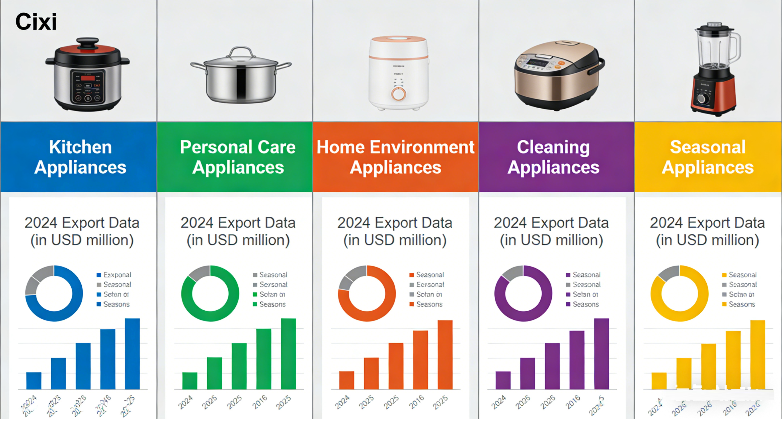
Drivers of Rapid Development
- Ultimate Supply Chain Efficiency: Achieving a "one-hour industrial circle" where over 95% of components, from motors and molds to injection molding and electronic components, are locally sourced. For example, components for air fryers, such as heating tubes, fans, and shells, can be procured and assembled within one hour.
- Differentiated Innovation Strategy: Enterprises have shifted from "imitation to innovation," such as Yueda Electronics increasing air fryer sales by 30% through a "dual-basket design," and Yueli Group successfully transitioning from OEM to branding with its "Xiaoshi" brand targeting young consumers.
- Policy and Platform Empowerment: The government promotes the "cross-border e-commerce + industrial cluster" model, establishing smart home appliance halls and overseas warehouses covering the US, Russia, and Southeast Asia. Additionally, data asset mortgage financing (such as Qixi Electric obtaining a 10 million yuan data loan) reduces enterprise operating costs.
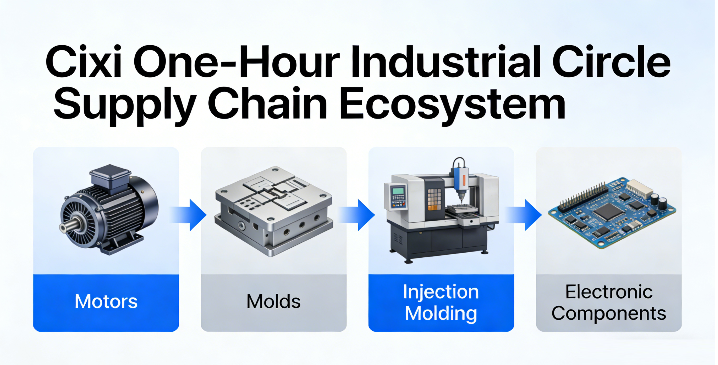
Development Opportunities for International Expansion
- Emerging Market Growth: Exports to Africa and Latin America grew by over 40% in 2025, with electric fans achieving high repurchase rates in Africa and heaters receiving substantial orders in Japan, South Korea, and Central Asia.
- Intelligence and Green Transformation: AI voice control and energy-saving technologies have become new growth points, such as Bull Group's chip-embedded smart sockets achieving a 78% repurchase rate in Germany.
- Cross-border E-commerce Dividends: Through platforms like Amazon and TikTok, Cixi's small household appliance cross-border e-commerce exports grew by 42% in 2024, with portable coffee makers and visual air fryers becoming "hit products."
In-depth Analysis of Procurement, Packaging, and Logistics
- Procurement: Flexible models and cost advantages support OEM/ODM customization and rapid small-batch production (minimum order quantity as low as 500 units). For example, Aiken Intelligent Technology's pancake machine achieved rapid iteration through small-batch trial production, selling over 20,000 units within 10 days.
- Packaging: Environmental protection and brand upgrading promote the use of biodegradable materials. For instance, Zhuoli Electric's bamboo fiber packaging boxes have obtained EU green certification, while multi-language instructions and modular packaging designs support customization for cross-border brand channels (such as minimalist styles preferred in the Korean market and shock-resistant protection emphasized in the European and American markets).
- Logistics: Efficient overseas channels leverage the Ningbo Zhoushan Port to achieve "24-hour direct sea freight to major global ports." For example, Jiu You Electric's heaters are shipped directly to Europe through the port, shortening the transportation cycle by three days. Overseas warehouse layouts in the US, Russia, and Southeast Asia support FBA warehousing and return services, reducing cross-border logistics costs by 30%. Customs clearance convenience, such as the "green channel" opened by Cixi Customs for home appliance exports, compresses clearance time to two hours, as demonstrated by Ningda Electric's heater exports.
Data Comparison and Case Studies
- Supply Chain Efficiency: Compared to the three days required for component procurement in the Pearl River Delta, Cixi's "one-hour industrial circle" improves efficiency by 70%.
- Market Performance: In 2024, Cixi's home appliance exports reached 29.66 billion yuan, accounting for 41.6% of Ningbo's total export value, with air fryer exports 45%.
- Case Study: Ningbo Aijia Electric's touch-screen electric iron, developed for a US client and iterated three times within six months through local mold factories, achieved sales of over 14 million yuan.
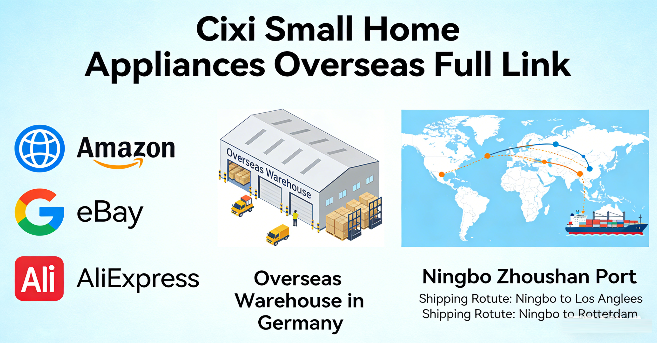
Additional information about Cixi
Cixi's small household appliance industry has become a high-cost-performance and high-efficiency partner for global purchasers due to its "supply chain cluster + agile innovation + full-chain services." In the future, with the deepening of intelligence and green transformation, Cixi will further consolidate its position as the "Global Smart Home Appliance Innovation Center," providing international brands with one-stop solutions from R&D to delivery.
Travel to Cixi for business it is very easy, it will take around 1 hour from Shanghai, Hangzhou.
If you have to ship out your electric appliance from Cixi, it also very closed to Zhoushan port by sea, air cargos are available in Cixi Town by DHL, FEDEX, UPS and so on.
* If you want to know Cixi electric home appliance factories or professional suppliers we SEENWILLS can offer such services well.
[company_id] => 18
[sort] => 0
[category_id] => 16
[key_name] => home-appliance-wholesale-cixi
)
Array
(
[id] => 25
[name] => Children Wearing Wholesale Centre ---Huzhou Zhili Markets
[status] => normal
[create_time] => 2026-02-15 20:49:09
[delete_time] =>
[category_ids] => 16
[image] =>
[description] => There is a big baby dressing bulk selling market in Huzhou Zhili.
[content] => Zhili Children's Wear Market is located in Zhili Town, Huzhou City, Zhejiang Province. It stands as China's largest and most comprehensive industrial cluster for children's apparel, serving as a pivotal professional trading hub.
The industry's roots trace back to the late 1970s, originating from the production and trade of embroidery products.
In 1983, a street-side stall market for embroidery products emerged, which was later formalized by the local industry and commerce department through the construction of a simple shed—marking the birth of the first-generation children's wear market.
Following several phases of expansion and renovation, the "China Wuzi Children's Wear Market" was officially established in 1997.
The current core facility, "Zhili Children's Wear City," was initiated in 2008 and opened for business on December 6, 2009. Covering a total land area of approximately 600 mu (about 100 acres) with a total floor area exceeding 700,000 square meters, the project was developed in three phases.
Having evolved from the early "shop-in-front, factory-at-back" model, the market has transformed into a specialized, multifunctional industrial complex offering one-stop services.
*If you are interested in purchasing babies clothings in bulk SEENWILLS is willing to assist you well.
Huzhou Children's Wear Industry: A Deep Dive for International Buyers
Welcome to Wujiang, Huzhou, the "Capital of China's Children's Wear." As the world's largest children's clothing cluster, it produces 2 billion garments annually, occupies two-thirds of the domestic market share, and exports to 165 countries and regions worldwide. The following is an in-depth analysis of the core value and cooperation opportunities of the Huzhou children's wear industry from six key dimensions.
-
Industry Scale and Market Position: The "Heart" of Global Children's Wear
Wujiang Town, Huzhou, covers an area of only 30 square kilometers but gathers more than 14,000 children's wear enterprises, forming a trillion-yuan industrial empire.
Output Dominance: Annual output is as high as 2 billion pieces, with sales of nearly 100 billion RMB.
Global Coverage: Products are exported to 165 countries and regions worldwide. From daily wear in Africa to high-end school uniforms in Europe, Wujiang children's wear has become an indispensable part of the global supply chain.
Market Transformation: Previously focused on domestic sales, it is now accelerating its "going global" strategy. In 2024, children's wear exports reached 4.23 billion RMB, a year-on-year increase of about 15%.
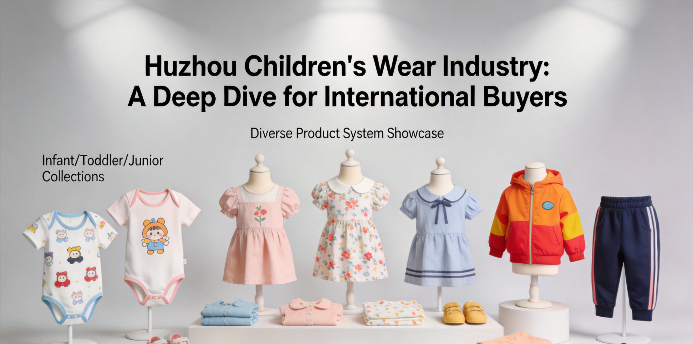
-
Product System and Niche Tracks: From "Little Dresses" to "Full Categories"
Wujiang children's wear has evolved from early single dresses to a complete product matrix covering full categories and multiple scenarios.
School Uniform Track: This is the "golden track" of Wujiang children's wear in recent years. The town has more than 1,000 school uniform supply chain enterprises, producing more than 80 million sets annually, with sales of 14 billion RMB. Products cover British-style, sportswear, and high-tech three-proof fabric school uniforms to meet global demands.
Fashion Children's Wear: Enterprises like "Zhuangzhuanghu" have independent design teams, developing more than 500 new products annually, keeping pace with global fashion trends.
Functional Clothing: In addition to daily wear, Wujiang also has strong manufacturing capabilities in infant wear, coats, and functional protective clothing.
-
Supply Chain and Manufacturing Strength: "Fast Reaction" and "Flexible Production"
For international buyers, the flexibility and responsiveness of the supply chain are core competitiveness.
Digital Workshops: 20 leading enterprises have completed digital workshop renovations, improving production efficiency by 20% and realizing fast flow from design to delivery.
Flexible Manufacturing: Relying on industrial belt platforms like 1688, Wujiang enterprises can achieve "small batch, fast turnaround." Even small customized orders can be completed efficiently.
Benchmark Case: Huzhou Jingling Apparel Co., Ltd. achieved annual sales of 20 million RMB in just one year through cross-border e-commerce, demonstrating strong market adaptability.
-
Going Global Channels and Trade Facilitation: One-Stop "Selling to the World"
Huzhou has built an extremely convenient trade bridge for global partners and local enterprises.
National Pilot: Wujiang is a national pilot for market procurement trade. This means that even small-batch, multi-variety children's wear exports can enjoy "one-stop" customs clearance, settlement, and tax exemption policies, greatly reducing the threshold for foreign trade.
Cross-border E-commerce: More than 1,000 operators have opened foreign trade businesses, using overseas social platforms like TikTok and Instagram for short video marketing to directly reach overseas consumers.
International Organization Procurement: Wujiang children's wear has successfully entered the procurement list of international organizations like UNICEF. The first batch of 30,000 humanitarian aid winter outfits has been delivered, marking that its quality has reached international public procurement standards.
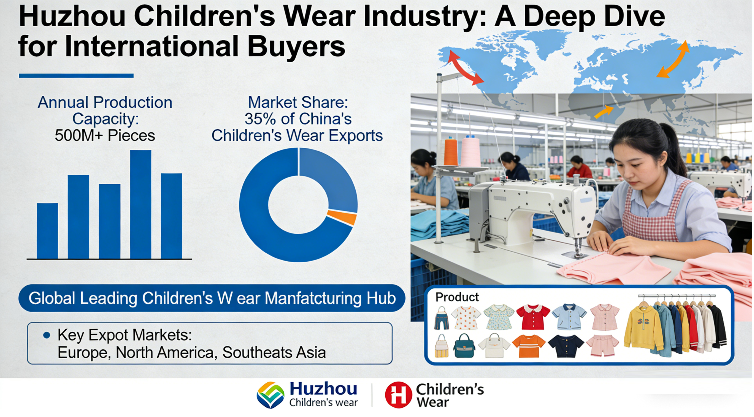
-
Business Environment and Service Support: From "Product Going Global" to "Brand Going Global"
The Huzhou government is committed to providing comprehensive support for global partners.
Policy Dividends: Supporting policies like "Tong Baitiao" provide capital rewards, financial assistance, and tax reduction for enterprises, with more than 61 million RMB in subsidies paid to children's wear enterprises.
Talent Reserve: "School-enterprise cooperation" cultivates foreign trade talents directionally, supplying nearly 3,000 professionals to the industry annually.
Intellectual Property Protection: Patent usage rights acquisition time has been shortened from 29 days to 5 minutes, protecting original designs.
-
International Opportunities and Future Outlook: A Win-Win Ecosystem of Mutual Benefit
The Huzhou children's wear industry is ushering in unprecedented international opportunities.
Global Buyer Aggregation: Through activities like "International Buyers Walking into Wujiang," procurement agents from Japan, Poland, UAE, Russia, etc., have established in-depth cooperation with local enterprises.
Overseas Warehouse Layout: Enterprises are actively establishing overseas warehouses in Russia, Southeast Asia, etc., shortening logistics time and better serving regional markets.
Real Cases: Arsen, a Russian businessman, quit his Fortune 500 job, settled in Wujiang, and sold clothes to more than 30 countries worldwide using multilingual short videos. Henry, an Egyptian client, set up a trading company in Wujiang with annual sales breaking 100 million. They are witnesses to the successful model of "Made in China, Selling Worldwide."
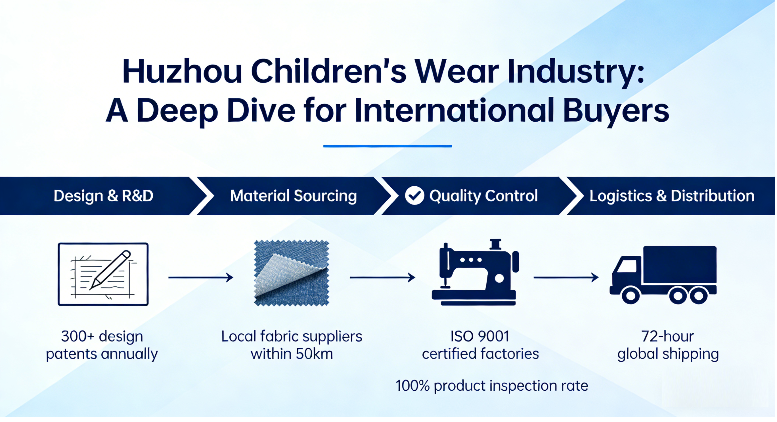
Conclusion
Choosing Huzhou means choosing a partner with a complete industrial chain, extreme cost performance, and infinite innovation vitality. Whether you are seeking OEM/ODM cooperation or a stable supply chain, Wujiang, Huzhou, will be your best starting point for expanding the global market.
We SEENWILLS Company looks forward to meeting you in beautiful Huzhou and jointly painting a new blueprint for international cooperation in the children's wear industry.
[company_id] => 18
[sort] => 0
[category_id] => 16
[key_name] => kids-clothing-wholesale-zhili-huzhou
)
Array
(
[id] => 24
[name] => China Auto & Motorcycle Parts Sourcing Centre - Wenzhou
[status] => normal
[create_time] => 2026-02-15 18:49:47
[delete_time] =>
[category_ids] => 16
[image] =>
[description] => From Wenzhou you can look for very great suppliers on auto & motorcycle parts, mostly are real big factories and accept OEM services.
[content] => Have you meet some chances & chellenges in your auto & motorcycle part business, if so we hope you can get some of following information which may help you solve such problems.
- Overview of Wenzhou's Auto & Motorcycle Industry
- Collaborative Development within Wenzhou's Auto & Motorcycle Sector
- Strategy and Future of Wenzhou Auto & Motorcycle Products
- The Industrial Development Blueprint for Wenzhou
- Systemic Upgrading is the Core of Wenzhou's Auto & Motorcycle Industry Development
- Three Key Transformations Assisting the Development of Wenzhou's Auto & Motorcycle Industry
* If you want to get more knowledge about auto & motorcycle accessories' suppliers or factories please feel free to let SEENWILLS knows.
1.About Wenzhou's Auto & Motorcycle Parts
Wenzhou's auto and motorcycle parts industry is built on a solid foundation and is one of the core forces driving regional economic growth.
- Output Value: In 2024, the total output value of the city's auto and motorcycle parts industry surpassed the 120 billion yuan mark. Specifically, Ruian, the core cluster area, achieved a scale-above output value of 53.81 billion yuan, a year-on-year increase of 16.4%.
- Growth Momentum: The industry demonstrates strong development momentum. In the first half of 2025, the added value of the city's scale-above auto and motorcycle parts industry grew by 24%, firmly leading the position within the city's "5+5" industrial clusters.
- Enterprise Matrix: The industry possesses a robust echelon of enterprises. Ruian alone has gathered over 4,600 scale-above auto and motorcycle parts enterprises. In 2025, over ten high-quality enterprises, including national manufacturing "single champions" and national specialized new "little giant" enterprises, were added, injecting a steady stream of vitality into industrial upgrading.
2.Industrial Layout and Cluster Advantages:
A "Single Core with Multiple Points" Collaborative Development Pattern
Wenzhou's auto and motorcycle parts industry has formed a "flock-forming" industrial ecosystem with Ruian as the core and surrounding counties and districts developing characteristic and collaborative industries.
- Core Engine - Ruian: As the "Capital of Chinese Auto & Motorcycle Parts," Ruian is the innovation source and core engine of the entire industry, focusing on intelligent connected vehicle key parts and constructing a full-chain system of "R&D - Incubation - Industrialization."
- Characteristic Collaboration Zones:
- Longwan: Focuses on automotive electronics, cultivating a batch of "specialized and new" enterprises mastering core technologies.
- Ouhai: Has formed characteristic advantages in new energy vehicle chassis system parts.
- Yueqing: Leverages its strong electrical industry foundation to occupy an important position in the automotive wiring harness segment.
- Pingyang: Is quite competitive in automotive molds and lightweight parts production.
This layout realizes the efficient allocation of resources, enabling over 90% of complete vehicle parts to be procured locally, forming an industrial chain depth and collaborative advantages that are difficult to replicate.
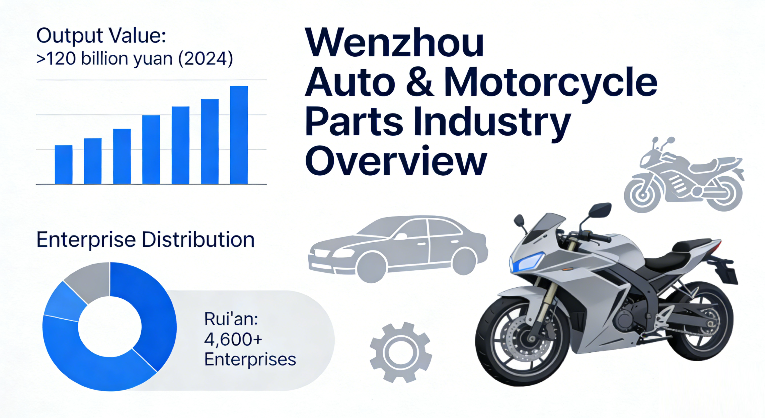
3.Strategic Upgrade and Future Direction
Building the "China (Wenzhou) Smart Car Valley"
Facing the profound changes of electrification, intelligence, and networking in the auto and motorcycle industry, Wenzhou has established a clear strategic upgrade path, the core being the creation of the "China (Wenzhou) Smart Car Valley".
- Strategic Goal: To promote the industry's transition from a traditional parts base to a "source of intelligent connected vehicle key system solutions and an advanced manufacturing base," building a nationally influential new highland for intelligent connected vehicle key parts.
- Spatial Planning: The Smart Car Valley clearly constructs a development pattern of "One Core, One Town, One Zone, One Corridor".
- One Core: The Dongxin Industrial Block as the core area, undertaking R&D and incubation functions.
- One Town: The Ruian Auto & Motorcycle Smart Parts Town as the industry cluster area, attracting upstream and downstream enterprises.
- One Zone: The provincial "Ten Thousand Acres and One Billion" platform as the industry expansion area, providing vast development space.
- One Corridor: The 104 National Highway Auto & Motorcycle Cultural Corridor as the industry ecological corridor, integrating R&D, exhibition sales, cultural creation, and other formats.
- Development Blueprint: According to the plan, by 2030, it strives to form a千亿-level (trillion-yuan) industrial cluster of new energy intelligent connected vehicle parts.
4.Core Products and Technical Strength
From Basic Parts to Intelligent Key Systems
Wenzhou's auto and motorcycle parts product system is extremely comprehensive, covering 12 major categories and over 5,000 series varieties, from traditional mechanical parts to frontier intelligent systems.
- Advantageous Products: It holds the No. 1 market share in China for 5 types of products, such as shock absorbers and braking systems, providing supporting for over 100 domestic and international OEMs like BMW and Geely.
- Technology Tackling: The industry is accelerating its transition toward electrification, intelligence, and lightweight. It is focusing on "three-electric" systems (battery, motor, and controller), intelligent chassis, automotive electronics, and sensors for new energy vehicles.
- Innovation Platforms: By establishing an engineer collaborative innovation center for intelligent key auto parts, it has gathered thousands of shared engineers to provide "diagnosis and treatment" for enterprises across the entire industry chain from powertrains to body systems, effectively solving a series of "bottleneck" technical problems such as aluminum part welding and plastic shrinkage.
5.Market Expansion and Industrial Chain Collaboration
Deeply Linking Global OEMs
Wenzhou not only works hard but also actively "goes out" and "links" global resources to ensure its products can enter mainstream markets.
- OEM-Parts Collaboration: It actively organizes enterprises to connect with mainstream carmakers like SAIC and BYD. For example, during the connection activity with SAIC, 6 enterprises signed formal cooperation agreements, with another 7 maintaining close discussions, achieving a cooperation amount of 265 million yuan.
- Market Expansion: By hosting high-level exhibitions such as the China (Wenzhou) International Auto & Motorcycle Parts Expo and the International Innovation Ecosystem Conference for New Energy Intelligent Connected Vehicles, it helps enterprises expand domestic and international markets. The Wenzhou International Auto & Motorcycle Parts Expo once achieved intended orders exceeding 830 million yuan.
- Cross-border E-commerce: It is vigorously developing cross-border e-commerce business, planning that by 2030, the cross-border export value of related products will exceed 100 billion yuan, opening a new channel for the global market.
6.Intelligent Manufacturing and Digital Transformation
Reshaping the Production Model
Digitization and intelligence are the key driving forces for the transformation and upgrading of Wenzhou's auto industry.
- Digital Workshops: Taking Zhejiang Global Filter Co., Ltd. as an example, its digital workshop realizes the full-process "non-landing" production from raw material stamping to finished product packaging, compressing the production cycle from 7 days to 1 hour, achieving a subversive improvement in production efficiency.
- Standard Leadership: Wenzhou has released the province's first "Standard System Construction Guide for Industrial Digital Transformation," containing 1,380 standards, providing a clear path for industrial digital transformation and helping enterprises avoid detours.
- Technology Upgrade Investment: Enterprise investment in intelligent transformation is huge. In 2024, the cumulative technology upgrade investment of the city's auto and motorcycle parts industry reached nearly 3.2 billion yuan, a year-on-year increase of 15%, laying a solid hardware foundation for the industry's high-quality development.
7.Typical Enterprise Cases
Seeing Industrial Vitality from Niche Leaders
The vitality of Wenzhou's auto and motorcycle parts industry is reflected in a group of high-quality enterprises that delve into niche fields and possess global competitiveness.
- Zhejiang Changjiang Automotive Electronics Co., Ltd.: This enterprise, which started from a loft, has grown into an industry giant with tens of thousands of employees. In its automated workshop, robotic arms precisely assemble automotive electronic control modules. With an annual development capacity of nearly 2,000 new products, it has achieved an average annual growth rate of 12.8%, serving as an epitome of the development of Wenzhou's automotive electronics.
- Zhejiang Tieyin Auto Parts Co., Ltd.: As a young enterprise founded less than ten years ago, it has developed automotive electric tailgate struts, becoming the preferred accessory in the aftermarket for over 90% of global vehicle models due to its wide adaptability and excellent performance, with an international market share as high as 70%, demonstrating the strong explosive power of Wenzhou's auto parts industry in niche markets.
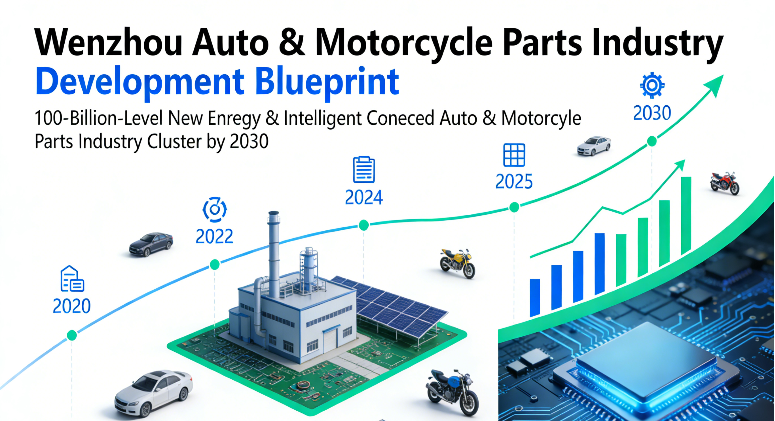
Transportation guide in Wenzhou
currently has Wenzhou Longwan International Airport and two high-speed rail stations, Wenzhou Station and Wenzhou South Station, making it very convenient to visit this industrial belt for procurement and to find high-quality auto and motorcycle parts supply chain factories.
CAMPI Exhibition Information
Wenzhou Auto & Motorcycle Parts Exhibition is generally held
Time: early September every year
Location: Wenzhou International Convention and Exhibition Center.
Address: No. 1, Jiangbin East Road, Lucheng District, Wenzhou, Zhejiang Province.
wish to attend this type of exhibition, you can finalize your plans around May in advance. Friendly welcome for your inquiry through SEENWILLS assistant.
[company_id] => 18
[sort] => 0
[category_id] => 16
[key_name] => auto-motorcycle-parts-sourcing-wenzhou
)
Array
(
[id] => 23
[name] => To Taizhou to Purchase Competitive Plastic Homewares
[status] => normal
[create_time] => 2026-02-15 14:03:07
[delete_time] =>
[category_ids] => 16
[image] =>
[description] => where can we get very good priced plastical homewares? Taizhou is the best places to get plastic product factories.
[content] => Are you looking to source large quantities of plastic storage bins, tumblers, tableware, brooms, or trash cans?
Today, SEENWILLS brings you an in-depth look at one of China’s most outstanding industrial powerhouses. We’ve curated this guide to help global buyers navigate the ecosystem of Taizhou, covering everything from industry insights to logistics.
- Main products made in Taizhou Zhejiang
- Taizhou Plastic Homeware Products
- How to Choose Taizhou Best Plastic Items
- Looking for Advanced Plastic Product Suppliers in Taizhou
- Packing Solution on Plastical Housewares
- Shipping Advices on Plastic Consumer Products
- Trends of Taizhou Plastic Items
- Purchasing Experience in Taizhou Manufacturers
- Transportations to Taizhou City
* If you want to know Taizhou better you can contact seenwills to get the great consultant.
- A Glimpse at Taizhou’s Core Industries: From the "Plastic Kingdom" to a "Smart Manufacturing Hub"
Taizhou, often hailed as a "City of Manufacturing," has an industrial footprint that extends far beyond plastic goods. As a major manufacturing hub in the Yangtze River Delta, it is building a modern industrial system centered on the "5+5+6" strategy.
In traditional sectors, Taizhou boasts two national advanced manufacturing clusters. The automotive and components industry is a pillar, home to giants like Geely and Volvo, forming a complete ecosystem. However, the crown jewel remains the mold and plastic industry. Huangyan is known as the "Hometown of Chinese Molds," supporting approximately 70% of the nation’s plastic daily necessities market share.
In emerging section, Taizhou is sprinting ahead with new energy vehicles, high-end equipment (industrial machine tools), and green energy. Looking toward the future, Taizhou is cultivating clusters in low-altitude economy (aerospace), embodied intelligence (robots), and synthetic biology, exemplified by Geely’s aerospace satellite projects.
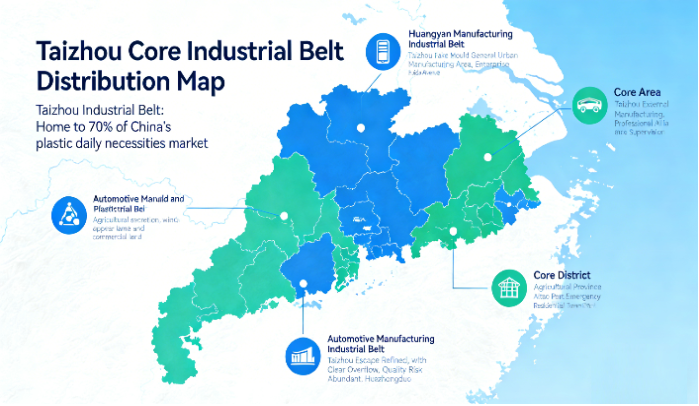
- Decoding the Industrial Belt: A Deep Dive into Taizhou’s Plastic Products Industry
Stepping into Taizhou is like entering the heart of China’s plastic home products industry. With over 13,000 plastic product manufacturers and an annual output value exceeding 60 billion RMB, it is a dominant force.
Currently, the industry is undergoing a profound transformation. Moving away from reliance on scale and cost, Taizhou is pivoting toward "branding, digitalization, and intelligence." The 2025 launch of the "Taizhou Plastics" regional public brand is a landmark event, aiming to solve industry overcompetition.
Especially in design and R&D, Taizhou has introduced AI-assisted industrial design and 3D printed molds, drastically shortening product design cycles. Through C2M (Customer-to-Manufacturer) flexible manufacturing, a new storage box concept can be turned into a commodity rapidly.
- The Professional’s Guide: How to Pick High-Quality Plastic Daily Necessities
In a sea of plastic products, how do you develop a "discerning eye" for quality? Focus on these core dimensions:
First, check the material identification. Food-grade plastics are usually PP (Polypropylene) or Tritan, marked with a triangular recycling symbol. PP is heat-resistant, ideal for lunch boxes, while Tritan is clear and shatterproof, perfect for water cups.
Second, inspect the craftsmanship. High-quality products have smooth surfaces without burrs, uniform wall thickness, and smooth opening/closing mechanisms. For storage items, load-bearing capacity is key.
Finally, never overlook eco-friendliness. Avoid products with pungent odors, which often indicate inferior recycled materials. From both environmental and health perspectives, sourcing products with eco-certifications is wise. Although the initial procurement cost may be slightly higher, their long service life and low breakage rate lower operational costs in the long run.
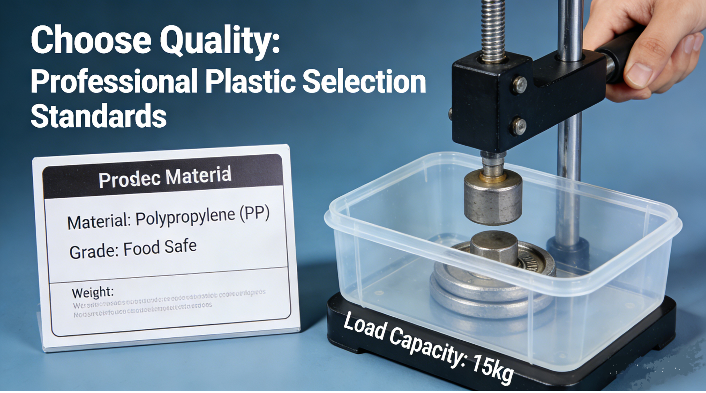
- Sourcing Strategies: How to Find Premium Suppliers in Taizhou
Finding direct factories in Taizhou is key to controlling costs and ensuring supply stability. Here are four efficient channel strategies:
Direct factory sourcing offers the highest profit margins. Contacting manufacturers in Huangyan or Tiantai directly can lower purchase prices by over 30% compared to secondary wholesalers. We recommend starting with small trial orders.
E-commerce platforms are suitable for light-asset operations. On 1688, many Taizhou enterprises participate in "Yanxuan" or "Industry Belt" channels, supporting drop-shipping and effectively solving inventory pressure.
Regional distribution centers are also an option. Although Yiwu is a comprehensive small commodities hub, a large portion of its plastic products originate from Taizhou, suitable for small-batch, multi-variety procurement.
Lastly, brand franchising and supply chains. If you are a chain store or community group leader, connecting to a brand’s supply chain system can provide intelligent product selection support and lower the risk of unsold inventory.
- Safety First: Packaging & Protection Solutions for Long-Distance Transport
Although plastic products are lightweight, they are prone to damage from compression, friction, or environmental factors during long transport. Scientific packaging is the first line of defense.
For scratch-prone glossy products, use bubble wrap or pearl cotton for internal fixation and partitions to prevent collision. For the high-humidity marine environment, sufficient desiccants must be placed inside the packaging, using reinforced corrugated cartons.
For large plastic furniture or equipment, wooden pallets with strapping are recommended, along with a "Center of Gravity" label to prevent tipping during loading/unloading. Professional logistics service providers usually offer customized packaging solutions, which is key to reducing cargo damage rates.
- Going Global: Efficient International Logistics Channels for Plastic Goods
Choosing the right logistics channel directly impacts capital turnover and customer experience. The main international transport methods include express, air, sea, and multimodal transport.
For high-value or urgent samples, international express (DHL, FedEx) is the first choice, offering speed at a high cost. For bulk, low-value goods, sea freight is the most cost-effective. For instance, shipping from Ningbo or Guangzhou ports to Africa or South America can greatly reduce unit costs, though it takes longer (approx. 30-40 days).
Specially, dedicated logistics lines for specific markets (like the Middle East) are emerging. These lines integrate air and land transport, offering "Double Clearance and Tax Included" services, effectively solving customs difficulties.
- Trend Insight: The New Horizon of International Trade in Plastic Daily Necessities
Global plastic trade is facing structural changes. In 2024, China’s plastic product exports exceeded 90 billion USD, accounting for 35% of the global share. However, new challenges and opportunities arise.
On one hand, pricing models are iterating. The past reliance on "one-order-one-negotiation" is shifting toward futures pricing. Utilizing futures tools for hedging is becoming a must for foreign trade enterprises.
On the other hand, green trade barriers are becoming more prominent. Developped markets demand stricter environmental standards; products made from recycled materials (like PP, PET) are more popular. Additionally, localized design for different markets is a trend—bold colors for developped countries, and durability for African markets.
- Field Experience: Procurement Insights from a Veteran Buyer
As a procurement veteran, I’d like to share some "pit avoidance" tips.
First, don’t just look at price. Low prices often mean material downgrades or wall thickness reductions, leading to high after-sales return rates. Assess the "full lifecycle cost."
Second, emphasize the sampling phase. Conduct strict sample tests (drop tests, load tests, odor tests) before mass production.
Third, focus on supply chain flexibility. Choose suppliers who support small-batch, multi-batch production to stay agile.
Lastly, long-term cooperation is more important than a single transaction. Establishing trust with factories ensures you get priority production resources during peak seasons.
- Visiting the Source: Travel & Transportation Advice for Visiting Taizhou
If you plan to visit Taizhou to inspect factories, this travel guide will help. Taizhou has convenient transportation, including high-speed rail and an extensive rail transit network.
High-speed Rail: Taizhou Station (in Jiaojiang) and Taizhou West Station (in Huangyan) are the main hubs. Since Huangyan is the core of the mold and plastic industry, getting off at Taizhou West Station may be more convenient.
Public Transit: Taizhou has a modern transportation equipments S1 line connecting Jiaojiang, Luqiao, and Wenling. For inter-county factory inspections, we recommend ride-hailing or renting a car, as factories are widely distributed, making Auto Drving more flexible and efficient.
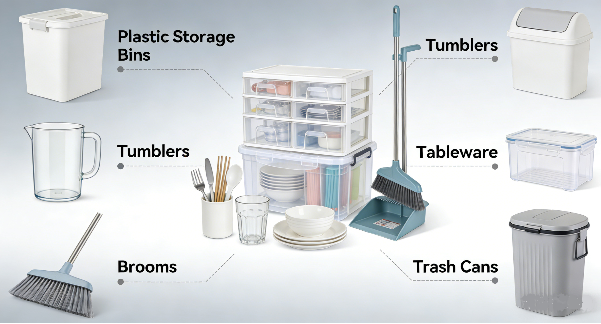
Note on Pricing Tiers: In actual procurement, Taizhou’s plastic products are generally mid-priced, suitable for the mid-tier market. If you need high-end materials and brand-level mass production, Guangdong Province is usually the target. If you specifically need very low-cost plastic goods, the main production areas are in Hebei and Shandong.
Contact the SEENWILLS SUPPLY CONSULTANT TEAM for more assistance if you are in such plastical item business.
[company_id] => 18
[sort] => 0
[category_id] => 16
[key_name] => plastic-homewares-wholesale-taizhou
)
Array
(
[id] => 145
[name] => SEENWILLS DONATES TO THE PATIENT
[status] => normal
[create_time] => 2026-03-27 21:51:52
[delete_time] =>
[category_ids] => 17
[image] =>
[description] => seenwills csr, seenwills donations,
[content] => 
2026-03-27
Darren as the owner of SEENWILLS donated to the patient of Jianru Chen who is with NOSE CANCER and living in the same town of Hunan Province.
[company_id] => 18
[sort] => 0
[category_id] => 17
[key_name] => seenwills-donates-to-the-paitent
)
Array
(
[id] => 69
[name] => SEENWILLS DONATES TO THE HOMETOWN ROAD REBUILDING
[status] => normal
[create_time] => 2026-03-08 12:10:25
[delete_time] =>
[category_ids] => 17
[image] =>
[description] =>
[content] => 
2025-08-23
Darren as the owner of SEENWILLS donated to his hometown road constructions to let the locals go around safely.
[company_id] => 18
[sort] => 0
[category_id] => 17
[key_name] => seenwills-donates-to-the-hometown-road-rebuilding
)
Array
(
[id] => 68
[name] => SEENWILLS' DONATIONS TO THE OLD SOLDIERS
[status] => normal
[create_time] => 2026-03-08 12:01:58
[delete_time] =>
[category_ids] => 17
[image] =>
[description] =>
[content] => 
2025-06-12
Seenwills donated to the old soldier association through online platform of Douyin in China (Same company to TIKTOK).
[company_id] => 18
[sort] => 0
[category_id] => 17
[key_name] => seenwills-donations-to-the-old-soldiers
)
Array
(
[id] => 16
[name] => Seenwills CSR
[status] => normal
[create_time] => 2026-02-05 17:43:57
[delete_time] =>
[category_ids] => 17
[image] =>
[description] => seenwills' corporate social responsibility
[content] => 
Keep peace, love as a seed.
[company_id] => 18
[sort] => 0
[category_id] => 17
[key_name] => corporate-social-responsibility
)
Array
(
[id] => 84
[name] => Brand Links
[status] => normal
[create_time] => 2026-03-21 17:47:11
[delete_time] =>
[category_ids] => 18
[image] =>
[description] =>
[content] => The following brand links are real big brands in China or global markets which we did heavy investigations or copporated. So if you are interested to get their products or services we can offer the serious services.
v360pro camera
[company_id] => 18
[sort] => 0
[category_id] => 18
[key_name] => brand-links
)
Array
(
[id] => 75
[name] => Social Links
[status] => normal
[create_time] => 2026-03-10 22:56:42
[delete_time] =>
[category_ids] => 18
[image] =>
[description] => Know seenwills more from our official links
[content] => Linkedin
Youtube
Reddit
Quora
[company_id] => 18
[sort] => 0
[category_id] => 18
[key_name] => social-links
)
Array
(
[id] => 144
[name] => Brand Agency Facilitation
[status] => normal
[create_time] => 2026-03-26 16:26:44
[delete_time] =>
[category_ids] => 19
[image] =>
[description] => Brand Agency Facilitation & China Legal Contract Representation for Overseas Entities.
[content] => Service Scope
Represent overseas clients to negotiate, review, and finalize China domestic legal contracts for brand agency, distribution rights, licensing, and regional authorization with Chinese brand owners, ensuring compliance with Chinese laws and commercial feasibility.
1. SOP
Phase 1: Intake & Requirement Confirmation
- Collect full client information: company entity, business scope, target market, sales channels, and financial capacity.
- Confirm authorization objectives: product category, exclusive/non-exclusive rights, territory, term, sales targets, pricing policy.
- Conduct preliminary due diligence on the Chinese brand: trademark status, business license, production capacity, existing agency records.
- Issue Client Requirement Brief & Feasibility Assessment.
Phase 2: Communication & Negotiation Support
- Act as the official liaison between overseas client and Chinese brand.
- Assist in negotiating core commercial terms: agency fees, deposits, rebates, supply chain, after-sales, territorial restrictions.
- Record and issue Meeting Minutes & Negotiation Summary after each discussion.
- Finalize a mutually agreed Term Sheet (Letter of Intent).
Phase 3: Contract Drafting & Legal Review
- Draft or revise the China domestic brand agency / distribution contract in accordance with PRC laws.
- Review key clauses:
- Intellectual property rights (trademark use, infringement liability)
- Territory, channel control, anti-dumping provisions
- Payment, delivery, warranty, liability for breach
- Termination, renewal, dispute resolution (governed by PRC law)
- Provide Legal Risk Analysis & Revision Suggestions.
- Coordinate revisions until both parties approve the final version.
Phase 4: Execution & Closing
- Provide signing guidance: electronic signature, offline signing, notarization (if required).
- Confirm full execution of the formal contract.
- Organate and archive all documents.
- Deliver Project Completion Report.
Phase 5: Post-Signaling Support (Optional)
- Contract compliance guidance
- Renewal & amendment support
- Dispute resolution consultation
2. Standard Deliverables
The client will receive the following finalized documents:
- Client Requirement & Feasibility Report
- Negotiation Minutes & Term Sheet (LOI)
- Formal China Domestic Brand Agency Contract (final signed version)
- Legal Risk Warning & Key Clause Explanation
- Full set of project document archive (PDF + editable version)
- Signing Process Guide & Compliance Notes
3. Service Standards (SLA)
- Response to client inquiries: within 24 hours
- First draft of contract: within 3 working days
- Revision feedback: within 24 hours
- All deliverables provided within 48 hours after contract signing
[company_id] => 18
[sort] => 0
[category_id] => 19
[key_name] => brand-agency-facilitation-service
)
Array
(
[id] => 143
[name] => B2B Sourcing Service
[status] => normal
[create_time] => 2026-03-26 15:46:47
[delete_time] =>
[category_ids] => 19
[image] =>
[description] => Sourcing Matching, Factory Verification, Negotiation, QC Services based in China
[content] => Sourcing Matching Service
Mode 1: Select from our product data system directly with all the details, confirm the quantity with receiving address, then seenwills sales willl offer you the official payment account with exact amount.
Mode 2: ODM, OEM, OBM orders you can leave the details through our ONLINE CHAT, RFQ System, EMAIL, Whatsapp to make a contract seriously.
Factory Verification
Mode 1: Online verifications- seenwills team verify your suppliers through online only.
Include whether it is active, real address, key person contact, factory or trading company.
Mode 2: Offline verications- seenwills team verify your manufacturer offline with full task lists.
Without negotiation, QC, cargo service and so on.
Negotiation
Mode 1: Online negotiation
Mode 2: Offline negotiation
Include cost, shipping time, quality, after-sales.
Without illegal sections.
Quality Control
Mode 1: Full QC-from sourcing match to after-sales full program quality control assisting.
Mode 2: Part of QC-sample confirmation, product manufacturing inspection.
[company_id] => 18
[sort] => 0
[category_id] => 19
[key_name] => b2b-sourcing-service
)
Array
(
[id] => 6
[name] => Logistic Service
[status] => normal
[create_time] => 2025-03-02 13:40:13
[delete_time] =>
[category_ids] => 19
[image] =>
[description] => China Air Cargo, Ship by sea, DHL Freight , FedEx Logistic, UPS Express, Train Fowarding, Haulage,
[content] => 1. Quality Checking
- SOP:
- Confirm the details of your products after the payments.
- Ask for the real products image, packages, cartoons.
- Give final quality confirmation to SEENWILLS.
- Key Points:
- Ensure no mistakes on quality of the products
2. Packing and Labeling
- SOP:
- Select appropriate packaging materials based on the product type and size.
- Securely pack items to prevent damage during transit.
- Attach clear and accurate shipping labels and customs documentation if required.
- Key Points:
- Use durable packaging materials to protect goods from damage.
- Double-check labels for correct address information and tracking numbers.
3. Shipping Method Selection
- SOP:
- Evaluate available shipping options based on cost, speed, and reliability.
- Choose the most suitable carrier and service level (e.g., express, standard, economy).
- Provide customers with estimated delivery times.
- Key Points:
- Balance between cost-effectiveness and delivery speed.
- Ensure carriers have a good track record for timely deliveries.
4. Tracking and Communication
- SOP:
- Implement a tracking system that allows real-time updates on shipment status.
- Send automated notifications to customers about shipment milestones (e.g., dispatched, in transit, delivered).
- Maintain open communication channels for customer inquiries.
- Key Points:
- Keep customers informed throughout the shipping process.
- Address any concerns or questions promptly to enhance customer satisfaction.
Under the above guildes, Seenwills teammates advice that, try to use your long time relationship cargo companies to keep safety, donot focus on cheap rate as the best, mostly there are some frauts as our expressing experiences.If you are the first time to buy and ship products we will help you to get the safe and quality shipping agency as well.
[company_id] => 18
[sort] => 0
[category_id] => 19
[key_name] => ship-from-china
)