Have you ever heard the City name of Zhuji from Zhejiang Province?
Here are some contents for you to know it well
1. The pearl industry in Zhuji;
2. Status of pearl jewelry in Zhuji now;
3. Chances and challenges for Zhuji pearl jewelry;
4. Professional knowledge for pearl jewelry;
5. How to select quality pearl jewelry and related suppliers in Zhuji;
6. Business trips in Zhuji;
7. Transportation guide to Zhuji;
If you want to know more about pearl jewelry or Zhuji industry please feel free to let seenwills knows.
I. Why Did the Pearl Industry Emerge in Zhuji?
The formation and development of the pearl industry in Zhuji are the result of a synergy between geographical endowments, historical accumulation, policy guidance, and market dynamics.
- Geographical & Resource Endowments: Situated in the southern wing of the Yangtze River Delta, Zhuji boasts a dense network of rivers and lakes (such as Baita Lake and the waters around Miguo Theme Park). The superior water quality provides ideal natural conditions for freshwater pearl mussel farming. Since the late 1960s, Shangxiahu Town has been experimenting with pearl cultivation using mussels, laying the geographical foundation for the industry.
- Historical Accumulation & Entrepreneurial Spirit: In the 1970s, driven by necessity, farmers in Shangxiahu were among the first to master artificial pearl cultivation techniques, leading to a phenomenon where "every household raises mussels and cultivates pearls." This grassroots entrepreneurial enthusiasm gave birth to the earliest pearl trading markets.
- Policy Guidance & Platform Construction: In 2008, Zhuji was named the "Pearl Capital of China" by the Development Research Center of the State Council. The government promoted the construction of the East China International Jewelry City (the world's largest pearl trading market) and established a provincial-level pearl industrial park. Special support policies have guided the industry's transformation from scattered farming to intensive, branded, and internationalized development.
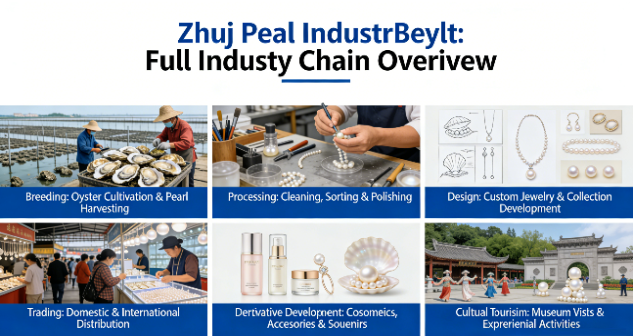
- Industrial Chain Agglomeration Effect: After more than half a century of development, Zhuji has formed a complete industrial chain covering "farming—processing—design—trading—derivative development—cultural tourism." With over 9,000 upstream and downstream enterprises gathered in one place, the agglomeration effect is significant, realizing a model of "agglomeration in one location, radiation to the globe."
II. Current Status of the Pearl Jewelry Industry in Zhuji and Globally
- Industry Status in Zhuji
- Market Scale: In 2024, the output value of Zhuji's entire pearl industry chain exceeded 50 billion yuan, accounting for 80% of China's pearl production and 73% of the world's total.
- Market Entities: There are over 9,000 enterprises and workshops, including 6 enterprises above designated size and 2 listed companies (such as Qianzhu Pearl). Well-known brands such as RuanShi and Angel's Tears have been cultivated.
- Market Channels: Online sales account for over 60% of the total. There are nearly 7,000 live-streaming sessions daily, with over 7,500 active live-streaming rooms. The TikTok cross-border live-streaming base has been established, and cross-border e-commerce sales exceeded 500 million yuan in 2024.
- Technological Upgrades: Intelligent feeding systems, AI pearl sorting machines (10-15 times more efficient than manual labor), and automated drilling machines have been promoted, reducing labor costs by 40%. The research and development of the "Edison" pearl variety has resulted in quality comparable to saltwater pearls.
- Integration of Culture, Commerce, and Tourism: The World Freshwater Pearl Museum and Pearl Culture District have been built, receiving over 600,000 tourists annually, promoting the development of "pearl + tourism + research."
- Global Industry Status
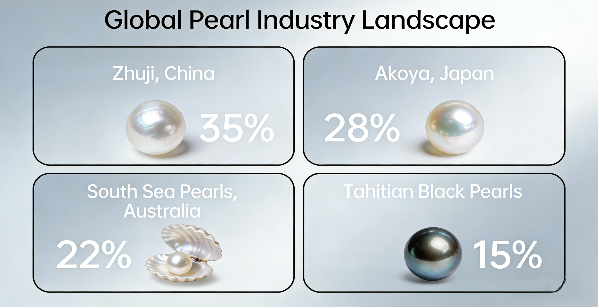
- Market Structure: China is the world's largest producer and exporter of pearls. Freshwater pearl production accounts for over 95% of the global total, with major production areas in Zhuji, Zhejiang; Hanshou, Hunan; and Suzhou, Jiangsu.
- Consumption Trends: Pearl jewelry is shifting from being a "gift for the middle-aged and elderly" to "youth-oriented, fashionable, and daily wear." Generation Z has become the main consumer group, with Chinese-style and New Chinese-style designs being highly popular.
- International Competition: Japanese Akoya, Australian South Sea, and Tahitian black pearls occupy the high-end saltwater pearl market. Chinese freshwater pearls are gradually entering the mid-to-high-end market through quality improvements (such as Edison pearls).
- Trade Structure: Pearl products are sold to over 70 countries and regions including the United States, Japan, Russia, and Southeast Asia. However, brand influence still lags behind international counterparts.
III. Core Opportunities and Challenges in Pearl Jewelry Industry Development
| Dimension | Content |
|---|---|
| Core Opportunities | 1. Consumption Upgrade: Growing demand for youthful and personalized pearl jewelry indicates huge market potential. 2. Digital Transformation: Live-streaming e-commerce and cross-border live-streaming (TikTok, Temu) are opening new growth frontiers. 3. Industrial Chain Extension: The market for derivatives such as pearl powder, face masks, health products, and pharmaceuticals is expanding. 4. Policy Support: The state values the real economy and rural revitalization, providing multiple policy dividends for the pearl industry. 5. Cultural Empowerment: With the rise of the Chinese trend, pearls, as representatives of "Oriental Aesthetics," are seeing their cultural value highlighted. |
| Main Challenges | 1. Insufficient Brand Power: There is a lack of internationally renowned brands, with most enterprises still in the OEM or wholesale stage. 2. Design Shortcomings: Original design capabilities are weak, homogenization is serious, and there is a scarcity of high-end design talent. 3. Uneven Quality: Small and medium-sized workshops still engage in practices such as passing off inferior goods as superior or bleaching and dyeing, affecting overall reputation. 4. Environmental Pressure: Traditional farming models have caused water pollution, and the cost of green transformation is high. 5. International Barriers: Exports face trade barriers such as technical standards and environmental certifications. |
IV. Multi-Dimensional Classification of Pearl Jewelry from Raw Materials to Finished Products
- Classification by Source
| Type | Characteristics | Main Origin |
|---|---|---|
| Freshwater Pearls | Diverse shapes, rich colors, high yield, affordable prices | China (primarily Zhuji) |
| Saltwater Pearls | High roundness, strong luster, large size, high value | Japan (Akoya), Australia (South Sea Pearls), French Polynesia (Tahitian Black Pearls) |
- Classification by Cultivation Method
- Nucleated Pearls: Implanted with a nucleus, resulting in regular shapes, such as Edison pearls and Akoya pearls.
- Non-Nucleated Pearls: Only implanted with a piece of tissue, resulting in diverse shapes, mostly traditional forms of freshwater pearls.
- Classification by Quality Grade (Taking Zhuji Freshwater Pearls as an Example)
| Grade | Diameter (mm) | Roundness Rate | Luster | Application Scenario |
|---|---|---|---|---|
| Special Grade | ≥9.0 | ≥95% | Extremely Strong | High-end jewelry, collection |
| Grade 1 | 7.0-8.9 | ≥90% | Strong | Business gifts, weddings |
| Grade 2 | 5.0-6.9 | ≥85% | Moderate | Daily wear, fashion accessories |
| Grade 3 | <5.0 | <85% | Weak | Wholesale, DIY materials |
- Classification by Finished Product Form
- Loose Pearls (Raw Pearls): Unprocessed pearls sold by size, roundness, and luster.
- Pearl Jewelry: Necklaces, earrings, bracelets, rings, brooches, etc.
- Semi-finished Products: Components that have been drilled, strung, or matched with chains for secondary design by brand owners.
- Derivatives: Pearl powder, face masks, health products, traditional Chinese medicine preparations.
V. Core Experience Sharing on Selecting Pearl Jewelry and Supply Chains
- Product Selection Strategy
- Observe Luster: The stronger the luster, the higher the quality. Use the "mirror method"—if a person's reflection is clear, the quality is good.
- Check Roundness: Perfectly round pearls have the highest value. Use the rolling ball method for testing.
- Inspect Flaws: The smoother the surface, the higher the value. Observation under a microscope is more accurate.
- Assess Matching: For stringed jewelry, pay attention to the consistency of size, color, and luster among the pearls.
- Supply Chain Selection Experience
- Source Direct Procurement: Prioritize breeding bases or large processing enterprises in Shangxiahu Town to reduce intermediate links.
- Check Qualifications: Verify if the enterprise has SC certification, quality inspection reports, and export qualifications.
- Focus on Technical Capabilities: Whether they possess AI sorting, automated drilling, and non-destructive bleaching processes.
- Cooperation Models:
-- B2B Wholesale: The first floor of the East China International Jewelry City is a wholesale area, suitable for bulk procurement. You can sourcing from alibaba.com, seenwills.com if you do not come to China as a business starter.
-- Drop Shipping: Many live-streaming bases support small-batch drop shipping, suitable for e-commerce startups.
-- Custom Development: Cooperate with design brands or processing workshops to provide OEM/ODM services.
- Pitfall Avoidance Guide
- Be wary of "ultra-low-priced" pearls, which may be bleached or dyed.
- Avoid direct cooperation with small workshops lacking quality inspection capabilities. It is recommended to transact through platforms or guaranteed channels.
- For cross-border sales, pay attention to the environmental and labeling regulations of the target market.
VI. Business Travel Introduction near Zhuji
- Core Business Areas
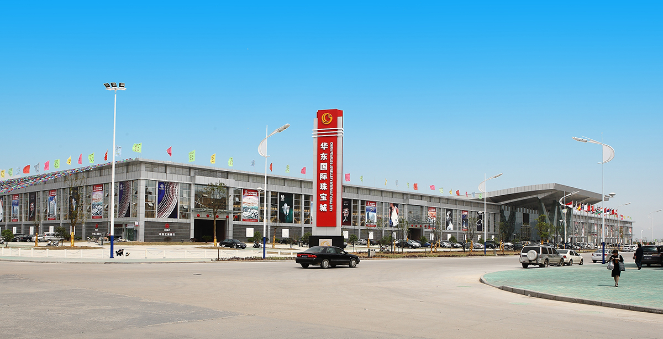
- East China International Jewelry Mall: The world's largest pearl trading market integrating trading, display, quality inspection, and logistics, with over 2,000 companies to merchants.
- World Freshwater Pearl Museum: Integrates science popularization, culture, and exhibition sales, serving as an important window to understand pearl history and craftsmanship.
- Pearl Culture District: Integrates catering, accommodation, cultural and creative products, and experience stores, suitable for business inspections and leisure.
- Miguo Town: A 4A-level scenic spot providing mussel opening and DIY experiences, suitable for team building and research.
- Accommodation Recommendations
- High-end Hotels: Jinjiang Inn, Hanting Hotel (chain brands, the first choice for business travel).
- Characteristic Homestays: Pearl-themed homestays, such as "Pearl Cottage," offering a strong sense of experience.
- Catering Brands: Starbucks, KFC, local specialty restaurants (such as Xishi Tofu, Pearl Balls).
- Business Support
- Live-streaming Bases: Three large live-streaming bases: Baoji, Xingdahui, and Tonghe, providing product selection, incubation, and operation services.
- Quality Inspection Institutions: 10 authoritative institutions, including the National Jewelry Quality Supervision and Inspection Center, are stationed on-site.
- Logistics Services: DHL, FEDEX, UPS, SF Express, JD Cargo, and others have established exclusive pickup points, supporting global shipping.
VII. Transportation Convenience Information to Zhuji
- Air
- Hangzhou Xiaoshan International Airport: Approximately 60 kilometers from Zhuji, about a 1-hour drive, with airport shuttle buses to Zhuji.
- Shanghai Hongqiao International Airport: Approximately 180 kilometers from Zhuji, reachable by high-speed rail in 1.5 hours.
- High-speed Rail/Railway
- Zhuji Station: An intersection of the Shanghai-Kunming and Hangzhou-Ningbo high-speed railways. It takes 20 minutes from Hangzhou, 1 hour from Shanghai, and 40 minutes from Ningbo.
- Shaoxing North Station: Approximately 30 kilometers from Shangxiahu Town, about a 40-minute drive.
- Highways
- Shanghai-Kunming Expressway (G60): Take the Zhuji exit to reach the downtown area and Shangxiahu Town directly.
- Zhuji-Yongjia Expressway (S26): Connects Hangzhou and Wenzhou, with multiple exits in the Zhuji section.
- Intra-city Transportation
- Bus Routes: Direct buses (such as Zhuji Bus 101) run from downtown Zhuji to Shangxiahu Town.
- Taxis/Ride-hailing: Available throughout the area, with convenient taxi services within Shangxiahu Town.
- Self-driving Parking: The East China International Jewelry City has a large parking lot open to the public for free.
Conclusion
The pearl industry cluster in Zhuji has grown from a "small pearl" into a "major industry" and is now moving towards a new stage of high-quality development characterized by "branding, digitization, and globalization." For buyers, brand owners, and investors, this is an industrial highland that cannot be missed. Grasping trends, selecting optimal supply chains, and deepening product capabilities are the keys to standing out in this billion RMB level.
If you want a sourcing agency to help your real business in Zhuji then we hope you can contact SEENWILLS.