Are you in pet of dogs and cats business? Here today SEENWILL will share some exotic pet business for your future.
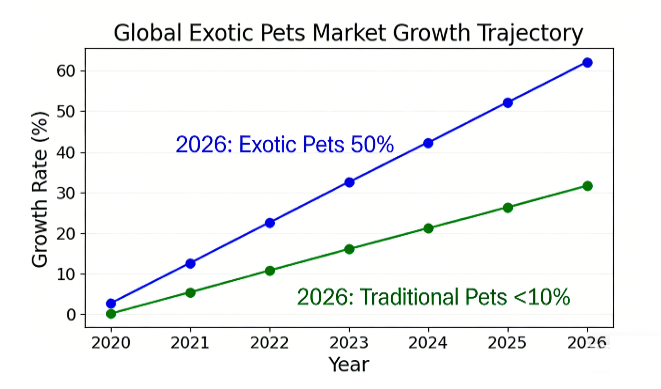
In 2026, the global pet economy is undergoing an unprecedented restructuring. While traditional cat and dog markets in developed regions are gradually entering a phase of single-digit growth characterized by stock competition, the exotic pet market is surging with an astonishing growth rate exceeding 50%, becoming the most explosive new growth pole in the global pet industry. From the reptile boom in North America to the refined care of rodents in Europe, and the renaissance of ornamental birds in the Asia-Pacific region, non-traditional pets, once labeled as "niche curiosities," are rapidly entering the lives of urban youth worldwide, evolving into a mainstream lifestyle trend.
According to the latest 2026 global pet industry data, the global exotic pet market size is projected to breach critical thresholds. Its growth momentum stems not only from rising ownership numbers but also from a deep upgrade in consumption structure—extending from basic live animal transactions to high value-added sectors such as exotic pet healthcare, smart equipment, customized nutrition, and emotional experiences. This article deeply dissects this skyrocketing sector, analyzing the global consumption logic and industrial opportunities behind it.
Contents:
1. What is exotic pet mart trends?
2. Who is moving such special business?
3. What kind of exotic pets are very hot in the global markets?
4. How about the opportunities and challenges for the exotic pet business?
I. The Global Exotic Pet Market Explosion: From Niche Hobby to Mainstream Business
Once upon a time, exotic pet keeping was a secret garden for only a few enthusiasts. However, 2026 data has completely shattered this stereotype. The global exotic pet owner population has surpassed tens of millions, expanding at an annual rate of over 10% in major urban circles across North America, Western Europe, and East Asia.
In the landscape of global pet consumption, reptiles, rodents, and ornamental birds have emerged as the three core pillars. Particularly in mature markets like the US, UK, Germany, and Japan, reptile penetration rates have significantly increased. In some regions, one in ten young households now keeps at least one type of small exotic pet. This marks a formal shift in the pet industry landscape from "cat and dog dominance" to a new era of "diverse symbiosis."
Unlike the red-ocean competition in traditional sectors, the exotic pet track is in a golden period of incremental explosion. This is reflected not only in the heat of live animal trading but also in the wellspring-like demand for the entire industrial chain, including exotic pet supplies, specialized feed, environmental control equipment, and specialized medical services. Brands and entrepreneurs globally are rushing to enter this blue ocean to seize the first-mover advantage. Notably, a complete exotic pet consumption loop has formed. The model of "Live Animal + High-End Equipment + Functional Food + Professional Services" has pushed the Lifetime Value (LTV) per pet far beyond expectations, making it a new focal point for capital pursuit.
II. Who is Driving the Global Exotic Pet Boom? The Choice of Gen Z and Urban Youth
The global explosion of the exotic pet market is primarily driven by generational iteration in the consumer base. Gen Z consumers and Millennial urban youth constitute the main force of exotic pet owners, accounting for nearly 70%. These highly educated, aesthetically conscious, and individualistic young people globally are not choosing alternative pets on a whim; rather, they are making a precise match to their current living conditions:
1. Space Adaptability: The Optimal Solution for Small Apartment Pet Keeping Amidst Global High Housing Prices
In global first-tier cities like New York, London, Tokyo, and Shanghai, living spaces are increasingly compact. Soaring rents and limited square footage make large dogs and cats difficult to afford. Small exotic pets such as geckos, hamsters, and ornamental turtles require only a terrarium or a corner of a desk. This characteristic of low space requirement perfectly fits the living reality of global singles and renters, allowing them to enjoy furry or uniquely cool companionship without occupying significant home area.
2. Time-Friendly: Low-Burden Companionship in a Fast-Paced Life
Amidst intensifying global workplace competition, young people lack the time for daily dog walking or frequent cat hair cleaning. Low-maintenance pets have become the new favorite. Reptiles and rodents mostly do not require high-frequency interaction; regular feeding, temperature control, and substrate changes suffice. They serve as perfect stress-relief tools for workers, providing just the right amount of "distanced" companionship without adding life burdens, aligning with the modern psychological demand for both efficiency and healing.
3. Personal Expression: Social Currency That Rejects Homogenization
For Gen Z who pursue uniqueness, owning a common Golden Retriever or British Shorthair is no longer sufficient to express individuality. High-aesthetic exotic pets like Crested Geckos, Sugar Gliders, and Cockatiels, due to their unique appearance and scarcity, have become traffic passwords on social media. On platforms like Instagram, TikTok, and Xiaohongshu, sharing exotic pet daily life is not just recording life; it is a social label for young people to display their aesthetic taste and gain community recognition.

III. Global Hot Exotic Pet Categories: Who Are the Track Leaders?
Although there are numerous exotic pet species, the global market has formed a clear hierarchy of popularity. The following three categories have become the global sales leaders due to their high adaptability, aesthetics, and mature supply chains:
1. Reptiles: The Aesthetic and Tech Leaders of the Exotic Circle
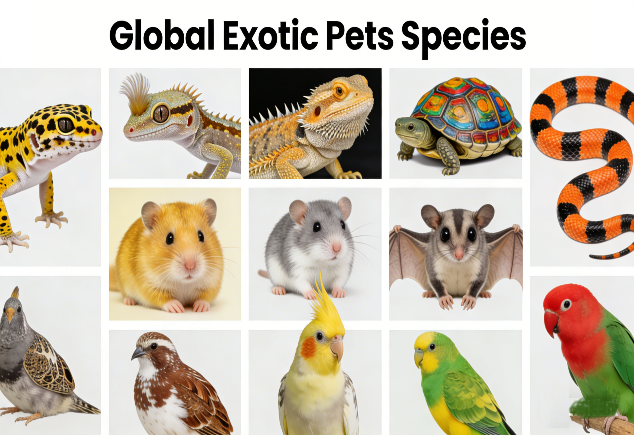
Reptiles are currently the fastest-growing sub-sector globally. Leopard Geckos, Crested Geckos, Bearded Dragons, various ornamental turtles, and Corn Snakes are the absolute top stars.
- Market Performance: In North America and Europe, ornamental turtles account for half of reptile ownership, while geckos, known for their gentle nature and cute appearance, are the top choice for beginners.
- Drivers: These pets are odorless, quiet, and relatively easy to care for. This has driven huge demand for high-tech equipment such as smart terrariums, UVB lighting systems, and ecological landscaping, pushing the high-end upgrade of reptile equipment.
2. Rodents: The Soft and Healing Entry-Level Choice
Rodent exotic pets rely on their strong interactivity and soft, cute appearance to remain the top choice for beginner pets. Syrian Hamsters, Dwarf Hamsters, Sugar Gliders, and the emerging King Quails are favorites among global youth.
- Market Performance: These pets are miniature in size, affordable, and especially suitable for students and young professionals.
- Drivers: Extremely high repurchase rates are seen in exquisite cages, silent exercise wheels, natural snacks, and warming supplies. Especially for socially active species like Sugar Gliders, the market for interactive toys and specialized milk powders is growing rapidly.
3. Ornamental Birds: Dual Healing for Hearing and Vision
Bird pets focus on "dynamic companionship," with Cockatiels, Budgerigars, and Lovebirds being the global popularity kings.
- Market Performance: While bird keeping traditions are deep in Latin America and Southern Europe, the interactive joy of hand-reared birds is being rediscovered in the Asian market.
- Drivers: Some species can mimic speech and have soft calls, suitable for those who prefer quiet companionship. Demand for supporting products like ecological birdcages, enrichment toys, pellets, and breeding boxes continues to rise, driving the professionalization of bird care.
IV. Global Industrial Chain Opportunities: From Live Trading to Full-Chain Service Explosion
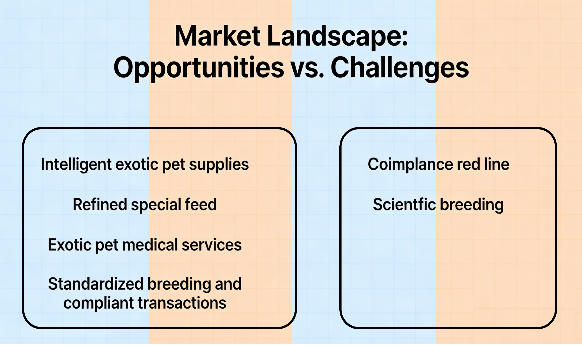
As the exotic pet economy matures, the global industrial chain is transitioning from extensive to refined, with four core areas emerging with huge commercial opportunities:
1. Exotic Pet Supplies & Equipment: Trends Towards Intelligence and Home Integration
The era of traditional, crude cages is over. The global market is trending towards high-end exotic pet equipment.
- Trend: Smart terrariums integrating intelligent temperature/humidity monitoring, automatic feeding, and APP remote control can sell for thousands of dollars and remain in short supply.
- Opportunity: Integrating pet equipment into home aesthetics to create landscaped keeping environments is key for brands to break through.
2. Specialized Feed: Huge Gap in Refinement and Functionality
The era of "universal feed" is over; the concept of scientific exotic pet feeding has taken root.
- Trend: Demand is skyrocketing for niche products like reptile-specific calcium powders, insect protein feeds, high-protein rodent diets, and functional bird pellets.
- Opportunity: Customized nutrition plans for specific species and growth stages (e.g., juveniles, pregnancy), as well as freeze-dried snacks and probiotic supplements, represent the best entry points for domestic brands going global and emerging brands.
3. Exotic Pet Medical Services: A Scarce Track with High Premium Potential
This is currently the biggest pain point and opportunity in the global pet healthcare sector.
- Status Quo: The vast majority of traditional veterinary clinics only serve cats and dogs. Veterinarians qualified in exotic pet diagnosis and treatment are extremely scarce, leading to a "high demand, low supply" situation, especially in major cities in Europe, the US, and Asia.
- Opportunity: Professional exotic pet hospitals, exotic emergency services, specialized diagnostic equipment, and exotic pet insurance products possess extremely high pricing power and profit margins, making them the commanding heights of future industry competition.
4. Breeding and Compliant Trading: Standardization and Traceability
Global emphasis on animal welfare and biosecurity has promoted the standardization of captive breeding.
- Trend: Wild capture is strictly prohibited, and compliant exotic pets with CB (Captive Bred) certification have become the market mainstream.
- Opportunity: Establishing traceable live animal trading platforms, offering genetic testing services, and promoting ethical breeding concepts will earn brands higher market trust.
V. Rational Outlook: Compliance and Scientific Care are the Bottom Lines for Global Exotic Pet Development
Although the exotic pet track has bright prospects, blind following is ill-advised. The healthy development of the global market must be built on two cornerstones:
- Strictly Adhere to Compliance Red Lines: Laws and regulations regarding wildlife protection are becoming increasingly stringent globally (e.g., CITES). It is imperative to prohibit keeping endangered species and insist on choosing artificially bred compliant varieties. Requesting and verifying breeding certificates is a prerequisite for practitioners' survival and a responsibility for owners.
- Advocate Scientific Keeping: Abandon the "curiosity" mindset. Every exotic pet has unique biological characteristics. Beginners must study keeping knowledge in advance, understanding lifespan, environmental needs, and potential risks to avoid abandonment tragedies caused by impulsive buying. The industry needs to strengthen popular science education to promote a transition from "wild growth" to "professional operation."
VI. Conclusion: Witnessing the Golden Age of the Exotic Pet Economy
The essence of the pet economy is, and always has been, the emotional connection between humans and animals. The diversification from cats and dogs to exotic pets reflects a redefinition of companionship forms by the younger generation globally—they pursue a lifestyle that is more personalized, lower burden, and more exploratory.
The global exotic pet market, with a growth rate exceeding 50%, is a fleeting traffic trend but an inevitable result of the long-term evolution of the pet industry. It is becoming the core increment supporting the next trillion-dollar pet economy after cats and dogs. For consumers, it is a unique little happiness that heals life; for entrepreneurs and investors, it is a blue ocean full of infinite possibilities. Only by adhering to compliance bottom lines, delving into professional technology, and gaining insight into user needs can one seize the dividends in this wave of exotic pet frenzy and jointly witness the golden age of the global exotic pet industry.
If you are going to set some exotic pet caring product business hope you can contact seenwills team to have a good copporation.