As SEENWILLS' blog writer,here I have to say " Dear mum, I love you so much for ever." Why? Because we are all from our mothers,and they paid or are paying so much time, love on our growing-up from every important steps. Espercially they feed us with milk, so I tried my best to wrote such pages to the baby bottle B2B sourcing buyers---Keep quality in mind always please.
Contents:
- The core reasons for the existence of baby bottles as a product?
- Main materials and functions of baby bottles historically? What are the pros and cons of each?
- What are the key certification requirements for baby bottle products in different countries?
- What are the major industrial clusters and top brands in China?
1. The Core Reason for the Existence of Baby Bottles
The baby bottle was not merely an invention of convenience; it was a solution to a biological and societal necessity. Its primary purpose is to bridge the gap when direct breastfeeding is impossible or insufficient.
- Nutritional Continuity: It ensures infants receive essential nutrition (breast milk or formula) when the mother is absent, unable to lactate sufficiently, or has ceased breastfeeding.
- Shared Caregiving: It democratizes feeding, allowing fathers, grandparents, and caregivers to participate in the bonding and nurturing process, relieving the sole burden on the mother.
- Medical Necessity: For premature infants or those with specific latch difficulties, specialized bottles provide a controlled flow that mimics breastfeeding mechanics, ensuring safe intake.
2. Evolution of Materials and Functions: Pros & Cons
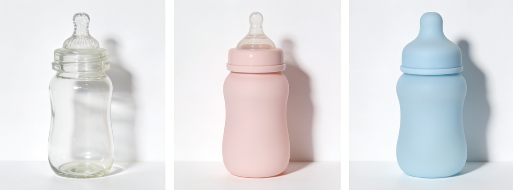
Historically, baby bottles have evolved through distinct material phases, each addressing safety and functional gaps of its predecessor.
| Material | Era/Status | Pros | Cons |
|---|---|---|---|
| Glass | Traditional / Premium | Safety: Chemically inert, no leaching. Durability: Scratch-resistant, easy to clean. Heat: Withstands high sterilization temps. |
Weight: Heavy for infants to hold. Safety Risk: Can shatter if dropped. Thermal: Conducts heat quickly (risk of burning). |
| PP (Polypropylene) | Mass Market (Legacy) | Cost: Very inexpensive. Weight: Lightweight. Safety: Generally BPA-free in modern versions. |
Durability: Becomes cloudy/scratched over time. Lifespan: Degrades with repeated sterilization. Permeability: Can retain odors. |
| PPSU (Polyphenylsulfone) | Current High-End Standard | Performance: Amber color, extremely durable, heat resistant up to 180°C. Safety: Naturally BPA/BPS free. Longevity: Longest lifespan among plastics. |
Cost: Significantly more expensive than PP. Aesthetics: Limited to amber/yellow hue. |
| Silicone | Modern / Niche | Feel: Soft, skin-like texture mimics breast. Safety: High heat resistance, inert. Design: Collapsible options for travel. |
Stability: Soft body can be hard to balance when filling. Cost: High production cost. Attraction: Attracts dust/lint easily. |
Functional Evolution: Early bottles were simple containers. Modern iterations introduced anti-colic vents (to reduce gas), wide-neck designs (for easy cleaning and filling), and temperature-sensitive strips (basic safety).
3. Global Key Certifications
Compliance is the biggest barrier to entry. Sourcing buyers must ensure factories hold valid certifications for the target market.
- 🇺🇸 USA:
- FDA (Food and Drug Administration): Compliance with 21 CFR (Code of Federal Regulations) for food contact materials. Focuses on migration limits of harmful substances.
- CPC (Children’s Product Certificate): Mandatory for children's products, requiring third-party testing from a CPSC-accepted lab (e.g., for lead and phthalates).
- 🇪🇺 European Union:
- EU Regulation No 1935/2004: The framework regulation for all Food Contact Materials (FCM).
- LFGB (Germany): The "Knife and Fork" symbol. Stricter than general EU standards, including sensory tests (taste/odor transfer). Essential for the DACH region.
- EN 14350: Specific standard for child use and care articles – drinking equipment.
- 🇨🇳 China (Domestic & Export Base):
- GB 4806 Series: The mandatory national standard. Specifically GB 4806.2 (Nipples) and GB 4806.7 (Plastics). Note: The updated GB 4806.16-2025 introduces stricter migration limits for new materials.
- 🇯🇵 Japan:
- JHOSPA: Japan Hygienic Olefin and Styrene Plastics Association standards. Highly respected globally for rigorous testing on synthetic resins.
4. Industrial Clusters and Brands List
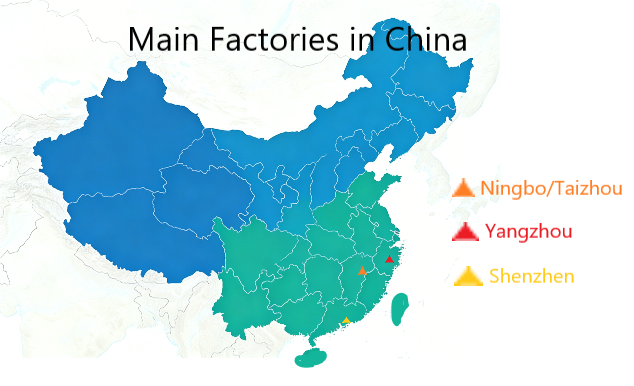
China’s Manufacturing Hubs
China dominates global production, with specific clusters specializing in different aspects:
- Ningbo & Taizhou (Zhejiang Province): The heart of plastic molding and assembly. Home to thousands of OEM/ODM factories producing mid-to-high range bottles. Strong supply chain for molds and electronic components (crucial for smart bottles).
- Yangzhou & Jiangyin (Jiangsu Province): Known for glass bottle production and high-quality silicone nipples.
- Shenzhen & Dongguan (Guangdong Province): The hub for electronics integration. If a bottle has sensors, Bluetooth, or heating elements, the R&D and assembly often happen here.
Brand Ecosystem
- International High-End Brands:
- Dr. Brown’s (USA): Leader in anti-colic technology.
- Philips Avent (Netherlands/Global): Market leader in wide-neck and natural feeding simulation.
- Comotomo (Korea/USA): Pioneer in full-silicone, breast-mimicking design.
- Pigeon (Japan): Renowned for peristaltic-style nipples and glass quality.
- MAM (Austria): Known for self-sterilizing and symmetrical nipples.
- Chinese Core Brands (Rising Giants):
- Goodbaby (gb): A massive conglomerate with extensive R&D.
- Babycare: A newer lifestyle brand focusing on design and premium materials (PPSU/Silicone).
- Usbaby (You Bei Min): Strong domestic presence with export capabilities.
5. From 2025 top 20 countries new birth rate list we can see where it is the best markets as below.
| Rank | Country (English Name) | Est. Population 2025 (Millions) | Total Fertility Rate (TFR) (Births per Woman) |
Region |
|---|---|---|---|---|
| 1 | Niger | 31.9 | 6.73 | West Africa |
| 2 | Somalia | 19.8 | 6.08 | East Africa |
| 3 | Chad | 20.5 | 5.92 | Central Africa |
| 4 | Mali | 24.6 | 5.78 | West Africa |
| 5 | Central African Republic | 6.2 | 5.65 | Central Africa |
| 6 | Democratic Republic of the Congo | 118.2 | 5.52 | Central Africa |
| 7 | Angola | 38.9 | 5.41 | Southern Africa |
| 8 | Burundi | 14.5 | 5.35 | East Africa |
| 9 | Benin | 15.3 | 5.28 | West Africa |
| 10 | Uganda | 51.6 | 5.15 | East Africa |
| 11 | Burkina Faso | 24.8 | 5.08 | West Africa |
| 12 | South Sudan | 13.9 | 4.95 | East Africa |
| 13 | Mozambique | 36.8 | 4.82 | Southern Africa |
| 14 | Zambia | 22.6 | 4.75 | Southern Africa |
| 15 | Afghanistan | 44.8 | 4.68 | South Asia |
| 16 | Nigeria | 239.5 | 4.62 | West Africa |
| 17 | Cameroon | 32.5 | 4.55 | Central Africa |
| 18 | Ivory Coast (Côte d'Ivoire) | 33.2 | 4.48 | West Africa |
| 19 | Senegal | 19.6 | 4.42 | West Africa |
| 20 | Tanzania | 72.8 | 4.38 | East Africa |
Africa ! Africa ! Africa !
If you need more inform on baby bottle or related product hope you can contact seenwills for assisting.