Latest data indicates that the global AI toy market is experiencing explosive growth in 2026. From manufacturing workshops in Yiwu to living rooms in North America, smart toys featuring voice interaction and emotional companionship have become the new favorites in cross-border e-commerce. This article deeply analyzes the industrial logic behind the "AI + Emotional Consumption" trend, explores how Chinese supply chains are leveraging technological advantages to capture this hundred-billion-dollar sector, and provides compliant product selection strategies for cross-border sellers.
From "Manufacturing" to "Intelligent Manufacturing" – A Paradigm Shift in the Toy Industry
In the global trade landscape of 2026, a significant trend is emerging: while the export growth of traditional toys is slowing, orders for smart toys equipped with Artificial Intelligence (AI) interaction capabilities are doubling.
Especially in core Chinese industrial hubs like Yiwu and Shenzhen, AI toys featuring voice dialogue, emotional feedback, and personalized companionship have become the fastest-growing category in terms of overseas buyer inquiries. This is not the accidental success of a single product, but the inevitable result of the convergence of two major waves: "AI Technology Implementation" and "Global Emotional Consumption." For global sellers, understanding the logic behind this transformation is key to seizing the next wave of blockbuster product dividends.
I. Why Are AI Toys Exploding in 2026?
SEENWILLS observes that this surge in AI toys is driven by three core forces:
1. The Rise of the Global "Emotional Economy"
In the post-pandemic era, global consumer psychology has undergone profound changes. Consumers are no longer paying solely for functionality; they are increasingly willing to pay for "Emotional Value."
- The Antidote to the Loneliness Economy: From Gen Z living alone to an aging society, alleviating loneliness and seeking companionship have become rigid demands.
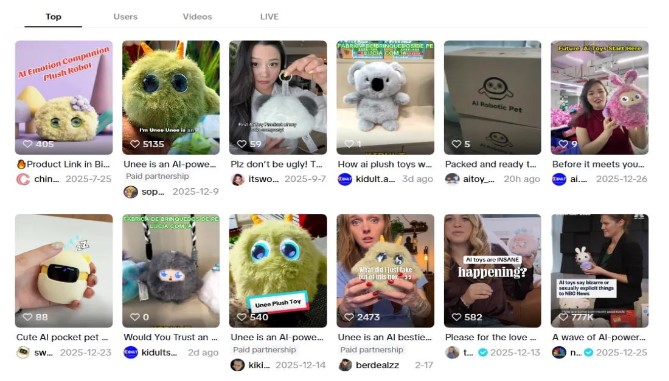
- Upgraded Emotional Connection: Unlike traditional stress-relief toys, AI toys utilize Large Language Models (LLMs) to achieve human-like interaction, providing instant emotional feedback. This experience of "being understood" gives them powerful viral potential on social media platforms like TikTok and Instagram.
2. The "Dimension-Reduction Strike" of the Chinese Supply Chain
The resilience of Chinese manufacturing is the cornerstone of AI toy proliferation.
- Efficient Synergy of Hardware and Software: Mature electronic hardware solutions from Shenzhen and Dongguan are perfectly integrated with Yiwu's extreme small-commodity manufacturing system.
- Cost Advantages Restructuring the Market: Leveraging the Chinese supply chain, the cost of high-end companion robots that previously sold for hundreds of dollars overseas has been compressed by over 50%. This has rapidly transformed AI toys from "geek gadgets" into mass-market consumer goods, significantly expanding market boundaries.
3. Cross-Border E-Commerce Accelerating Product Iteration
Traditional toy development cycles used to take 6–12 months; the cross-border e-commerce model has shortened this to just a few weeks.
- Data-Driven R&D: Factories now directly align with overseas social media trends, influencer reviews, and user comments to rapidly adjust algorithms and features.
- Agile Response: This "small-batch, quick-return" model allows Chinese sellers to capture and satisfy niche market demands far faster than their Western counterparts.
II. The Hundred-Billion-Dollar Space for AI Toys in 2026
According to authoritative forecasts, the global AI toy market is on a high-growth trajectory.
- Market Size Forecast: Data shows that the global AI toy market size exceeded $11 billion in 2024 and is projected to climb to $58 billion by 2030, with a Compound Annual Growth Rate (CAGR) of over 20%. This far outpaces the 3%-5% growth rate of the traditional toy industry.
- Core Market Distribution: North America remains the largest consumption base, but the growth potential in Europe and Southeast Asia should not be underestimated.
- Price Tiers and Segmentation:
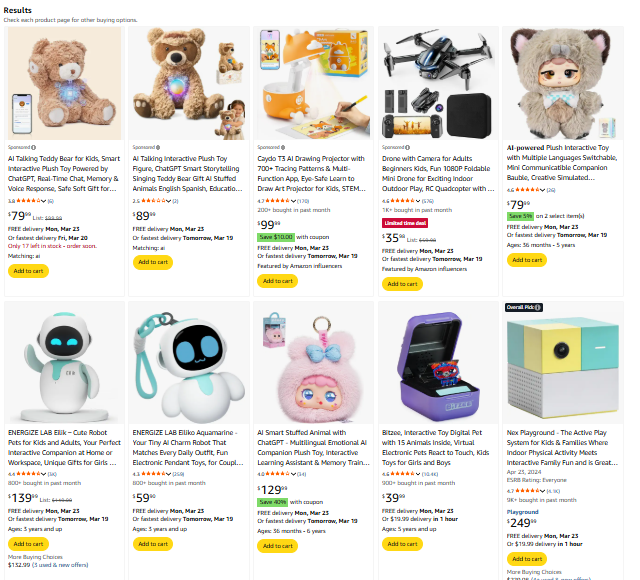
- Entry-Level ($20–$50): Simple voice-interactive dolls; volume drivers.
- Mid-Range Interactive ($50–$100): Smart companions with multi-turn dialogue and basic educational functions.
- High-End Robots ($100–$300+): High-end companion devices featuring complex emotional algorithms and multi-modal interaction.
Trend Highlight: Educational AI toys currently hold the largest market share, with European and American families highly recognizing their value in language learning and logical training. Simultaneously, "Emotional Companion" products targeting adults are emerging as a new growth pole.
III. Opportunities and advices for Ai toy Sellers
Facing this new blue ocean, how should cross-border sellers position themselves? We recommend focusing on the following three tracks:
1. Ultra-Cost-Effective "Light-Smart" Toys
- Strategy: Focus on the under-$50 price point, featuring basic voice interaction and storytelling functions.
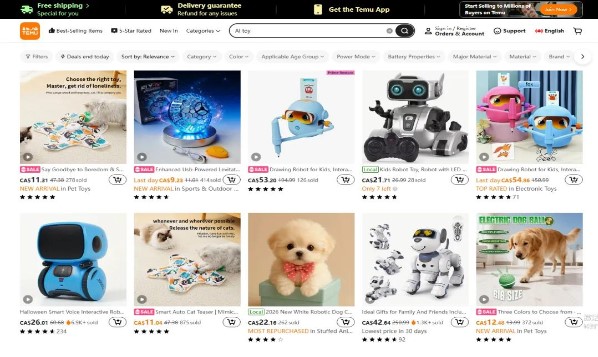
- Advantage: Low barrier to entry and high repurchase rates make these ideal for forming blockbusters on platforms like Temu and TikTok Shop.
2. "Edutainment" Educational AI Products
- Strategy: Deeply integrate STEM education concepts with bilingual teaching and programming enlightenment features.
- Scenario: Precisely target the educational scenarios of Western families to build brand loyalty and increase Average Order Value (AOV).
3. All-Age "Emotional Companions"
- Strategy: Design healing aesthetics and delicate interactions for young people and solitary individuals.
- Core Value: You are not selling a toy; you are selling a social experience of "being understood."
⚠️ Critical Reminder: Compliance is the Bottom Line for Going Global
While chasing trends, sellers must prioritize data security and privacy compliance:
- Child Privacy Protection: Strictly adhere to US COPPA and EU GDPR regulations to ensure children's data is not collected illegally.
- Product Certification: Complete mandatory certifications for target markets in advance, including CE, FCC, and ASTM F963.
- Content Safety: Establish AI content filtering mechanisms to prevent the generation of inappropriate speech.
Conclusion: Redefining the Definition of "Toys"
From plush dolls to AI companion robots, the toy industry is undergoing a profound upgrade from "physical entertainment" to "intelligent interaction."
Future toys will not only be playmates for children but may also become smart entry points within home scenarios. For cross-border sellers, those who can first close the loop between technological innovation, content ecosystems, and supply chain management will seize the initiative in the global market of 2026 and beyond.
A Message from Seenwills:
"The wind has risen; only those who adapt will remain unbroken."
If you are seeking high-quality AI toy supply chain resources or require professional cross-border compliance guidance, please contact the Seenwills team. Let us help you navigate the waves of the global smart toy revolution.