Here is the professional English translation of the analysis on the "Pet Hair & Odor Air Purification + Antibacterial" equipment market.
Contents for the PET AIR PURIFIER MACHINES
1. What types of machines are available for the air house solutions?
2. What is the proprietary or standard name for the machines?
3. What is the global market trends in PET machine business?
4. Which domestic China brands or companies are involved?
5. What are the general MOQ and Lead Time?
6. Advantages and Disadvantages of B2B and B2C Platform Sales?
7. Promotion Dimensions for Creating a Hit Product
8. Foreign Buyer Procurement Channels and Core Dimensions
More questions on such programns hope to have a great chat with SEENWILLS SALES DEPARTMENT. We can offer more choices on pet products, pet tools, pet toys, pet machines and so on with your keywords sourcing.

1. What products are available?
The primary product category currently available is Pet Air Purifiers. These are not merely standard air purifiers but represent a systematic upgrade tailored to the specific pain points of pet-owning households.
- Integrated Functionality: A single device addresses three key issues: airborne pet hair and dander, stubborn odors (such as ammonia and hydrogen sulfide), and the elimination of bacteria, viruses, and allergens (e.g., Feld1 protein).
- Innovative Formats: Beyond conventional upright purifiers, the market has seen the emergence of innovative products like Smart Pet Grooming Stations. These devices actively suction loose fur during the grooming process, tackling the problem at its source and significantly reducing environmental hair pollution.
2. What is the proprietary name?
These products are commonly referred to as "Pet Air Purifiers" or "Air Purifiers for Pet Households".
In more specialized review or medical contexts, they may be termed:
- Allergen Removal Purifiers
- Medical-Grade Pet Purifiers, specifically referring to those possessing medical device certifications and focusing on sterilization and allergen removal.
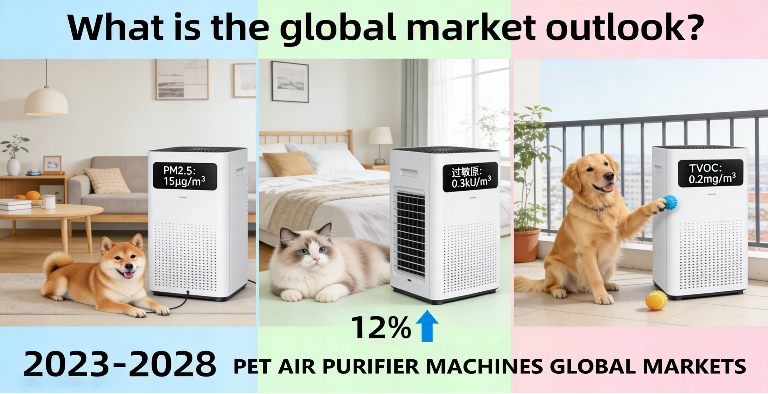
3. What is the global market outlook?
The global market outlook is exceptionally promising, currently experiencing a high-growth phase.
- Market Drivers: The booming "pet economy" and the elevated status of pets as "family members" are driving demand for high-quality, healthy home environments.
- Data Support: Data indicates that the "Pet Household Usage Scenario" accounts for over 30% of the air purifier market, making it a significant growth segment. With the introduction of relevant standards (e.g., GB/T 18801-2025) incorporating "Pet Allergen Removal" into performance grading, the market is transitioning into an era of "Precision Purification," ensuring demand will continue to deepen.
- Growth Potential: The intelligent device sector focused on pet environmental health is projected to maintain high growth in the coming years, particularly in markets with high pet ownership, such as North America, Europe, and China.
4. Which domestic brands or companies are involved?
Numerous Chinese brands have actively entered this space, ranging from dedicated pet brands to comprehensive home appliance giants.
- Leading Tech Brands:
- Xiaomi: Launched the Mijia Pet Air Purifier, leveraging its smart ecosystem and cost-effectiveness to enter the market.
- Dreame: Its AP10/FP10 series have been showcased at CES and entered North American Costco channels, emphasizing powerful hair suction and sterilization.
- Specialized & Innovative Brands:
- MOVA: Showcased the Puris P10 at the CIIE, utilizing "Dual Filter" and "Solid Alkali Targeted Decomposition" technology, positioning itself in the premium segment.
- Yixiang: Possesses Class II medical device certification, with products used in top-tier hospitals and vet clinics, emphasizing medical-grade sterilization and hair removal.
- Other Brands: Companies like airx and Yuehuxi are also deeply involved, offering solutions based on different technological approaches.
5. What are the general MOQ and Lead Time?
For B2B operations, these figures primarily depend on the manufacturer's type and your cooperation model.
- Minimum Order Quantity (MOQ):
- Established Brands/Large Factories: Typically have high MOQs, often starting in the hundreds or thousands of units, suitable for large distributors or supermarket chains.
- SME Manufacturers/OEM Factories: MOQs are relatively flexible, potentially as low as 50-100 units, suitable for startups or small-scale market testing.
- Lead Time:
- Stock/Standard Items: Can ship within 1-2 weeks after order placement.
- Custom/OEM Orders: Typically require 4-8 weeks for mold development, production, and quality inspection, potentially longer during peak seasons or for complex customizations.
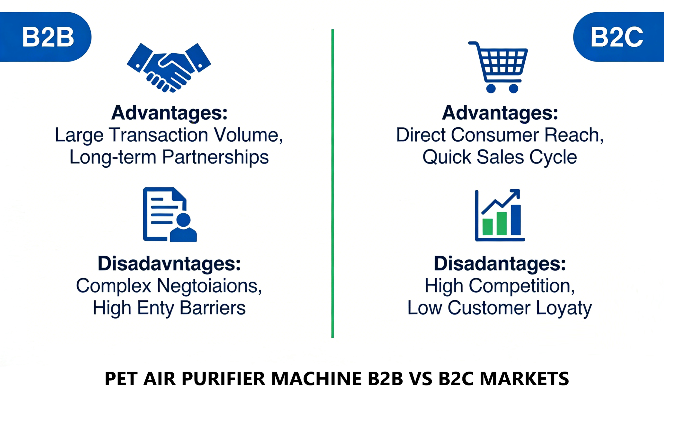
6. Advantages and Disadvantages of B2B and B2C Platform Sales
Selling on different platforms presents distinct core trade-offs:
| Platform Type | Advantages | Disadvantages / Challenges |
|---|---|---|
| B2B Platforms (e.g., Alibaba, Global Sources) | Precise Clients: Connects with wholesalers and dealers, leading to large orders. Long-term Relationships: Easier to establish stable supply chain partnerships. Brand Exposure: Showcases manufacturing capability and product lines. |
Intense Competition: Price wars are common. Long Sales Cycle: Procurement processes are complex and lengthy. Profit Margins: Relatively lower compared to B2C. |
| B2C Platforms (e.g., Amazon, JD, Tmall) | Higher Profits: Direct-to-consumer sales offer greater gross margins. Brand Direct: Builds direct consumer brand recognition. Rapid Feedback: Quickly gathers user reviews for product iteration. |
Complex Operations: Requires handling marketing, customer service, logistics, and returns. High CAC: Traffic competition is fierce, requiring significant ad spend. Inventory Pressure: Requires self-warehousing, tying up capital. |
7. Promotion Dimensions for Creating a Hit Product
To turn such a product into a hit, promotion should focus on the following core dimensions:
- Pain Point Marketing: Precisely target the core pet-owner pain points: "Dread during shedding season," "Embarrassment over pet odors," and "Worry about bacteria/allergies." Use scenario-based content to trigger resonance.
- Technical Endorsement: Highlight the product's core "black tech," such as "Solid Alkali Odor Decomposition," "Medical-Grade Sterilization," or "Dual Filter Non-Clogging Design," backed by authoritative test reports or medical institution partnerships.
- KOL/KOC Seeding: On social platforms like Xiaohongshu, Douyin, and Bilibili, collaborate with pet bloggers and influencers for authentic unboxing reviews and long-term usage sharing.
- Scenario-Based Demonstration: Emphasize how the product integrates into home decor (e.g., magnetic outer shells, quiet design) and solves specific problems in multi-pet or child-inclusive households.
- Cross-Industry Collaboration: Partner with vet clinics, cat cafes, and grooming salons for product display or experiences, directly reaching precise user groups.
8. Foreign Buyer Procurement Channels and Core Dimensions
-
Procurement Channels:
- Major B2B Platforms: Such as Alibaba, the primary channel for finding Chinese suppliers where you can filter certified "Gold Suppliers."
- Trade Shows: Attend professional appliance fairs (e.g., AWE) or pet product expos to meet brand owners and factories face-to-face.
- Brand Websites/OEM Cooperation: Directly contact brands of interest (e.g., Dreame, Xiaomi) to inquire about OEM/ODM services or overseas distribution partnerships.
-
Core Attention Dimensions:
- Certification & Compliance: This is the most critical dimension. Ensure the product meets the safety and performance standards of your target market, such as EU CE and North American ETL/FCC certifications.
- Core Technical Specifications: Focus on CADR (Clean Air Delivery Rate, determines speed), CCM (Cumulative Clean Mass, determines filter life), and Noise Levels (especially in sleep mode).
- Filter Cost & Replacement: Understand the filter replacement cycle and long-term usage costs, which directly impact end-consumer repurchase rates and satisfaction.
- Differentiation: In a saturated market, seek products with unique technologies (e.g., odor decomposition, probiotic tech, dual-channel design) to establish a market advantage.
- Supplier Strength: Evaluate the factory's production capacity, R&D background, and quality control systems to ensure stable supply and product quality.
*If you are in such pet care or related machine business in need of assisting please feel free to contact SEENWILLS for help.