2026 Cross-border E-commerce Strategic Report: The Structural Transition from Traffic-Driven to Product-Centric Excellence
I. Executive Summary: The Macro Shift
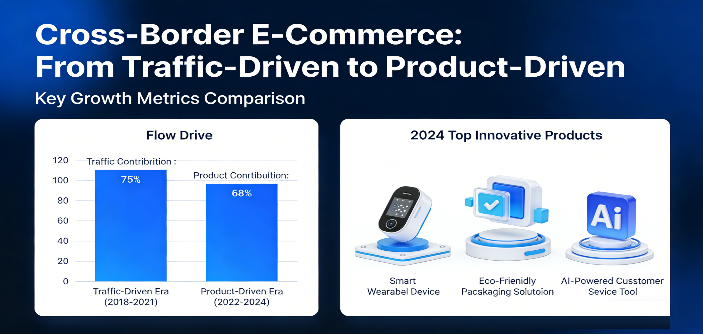
In 2025, the cross-border e-commerce industry completed a profound structural transition from "Traffic-Driven" to "Product-Driven" dynamics. In this transformative phase, the logic of product selection has fundamentally shifted—moving beyond traditional sourcing to the systematic identification of "Hit Product DNA." This entails discovering products that solve authentic consumer pain points, create novel experiences, and possess inherent technical barriers.
According to General Administration of Customs data, China's cross-border export e-commerce scale reached CNY 2.15 trillion in 2024, a year-on-year increase of 16.9%, setting another historic high. As we enter 2026, the core of competition has shifted decisively toward product innovation. The Amazon Global Selling "2025 China Cross-border E-commerce Trends Report" indicates that nearly 90% of innovation-leading enterprises possess original flagship products, with over 30% pioneering new consumption scenarios. This signifies that the industry is evolving from simple "selling goods overseas" to a deep "integration strategy," where product innovation is the core engine for businesses to navigate cycles and build sustainable moats.
*If you want to get some fresh products from China factories or markets hope you can contact SEENWILLS directly.
II. Deep Dive into Core Category Verticals
Based on 2026 market data and consumer intent analysis, each category demonstrates distinct development trajectories and opportunity windows.
- Sports, Fitness & Outdoor: The Hardware Upgrade of Lifestyle
As one of the fastest-growing sectors, the outdoor category is undergoing a transition from "utility transportation" to a "lifestyle upgrade." Short-distance travel devices now cover the full age spectrum—from children's models to high-performance off-road variants—integrating APP intelligence and deep customization. The validation in European, American, Middle Eastern, and Australian markets suggests that supply chain enterprises with integrated R&D, manufacturing, and sales capabilities are on the cusp of an explosion. - Smart Small Appliances: Hyper-Innovation in Niche Scenarios
Kitchen small appliances are solving the pain point of limited kitchen space but high functional demand in Western households through precise temperature control, material innovation (e.g., pure titanium), and multi-functional integration (e.g., handheld food processors). Products tailored for the "Efficient Kitchen" and "Premium Breakfast" scenarios exhibit stable repurchase rates and robust market performance. - 3C Consumer Electronics & AI Wearables: The Medicalization and Invisibility of Hardware
The AI hardware ecosystem is exploding. From AI glasses to smart rings, hardware innovation is evolving toward "Software-Hardware Integration" and "Medical Necessity." For instance, medical-grade wearables with FDA and CE certifications have built formidable competitive moats. Simultaneously, smart glasses are trending toward lightweight designs, aiming to become the user's "Invisible Intelligent Assistant." - Home & Pet: From Trendy Decor to Health Necessities
The home category is bifurcating: consumers buy trendy décor via platforms like Temu/Shein while investing in durable goods. Notably, pet smart home devices have emerged as a high-growth necessity. With the concept of "pets as family members" becoming ubiquitous, pet air purifiers equipped with ammonia purification and plasma sterilization functions are becoming essential for pet-owning households. Backed by nearly 50 patents, this sector offers high repurchase rates and warrants early positioning. As we know pet air purifier machines are very good for 2026-2030. - Toys & DIY Manufacturing: Technological Reshaping and Blue Ocean Potential
Traditional toys, when augmented with AI technology, see significant increases in price points and repurchase rates. AI dialogue robots and programmable robotic dogs have become a promising blue ocean as parents are willing to pay a premium for "educational companionship." Furthermore, consumer-grade laser engravers, representing the DIY desktop manufacturing sector, have shown immense high-growth potential with operations in 170 countries. - Beauty & Adult Products: At-Home Spa Experiences and High-Premium Niches
The trend of "Bringing the Beauty Salon Home" is clear. Beauty instruments combining oxygen infusion, RF, and extraction functions, coupled with consumables, offer a clear profit model. Meanwhile, adult products are shedding their vulgar labels, upgrading toward "Healthy Lifestyles" and "Gift Attributes." High-end adult products with international design awards that balance practicality and privacy represent an undervalued, high-premium sector.

III. Channel Strategy & Consumer Behavior Insights
The distribution of purchase intent across categories reveals different channel strategies.
- Fashion & Home (High Intent Categories): The fashion category (78% intent) is the most fiercely competitive, driven by trust, price, and speed. The home and kitchen sector (60% intent) shows a dual trend of strong brand website growth (+33% intent) and stable Amazon market share (22%).
- Health & Grocery (Trust-Driven Categories): Categories such as Vitamins (53% intent) and Beauty (57% intent) rely heavily on trust endorsements, with consumers favoring professional retailers like Chemist Warehouse or brand direct channels.
- 3C & Books (Platform-Dominated Categories): Electronics (59% intent) and Books (52% intent) are dominated by platforms like Amazon, which holds a significant GMV advantage in electronics.
- Emerging & Potential Categories:
- Auto Parts (41% intent): eBay leads in GMV and purchase intent, with Amazon holding a stable top-three position.
- Luggage & Travel (38% intent): This category shows high online penetration (~28%), with marketplaces and online retailers capturing 28% of purchase intent.
IV. Strategic Outlook & Future Recommendations
Facing the 2026 market landscape, cross-border enterprises should build their competitiveness through the following dimensions.
- Embrace the "Product Innovation Flywheel": Establish a virtuous cycle centered on the consumer: "Demand Insight → Creative Development → Product Validation → Scale Growth → Iterative Upgrade."
- Deep Cultivation of Niche Scenarios: Avoid red ocean competition by focusing on unmet niche demands (e.g., pet home air management, camping cookware).
- Build Technical Barriers: Actively adopt AI, new materials (e.g., Titanium), and new processes to enhance product technical content and inimitability.
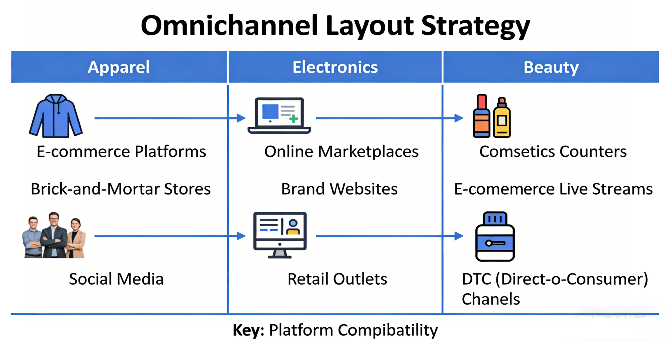
- Omni-channel Strategy: Select channel combinations based on category characteristics—maintaining dominance on mainstream platforms like Amazon while building brand private domains via independent websites.
In conclusion, the core opportunities in 2026 lie in products that solve real needs, possess innovation capabilities, and have core barriers. The key to cross-border success is permanently embedded in the deep refinement of product excellence.
* Every great actions will take more chances for co-work globally, here SEENWILLS likes to be your China Business Partener.